



Hello hello!
Nobody does founder content like Mid-Day Squares. So it caught us off guard when co-founder Nick Saltarelli told us it’s stopped moving the needle...
The challenge is that Meta only shows ads to people who resemble the person in it, so the same founder faces just keep reaching the same fans. With MDS now heading into Costco and Walmart in the US (!!!), Nick needed new faces, fast.
We talked with him about how Vidovo turned one winning script into 10 creator ads. Four became winners (the industry average is about 1 in 20), and they’re still running nearly a year later at 15–20% lower CAC.
Founder content builds the fanbase, but creator content (critically, not AI content) reaches everyone else.
Learn how Mid-Day Squares scales content while saving time ->
What what we’ve been thinking about…
The second great cereal renaissance is being led by a retailer.
This week, Little Spoon launched Dolphin Divers, its first-ever kids’ cereal, exclusively at Target nationwide. On its own, this is yet another better-for-you kids brand expanding its set in a major retailer. But what’s actually happening is more interesting… because this wasn’t actually Little Spoon’s idea.
Last fall, Target confidentially told the better-for-you kids brand Little Spoon—its biggest-ever food and beverage brand launch—that it was about to ban cereals with artificial colors, and asked if it wanted in on the category. One year layer, Dolphin Divers was born. Meanwhile, Target has spent the past few months championing another new kids’ cereal brand: Backflip, the brand from YouTuber Ben Azelart and Béis co-founder Shaun Neff, which launched exclusively at Target in July.
Target looked at its cereal aisle and saw a need for entirely new brand entrants rather than seeking innovation from its current set. How did we get here?
This isn’t Target’s first cereal renaissance. Magic Spoon launched in 2019 as a DTC brand with high-protein, low-carbs, and a premium vibe (and price tag to match). It spent three years winning over more than 1M+ customers online before landing its first retail deal: about 1,300 Target stores. Three Wishes arrived the same year with a grain-free chickpea base, macro callouts, and similar premium feel, and later used Target as its exclusive launchpad for its first move beyond cereal.
This first cereal renaissance was rooted in a macro-first pitch that landed hardest with adults. The kids’ shelf stayed Big Cereal’s turf… until this year.
The catalyst for a new kids cereal aisle in Target looked something like this:
First, the dye-free boom. In February, Target announced it would sell only cereals made without certified synthetic colors by the end of May, and drop brands that didn’t reformulate. Big Cereal moved fast: General Mills finished pulling dyes from its US cereals in August, and Kellogg is doing the same by the end of 2026, a year ahead of its own deadline.
But that alone wasn’t a big enough reason on its own to call-in Little Spoon; 85% of Target’s cereal sales were already dye-free. Mostly, it gave Target an excuse to reset the whole set. Target added an exclusive dye-free Froot Loops, its own Good & Gather kids’ line, and new varieties from Lovebird and Seven Sundays.
Target then realized it needed to fill another gap: The broader push for better-for-you kids products (which we wrote about here). Millennial parents who rebuilt their own pantries around clean labels have turned that same lens on their kids, but most recent “better” cereal innovation targeted adults. Kids got “cleaner” versions of the same old boxes, while the brands actually built for them—with the shapes, mascots, color, and age-appropriate macros—never arrived.
Enter the second wave of cereal: kid-first, Target-first. The sub-category’s two buzzy new hero brands are approaching it from different angles:
Backflip sells to the kid. The YouTuber-founded brand’s star-shaped cereal boasts a fun flavor mascot on every box, and even launched character trading cards to lean into the brand world. It’s built for the 6–12-year-olds who already watch Azelart. And it seems to be working (at least so far): In its first eight weeks on shelf, Backflip was the #1 most productive item in all of breakfast at Target, in both dollars and units.
Little Spoon sells to the parent. Dolphin Divers is organic, date-sweetened and wrapped in a ’90s ocean theme to appeal to millennial parents. Little Spoon as a brand is built on parent trust: it already outsells Gerber at Target, and has strategically built its product lines to grow with a child, from infant formula and first bites to big kid meals and snacks, and now a full breakfast lineup. The brand doesn’t have to find an audience in the cereal aisle, because it’s bringing one.
The reality is, cereal is still shrinking. Cold cereal sales fell 0.5% in 2026 after a 1.5% drop in 2025, and a dye-free Froot Loops won’t bring lapsed buyers back. But wholly new brand entrants can, because they show up with their own audiences—trusting parents and YouTube fan kids alike.
Big Cereal can reformulate its way back onto Target’s shelf, but it can’t reformulate its way into new households. Target stopped waiting for the next great cereal brand to find it, and went out and built one. 🥣
CPG & Consumer Goods

Does every founder have to be an influencer? In Stock, Shopify’s Substack newsletter, answers that question in its latest piece, where HEYDOH founder Clarissa interviews founders from brands like Sourmilk, Biena Snacks, Fly By Jing, Pistakio, and Honey Dept. Subscribe for a regular peek behind the news and into the real stories from the front lines of entrepreneurship.*
Kewpie’s getting company. Bachan’s is branching out from Japanese BBQ sauce with a new mayo lineup. The rage will include Original, Spicy and Black Garlic all made with free-range egg yolks and rice vinegar. They’re launching exclusively at Whole Foods nationwide.
This is Bachan’s first new line since Marzetti acquired it for $400M in May, but it’s apparently not an overnight post-acquisition pivot. Founder Justin Gill says the mayos have been in development for more than four years.
Bachan’s isn’t the only brand betting on mayo. Cabi launched its Japanese mayo in October 2024, while Graza’s olive oil mayos, Molly Baz’s Ayoh and Smash Kitchen are giving the aisle a refresh with different oils, bolder flavors, and an expanded focus on ingredients. Even Sauer Brands just renamed itself Duke’s Mayo Company after selling its spice business. If that’s not a bet on mayo, we don’t know what is.
How diet brands are angling against GLP-1s. Atkins is repositioning its shakes, bars, and other foods as options for people maintaining their weight after stopping GLP-1s. The pivot comes as Atkins sales fell 20.9% in fiscal 2026, dragging parent company Simply Good Foods’ total net sales down 6.5% to $1.4 billion.
When Atkins—one of the most iconic names in diet culture—starts rethinking who it’s for, you know this shift is real. The brand built its name on the idea that eating specific foods could help you lose weight. Now, diet brands can’t compete against this magical medication making everyone skinny… and they’re now forced to pivot. 11% of US adults currently take GLP-1s for weight loss, up from just 3% in 2024, and 15% have tried them at some point.
The question many consumers are probably thinking when they see an Atkins is: Why choose a legacy diet brand when a more fun, tasty option can deliver the same benefits? Its best shot here may be to lean in, like a SoWell, and build products for the specific needs of GLP-1 users and not just repackage the same diet-culture pitch for everyone. Otherwise, brands like Atkins will soon fade away as consumers find those benefits in much more exciting brands and products.
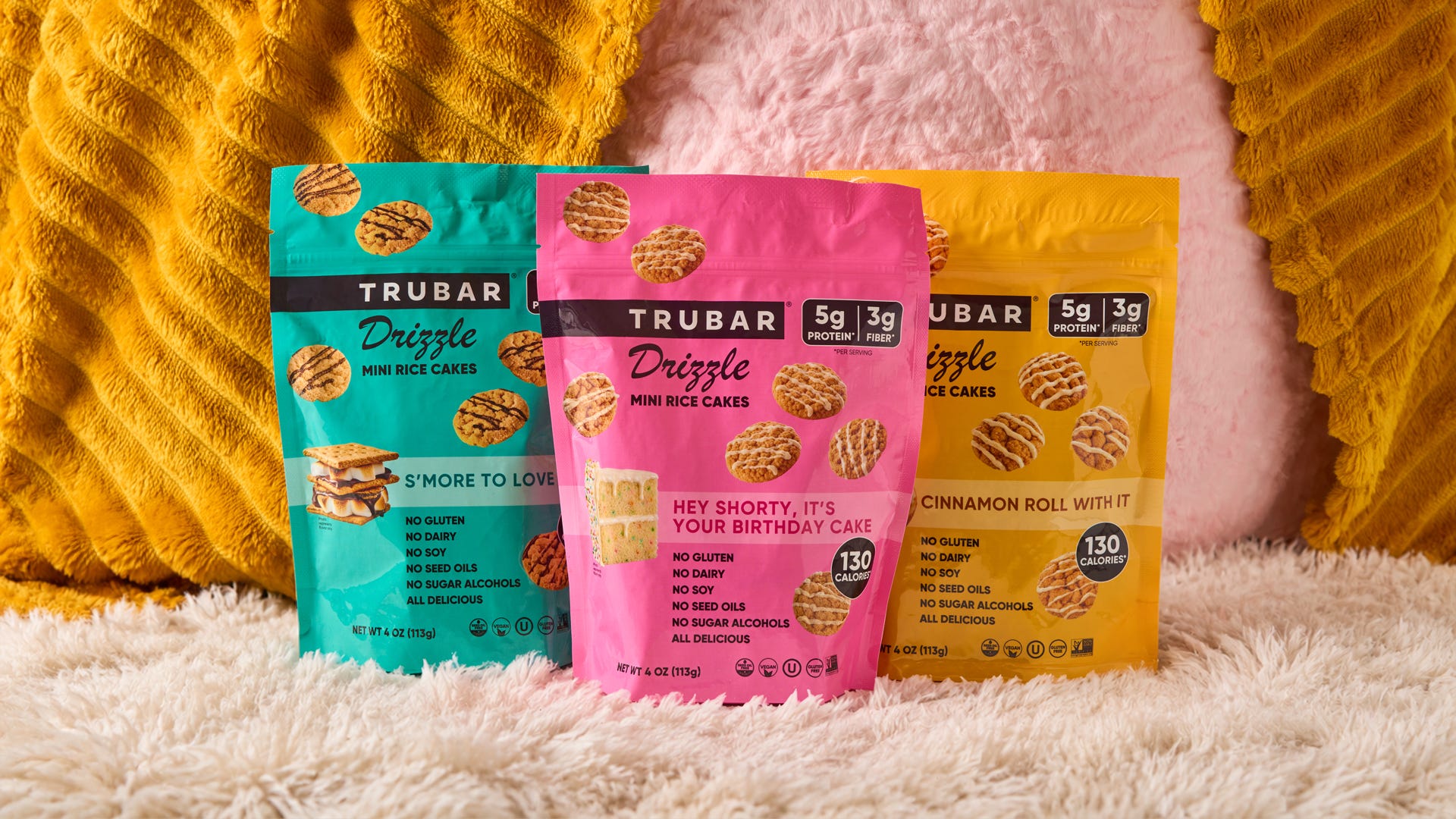
Everything is getting drizzled on. TRUBAR has launched Drizzle, its first product beyond bars—dessert-inspired mini rice cakes with 5g protein and 3g fiber per serving, available at Walmart.
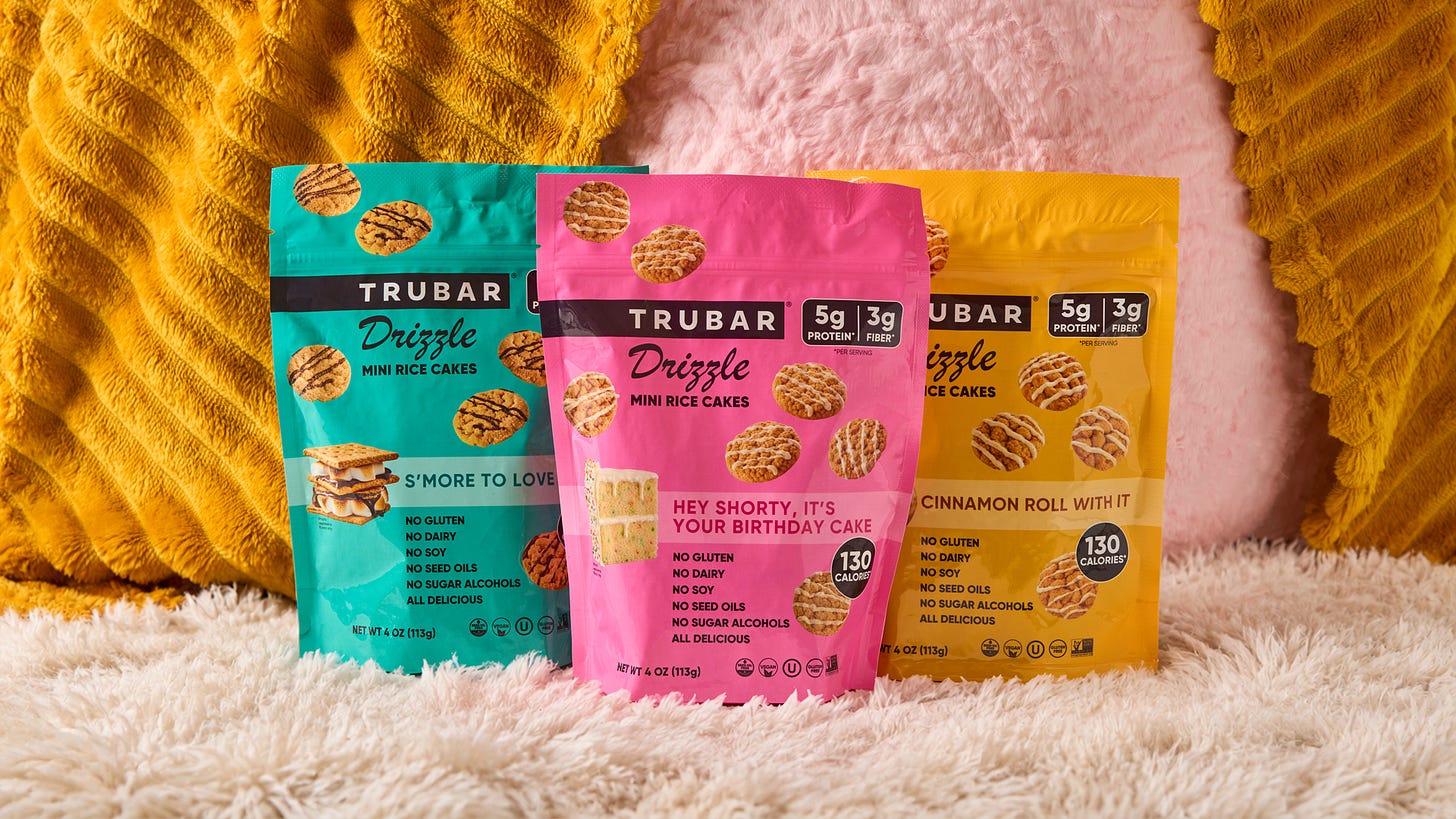
Looks awfullyyyy similar to Drizzilicious, the drizzled rice cake brand by Snack Innovations that’s been around since 2016. TikTok made them a sellout years later (451K+ units on TikTok Shop alone), after a boom of TikToks highlighting the brand (fans credit an Alix Earle shoutout as the origin). Circana named the company a 2025 Growth Leader in the $100M–$500M tier. Numerator also ranked Drizzilicious #3 on its fastest-growing Brands to Watch for 2026.
Naturally, the dupes are following. RITZ launched “Drizzled Minis” in January, Like Air launched Drizzled Rice Cakes in June, and now TRUBAR’s version arrives with familiarly indulgent flavors like “Hey Shorty, It’s Your Birthday Cake” (which, we must credit them, is at least a creative spin on birthday cake). When Drizzilicious’s TikTok bio starts calling itself “The Original,” the shelf is getting crowded.
Separately: There has to be a synonym for “drizzle.”
A viral format becomes a category fast, and you can’t trademark a drizzle. It’ll be interesting to see what will help the new entrants stand out—for TRUBAR, the “twist” is added protein at the same calorie count—and what the OG brand will do to respond (we think a rebrand is in order…).
Why now? Permissible indulgence. Shoppers want dessert without committing to dessert, and a 90-calorie bag of birthday cake rice cakes is about as low-stakes as a treat gets. We dug into the dessert-ification of everything on our recent podcast!!
Avo oil’s trust problem. PepsiCo faces a proposed class action in Illinois over Siete Family Foods chips, which a UC Davis study found contain canola, corn, soybean, and sunflower oils despite being marketed as avocado oil products.
Siete is far from the only brand in the hot seat. That UC Davis study, published in July, tested 54 products labeled as using only avocado oil and found 48 of them (89%!) were inconsistent with the pure oil, including 93% of chips, 71% of mayos, and every single salad dressing. Since August, lawyers have filed 32 federal class actions against Kettle Brand, Boulder Canyon, Primal Kitchen, Sir Kensington’s, Chosen Foods, Jackson’s, Sensible Portions, Sprouts’ store brand, and Siete. And Texas AG Ken Paxton has opened an investigation into Primal Kitchen, Siete, and Chosen Foods.
The problem isn’t new, either: UC Davis found 82% of bottled avocado oil was rancid or adulterated back in 2020, and a batch of suits over store-brand avocado oil at Walmart, Aldi, and Trader Joe’s was headed for consolidation in 2024.
Cue the internet’s favoriteeee post-acquisition narrative (which we’ll be unpacking on the pod this week…): Big CPG buys the beloved brand, then swaps in cheaper ingredients. But this case doesn’t really prove it. The UC Davis samples were bought post-acquisition, yes, but there’s no “before” to compare against. And the brands getting sued span every kind of owner: Campbell’s, Unilever, Kraft Heinz, and PepsiCo, plus Chosen Foods, Jackson’s, and Sprouts. The study’s lead author thinks the adulteration likely starts with suppliers a few layers up the chain, and says brands may not even know. Siete may well have been buying the same oil before and after the deal.
A few years ago, none of this would’ve made headlines. Avocado oil became the go-to swap thanks to the anti-seed-oil movement, which lumps canola, corn, soybean, sunflower, and four others into the “hateful eight.” Back in May, we wrote about how avocado oil went from wellness niche to retail expectation, with buyers asking brands for seed-oil-free versions. The science still doesn’t back the scariest claims, but that’s beside the point for shoppers who paid a premium specifically to avoid them. Brands charged extra for a promise, and now they have to prove they kept it. Expect a lot more lab testing (and “third-party tested” on the back of the bag) very soon 🥑
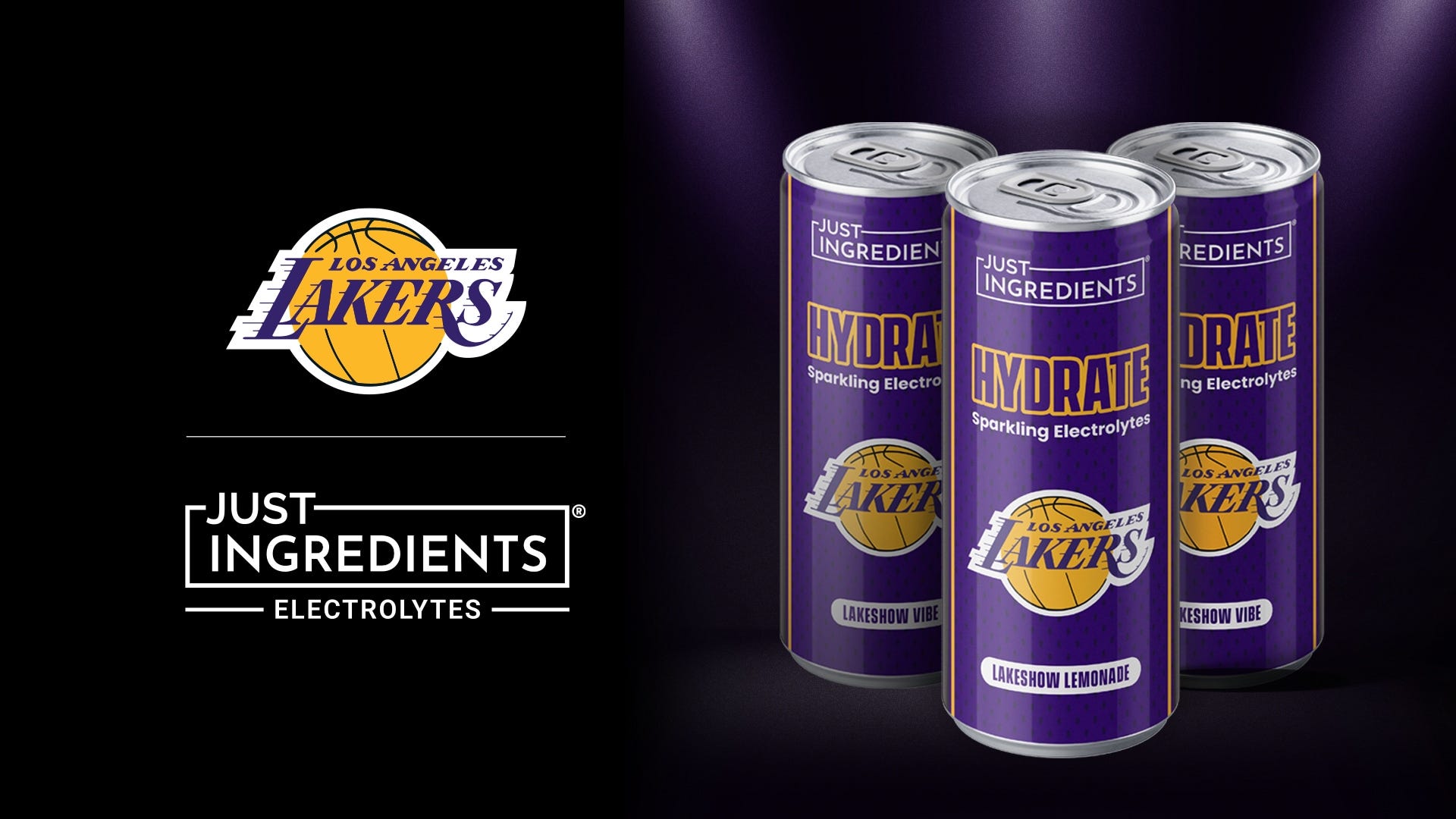
Game time for clean hydration. The Lakers named wellness brand Just Ingredients their official electrolyte partner, bringing its products to the team. The two are also launching a co-branded canned electrolyte drink in Lakers purple and gold later this season.
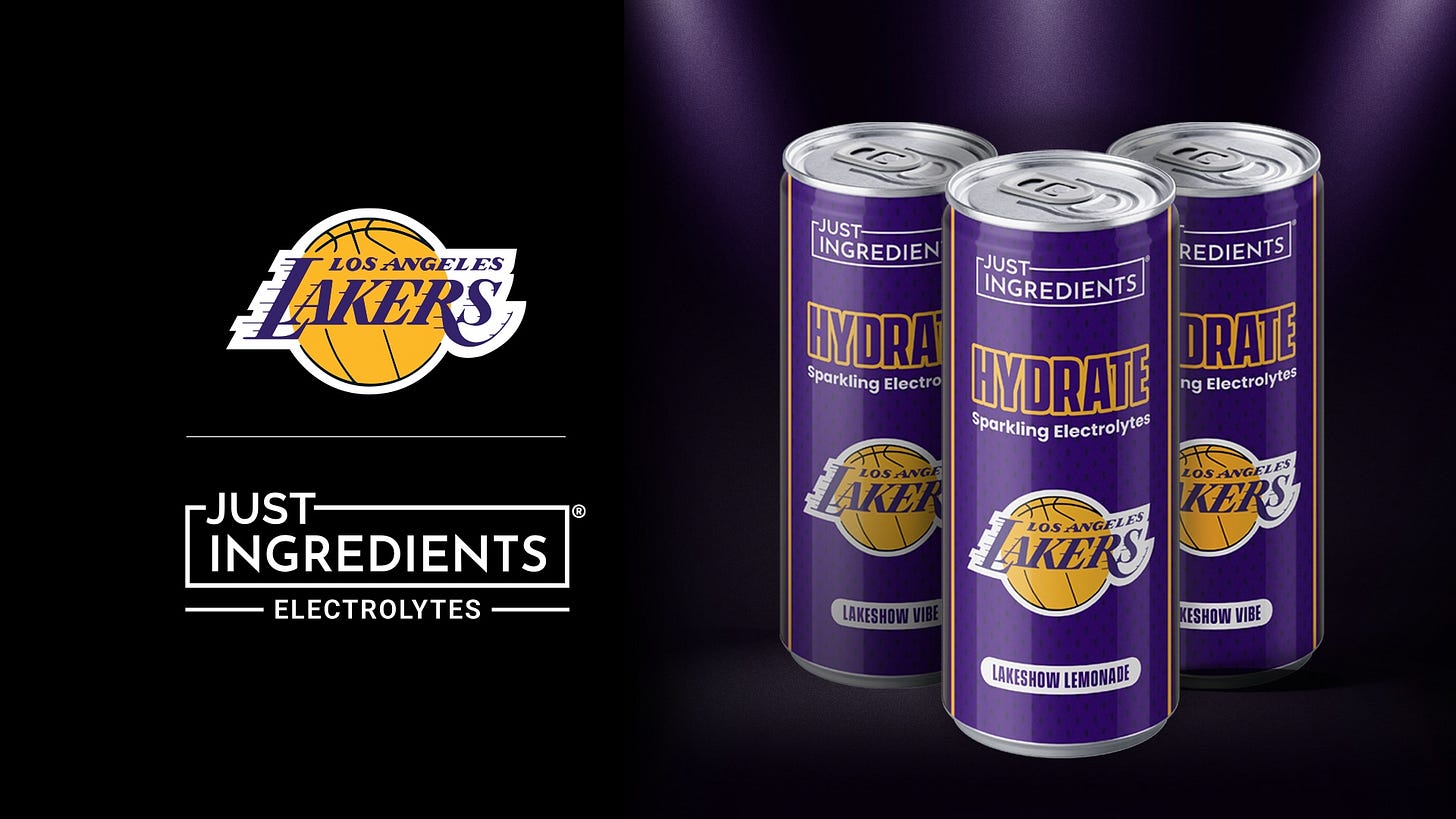
This feels like a big strategic shift in how pro sports is thinking about nutrition and wellness. The Lakers went from longtime hydration partner Gatorade to BioSteel in 2021 then to Prime Hydration in 2024 and all these brands primarily lead with sports and performance first. Now they’re partnering with a brand rooted in a much broader conversation about what goes into our food, supplements, and everyday routines. It’s clear the Lakers are betting that the growing appetite for “clean” ingredients isn’t just a wellness-aisle trend anymore, but something much bigger.
And we do love seeing a brand like this make it to the big leagues. Founded by Karalynne Call in 2019, Just Ingredients grew out of an Instagram wellness community and now sells nationwide at Target. It also landed at No. 440 on the 2026 Inc. 5000, with 797% three-year growth. And the Lakers aren’t its only sports partner! The brand also works with the Utah Jazz, Utah Mammoth, Los Angeles Angels, Philadelphia Phillies, and Vegas Golden Knights. From an Instagram community to a whole roster of pro sports partnerships… not too shabby!
The race to sweeten your coffee. Cargill launched Craftiva, a line of reduced-sugar flavored syrups and sweetener packets. The syrups contain 7 grams of sugar per serving versus the ~20 grams in a leading full-sugar syrup. Both the syrups and packets will be using both cane sugar and stevia. They’re available on Amazon and are rolling out to TikTok Shop, U.S. retail stores, and foodservice distributors in the coming weeks.
Coffee syrups have been getting more, let’s say, exciting over the past few years. Torani and Monin are no longer the only game in town! Brands are taking different approaches, like reducing sugar or adding fiber, but the common thread is bolder flavors that bring the café experience into the home. Brands like Transcendence, Nooly, Motif, and Proper (which just launched in Target!) are leading with bold flavor, natural sweeteners, and quality ingredients rather than just a mere sugar-free pitch. So you can think flavors like Miso Salted Caramel from Transcendence or Almond Croissant from Nooly. Sound delightful! For consumers looking to cut sugar, brands like SUP and Skinny Mixes are offering lower- and zero-sugar options while POCA is adding a functional twist with portable, zero-calorie squeeze packets that add some fiber. Honestly shocked there isn’t a clear protein one yet.
Hydration is headed to recess. Vita Coco launched Vita Coco Kids, a kid-sized coconut water line exclusive to select Walmart stores, available in Original Coconut Water and a dairy-free Strawberry Coconutmilk Beverage with 0g added sugar.
Just like with adult hydration products, there are many more brands playing in bringing extra hydration to the children. Once Upon a Farm launched Electrolyte Blends in October, a refrigerated fruit-and-veggie pouches made with coconut water and sea salt. Roxberry, a coconut water–based sparkling drink for kids, recently raised $4M and landed in Walmart’s modern soda aisle.
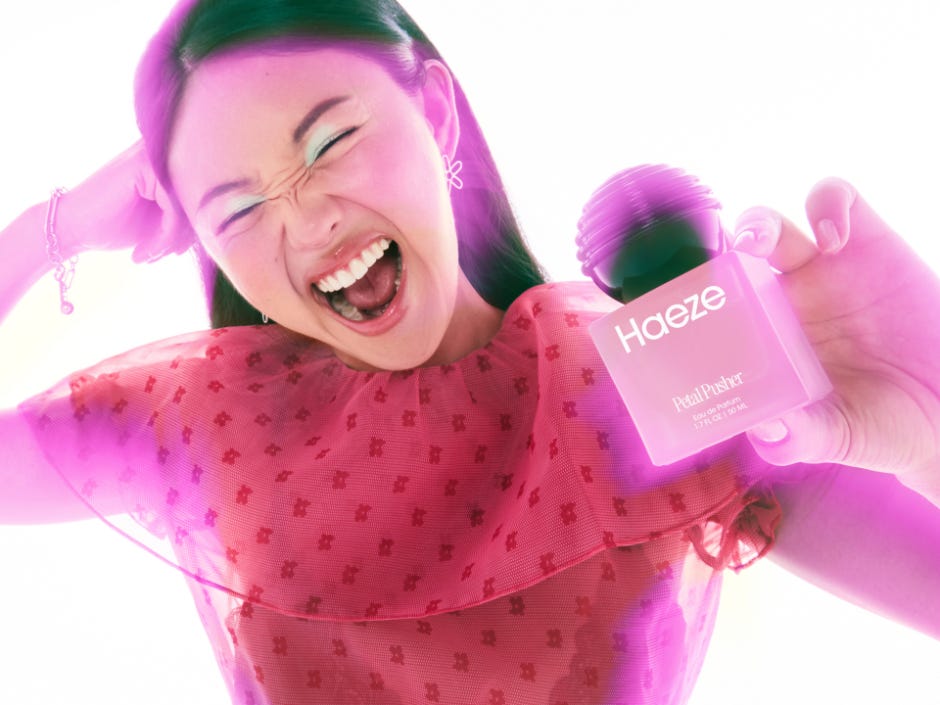
Target wants to own your scent. Haeze is launching exclusively at Target with five “layerable” fine fragrance scents priced $10–$49, co-developed by the retailer. Plans include expanding into home and laundry in 2027.
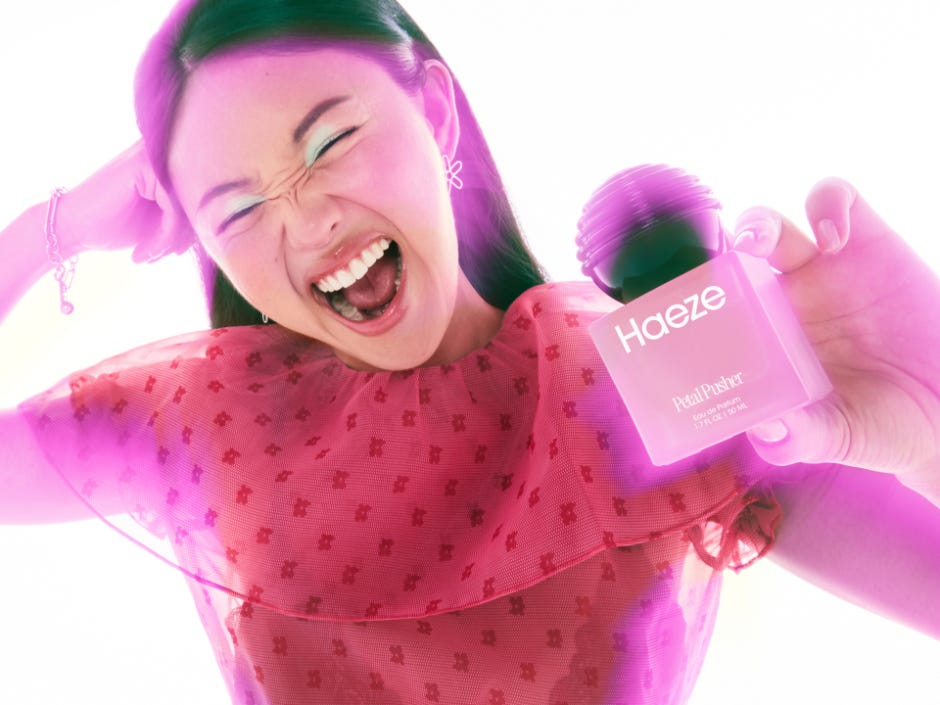
“Layerable” just means wearing two or more scents at once, so you build a “fragrance wardrobe” instead of one signature scent. Searches and social posts about it jumped 63.9% in 2025, and everyone’s on it: Bath & Body Works rolled out a Blend Bar, and Snif and Sol de Janeiro both launched layering bundles and solids. It’s also a very elegant way of saying “buy more than one” (hi, $20 five-mini Discovery Set 👀).
Target needs a beauty win. Ulta’s shop-in-shops left 600+ Target stores last year (we covered the breakup here), and fragrance is the fastest-growing beauty category in mass, up 15% in the first half of this year. An exclusive brand gives Target something you can’t price-match anywhere else, and with laundry and home next, one scent can pull you through three aisles (and basically own your lifestyle, not just your personal scent).
Uncrustables hits $1B and finally solves the thaw problem. J.M. Smucker launched a fridge-friendly Uncrustables that keeps for five days—no 30-minute thaw required. Smucker says 50% of non-buyers would be more likely to purchase, and 72% of existing fans would eat it more often.
Uncrustables is having a moment well beyond the lunchbox. The brand has been growing at a 20% compound annual rate and crossed $1B in annual sales this year, which is wild for a sandwich from the ’90s. There’s still room to grow, too: about half of consumers have never tried one. (Smucker also says impatient fans have been thawing them on car dashboards and by sitting on them… we have questions.)
And now everyone wants a bite. As we’ve spoken about before, PB&J wars go back to Smucker suing Chubby Snacks over lookalike packaging in 2024, and the field has only gotten more crowded since. Smucker sued Trader Joe’s over its “copycat” version last year. DropOut’s JAMS launched with 10g protein and no seed oils. And Welch’s, which owns the “J” after all, rolled out a Real PB&J at Walmart with 12g protein and 50% more sandwich.
An ingredient deck is easier to copy than a behavior change. Keeping the bread from going stale or soggy in the fridge took real R&D, and the BFY crowd now has to match it. RIP to the dashboard thaw. :’(
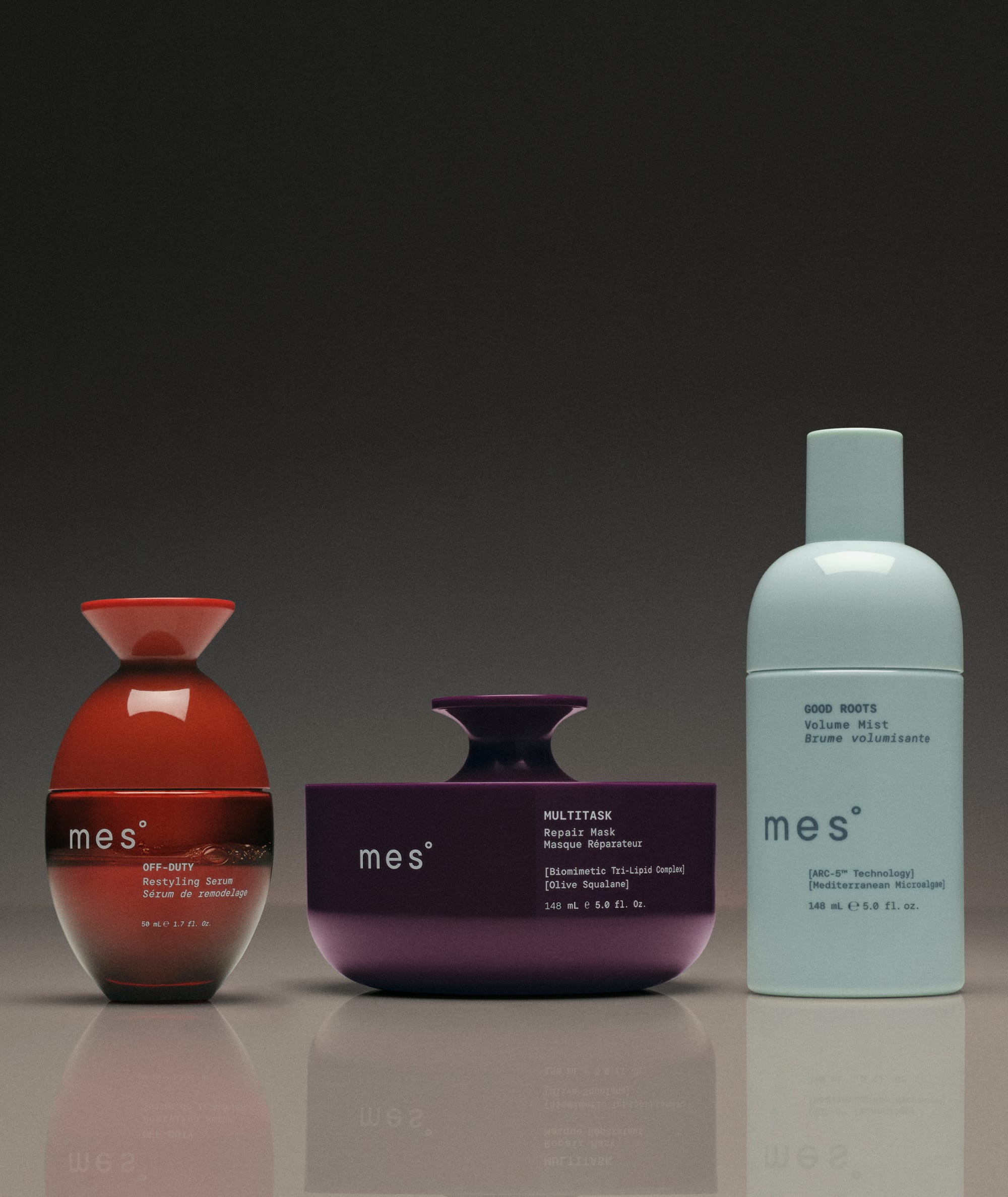
Celebrity hair care just got a biology degree. Jennifer Lawrence just launched her first brand, Mes° (pronounced “mess”), a prestige haircare line she co-created with Jasmina Aganovic, the MIT-trained engineer behind biotech beauty company Arcaea.
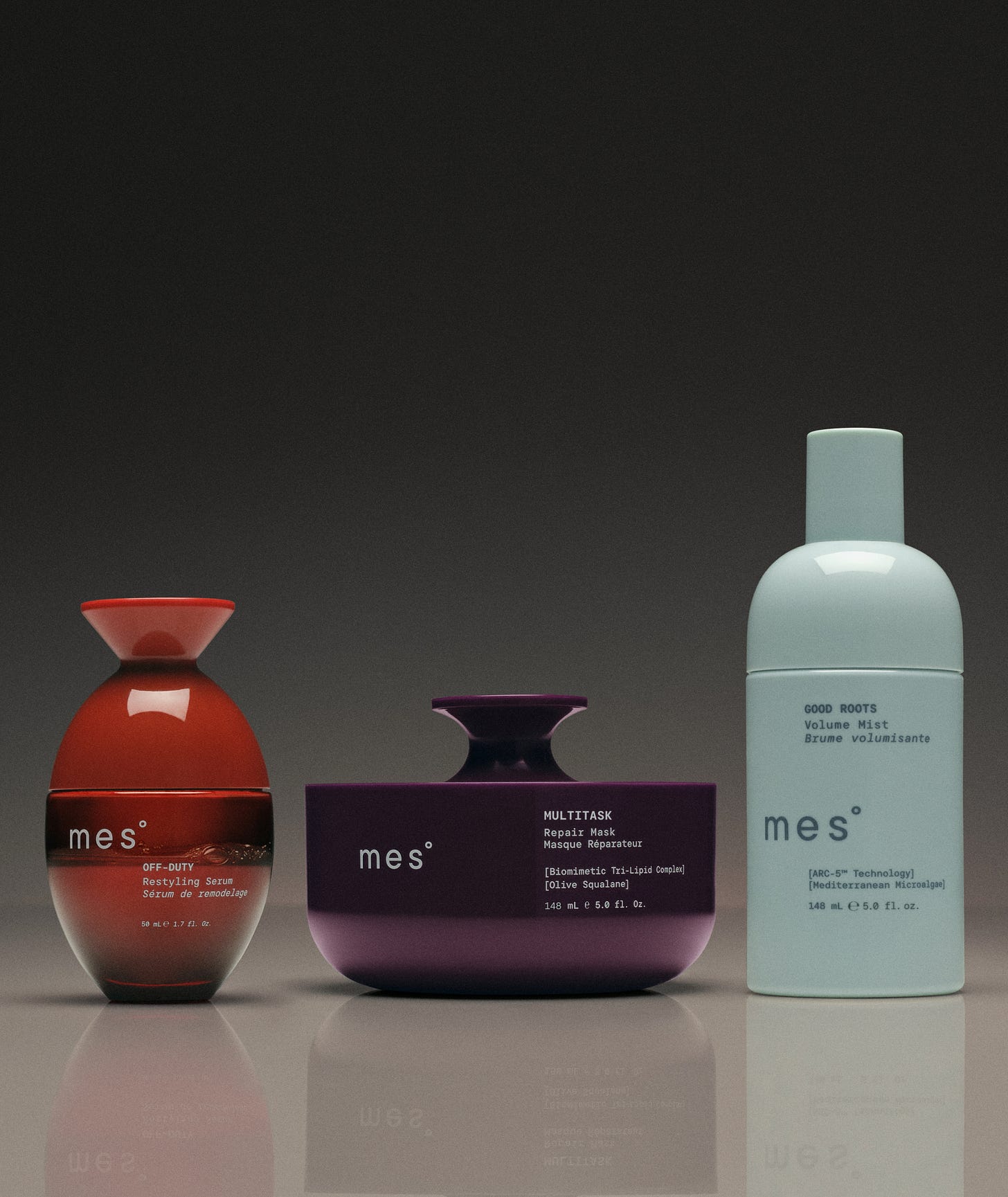
The story goes that Lawrence watched Aganovic’s TED Talk three years ago, asked for a meeting, and the two have been building the brand since then as 50-50 partners. It launched DTC-only and is all built around the idea of getting more days out of a wash and less time in front of the mirror. Lawrence also joined Instagram in September specifically to roll this out and had over 8 million followers by launch day. Not too shabby for some free brand awareness!
While other haircare leans “clean,” Mes° is leaning more “science-y.” Mes° is really leaning into its partnership with Arcaea and everything that they’ve built as a way to stand out from the slew of celebrity haircare brands on shelf.
There’s been a lot of discourse online about whether this brand will actually work, mostly centered around the celebrity brand playbook rather than the products themselves. One viral video pointed out that the whole ethos of the brand is embracing messiness and freedom from perfection, while in the same press cycle, Lawrence is walking through the cosmetic procedures she’s had done.
The controversy continued when consumers found Lawrence’s cover interview with The Cut, where she said she’d have “no clue what success numbers would look like” and whispered “I don’t know” when asked whether the company has investors. (Technically it does, since Arcaea is her partner in the business and has raised $78 million). When you position yourself as the one building the brand, and then admit ignorance to the press, it’s hard to maintain credibility. To her credit, though, Aganovic seems very well aware this rhetoric. She told Beauty Independent she was skeptical of partnering with a celebrity, and she told Glossy that “as wild as it is to say ‘building something with Jen,’ I don’t view it as a celebrity brand.” Luckily, early reviews of the products have been favorable, and Aganovic is a very legitimate founder running this company. This just goes to show the risks of celebrity brands….
Retail
Target is making grocery a destination. Target debuted a New York-inspired food market in the lower level of its SoHo concept store, swapping conventional dry goods aisles for freestanding display cases—part of a broader renovation that also added a snack bar, wellness section, and home decor area.
Every retailer wants in on beauty. Victoria’s Secret’s Pink launched The Pink Mini Bar, a beauty collection with 16 exclusive products from nine brands—including Vacation, Mario Badescu, and Fazit—available online and in US stores with dedicated beauty sections.
Pink’s spin is co-branding: all 16 products are exclusives in limited-edition Pink packaging. For indie brands like Vacation and Touchland, a non-beauty retailer with a young, loyal customer is a new discovery channel, without fighting for shelf space at Ulta.
Retailers on notice for price-gouging by algorithm. The FTC has ordered Target and Walmart—along with airlines, rideshares, and food delivery firms—to disclose how they use personal data to set prices, with 45 days to respond or face federal court.
Funding, Mergers, and Acquisitions
Add to cart: Instacart. DoorDash agreed to acquire Instacart for $17 billion ($65 a share), and plans to keep Instacart’s brand and app running. Don’t hold your breath, though: the deal still needs regulatory approval and isn’t expected to close until late 2027 or the first half of 2028.
We asked Eleanor Hayden, founder and CEO at Veriti (a shopper marketing and retail media agency for some of the coolest better-for-you brands), for her take:
“I don’t see DoorDash cutting the Instacart name. They’re two very different use cases for grocery: Instacart is the routine shopper doing a traditional grocery run, while DoorDash is the reactive shopper. Both brands are strong and cater to different people.”
The companies pitch it the same way: their joint release says families use Instacart for the big weekly shop and DoorDash for meals. The numbers back it up: DoorDash handled 993 million orders last quarter to Instacart’s 91.4 million, but Instacart moved $10.5 billion in order value on those far fewer orders (read: much bigger baskets). DoorDash has been creeping onto stock-up turf, though: in September, it landed its first nationwide Costco deal, a retailer that’s run delivery through Instacart for nearly a decade.
And Instacart isn’t selling from a weak spot. Last quarter its order value grew 15% and ad revenue grew 23% to $331 million, and its stock was up 25% this year when the deal was announced. Add DoorDash’s own ad business, which passed $1 billion in 2024, and brands are looking at one giant grocery ad platform. So your retail media budget is about to lose a line item, and the one that’s left probably won’t be any smaller 👀
Mondelēz found its next better-for-you bet. The Oreo maker took a majority stake in Undercover Snacks, the chocolate-covered quinoa crisp brand that’s currently sold in 25,000+ stores and on United Airlines flights. Founders Diana and Michael Levy will keep a significant minority stake and stay on to lead the business.
When you hear Mondelēz you probably think Oreo, Cadbury and Chips Ahoy. Right? But the company has been putting money behind better-for-you snacking, building a lineup that includes Perfect Snacks, Hu, and Clif bar. And this doesn’t include the brands they simply invested in through Snack Future Ventures rather than outright acquired. Undercover fits right into the “permissible indulgence” conversation we had last week on the podcast.
One of the biggest things that I (Nate) think helped this brand win is the United Airlines partnership. United handed out more than 175 million samples since 2023, putting Undercover in front of people who might never have picked it up in a store. And they weren’t just seeing the brand—they were actually trying it, for free, at 35,000 feet with little else to do. That kind of trial is hard to come by for an emerging snack brand and I’d bet it helped Undercover feel much bigger than its shelf space alone would suggest.
Two drinks, one tab. Quench Ventures announced $4.4 million in investments split between SipMARGS ($2.4M follow-on), the RTD sparkling margarita backed by Alix Earle that grew from 8 to 46 states via Sazerac in three months, and Kenetik ($2.0M new), a caffeine-free ketone drink moving from DTC into retail.
Influencer + tequila RTD is officially a genre. A few weeks ago, college-hoops-turned-twinfluencers Haley and Hanna Cavinder joined Azúcar Tequila as Creative Directors, and we noted it looked a lot like what Alix Earle did when she became SipMARGS’ largest individual investor as part of its $3M relaunch in March 2025. The real rocket fuel came this year, though: Sazerac took an equity stake and exclusive distribution rights in May, and per Quench’s announcement, SipMARGS went from 8 to 46 states in three months (the brand’s own number, and getting into stores isn’t the same as getting reordered). Alix gets people curious enough to grab a can, and Sazerac gets that can on shelves. And fun fact: Quench founder John Green was in that 2025 relaunch round too, so this is an OG backer doubling down.
Kenetik is the wilder bet. Ketones are the fuel your body makes when it burns fat instead of carbs (the whole reason people do keto), and Kenetik puts them in a can as caffeine-free energy and focus, with no added sugar. Until now, ketone drinks have mostly lived online with the biohacker and intermittent-fasting crowd. And retail is a much tougher room: a shopper has about three seconds at the shelf to figure out what a ketone is and why they’d want one. Meanwhile, caffeine keeps finding new ways into our bodies (lip pouches are now a thing!), so Kenetik is betting there’s a crowd that wants the lift minus the jitters.
If you haven’t yet, please subscribe, like, leave a comment, and share! It helps us continue to bring you the most interesting news + nuance in consumer and retail every week.
First comes the great granola boom. Then the cereal.