



Hello hello!
If you happen to be in London June 3-5… we are incredibly jealous. Because our friends at Wayflyer are putting on what will likely be the event of the summer.
It’s three days, featuring the founders behind some of the UK’s best consumer brands like SURI (a fave interviewee on The Curious Consumer) and Trip (the magnesium drink that inspired this newsletter), talking about what’s worked and what hasn’t. With panels ranging from “Understanding the Modern Female Wellness Consumer” to “What Creator-Led Brands Know That Traditional Founders Don’t” there’s something for everyone to learn at this iconic summit.
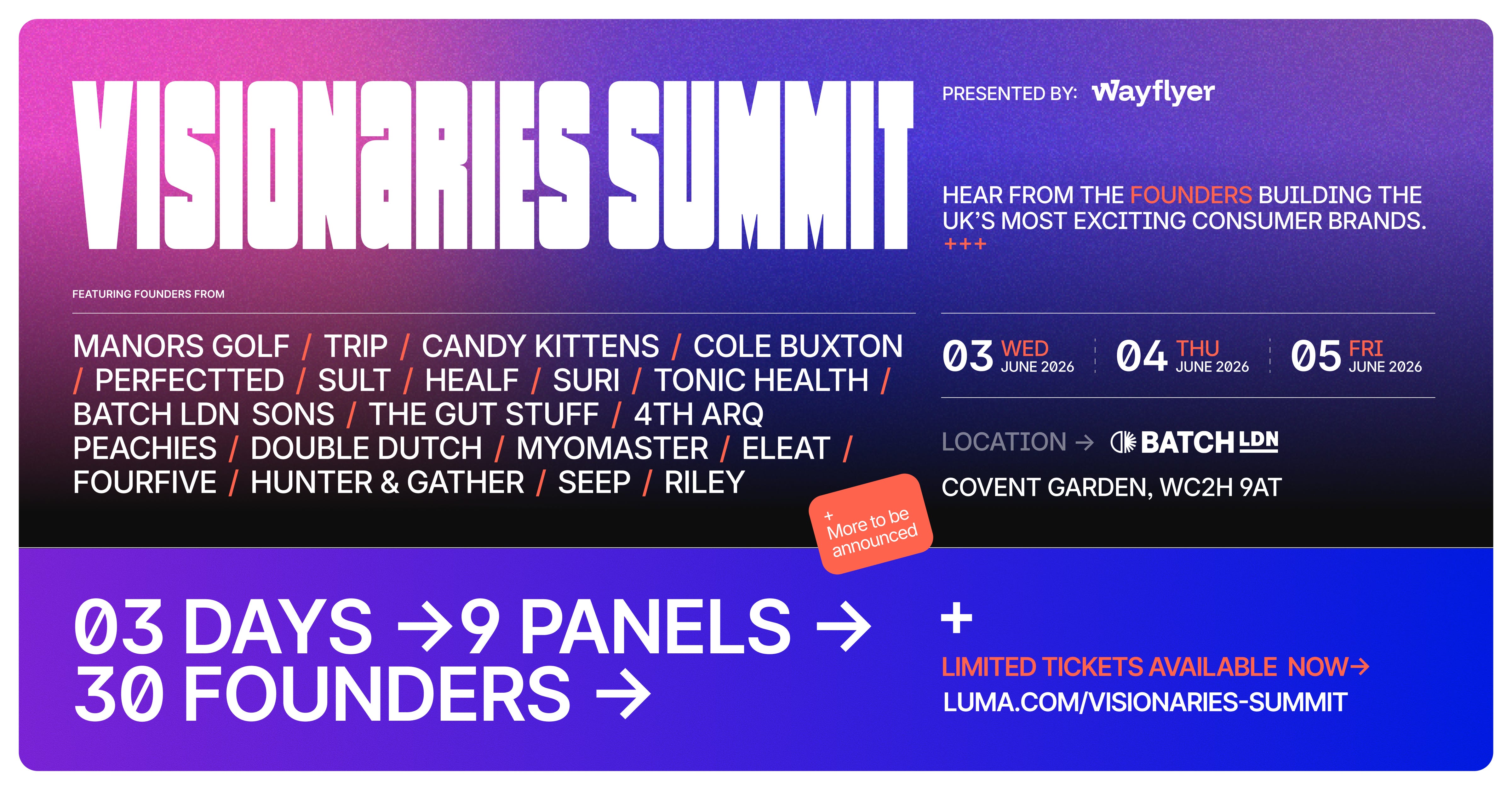
If you’re in London… you need to go. Your attendance is the only cure for our rampant FOMO.
We can’t wait for the event to come to New York later this year—who wants to in?
CPG & Consumer Goods
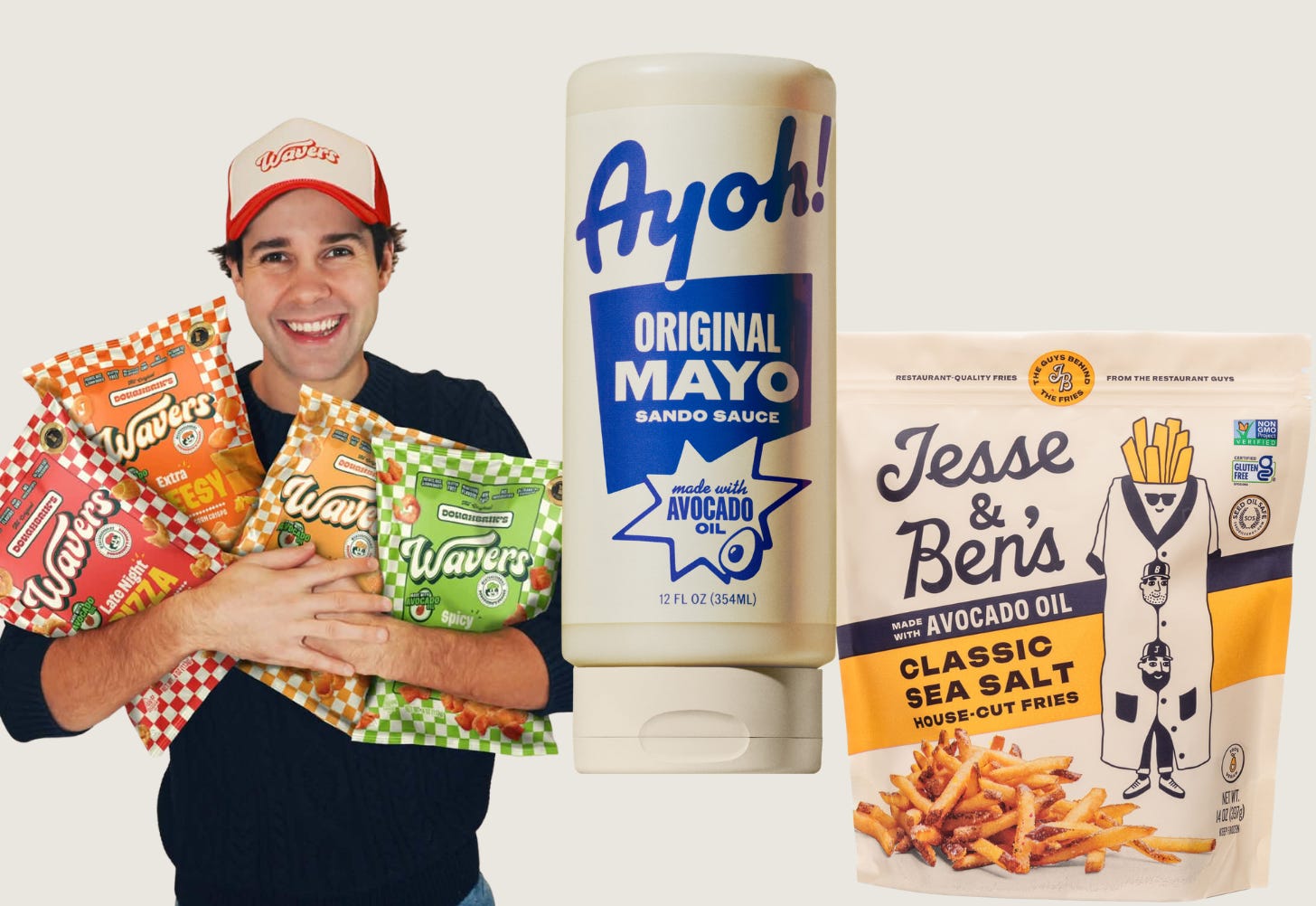
CPG is officially in its avocado oil era. What was a fringe wellness obsession two years ago is now a packaging callout, a funding thesis, and—increasingly—a retail requirement.
Ayoh, Molly Baz’s flavored mayo brand, reformulated its full lineup, swapping high-oleic sunflower oil for avocado oil. The new formula rolls out to 4,000+ doors (Whole Foods, Target, Sprouts) this month.
Per Ayoh’s CEO David McCormick (via Modern Retail), avocado oil is two to three times more expensive than the high-oleic sunflower oil Ayoh was using. For SKUs with high oil concentrations—like the plain mayo—COGs jumped 50% on the oil swap alone. Ayoh chose to absorb the hit rather than raise its $8.99 shelf price, betting that premium positioning + flavor improvement + the seed-oil-free callout justifies the margin compression.
McCormick framed it as a flavor decision first (”creamier texture, more neutral base”), but also acknowledged that retail buyers were asking for a seed-oil-free version. And when buyers start asking, reformulating stops being a brand-values move and starts being a shelf-survival move.
Jesse & Ben’s, the seed-oil-free frozen french fry brand (with avocado oil and a beef tallow SKUs), closed a $10M Series A led by Greycroft after posting 1,100%+ growth in 2025 and becoming the #1 frozen potato brand at multiple retailers.
Doughbrik’s WAVERS, David Dobrik’s snack brand, relaunched domestically with a fully reimagined formula made with avocado oil, no seed oils, and a redesigned package that puts “made with avocado oil” on the front.
… and, despite what you may or may not feel about seed oils (we think the whole thing is a tad overblown, but alas) the data supports these reformulations:
The Seed Oil Free Alliance launched a Seed Oil Free Certified® seal that requires lab testing for “adulteration,” which is common in avocado oil. SPINS reported that sales of Seed Oil Free Alliance–certified products rose 216% YoY in Q1 2025.
A Cleveland Clinic–adjacent survey put the share of US consumers actively avoiding seed oils at 28%.
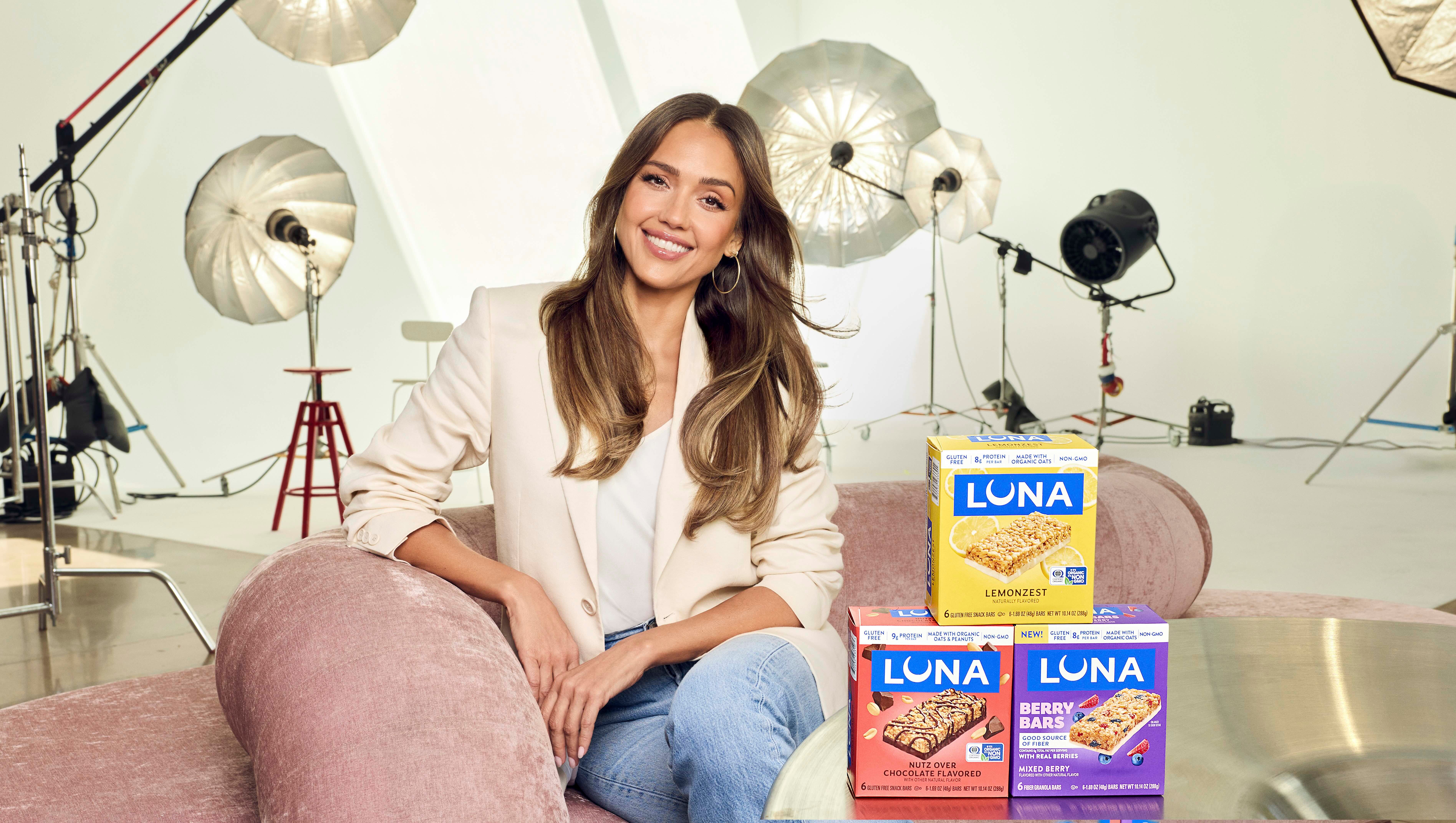
The battle for bar relevance. Luna Bar launched “Easy to Love,” its first major creative campaign in seven years, featuring Jessica Alba as inaugural brand ambassador. The effort spans TikTok, Meta, and national retail display ads, timed to the debut of new Berry Bars—the brand’s first bar innovation in six years.
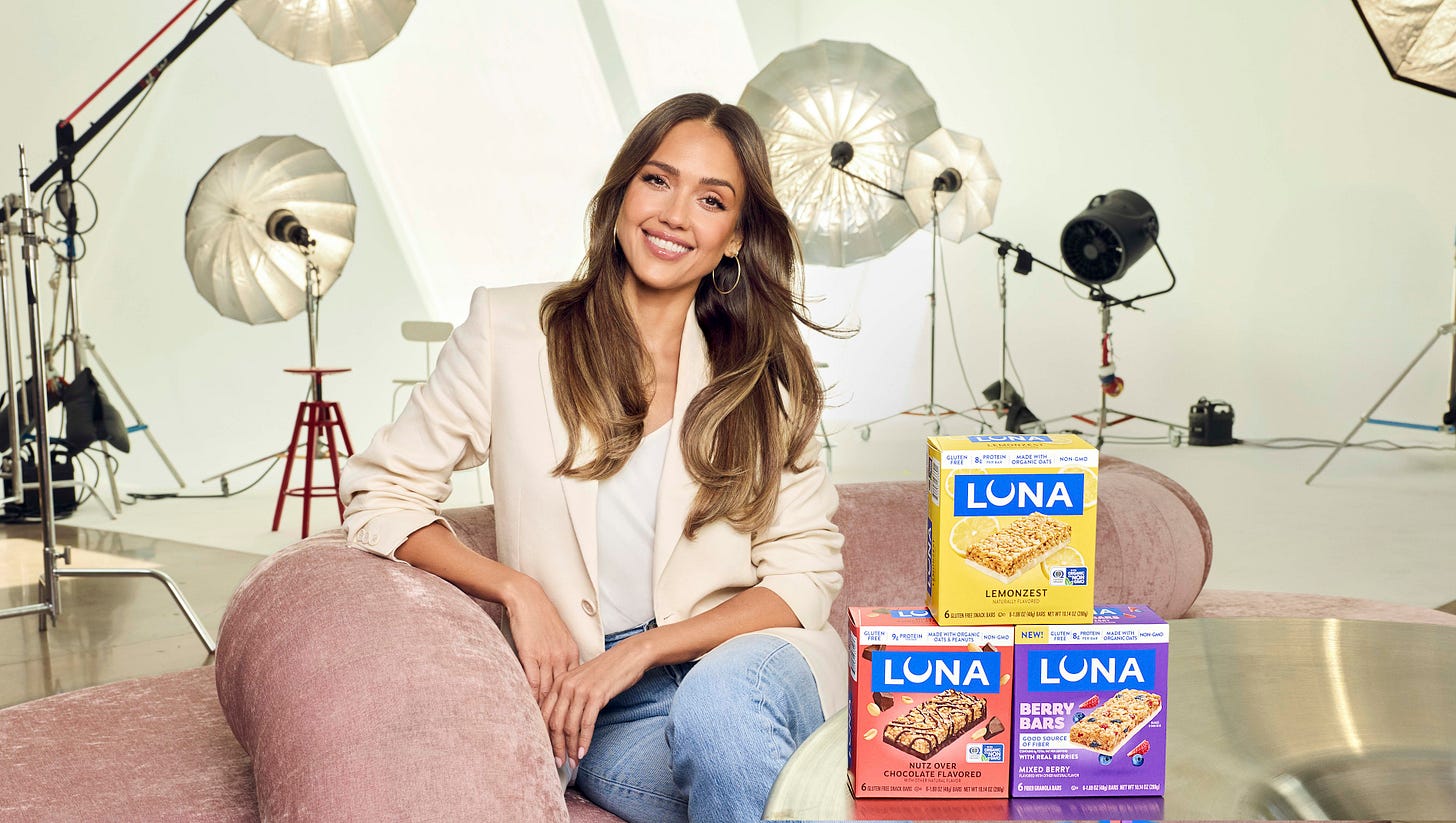
We don’t usually cover marketing campaigns, but Luna is a name we genuinely haven’t heard in years, and the relaunch is worth unpacking. If you didn’t have an Almond Mom in the early 2000s, here’s the lore: Luna was widely considered the first nutrition bar designed specifically for women, launched by Clif Bar in 1999 with sub-200-calorie portions and added iron, calcium, and folic acid. It was ahead of its time on both formulation and positioning—female-targeted bars weren’t really a category yet. Within a year of launch, Luna became the #1 energy bar in natural foods stores with 17% market share, beating out parent brand Clif Bar (13%) and every other competitor in a category with 700+ products.
Then Luna got stuck. The bar space exploded with higher-protein, cleaner-ingredient entrants (RXBar, Perfect Bar, Quest, etc.), and Luna’s soy-protein-isolate-and-rice-syrup formula started reading less “for women” and more “for women who haven’t updated their pantry since 2008.” A persistent internet rumor that the bars contained added estrogen (they didn’t—it was soy protein) didn’t help. Clif was acquired by Mondelez in 2022, and Luna has been quiet ever since. It survived on legacy distribution and the loyalty of customers who'd been buying LemonZest since college, but as a cultural force, it was effectively dormant.
So why the comeback now? First, the bar category is bigger and more lucrative than it's ever been (David, Built, Aloha, GoMacro all hitting peak relevance), and a name with Luna's brand equity is too valuable to leave sitting. Plus, the conditions are finally right: women-targeted CPG is no longer a fringe positioning bet, it's the dominant thesis driving growth across food and beverage (see: Olipop, Poppi, Gorgie, Bloom…). Luna invented this lane 26 years ago… it’d be borderline negligent not to try to reclaim it.
And re: the Jessica Alba of it all… she’s the perfect mix of millennial nostalgia and the current clean-CPG-founder archetype (her Honest Company era). Luna is demonstrating that it wants to be taken seriously as a wellness brand again rather than a relic of low-cal nutrition. The harder question is whether a refreshed berry bar can hold its own next to 20g-protein candy bars.
Another. Celebrity. Wellness. Brand. Carrie Underwood, the iconic country music star, launched HiNote, a women’s wellness brand, with a debut nutrition drink mix featuring 20g protein, 5g fiber, and no added sugar or caffeine. Her fit52 app is also rebranding as HiNote Life.
HiNote joins an increasingly crowded roster: Kylie Jenner’s k20, Alex Cooper’s Unwell (which now comes in stick packs too), Amanda Kloots’ Proper, David Beckham’s IM8, and Ian Somerhalder and Nikki Reed’s The Absorption Company, just to name a few. And this doesn’t include the countless wellness brands (especially drink mixes) that are endorsed by celebrities and influencers. The pattern is the same every time: a recognizable face and the implicit promise that drinking this is part of becoming a certain kind of person, and gaining access to their lifestyle.
The HiNote product itself, though, does feel different than a lot of other nutritional drink mixes on the market: It’s merging multiple different products in one to be a true supplement to someones diet. It’s a protein drink, fiber supplement, greens powder, and collagen supplement all in one—but it (cleverly) isn’t positioned as a meal replacement. Assuming this doesn’t become another celebrity’s forgotten brand, this product might have legs.
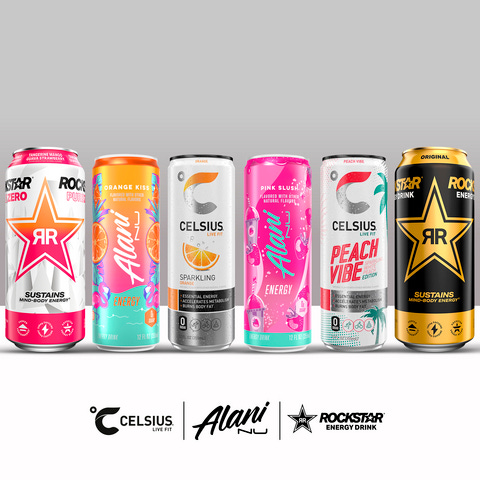
One in five energy drinks is now a Celsius Holdings product. Despite all the new players in energy, Celsius’ growth remains strong. Celsius Holdings reported $782.6 million in Q1 2026 revenue—up 138% year over year—after its $1.8 billion Alani Nu acquisition and Rockstar pickup from PepsiCo gave it ~20.9% dollar share of the US energy drink category.
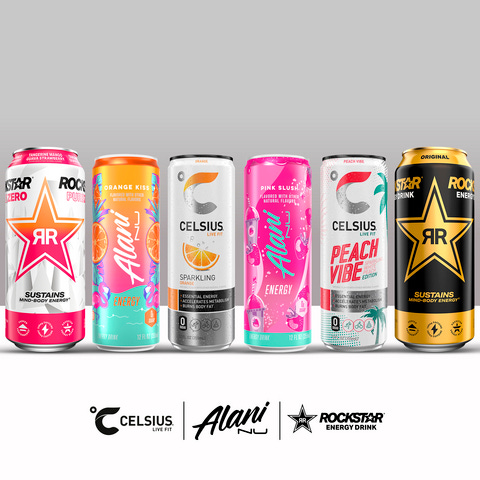
We’ve said it before and we’ll say it again: energy drinks are for the girls. Celsius and Alani Nu—now under one roof—are two of the most explicitly female-coded energy brands on shelf, with branding, flavor profiles, and influencer ecosystems built for the Pilates-and-pre-workout crowd. Together they’ve effectively built a parallel energy category that doesn’t look anything like the Monster/Red Bull aesthetic that defined the space for two decades.
The legacy energy playbook—extreme sports, neon, masculine bravado—missed an enormous portion of the population. Celsius read that white space early, leaned into a wellness positioning (the “burns body fat” claim, the cleaner ingredient deck), and rode the female-focused functional beverage wave that Poppi, Gorgie, and Bloom have all since validated. The Alani acquisition was essentially Celsius consolidating its own category.
And while Celsius takes over the US, Monster takes over the world. Monster Beverage reported Q1 sales of $2.35 billion, up nearly 27%, with international revenue topping $1 billion—up 45%—now 45% of total sales, led by affordability brands Predator and Fury in emerging markets.
Kid’s deserve fun new brands too! NoBiggie, a new kids’ sparkling drink brand from former Glossier CMO Ali Weiss and Vita Coco veteran Aytunc Atabek, launched with four flavors containing up to 5g of natural sugar and no artificial sweeteners or dyes.
The better-for-you kids beverage space is heating up fast. NoBiggie will compete with Wave Kids, Roxberry, Caliwater’s new kids electrolyte line, and Capri Sun Hydrate (which is, you guessed it, regular Capri Sun with electrolytes). And it’s not just beverages—the better-for-you kids category is exploding across supplements, milk, and snacks. The same upgrades adults have been getting for years are finally trickling down to the lunchbox.
What’s most interesting about NoBiggie specifically is the format. Sparkling drinks have historically been adult territory, but the cultural cachet of brands like Poppi has rewired how kids think about soda. When the cool older kids are wearing Poppi merch and drinking prebiotic soda at lunch, sparkling becomes aspirational for the under-12 set in a way it wasn’t a few years ago. NoBiggie is betting that the next generation of soda drinkers wants bubbles, fun branding, and parental sign-off—all in the same can.
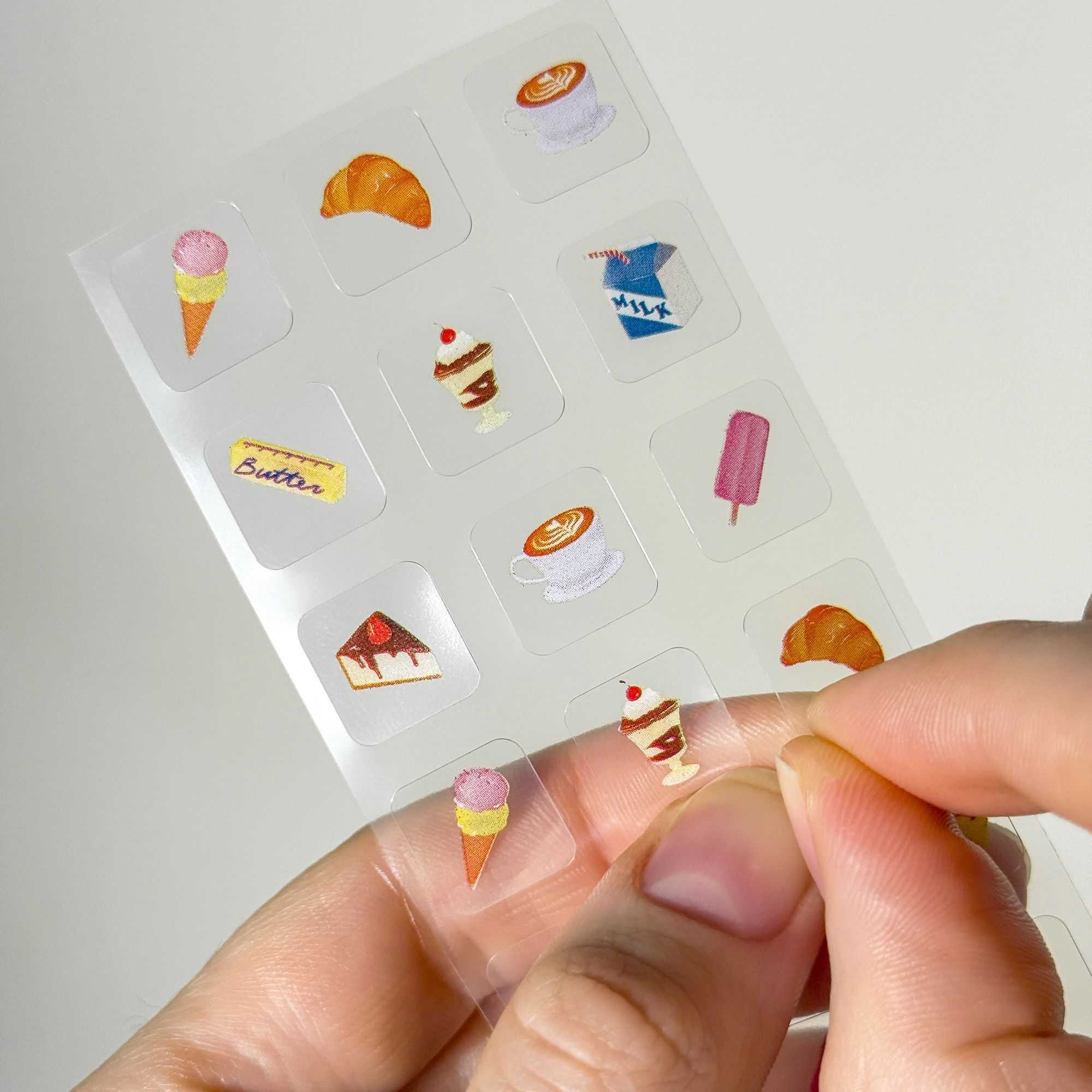
A sticker for your tummy troubles. Barrière is launching Dear Dairy (fantastic name), the world’s first lactose intolerance patch—$13 for 36 patches, using 2.5mg lactase enzyme delivered transdermally. It launches at Walmart and DTC, with the brand projecting ~$1 million in sales through end of 2026. Barriere already offers a line of transdermal stickers, from Vitamin D and Vitamin B12 patches to a “beauty” patch with biotin.
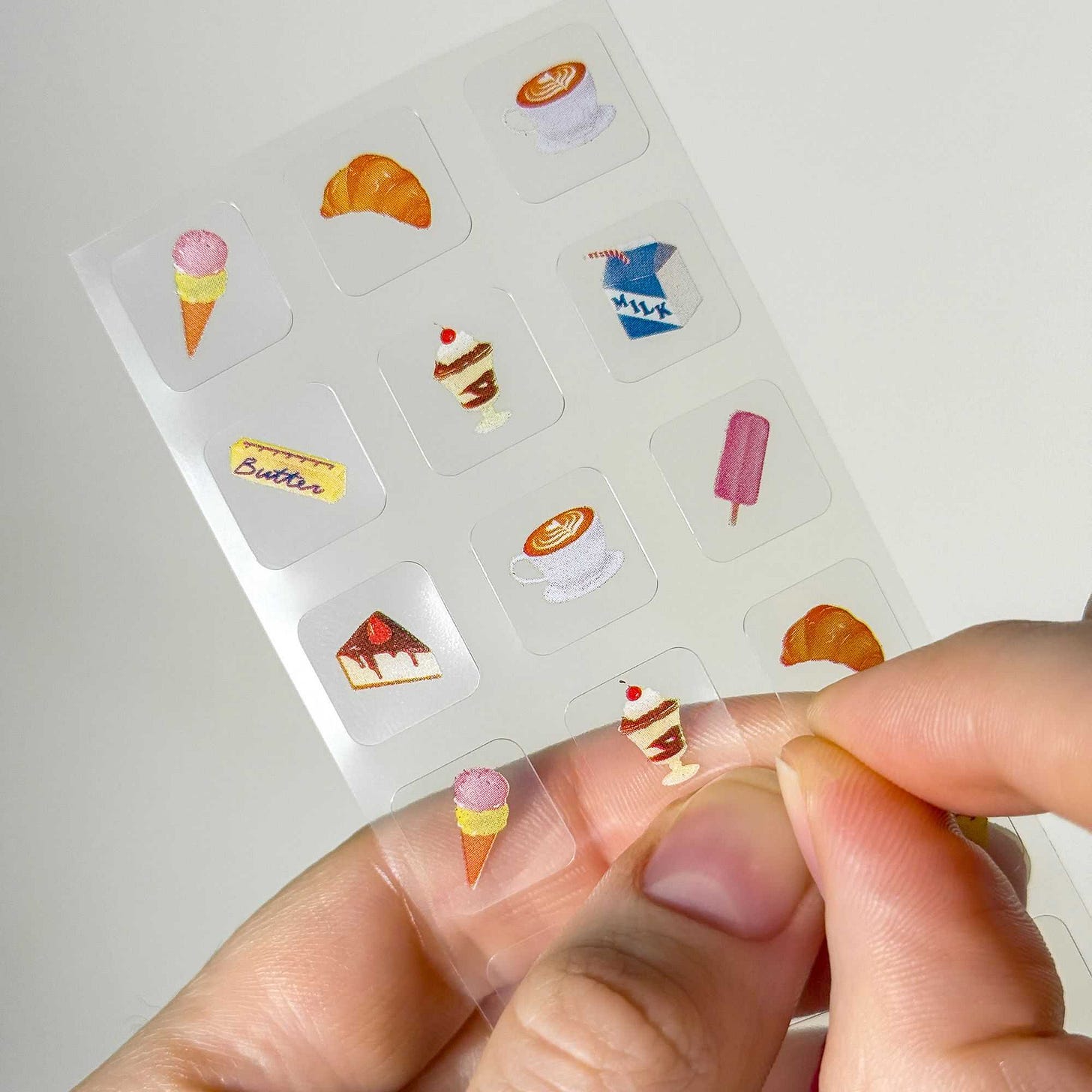
Yes, this is what one of the patch sheets looks like! My prediction for the next supplement deliverable: Gummies are dead, patches are in. Patches are alllll the rage right now, with brands like Kind Patches and The Good Patch delivering supplement patches (particularly NAD+ patches—we’ll get into this buzzy supplement at another time…) and reminding consumers that transdermal delivery is an option—and one that feels, perhaps, more chic than swallowing a pill.
While putting a sticker on yourself was likely seen as an adult faux pas just a few years ago, the popularity of pimple patches has made it socially acceptable to show up to a function with a sticker on your face. After all, wellness is performative. No one can see you taking your pills or applying your creams, but your lifestyle aspirations can clearly be revealed with a simple sticker. - Jenna
Cold-pressed goes public. Suja Life, the beverage company known for its organic, cold-pressed juices and functional wellness shots, raised $187 million in its IPO, selling 8.9 million shares at $21 each—toward the lower end of its target range.
Suja Life was founded in 2012, when wellness shots and juice cleanses were at their peak. The brand basically started the cold-pressed juice trend
Suja is now a house of brands, with Suja Organic (flagship juice; the #1 brand in cold-pressed juice category), Vive Organic (doctor-crafted wellness shots), and the revived Slice (prebiotic soda). All production was brought in-house, with an in-house innovation engine that allows them to go from concept → product quickly. When they bought the dormant Slice trademark, for instance, they were able to bring a better-for-you soda to market in just 9 months.
But the IPO reception was (clearly) rough. SUJA opened at $18—down 15% from its IPO price—and closed its first day at $17.85. Suja is unprofitable, posting a $23.3M net loss on $326.6M in revenue last year, and 76% of the proceeds ($141.3M) are earmarked for debt repayment rather than growth. This feels a little less “ready to be public” and more “PE owner needed a partial exit.”
That doesn’t mean CPG IPOs can’t work, though: Contrast that with Once Upon a Farm, which IPO’d three months ago and popped 17% on day one. Both companies were unprofitable at IPO, but Once Upon a Farm had narrowing losses, 66% sales growth and a path to profitability, and a clear founder-led story. Suja had widening losses, slower growth, and a balance-sheet cleanup framed as a growth story, and evidently, public investors noticed.
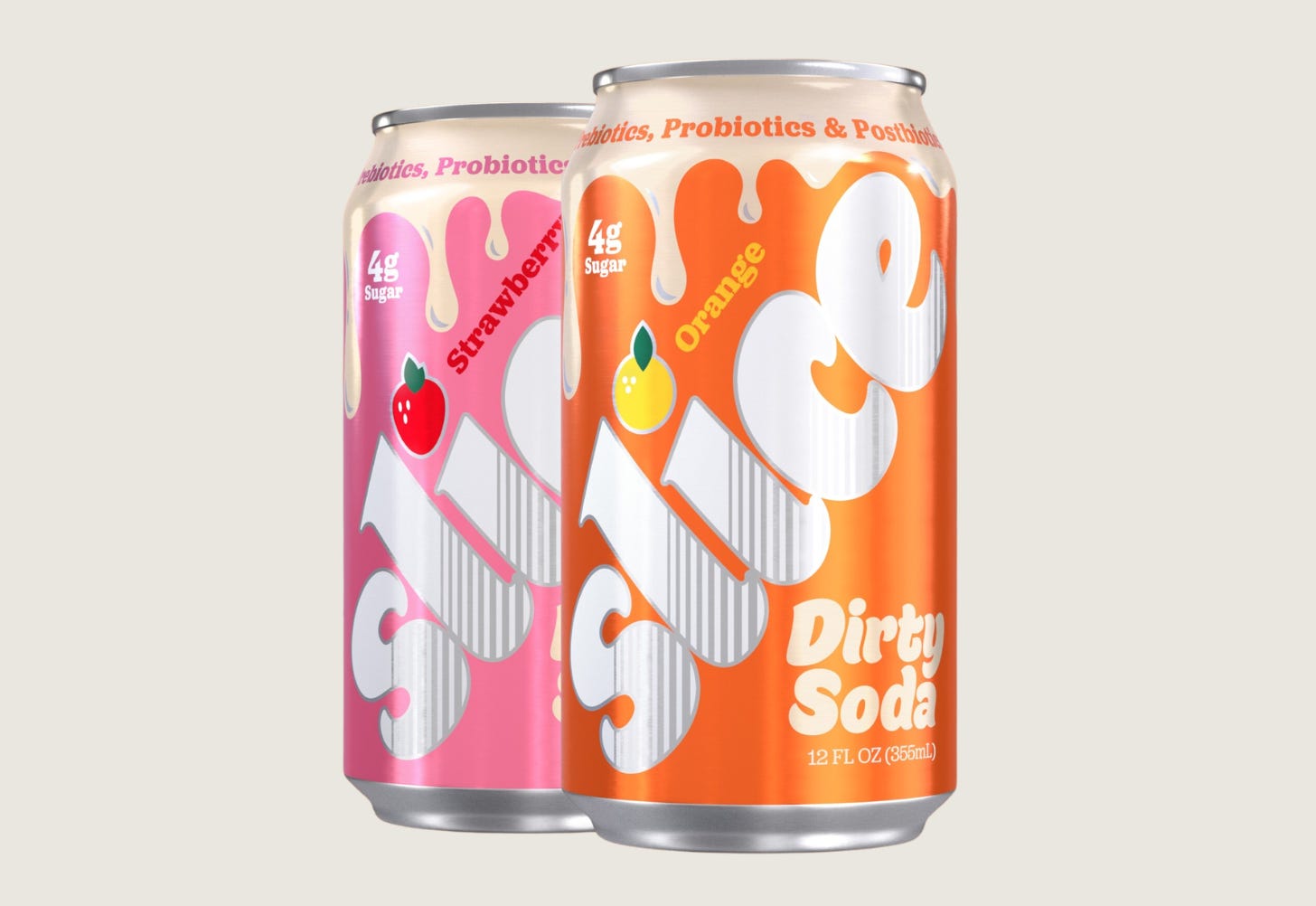
From soda shop to can. Slice Soda (a Suja Life portfolio brand) launched its first ready-to-drink dirty soda—Dirty Orange and Dirty Strawberry—now at Target nationwide. The cans use coconut-derived MCT oil for creaminess instead of artificial cream flavoring other brands use, with 4 grams of sugar and a prebiotic/probiotic/postbiotic blend.
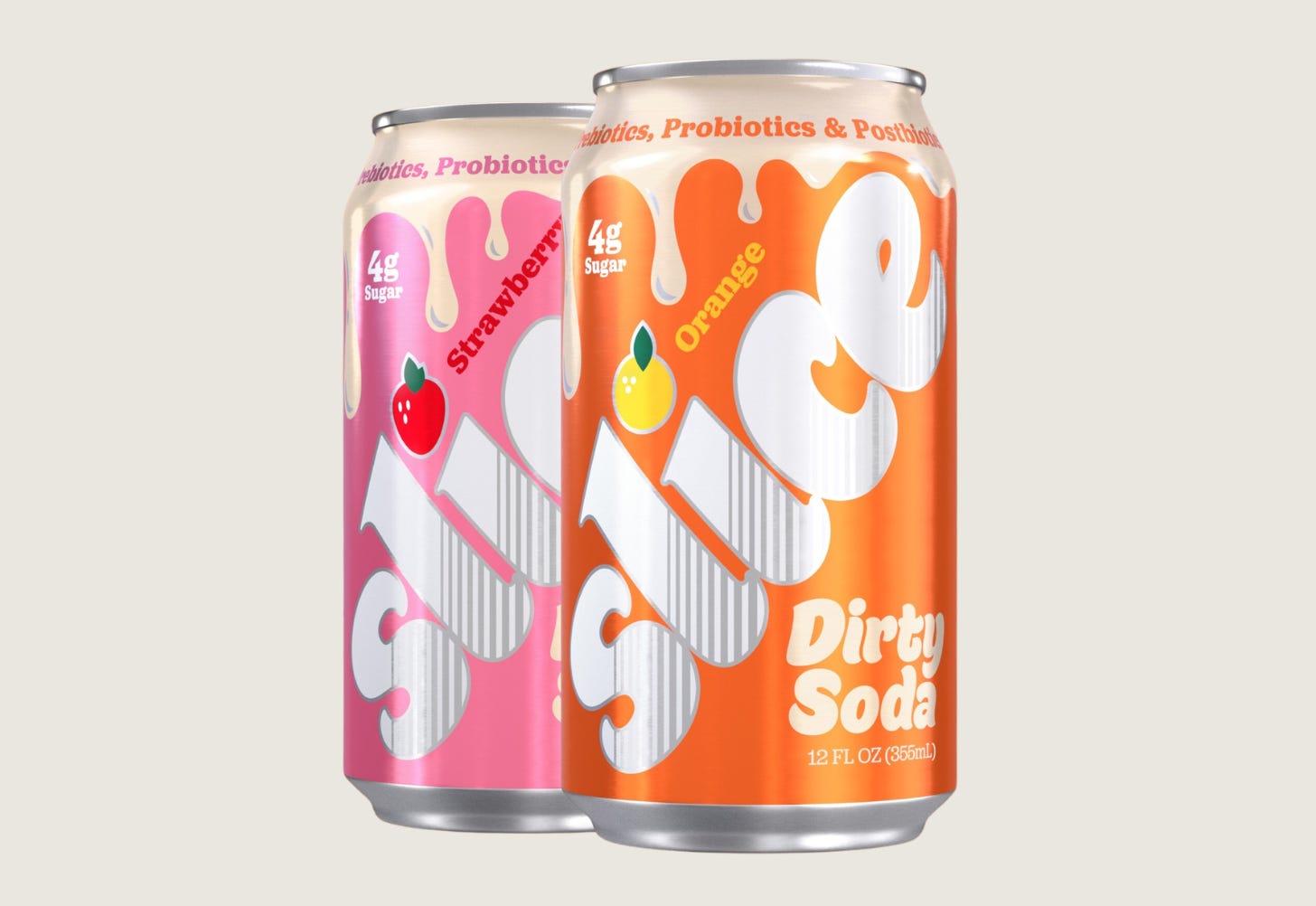
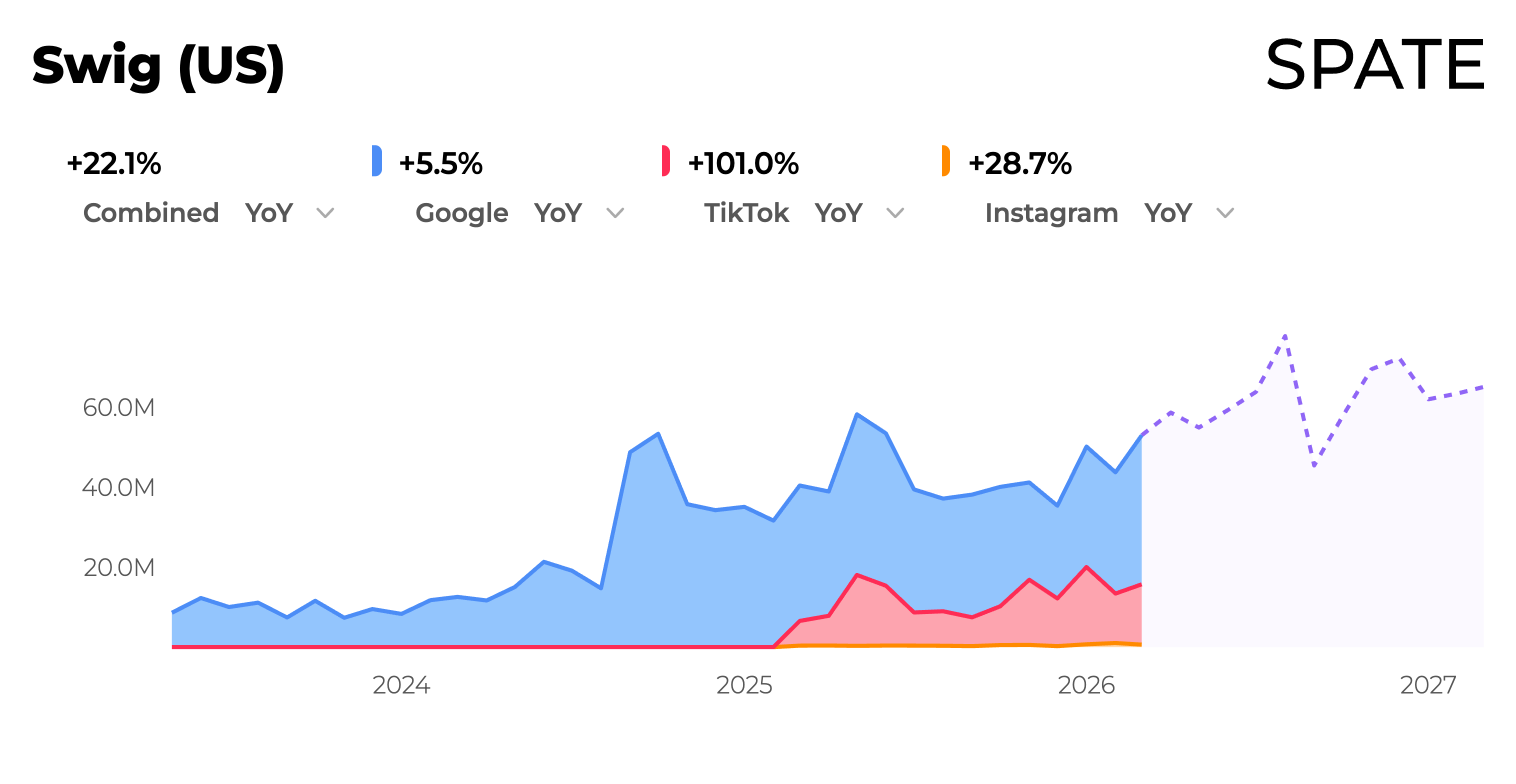
For those who don’t know: the dirty soda trend commercially started in the Mormon community with the chain Swig back in 2010 and quickly gained a fast following across the state. Sixteen years later, with help from The Secret Lives of Mormon Wives popularizing the “dirty soda” trend and the subsequent explosion on TikTok, and Swig now operates across 16 states with plans for roughly 500 locations over the next five years.
Side note: Do we need to do a piece on how Mormon culture is shaping CPG? Between dirty soda and Ballerina Farms/Nara Smith, we’re seeing so many innovations revolving around this community.
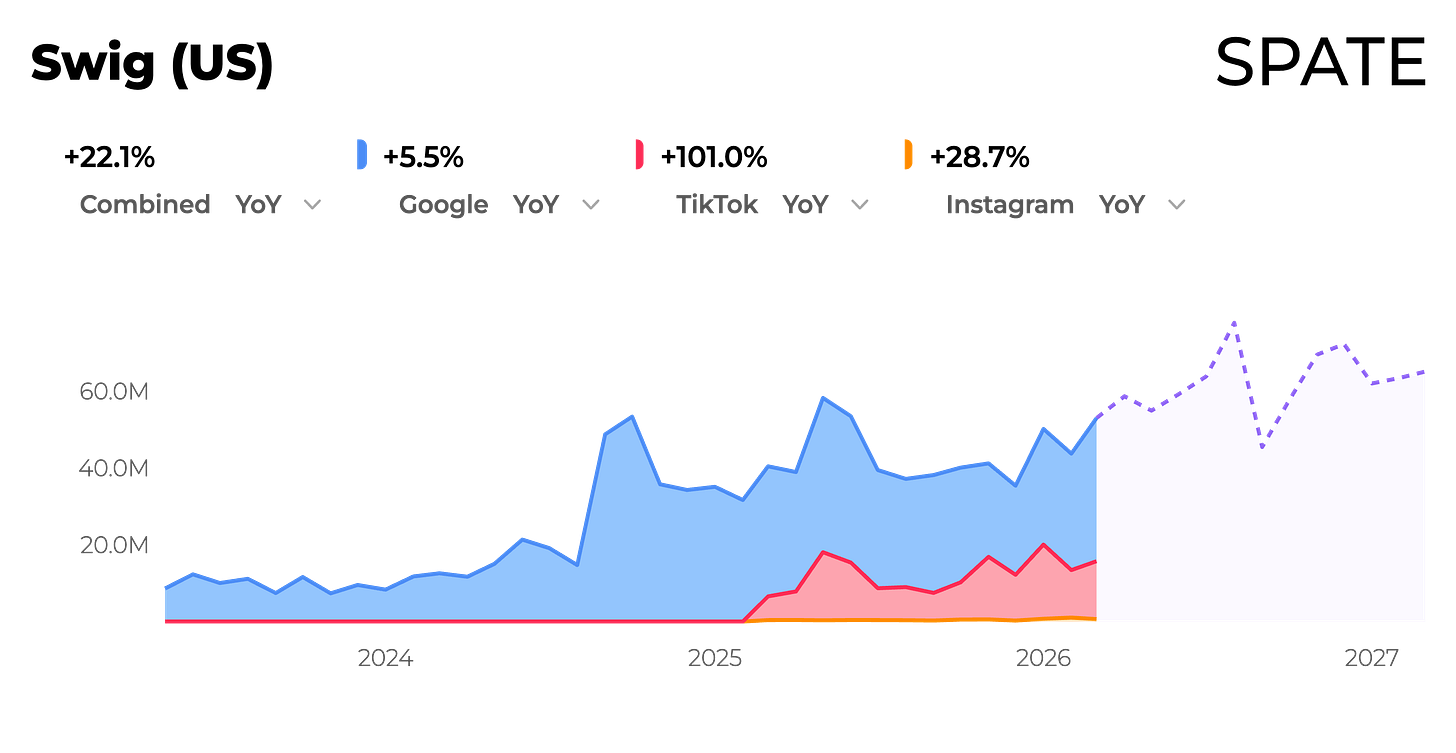
It’s popular to say the least…. (Source: Spate.nyc)
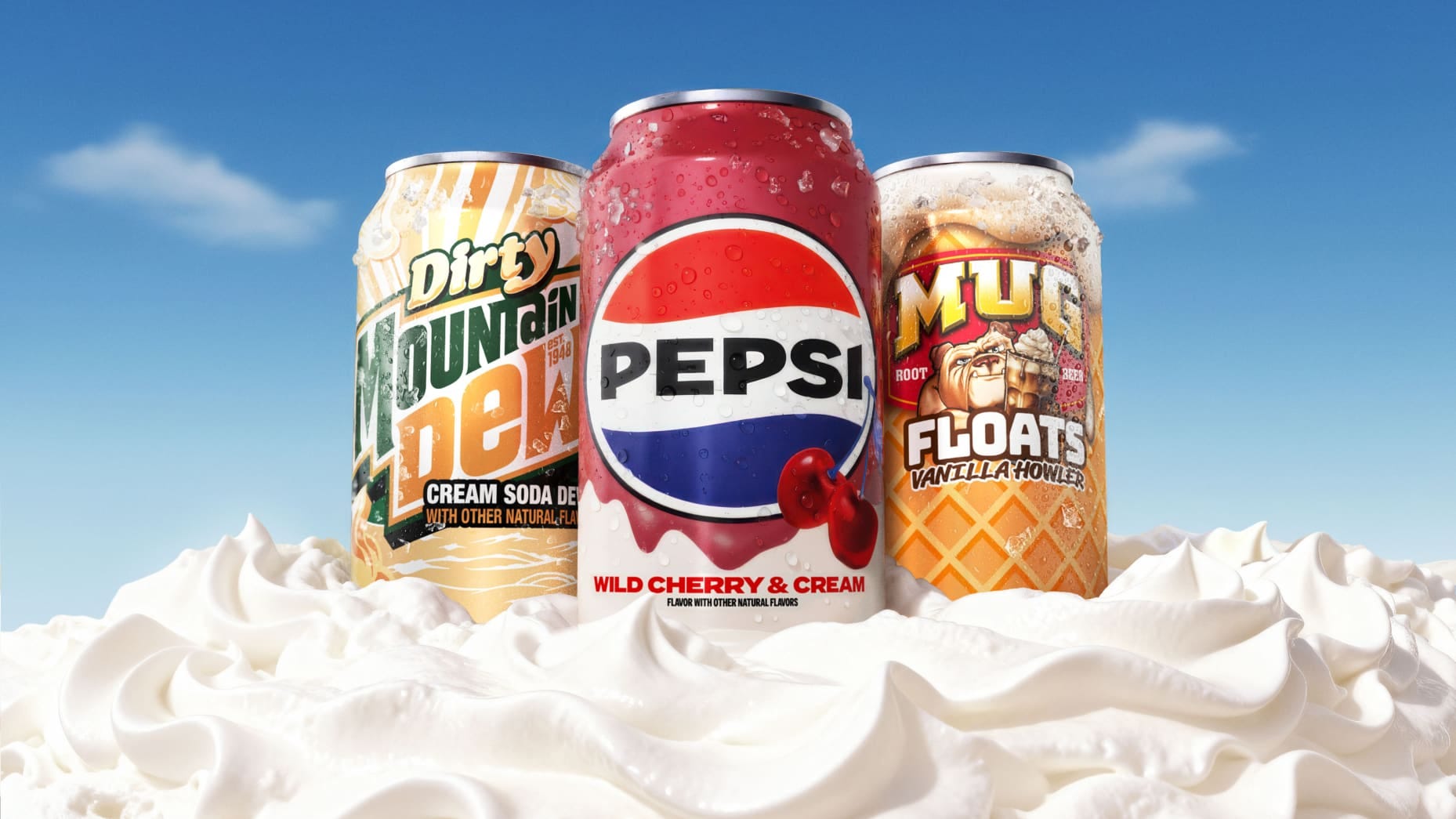
Fast food chains have also hopped in on the trend. McDonald’s, Chick-fil-A, Taco Bell, and even Dunkin’ all have their own versions of “dirty soda”—and Big CPG already saw this trend coming: PepsiCo was early to the game, launching the Dirty Mountain Dew line last month, Coca-Cola launched the Coca-Cola Cherry Float (technically just a vanilla flavor with no real cream/fat component), and CoffeeMate launched Dirty Soda Creamers (Coconut Lime made for Dr Pepper, and Orange Creme Pop made for Crush).
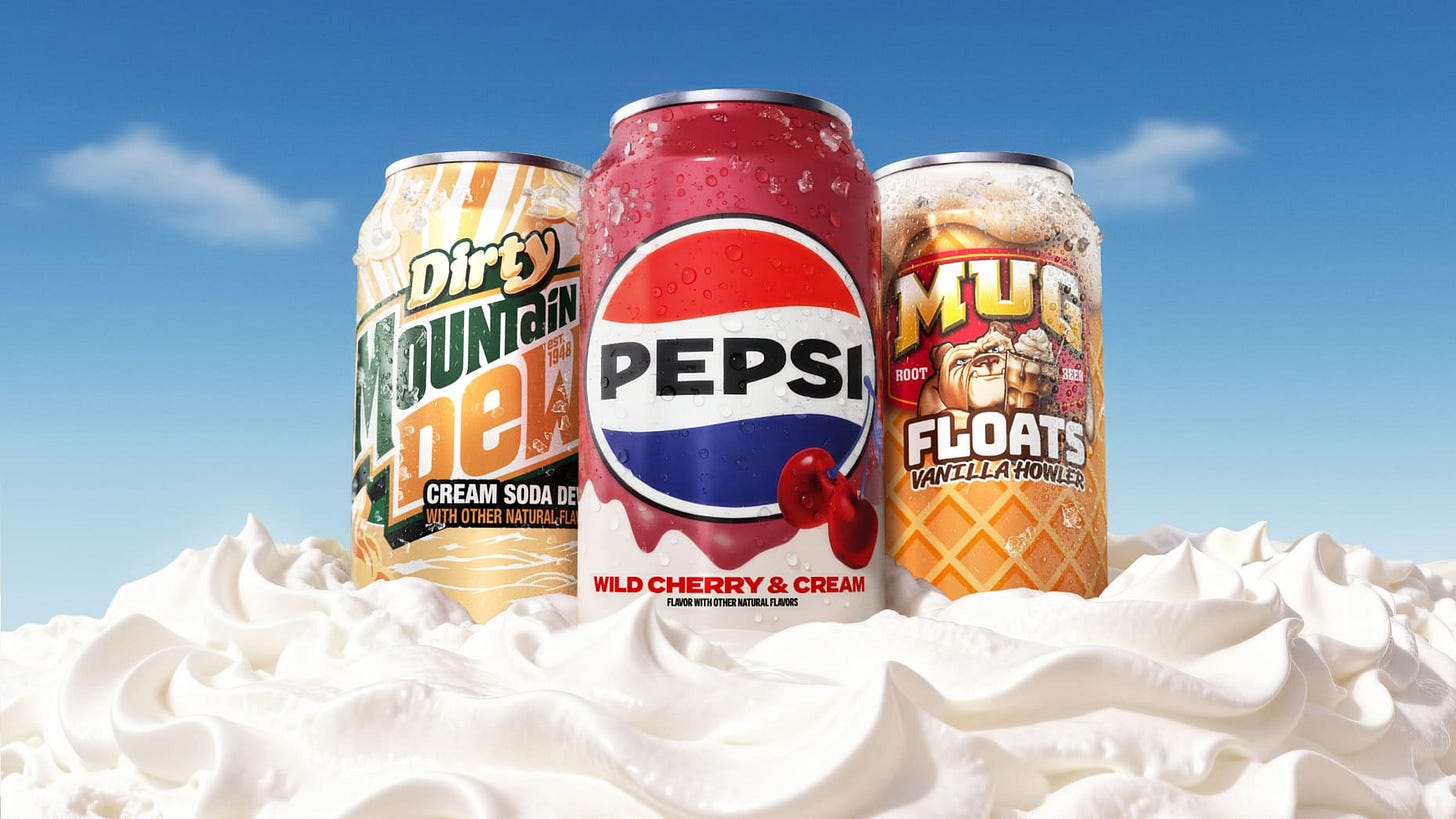
Source: PepsiCo In the increasingly crowded modern soda category, Poppi, OLIPOP, Culture Pop, and more (preferably without “Pop” in their names…) are competing on the same prebiotic-functional-better-for-you axis. So instead of trying to out-functional the category leaders, Slice is leaning into the cultural moment with an entirely new line extension, featuring a quality layer (MCT oil instead of synthetic cream, low sugar, gut blend). It’s also a flex of Suja Life’s vertically integrated innovation engine—Suja has consistently gotten products from concept to shelf in under a year, a timeline most CPG brands physically can’t match.
eCommerce
DK-beauty is taking over TikTok. TikTok Shop generated nearly $1 billion ($928.5 million to be exact) in U.S. beauty sales in Q1 2026, a 96% jump year-over-year, putting it on pace to exceed $4 billion annually. K-Beauty brands Dr. Melaxin ($46.3M) and Medicube ($44.3M) led the platform.
Retail
Temu wants to be your…. butcher? Temu is expanding into food and grocery via U.S.-based sellers, adding 700+ categories including frozen steaks and pantry staples—a pivot away from its direct-from-China roots after the de minimis exemption was closed.
Temu’s entire value proposition was direct-from-China factory pricing made possible by the de minimis loophole (which let packages under $800 enter the US duty-free). When the Trump administration closed that loophole in 2025, Temu’s cost advantage essentially evaporated overnight. Around the time of the loophole closing, Temu also enabled Shopify merchants to sell their wares through Temu’s worldwide customer base.
Now, it seems to be attempting yet another strategy to stay afloat in the US… and a really strange one at that. “With the addition of local sellers, Temu’s marketplace now offers more than 700 categories, from footwear to furniture to food,” a Temu spokesperson said in a statement. “Food is one of the newer additions, and food sellers on the program are U.S.-based businesses fulfilling from U.S. inventory. We don’t break out category-level data publicly, but food has grown quickly since launch and includes everything from pantry staples to specialty and regional brands.”
Funding
Grocers get their very own AI co-pilot. Vori, a company building the AI powered operating systems for grocery stores, has raised a $22 million Series B led by Cherryrock Capital, with Greylock Partners and The Factory also participating.
If you haven’t seen their launch video, we highly recommend it! It perfectly explains why this is such a huge opportunity and why it’s so needed in the world of grocery. Grocery is a $1.5 trillion market domestically—nearly every American interacts with it daily. It’s a massive category, and one that has stayed mostly analog.
Vori has processed $500M+ in payments across 55 cities since launching in January 2024, serving 1M+ consumers. Payments account for 60–70% of revenue—the model that’s worked for Toast in restaurants and Shopify in eComm: bundle software with payment processing, keep upfront costs low for operators, monetize on transaction volume.
Walmart and Amazon control about 25% of the US grocery market. Vori is going after the other 75%—the independent grocers, neighborhood markets, ethnic grocers, and specialty stores that have been completely underserved by tech. The pitch: bring AI to the operators who can’t afford to build their own engineering teams, and give them the tools that let Whole Foods and Kroger run circles around them on margin and inventory.
Brain health gets its moment. MOSH, co-founded by the celeb mother-son duo Maria Shriver and Patrick Schwarzenegger, raised $13 million in Series A funding led by Main Street Advisors, with participation from Great Circle Ventures and Rogers Healy of Morrison Seger. The round is funding a nationwide Target rollout and the launch of MOSH High Protein—a new bar with 20g of protein, creatine, and its Signature Brain Blend. The brand now sits in over 2,000 retail doors, with its retail channel on track to triple in 2026.
This benefit list of protein, creatine, and a Signature Brain Blend feels destined for capital, because it sits at the intersection of every functional trend currently driving growth in CPG. Cognitive health is an especially interesting piece here—it’s the wellness frontier with the most demographic tailwind: aging millennials worried about Alzheimer’s, Gen Z worried about screen-induced brain fog, and everyone in between worried about “optimization.”
As we covered last week, “brain boosting” ingredients are having their moment in the beverage aisle. Brands like Neutonic even feature the same key ingredient as MOSH: Cognizin Citicoline, a branded, patented form of citicoline (CDP-Choline) designed to support brain health.
Andddd then there’s the Target rollout, which is likely the biggest inflection point for a brand that built itself on DTC and specialty retail.
Speaking of brain food… Bel Group (brand beyond the iconic Babybel and GoGo squeeZ) acquired Ingenuity Foods, maker of Brainiac functional fruit snacks—which saw triple-digit sales growth last year. The purchase price was not disclosed.
This is yet another data point in the better-for-you kids gold rush. Brainiac plays directly into the same parental anxiety that’s driving every other launch in the space: parents who want shelf-stable, lunchbox-friendly snacks that don’t feel like a nutritional compromise. Triple-digit growth tells you the demand is real, and Bel is making a smart bet that adding a functional snack to a portfolio anchored by Babybel and GoGo squeeZ gives it a more complete play in the kids’ snack aisle.
Bel is worth watching more broadly. Earlier this year, the company announced a $200 million investment to double Babybel production capacity at its South Dakota plant, and partnered with food tech company Foodberry to develop a line of snacks using real fruit. For a legacy player, Bel is moving with surprising speed—building capacity, acquiring growth assets, and partnering on innovation all at once. That’s a meaningfully different approach than the wait-and-watch approach most BigCos take when an emerging category gets hot. 🤷♀️
The “skinification” of hair. Crown Affair has raised a Series C led by Stride Consumer Partners—the firm’s first prestige hair investment—joining existing backers True Beauty Ventures who led a $5M Series A in 2022 and a $9M series B round in 2024. The round size was undisclosed.
We’ve been tracking a wave of investment in prestige hair care. Everist, the waterless hair brand, closed a Sandbridge Capital-led round in early 2025; KilgourMD secured a Series A led by Prelude Growth Partners in March 2026 for its dermatologist-founded scalp serum line; and Henkel agreed to acquire Olaplex for $1.4 billion while signing a separate deal to acquire Not Your Mother’s—which had around €190 million in 2025 sales—within weeks of each other.
If you haven’t yet, please subscribe, like, leave a comment, and share it! It helps us continue to bring you the most interesting news + nuance in consumer and retail every week.
Obsessed with the lactaid patches. I will be making my husband test them 😆
Great piece - packed with fresh news and insights across the category.
Love seeing avocado oil get its moment. It’s been around forever, but what’s shifting is where it’s landing - crossing from wellness niche to mass retail expectation.
And dirty soda, a trend that quietly built in a specific community for over a decade and then exploded the moment TikTok and mainstream TV showed up. The overnight success that was ten years in the making 😄