



Hello hello!
Though this summer heat may make it feel like Q4 is far away, it’s right around the corner for brands.
Because the brands that win BFCM and Holiday aren’t the ones who start planning in October.... they’re the ones who spent their Q3 months building out proven creative. Most holiday winners are evergreen winners in disguise, assets that earned their place through months of testing and iteration long before the seasonal push.
Grapevine AI is built for exactly this.
Because they’re full service from creator sourcing through post-production, every creator becomes a pool of raw content their team can keep iterating against, one shoot becomes a library of assets you refine all year and repurpose for peak season. That’s a huge advantage when it’s time to scale what’s already working into your holiday winners.
Book a demo in the next 30 days and get $500 off your first creator campaign.
News From the Week
Last week, I (Nate) got to spend the day at Target HQ in Minneapolis for their F&B Discovery Day. It’s a full day of founders pitching, buyers tasting, and a room full of the buzziest emerging brands.
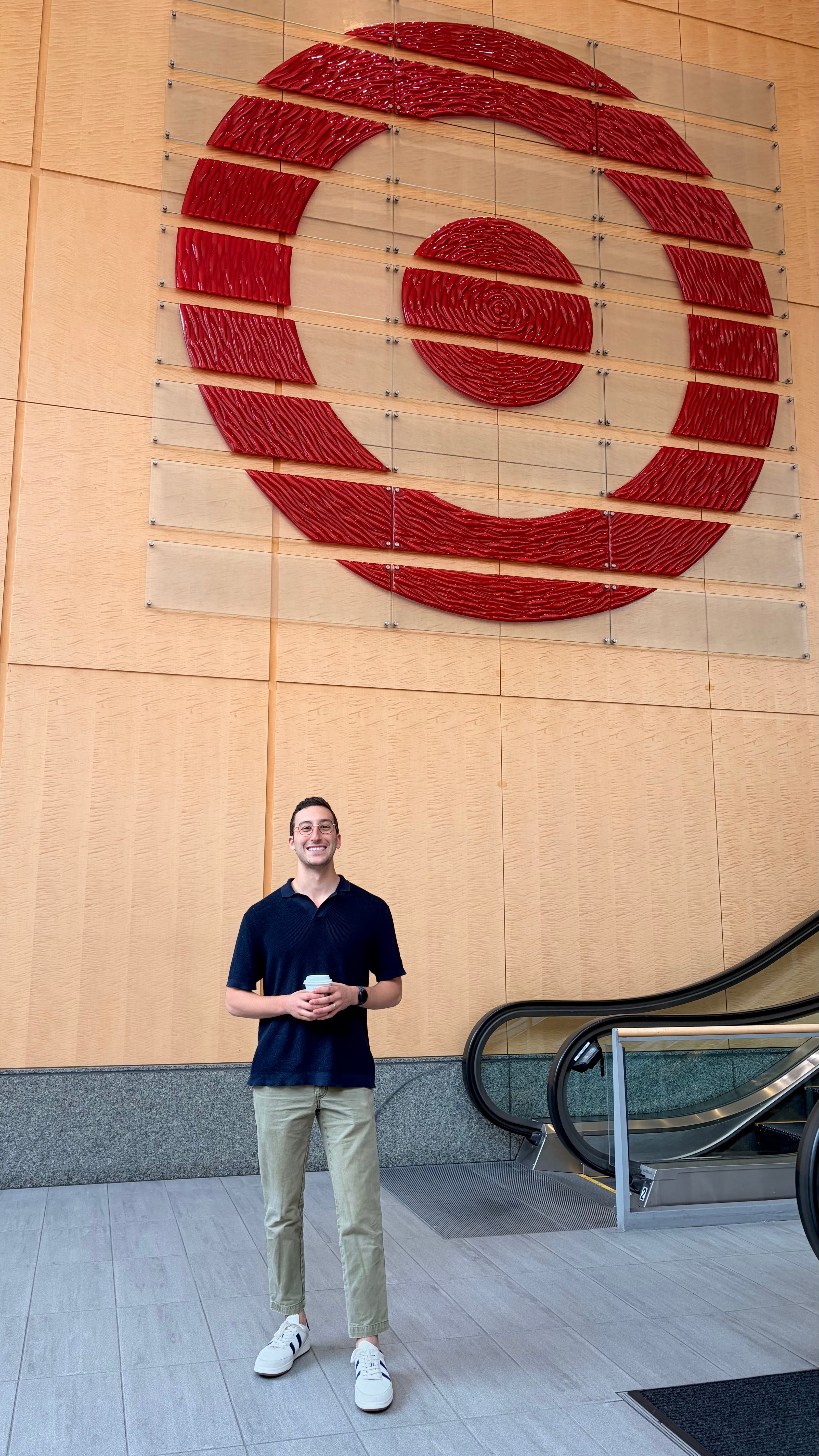
While I was there, I sat down with John Conlin, Target’s SVP of Food & Beverage Merchandising, to talk about what’s actually going on with grocery at Target. Because something is absolutely going on….something really exciting.
This is probably no surprise to anyone reading this newsletter, but Target is trying to become the next “it” grocer. You can see it for yourself in person, or simply search “Target” on basically any social platform and you’ll find countless videos making the same point: Target is becoming “the new Whole Foods.”
Creators of all sizes are walking the aisles, holding up the newest functional soda or better-for-you high-protein frozen thing, and marveling that this is at Target. The comparison is a little reductive, sure, but it’s pointing at something actually happening: Target is quickly becoming one of the most interesting places in mass retail to discover a new brand and, increasingly, the place you also do your actual weekly haul.
It seems to be working for them already, and they’re only getting started.
F&B is now a ~$24B business for Target, up almost $9B since 2019.
It counts for ~25% of total sales (biggest department by far), grew 6%+ YoY in Q1, and lands in over 55% of Target baskets!
They added 3,000 new F&B items in Q1 alone…. and the new stuff is selling 50%+ better than what it replaced. Crazy!
PLUS they’re remodeling 100-250 stores a year for the next few years, each getting 20–30% more room for food, and with the ~300 new stores planned over the next five to ten years, food will be right at the front door.
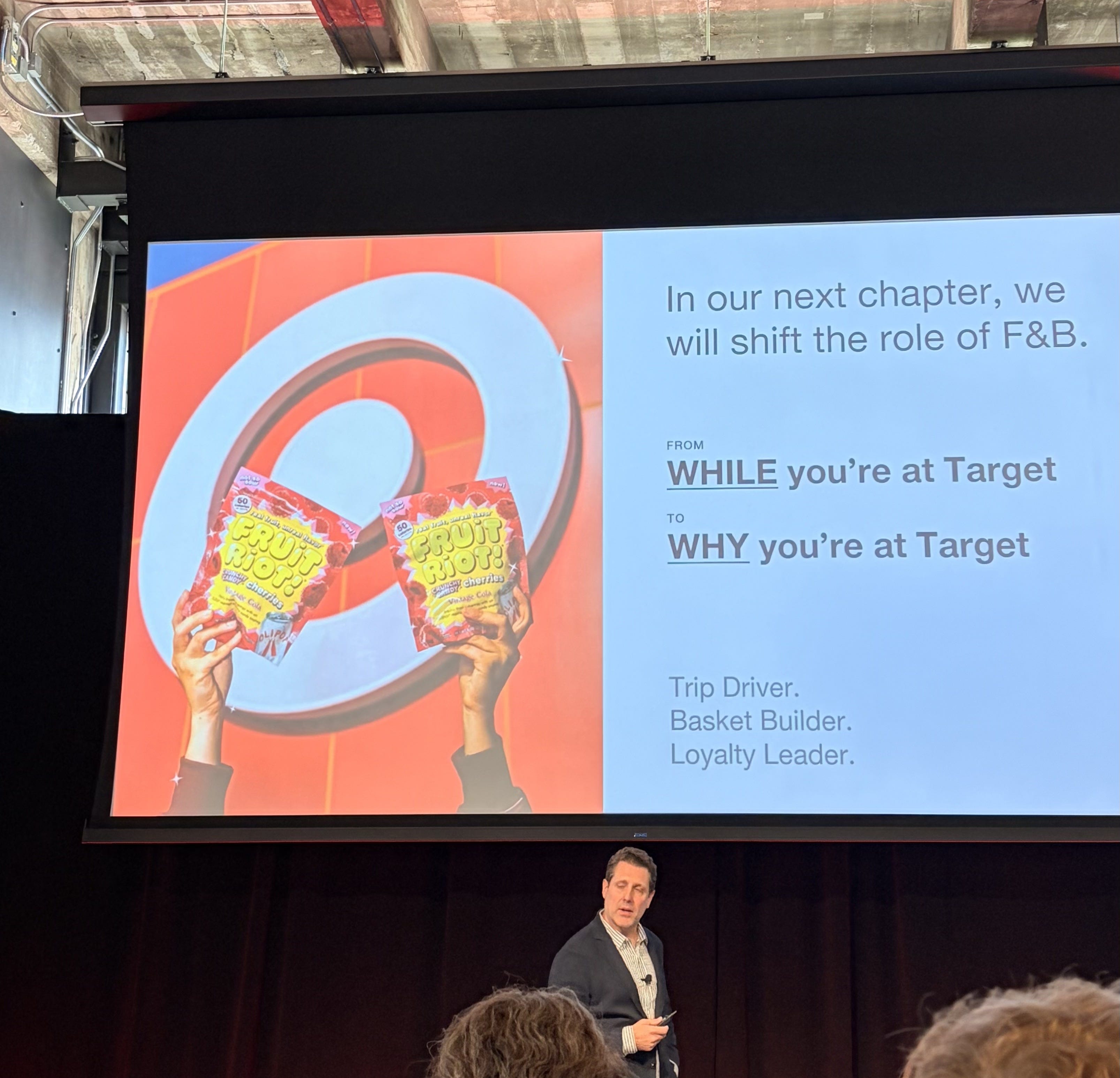
For years, food at Target was a while you shop—a basket builder—and this whole strategy is about turning that while into a why you shop.
“Increasingly, I want it to be the trip driver… to get people to come in more often for regular routines, accessible wellness, and these big seasonal moments that we’re very good at. That’s the bet, and it’s paying off so far.” - John Conlin
The logic was all over the presentations at the event. Grocery gets people in the store every week and keeps them loyal, and those weekly trips convert into more beauty, home, and apparel purchases.
But in order to get people to swap their weekly Whole Foods or Sprouts run for Target, they need a good reason. You could see those “3,000 new items” as Target just stuffing shelves with newness, but it’s more than that. As John explains:
“Curation being distinct is just part of our DNA. I think we have an opportunity to be more uniquely Target and more distinctly Target in our assortment strategy.”
The goal is doubling the uniqueness of the assortment over the next few years, without adding shelves. “Post-peak” brands and tired line extensions are getting cut to make room for emerging and founder-led brands.
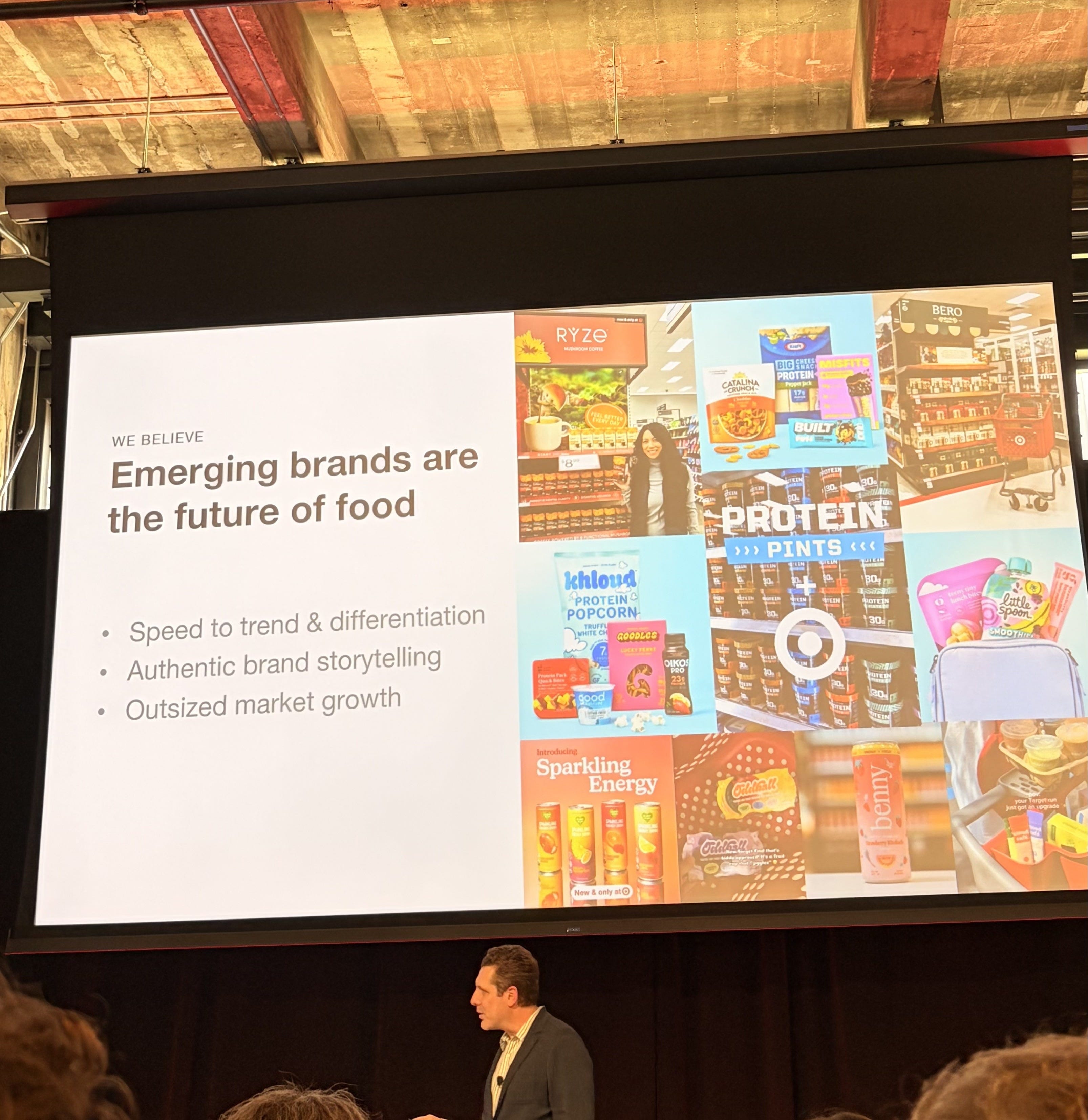
It’s increasingly clear that consumers are begging for exactly this. Bain found that 113 insurgent brands captured ~36% of all FMCG market growth in 2025 while holding less than 2% of share!
But Target isn’t building another wellness hub for a coastal few. It’s doing something more ambitious and frankly more useful: taking the discovery experience that used to require a specific store and a specific budget, and making it the default for the masses. As John emphasized, they’re not trying to be Erewhon:
“We’re trying to be more accessible than other wellness retailers from a price standpoint… the products we bring forward need to be affordable. They need to be understandable.”
Discovery was a luxury good. Now it’s being democratized.
The general consumer, especially since COVID, is more interested in CPG and new brands than ever before. Target’s filter is busy families who want fun, approachable, and better-for-you at the same time. Joyride, Backflip, Jesse & Ben’s, Gonanas—none of them are winning by scolding you. The product is good and the health part comes standard.
Target has spent decades earning shoppers’ trust in its taste. It’s the store that made “cheap chic” a thing, and their premium private label brand Good & Gather (on pace to be a $4 Billion brand, no artificial ingredients since day one) proved that trust extends to food. So when a Target shopper spots an unfamiliar functional soda in the set, the decision-making is simple: Target put it there, so it’s probably good, it’s probably not $9, and I don’t need a nutrition degree to understand it.
And the trust runs both ways, because the brands are doing a lot of the heavy lifting too. Target figured out it doesn’t have to handle consumer education itself. The founders and brands are the education layer. They’ve already explained the function and the ingredient story on TikTok or Instagram, built the community, and earned the credibility. Target just puts the product where that viewer is standing. We covered this dynamic in our newsletter All Roads Lead to Target a few months ago when DTC darlings Little Spoon and Butcher Box launched in store.
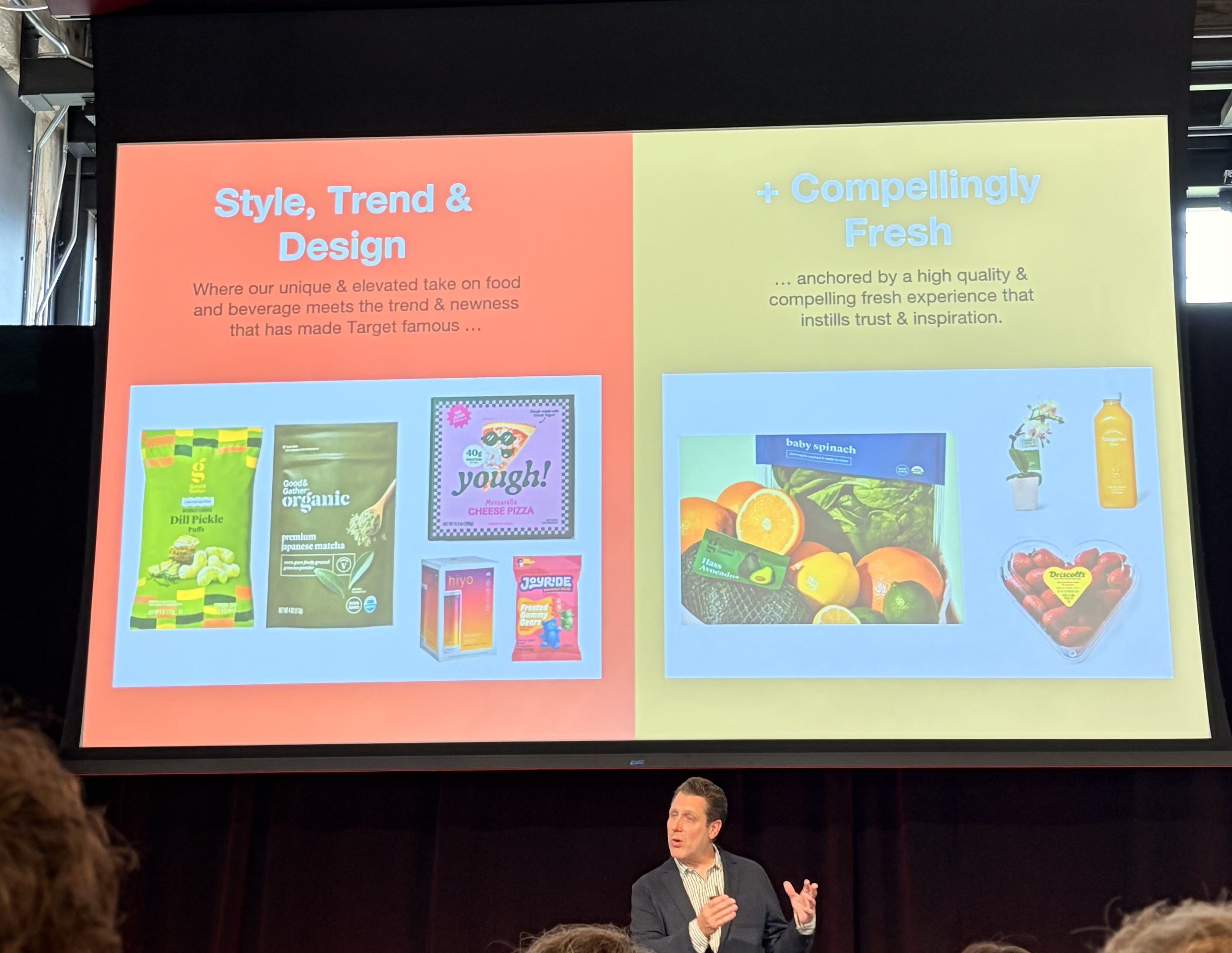
The big takeaway: The thing that struck me most from my day in Minneapolis is how rare this is. A legacy player of Target’s size taking a real, intimate interest in small emerging brands. You can feel how much they want the grocery department to be a unique, desirable selection, not just a wall of the usual suspects.
Target is carving its own lane as the place where the mass consumer discovers what’s next in food. Erewhon sells discovery to thousands of people at $25 a smoothie. Target is selling it to millions at $3.99. The store that taught America “Tarzhay” is now running the same playbook on your pantry, and the early returns say the “while you shop” is well on its way to becoming a “why.”
CPG & Consumer Goods
Egg prices broke food; fermentation might fix it. ADM is partnering with The EVERY Company to commercially scale OvoPro™, the first precision-fermented egg-white protein, at its Clinton, Iowa facility. EVERY’s orders in the first four months of 2026 were 550% of all 2025 volume. 🤯
So, what even is precision fermentation? Basically, scientists identify a microorganism to be the host (in this case, a yeast), and then inserts the DNA sequence codes for the protein (chicken ovalbumin, here), into the yeast. The yeast produces recombinant protein that are molecularly identical to egg whites, and using large-scale fermentation tanks (massive industrial bioreactors, like what ADM can provide here), they can brew the yeast, and therefore the protein, at-scale.
OvoPro™ is a high-quality protein with a PDCAAS score of 1.0 (the best amino acid profile possible) that provides binding, gelling, foaming, and whipping functionality, making it great for baked goods, frozen and prepared foods, and protein bars.
Protein is a tough ingredient to come by these days; we’re currently in the midst of a whey protein shortage. We broke it down the other week HERE, but the basics are that demand has blown past processing capacity. Prices topped $11/lb and some brands saw their costs jump 40%+ in a year. With 70%+ of Americans saying they want more protein daily, and us covering a new protein-enriched product daily at this point, it’s no wonder supply can’t keep up.
Kris Lutt, ADM’s VP for innovation and growth, said in a statement.
“The only way to meet the growing global demand for protein is to add innovative new ingredient options that can expand the supply of high-quality protein”
Luckily, alongside OvoPro, there are plenty of others trying to tackle this issue—from Leaft Foods pulling protein straight out of green leaves (a PDCAAS of 1.0 that digests 5-6x faster than whey), to Scoops turning peanuts into a 27g isolate, to Mozza Foods engineering soybeans to grow real dairy casein. We went deeper into some of these solutions in a previous newsletter HERE.
Speaking of protein, is the next protein trend….soup? Campbell’s launched a new Protein Soups line with 20g of protein and bone broth base across five varieties—Homestyle Chicken, Italian Wedding, Lemon Pepper, Southwest Black Bean, and Mediterranean Lentil—rolling out on Amazon and retailers nationwide for $3.19.
Any time a big CPG company drops a product with some trendy callout, we’re always quick to wonder what took them this long. But Campbell’s….what took you so long?! Bone broth has been a hot (protein rich) commodity for ages now! These protein and fiber rich soups are a no brainer!
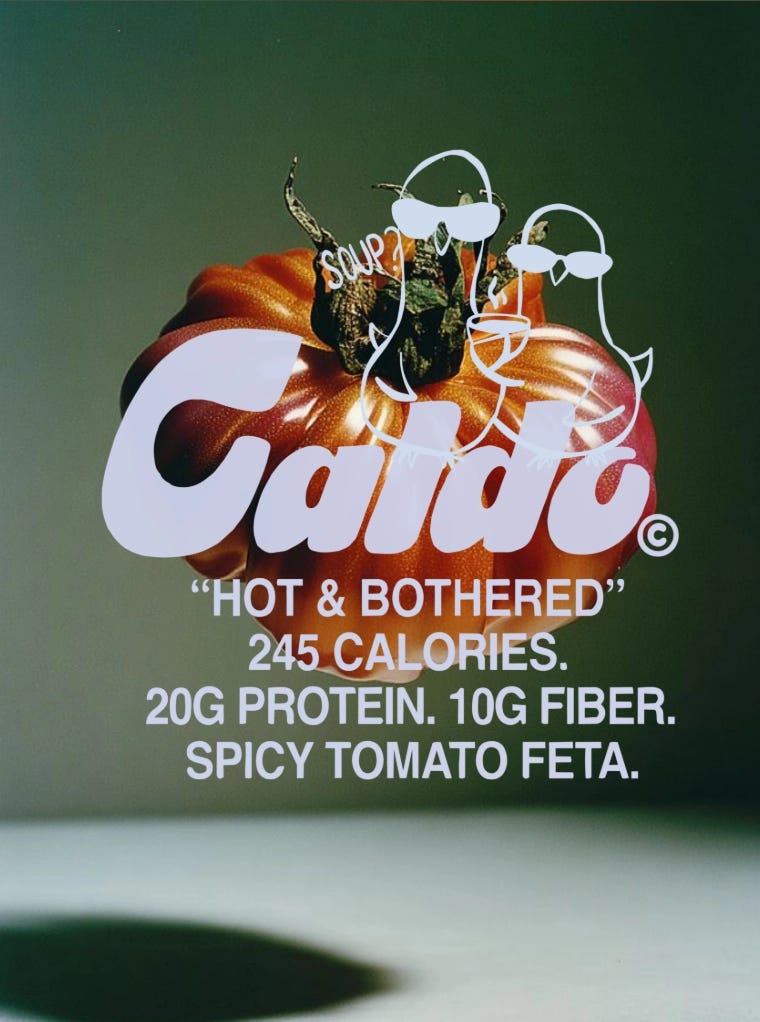
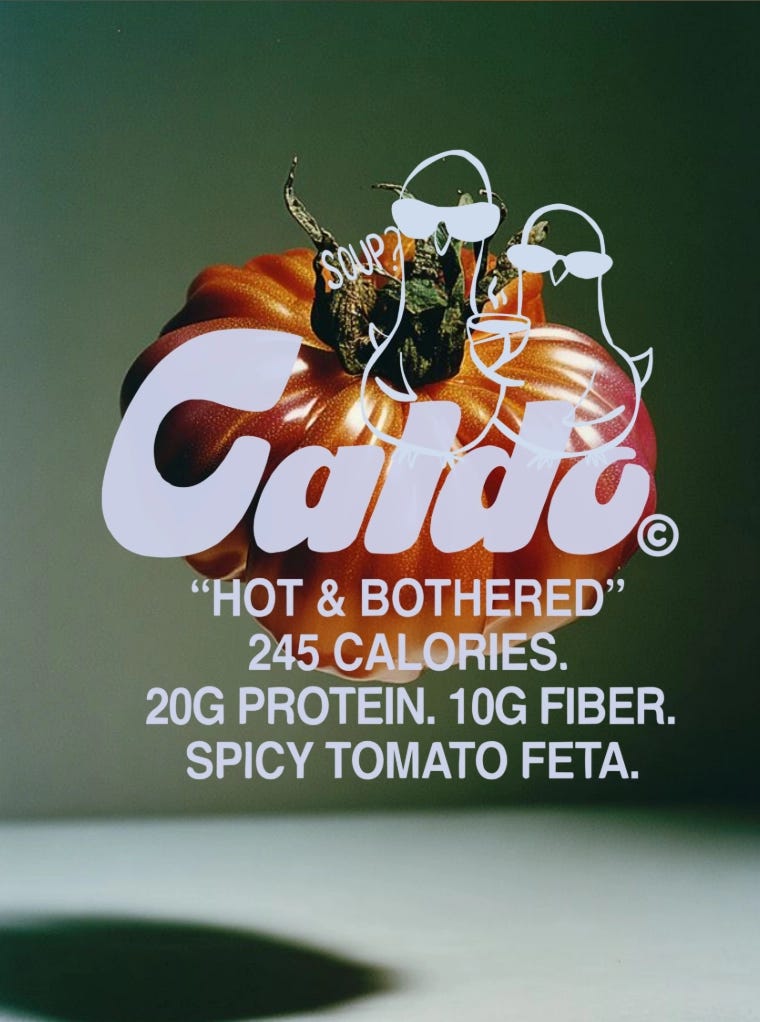
But the protein soup we’re most excited about is just about to launch in a few days…Caldo. They’re bone broth soups with some very cute branding.
“Why is it spicy?” Coca-Cola filed a trademark application for “Spricy,” hinting at a potential spicy Sprite innovation.
This has looming viral TikTok product written all over it. Spicy, sweet, sour...or a combo of all three. Consumers love unique flavor combinations and they especially love anything spicy. 65% of Americans now say they love or like spicy food, and purchase intent for anything labeled “spicy” has climbed from 39% to over 50% in the past decade.
Fairlife goes dark. Coca-Cola’s Fairlife dairy has temporarily suspended all U.S. production after a ransomware attack hit its systems. Fairlife is one of the most popular ultrafiltered milk brands right now: the brand does an estimated $4 billion in annual sales. Hopefully, the brand figures things out before it affects supply chains.
I am a subscriber for the Fairlife core power drinks….they’re perfect - Nate
DTC-to-shelf, body-first. Junoco, a DTC-native skincare brand, is launching exclusively at Ulta Beauty with 14 body care products across 850 stores, as the brand’s YTD body care sales climb 115%. The brand raised $6.3M to scale manufacturing ahead of the move.
This is another example of the masstige takeover in beauty and skincare. Junoco looks like a cross between Le Labo and The Ordinary: elevated, minimal, ingredient-forward, but priced for much broader adoption. And that’s the sweet spot right now. Consumers may be strapped for cash, but they’re not too strapped for a $15 serum that looks more expensive than it is and feels like it works just as well as the luxury version. That’s especially true as shoppers get more fluent in ingredients and less convinced that a higher price automatically means better results.
According to Circana data cited by Beauty Independent, masstige beauty sales were up 16% in Q1 2024, outpacing prestige at 15% and mass at just 3%. Skincare is one of the clearest examples: masstige skincare grew 28% last year, making it the fastest-rising masstige subcategory, even though it still represents just 9% of skincare sales.
This is the lane powering brands like e.l.f., The Ordinary, Bubble, BYOMA, Naturium, Good Molecules, Lume, and Glossier. The category is also getting blurrier: brands are playing in both mass and prestige. Most importantly, consumers are mixing high and low without caring what bucket a brand sits in. They want what works—and what TikTok tells them works. And Ulta is basically the headquarters for this movement, sitting between drugstore and Sephora.
Skin care to functional NA. The team behind skincare brand Symbiome is launching Hopkind, a functional non-alcoholic beer formulated with Senactiv and L-citrulline designed for muscle recovery and hydration.
The more interesting piece is how directly Hopkind is leaning into function. Most NA beer already sits on the wellness side of the aisle by virtue of being alcohol-free, but this goes a step further. It honestly reads less like a beer alternative and more like a post-workout recovery drink in a beer format. Not only does the front-of-pack say “hydrate and recover”—two classic callouts for sports drinks—it’s also leveraging Senactiv, a patented plant-based sports nutraceutical from NuLiv Science that’s often sold as a muscle-repair supplement, which just pushes the positioning even further into performance recovery.
We’re just glad it’s not protein beer. 🙃
eCommerce
DoorDash x Shopify. DoorDash launched a native Shopify integration letting U.S. brick-and-mortar merchants add their catalog to DoorDash’s marketplace directly from Shopify.
This is DoorDash’s play to become the same-day layer for everything that isn’t restaurants. Groceries and convenience were the first non-food expansion; embedding into Shopify’s merchant base is how it scales into apparel, beauty, home goods, and specialty retail without a single new enterprise deal.
For Shopify, it’s a defensive convenience move against Amazon’s same-day gravity—giving its merchants a local-delivery option without pushing them onto a marketplace that competes with their own storefront.
Instacart is buying its way into the aisle. Instacart has acquired Arpalus, a shelf intelligence company whose AI scans store shelves in real time with 95% accuracy, feeding inventory data to Instacart’s 600,000 shoppers and Caper Cart network. Terms were not disclosed.
Instacart has spent years as software sitting on top of other retailers’ stores, and its retail media revenue reflected that ceiling—strong on data, less so on physical presence. Cameras on carts in 100 cities give it a first-party sensor layer inside the store itself, the thing that separates a retail media network from an ad-serving middleman. Retail media is the highest-margin line in grocery right now, and this is Instacart betting that owning the shelf data, rather than renting a view of it, is how it earns a permanent seat at that table.
Funding
Beckham’s gotta stay relevant somehow. IM8, the subscription vitamin and longevity drink brand co-founded by David Beckham and Prenetics founder Danny Yeung, secured $1 billion from General Catalyst’s Customer Value Fund (CVF) to help scale customer acquisition without selling equity.
This is not a traditional venture round—so don’t read “secured $1B” as a fundraise. CVF is more like non-dilutive growth financing, so IM8 can use the capital to cover up to 70% of customer acquisition costs, then repay GC through a capped share of revenue from the customers funded by that spend.
The structure is built for companies with predictable subscription revenue. If IM8 can keep customers subscribed long enough, the model gives the brand a massive marketing budget without diluting Prenetics or Beckham’s ownership.
And according to Prenetics, IM8 is already putting up some real numbers with just two SKUs. The company says the brand is the “fastest-growing premium supplement brand ever recorded,” delivering more than 50 million servings to date (since its Dec 2024 launch), shipping roughly 200,000 servings per day, and on pace to reach $300 million in annualized run-rate revenue by the end of 2026.
The largest female-founded buyout fund, ever. Citation Capital announced the final close of Citation Fund I at $1.2 billion in total commitments—oversubscribed past its $1.1 billion LP hard cap—ranking it top-10 among inaugural buyout funds in the last decade and the largest female-founded buyout fund ever launched.
The next Kool Aid? FAVE, an organic drink mix brand founded by 20-year CPG veteran Ryan Raish, raised a $1M seed round led by Supernatural Ventures (backers of Poppi and Goodles) and launched in nearly 500 Sprouts Farmers Market stores nationwide, becoming the first certified organic brand in the ~$1B drink mix category.
We’ve talked ad nauseam about how hydration is booming and hydration sticks are having a moment, but there’s been surprisingly little innovation in just the pure flavored drink mix space. Every product seems to come loaded with added function (electrolytes, vitamins, adaptogens).
Just like we’re seeing across snacks broadly, there is a growing appetite for products that are simply great-tasting with upgraded, cleaner ingredients and little to no gimmicks. FAVE fits squarely in that trend, but that trend has mostly played out in sweet treats, where indulgence is already the point. It remains to be seen whether there are enough consumers who want that same “cleaned-up nostalgia” in drink mixes and whether enough people are simply looking to flavor their water rather than seek out added function.
The ultimate gamer snack. Final Boss Sour raised $4 million, backed by Mondelez SnackFutures Ventures and Evolution VC Partners, bringing its total to $12 million. The brand makes gaming-inspired sour snacks from real dried fruit coated in a proprietary sour candy shell. It is now rolling into seven major retailers including Walmart, Kroger, H-E-B, Wegmans, Hy-Vee, Target, and 7-Eleven.
There are countless brands are trying to make indulgence feel a little cleaner, but what makes Final Boss Sour interesting is how simple and clever the product actually is. It is real dried fruit with a sour candy coating, which kinda puts it in the same world as Fruit Riot, just not frozen. But, Final Boss takes the idea further by gamifying the whole experience. The sour levels, retro-game branding, and a digital-first playbook make it feel like a new format for the category.
The digital success is what makes the story especially compelling. Final Boss says it has generated more than 2 billion organic video views, built the largest YouTube subscriber base of any sour candy brand, and became the largest sour candy brand on TikTok Shop. The brand clearly understands how to turn flavors, drops, collaborations, and community into content, and having London Lazerson, a creator with 8.9 million TikTok followers, behind the company gives it a serious advantage.
And all of this is coming from a team that has seen what works and what does’t. Final Boss was built inside Science Inc., the Los Angeles venture firm and startup studio founded in 2011 by former MySpace CEO Michael Jones and entrepreneur Peter Pham. Science has been behind major CPG success stories including Dollar Shave Club and Liquid Death.
The Heated Rivalry of venture. Hockey Stick Ventures announced a $3M Fund I, transitioning the three-year-old beverage investment syndicator into a formal venture fund after backing several emerging brands.
They’ve built a solid track record so far, investing in Liquid Death, Recess, Coconut Cult, Leisure Hydration, Slate, Katy Perry’s De Soi, and Emma Watson’s Renais.
Hockey Stick was started by Sean Hershman, MBA, a former Numerator sales exec who also played minor league hockey, which is why the fund’s investor base includes past and present NHL players and others across the hockey world. Hershman isn’t the only Numerator alum moving into CPG investing, either: friend of the newsletter Kyle Fitzpatrick came out of the same company before launching Paperboy Ventures’ $3M fund.
No whey needed here. BUFFS, a puffed meat snack positioning itself as a high-protein alternative to bars and jerky, raised a $1.1m pre-seed and is launching to first customers on Aug 11th. Co-founders George Zhou and Beckett Kitaen started the brand as college juniors.
If you haven’t yet, please subscribe, like, leave a comment, and share it! It helps us continue to bring you the most interesting news + nuance in consumer and retail every week.
let out an audible gasp when I saw the title of this post- said this exact same thing to my husband last week when I found myself routing to Target to grab Snackish and Graza Potato Chips!!