



Hello hello!
Upcoming must-attend NYC event alert: Wayflyer’s Visionaries Summit is coming to KidSuper Studios in Brooklyn on August 26th and 27th and you will NOT want to miss it!!!
You might’ve seen clips of the London edition online, featuring UK brands like Trip, SURI and PerfectTed. Now Wayflyer is bringing the Summit to New York, with speakers confirmed from Dame, Bobbie, Ghia, Dad Gang, Stakt, Jones, Sauz, and more to be announced. Picture a room packed with brand owners, operators and investors, all speaking openly about what has and hasn’t worked as they’ve grown their businesses.

Tickets are FREE but spaces are limited, so book the panels you want to attend now 👀
We can’t wait to see you there!!!
News From the Week
The hottest new products are hiding in the… laundry room?
This week, WashWise—a clothing care brand built entirely around the “between-wears” moment—raised $1.2M in pre-seed via a SAFE.
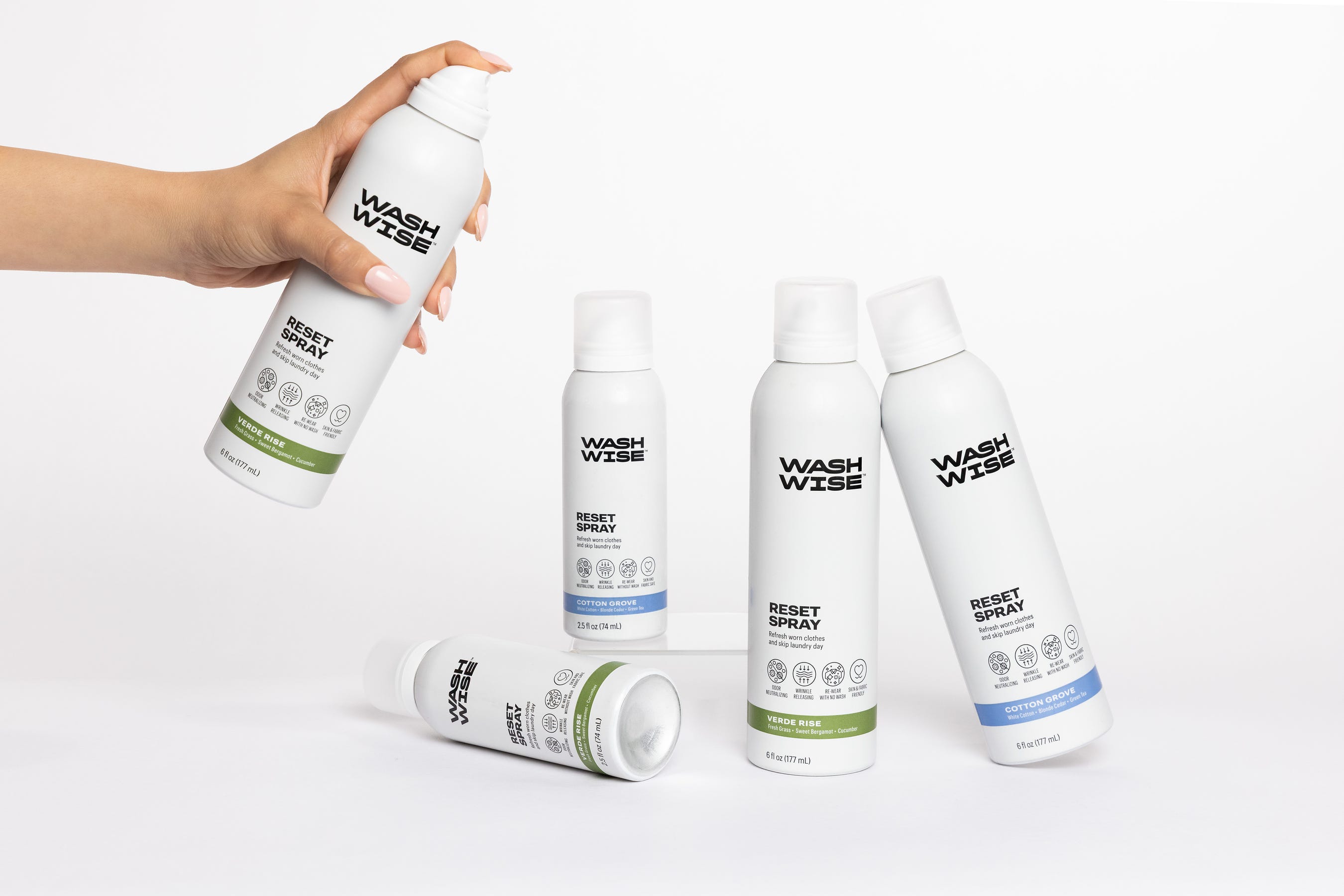
The debut product is Reset Spray, which the brand describes as “the dry shampoo for clothes” (brilliant). It neutralizes odor at the source, releases wrinkles, and buys you another wear. WashWise claims a single bottle saves up to $300 in dry cleaning, ~6 hours of laundry, 110 gallons of water, and 13 kWh of energy. 🤯
Admittedly, it’s a small round, and the brand just launched. But it lands in an aisle that is absolutely heating up right now: laundry-care.
U.S. laundry-care sales hit $19.4B last year, up 3% across price points, with the global market at roughly $110B and a projected 4.7% CAGR over the next five years. P&G’s laundry care business alone does nearly $3 billion (they own about 60% of market share)! It’s a serious market that was ripe for some disruption.
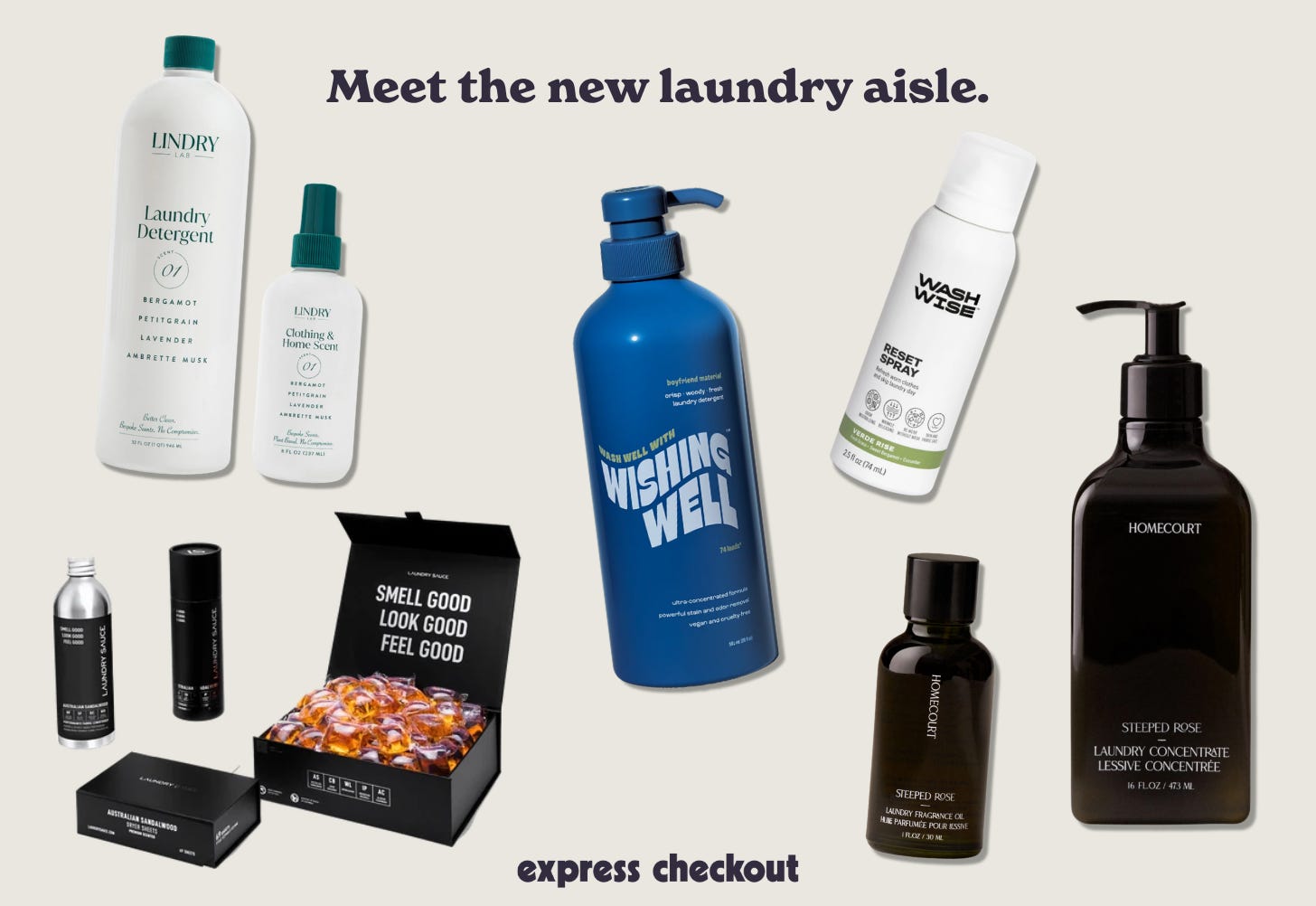
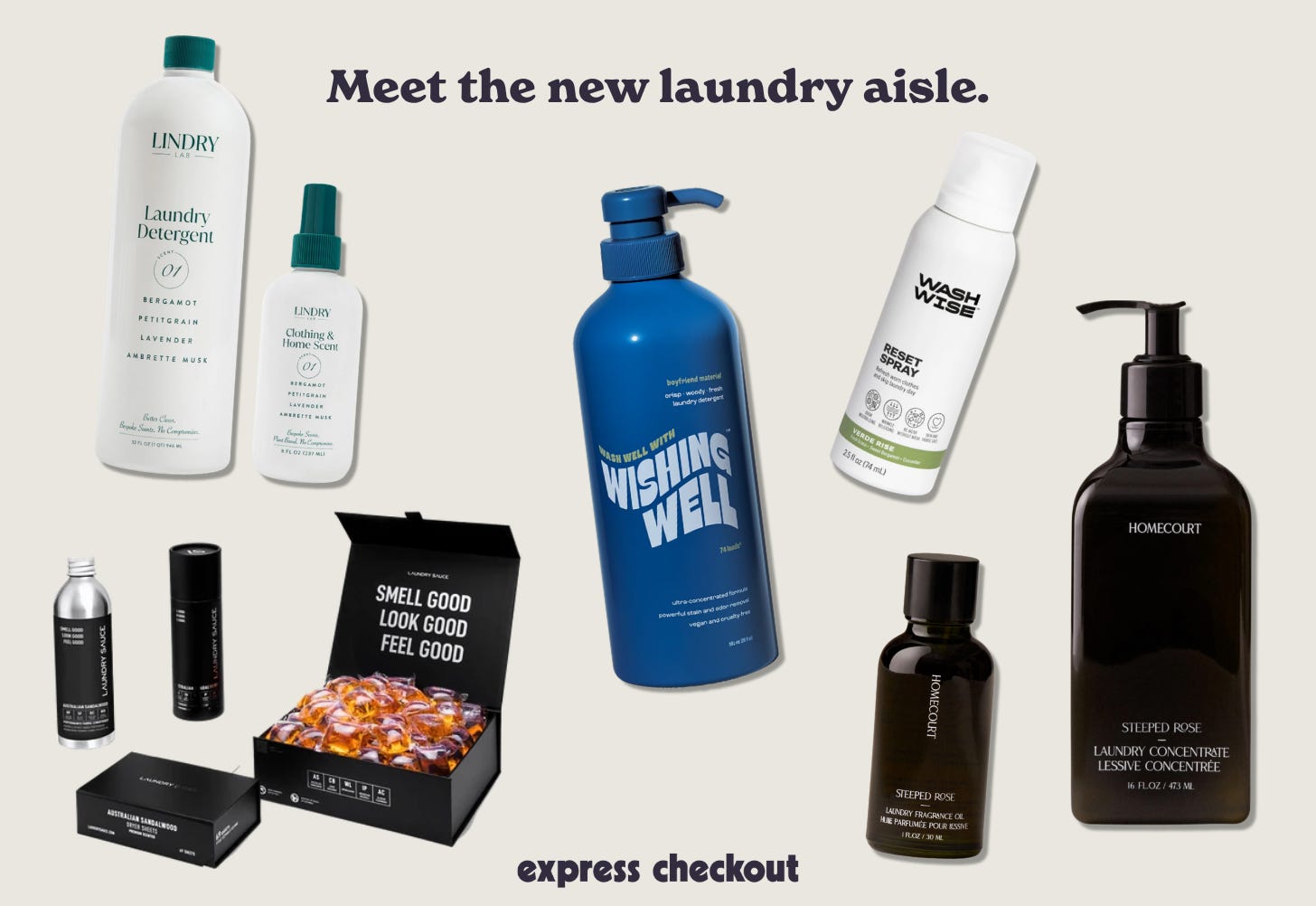
And boy is it getting disrupted. The emerging brands are coming in hot:
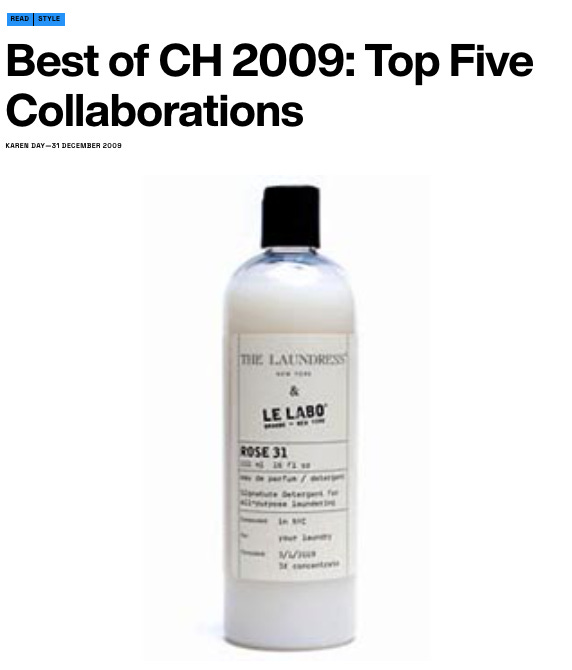
Let’s back up to the first wave (cycle? 😉): Innovation in laundry-care really started with The Laundress, which was founded all the way back in 2004. The brand, positioned as the first luxury lifestyle brand in laundry-care, thoughtfully aligned itself with early lifestyle/fashion bloggers and the burgeoning clean beauty movement to in the early 2010s. By the mid-2010s, the company was sustaining a 30% year-over-year growth rate, making it an obvious target for Unilever’s $100 million buyout in 2019.
Lindsey Boyd, who co-founded The Laundress, came back to laundry this past April with Lindry Lab. A luxe laundry brand with 17 SKUs—including six detergents at $45 for 32 ounces—all built around cleaner ingredients and functional fragrances.
Laundry Sauce raised a $7.2M Series A in January (~$17.7M total from Melitas Ventures, Morrison Seger, 3cubed, Patrick Ventures, and Talent Resources Ventures), and expanded into Target stores in March—its first national retail win after years of DTC.
Wishing Well is betting that laundry can be cool. The brand launched in 2025 with a non-toxic, ultra-concentrated detergent in a compact aluminum pump bottle in fragrance-inspired scents like Afterglow, Sunday Reset, and Boyfriend Material (one of Jenna’s fave products). The brands explicit goal is to make laundry feel like self-care rather than a boring chore.
Homecourt, Courteney Cox’s home fragrance brand, expanded into laundry in March 2025 with a full collection built off its existing scents. Seven months later it closed an $8M Series A led by CULT Capital, and it’s now in 300+ doors across Nordstrom, Bluemercury, and Revolve.
And the fragrance houses also are entering the space:
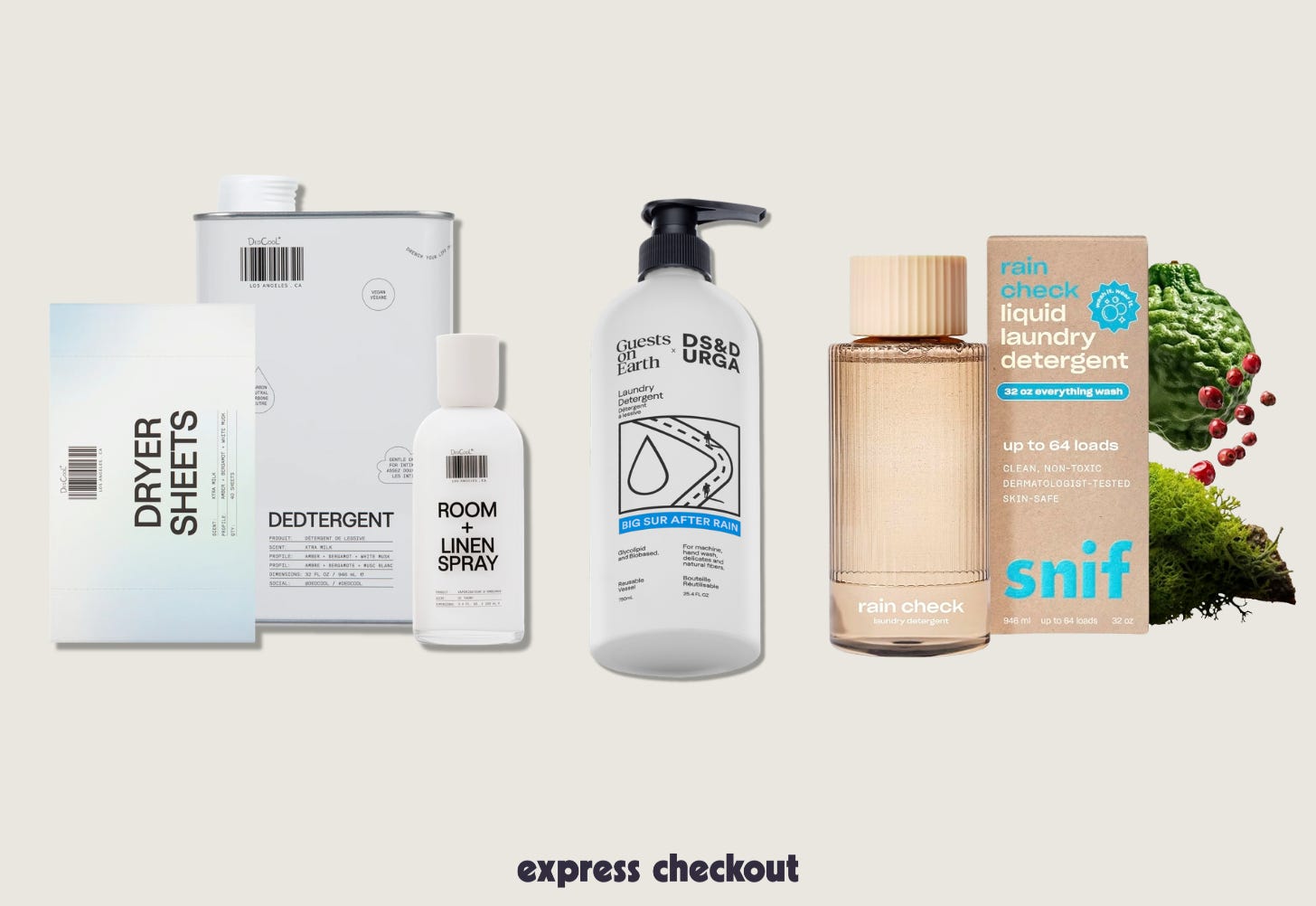
DedCool became Sephora’s first-ever laundry SKU back in 2022 across 210 doors, and is still the only laundry brand on those shelves.
Snif has a full laundry collection translating its fine fragrances directly into the wash. It’s also now on shelf at Ulta.
D.S. & Durga sells luxury detergent in a reusable aluminum bottle in partnership with Guests on Earth, sold through Revolve.
And Guests on Earth is a luxury home care brand that also sells a premium, high-concentration plant- and bio-based laundry detergent free from heavy chemicals.
Even Tide (which controls 40% of the laundry-care market) is trying to innovate here! In February, P&G rolled out Tide evo nationally—a 3.5-inch waterless “tile” of compressed detergent fiber, six layers deep, with something like 15 miles of woven scrubbers plus stain treatment, brighteners, and odor removers built in. It took 50+ patents, 15 chemists and engineers, more than a decade of development, and almost two years of test marketing in Colorado.
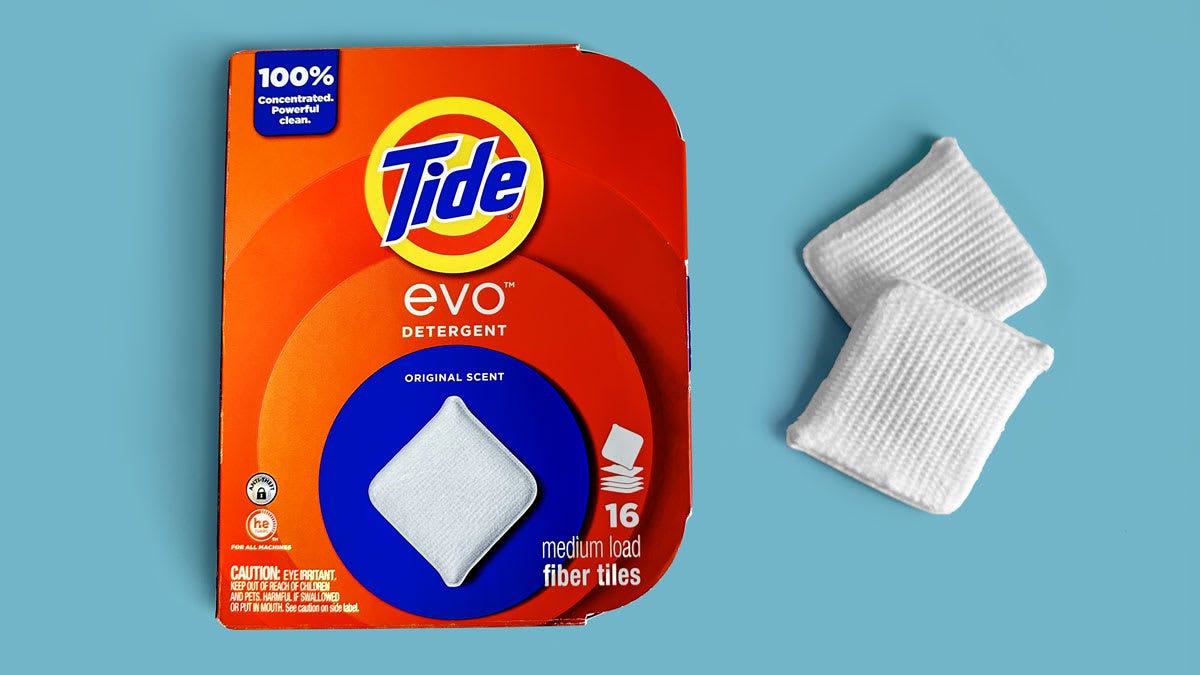
This is a surprising move in big CPG. The playbook in a mature, concentrated category is (usually) to defend share, cut costs, run a limited-edition scent, and buy the challenger once it clears $50M. Innovation is what you do when you’re losing, and as we said, P&G controls ~60% of the market—looks like a winner. Cannibalizing your own liquid business with a format that costs 2x per load is the harder, almost dumber-looking path, and they took it anyway.
Even the big guys are seeing that scent, format, and premiumization are about to reshape laundry.
So why is fancy laundry detergent is having a moment?
Fragrance is booming, and it’s bled into everything. US mass fragrance grew 15% in 2025 versus 5% for prestige—the real growth is in luxe-coded scent at accessible prices. And it isn’t staying in the fragrance aisle. We’re seeing brands win on fragrance in body care, hair care, hand sanitizer, hand soap, and now the laundry. Detergent may be the purest version of this, because it’s a scent you apply to (almost) everything you own all at once.
Everything is the lipstick index now. A $45 detergent is a lot more than Tide, sure, but it’s a small upgrade that makes an unglamorous chore feel expensive. When everything else in the cart costs more than it did two years ago, people will buy the little thing that makes them feel like they’re doing a lot better. It’s the same instinct we keep seeing at the grocery store shelf, where shoppers trade up on olive oil and soda to feel like they’re living a more luxurious life.
Skincare-level ingredient scrutiny. Wellness culture (and its many influencers) taught everyone to read the label. Consumers now care an enormous amount about what’s in their products and what those products come in. Scrutiny that started in food and skincare has been migrating to every category under the sun, and detergent was always going to make the list. It touches every part of you! They want the free-from list (SLES, SLS, endocrine disruptors) and functional additives that do something, which is the exact tension we wrote about in clean vs. science and functionwashing.
The home became a place for self-expression. The “shelfie” started in the bathroom, moved to the kitchen counter (see Graza, Fly By Jing, Loonen), and has now arrived in the laundry room. A neon green plastic jug is a chore you hide under the sink. A $45 aluminum bottle in a trendy, muted color is something you leave out.
Though the laundry room might be the last place you expected buzzy CPG brands to enter, it has potential to be one of the stickiest destinations. Watch (wash?) this space👀
CPG & Consumer Goods
Some cheesy innovation. GOODLES just launched Twirly Mac, a new spiral noodle format coming in three flavors—Cheddar Weather, Alfredo Heights, and Hotshot Jackpot. Each box offers similar nutrition to its other mac & cheese: 14g protein, 7g fiber, and 21 nutrients from plants, and all Clean Label Certified.
Both the format and the flavors (alfredo with white miso, chili garlic) suggest that this is a launch geared more towards an adult consumer, offering a permission slip to the guilty Goodler who regularly makes mac, but wants to upgrade to the more mature pasta.
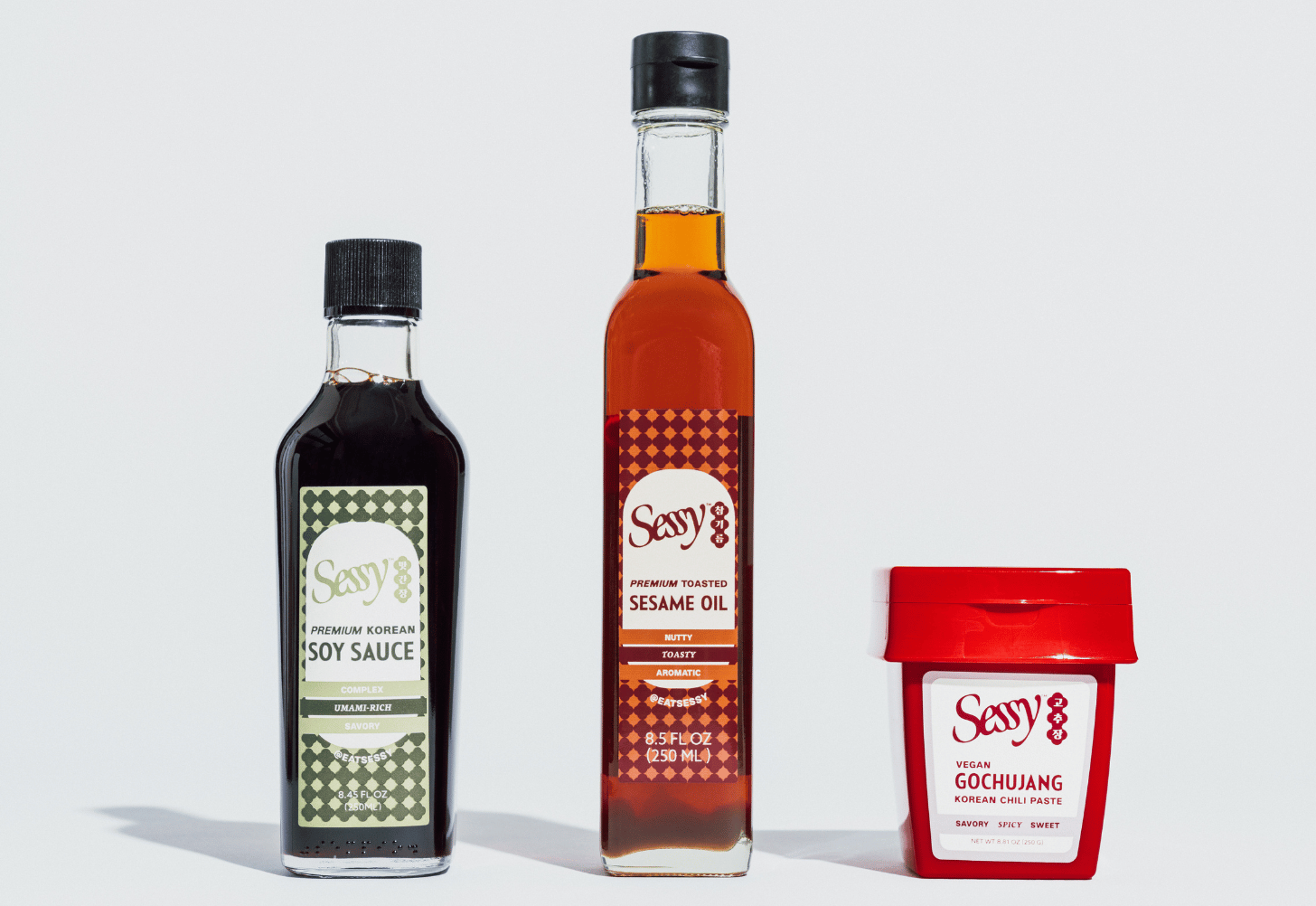
Celebrity CPG keeps growing. Chef Esther Choi, one of Food Network’s fastest-rising personalities, just launched Sessy, a new Korean pantry staples brand starting with soy sauce, sesame oil, and gochujang. The products are made in partnership with Korea’s longtime ingredient maker Sempio. All products are available now direct-to-consumer with retail expansion planned for 2027.
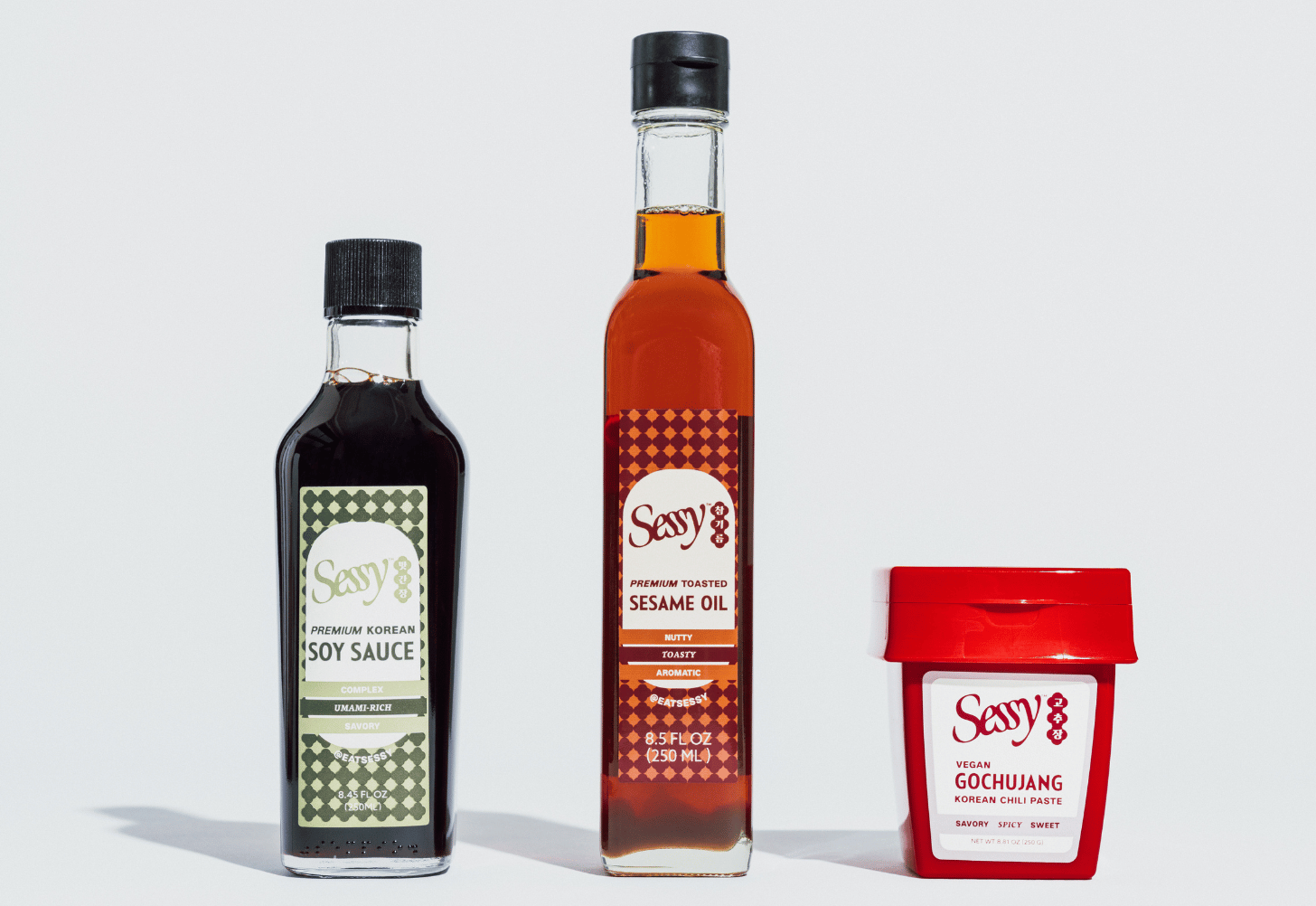
It’s nice to see a celebrity-led brand launch that feels authentic, high quality, and like a meaningful addition to a very crowded category—sauces and condiments in this case, but really broader CPG too. Celebrity-led brands run the risk of just feeling like a merch line, or something that simply doesn’t have legs once the talent gets tired.
But alongside Sessy, we’ve seen a lot of really good creator-, celebrity-, and chef-led brands lately that lean into being authentic brands with products people actually want to buy and that also get massive national distribution: Chrissy Teigen’s Cravings keeps expanding at Target, Momofuku has become a genuine pantry brand off David Chang’s chili crunch and noodles, Molly Baz turned Ayoh into a legit condiment brand that landed national retail fast, and Chamberlain Coffee and Feastables have both scaled into real shelf presence. Sessy fits into that mold with fewer SKUs, great branding, and a engaged founder.
America has a new favorite protein bar.* In a sea of countless protein bars, the emerging brand Prima just became the top-selling protein bar SKU at Sprouts and Erewhon, and it’s now on shelves at Kroger nationwide!! The formula: 10 recognizable ingredients, 21g of grass-fed animal protein, under 250 calories, and no seed oils, artificial sweeteners, or fillers.
Prima is rich and dessert-like, unlike some of its absurdly dense aisle-mates, and is available in Mint Chip, Cookie Dough, Mocha, Cacao, and Salted Caramel.
EC readers get 25% off with code EXPRESSCHECKOUT25 → Shop Prima
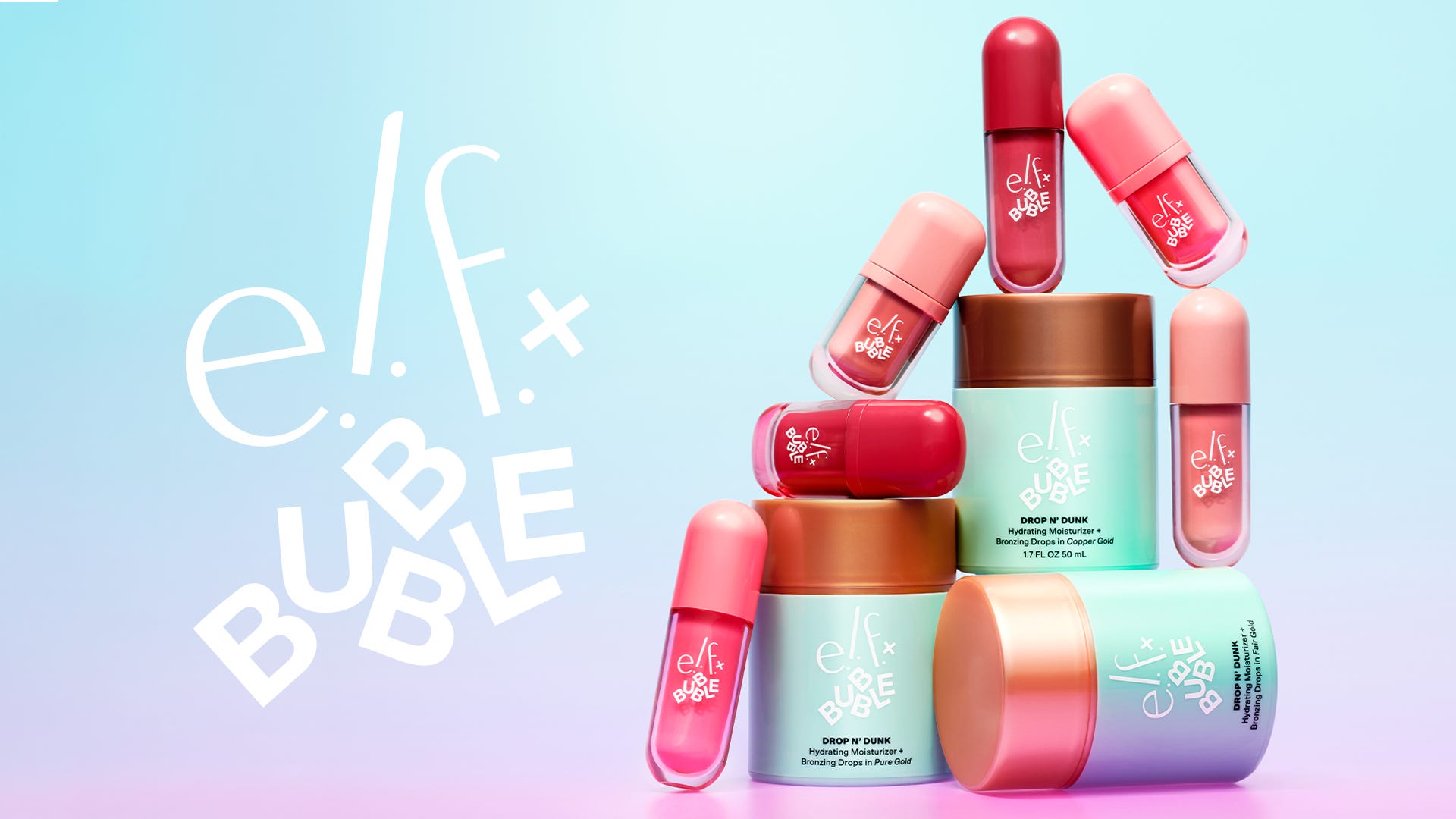
Is the the beauty collab of the decade? The #1 and #2 brands with U.S. teens (according to Piper Sandler) just merged their holy grails. Beauty brands e.l.f. and Bubble just dropped three new products mixing the best of both lineups—e.l.f. bronzing drops dual-chambered with Bubble’s moisturizer, Camo blush cut with hyaluronic acid serum, and a lip balm built as a lip serum. These are currently live on both the brands sites and at Target.
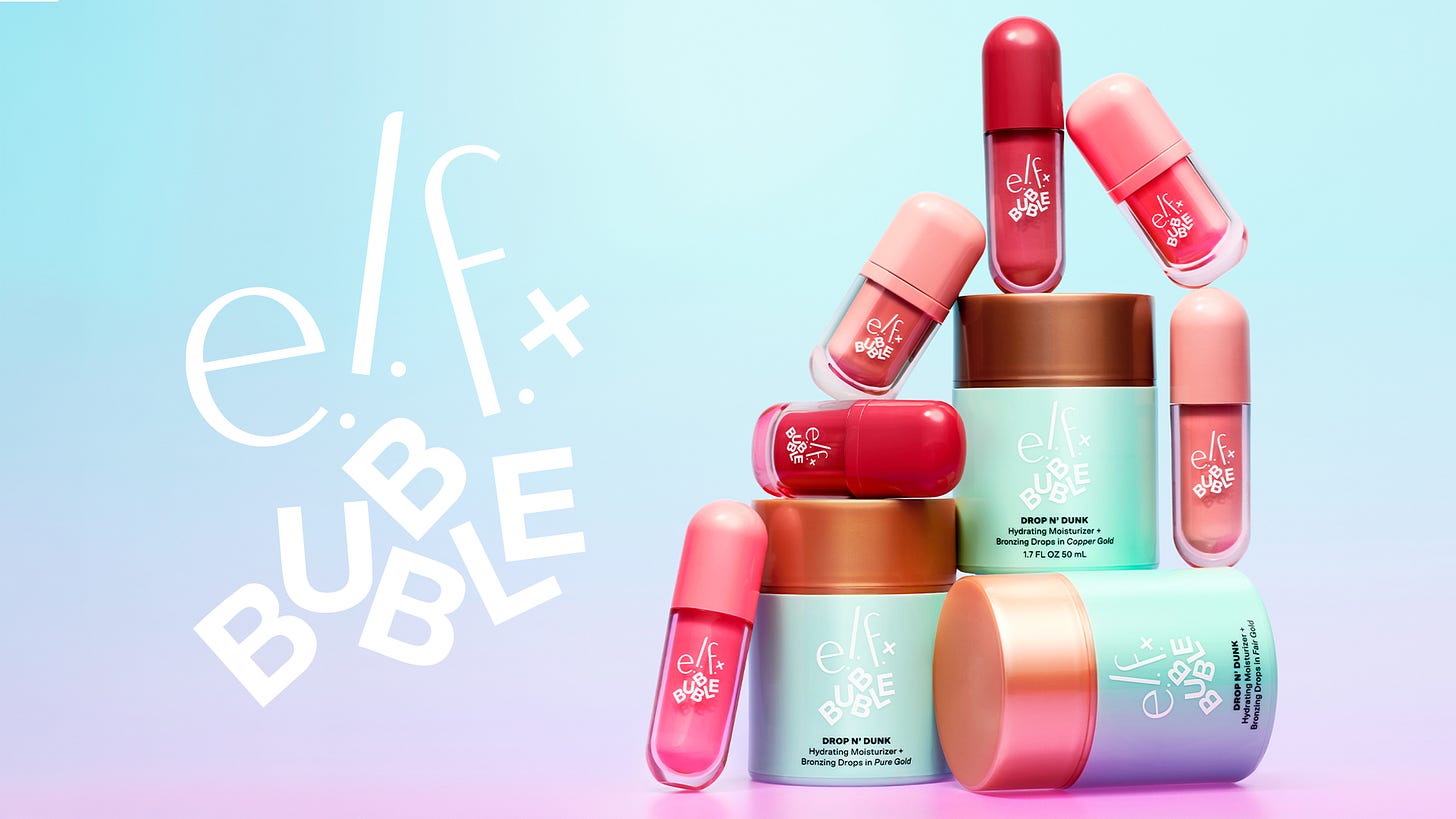
THIS IS WHAT WE LOVE TO SEE!! This is an incredible collaboration, and maybe even a hint at a cheeky acquisition? We could see e.l.f scooping up Bubble in the near future.
This is also a continuation of the trend of beauty doubling as skincare. Curious to see if there comes a point when there is no line between the two—when all beauty products provide a function, and most skincare offers an instant appearance boost rather than long-term promises.
Khloud launches Walmart-exclusive higher-protein chips. Khloe Kardashian’s Khloud brand just launched its first Walmart-exclusive line: Protein Chips Plus Collagen (a collagen-boosted version of their OG protein chips). At $3.49 per bag, these present a value option compared to their $5.99/bags of the OG (they’re also a single-serving at 240 calories, vs. the other line which is 4.5 servings at 170 calories and only 7g protein).
Beyond the ointment. Beiersdorf’s Aquaphor has launched its first-ever daily lotion and cream line, featuring 6% and 9% hyaluronic acid blends respectively, both approved by the National Eczema Association and available at Walmart, Target, and Amazon.
Hope for hemp. This weekend, the Senate voted 90-6 to pass a spending bill delaying the federal hemp THC ban from November 12 to December 11, after rejecting Sen. Ted Budd’s amendment to keep it on track (Senator Budd is a THC hater. You actually cannot make this sh*t up). As the CEO and Co-Founder of Nowadays, Justin Tidwell, explained:
“We’re seeing multiple positive signals come out of Washington at the same time. The Senate not only voted to extend the current federal framework, providing the industry additional time to work toward a long-term solution, but we’re also seeing lawmakers advance legislation like Representative Van Duyne’s Hemp-Derived Beverage Regulatory Clarity Act, which provides a thoughtful roadmap for how hemp beverages could be regulated within the traditional three-tier system.
While there is still significant work ahead, these developments suggest the conversation in Washington is beginning to shift from whether hemp beverages should exist to how they should be responsibly regulated. We believe that’s an important and encouraging change for consumers, retailers, and the industry as a whole.”
And in other THC news: Cann, makers of low-dose THC social beverages, launched a Half & Half line with NBA legend Dwyane Wade, available in two varieties: a 3mg THC/6mg CBD microdose and a zero-THC 0MG version with functional ingredients like passionflower, magnesium, and L-theanine.
We spoke to Jake Bullock, co-founder of Cann, about the impending ban on the Express Checkout podcast. He gave a great insider’s view into how the impending ban has been affecting THC brands, and what they’re doing to address it.
eCommerce
Hey ChatGPT, add lemons to my list. Albertsons launched a plugin inside ChatGPT for its Safeway brand, letting shoppers reorder lists, build carts, and discover products via natural language chat. And then, of course, check out on Safeway’s own platform. It extends the retailer’s existing AI shopping assistant and Ask AI tools it has implemented over the past year.
Retail
Walmart’s AI just got a promotion... is your brand ready? Walmart’s global CTO says the retailer now runs AI across forecasting, replenishment, scheduling, and routing—an “intelligence layer” he calls the conductor of the whole supply chain orchestra. The result is a sub-hour delivery windows and US e-commerce up 26% in Q1.
But there’s a catch for suppliers: that intelligence layer only works if what’s coming in the door is clean. As Walmart’s ordering and routing get more automated, there’s less human slack to absorb someone else’s late ASN or mismatched pack count. The brands eating chargebacks and OTIF penalties will be those with backends that didn’t catch up to their biggest retail partner’s.
Which is exactly the gap Endless Commerce1 closes. Instead of bolting on a third-party EDI middleman, CommerceOS builds EDI right into the platform already running your inventory, orders, and warehouse—so a retail PO lands like any other order, setup takes days (not the mythical 6-8 weeks), and you keep control of your own ops. Mission control for consumer brands, built by founders who’ve lived the chaos themselves.
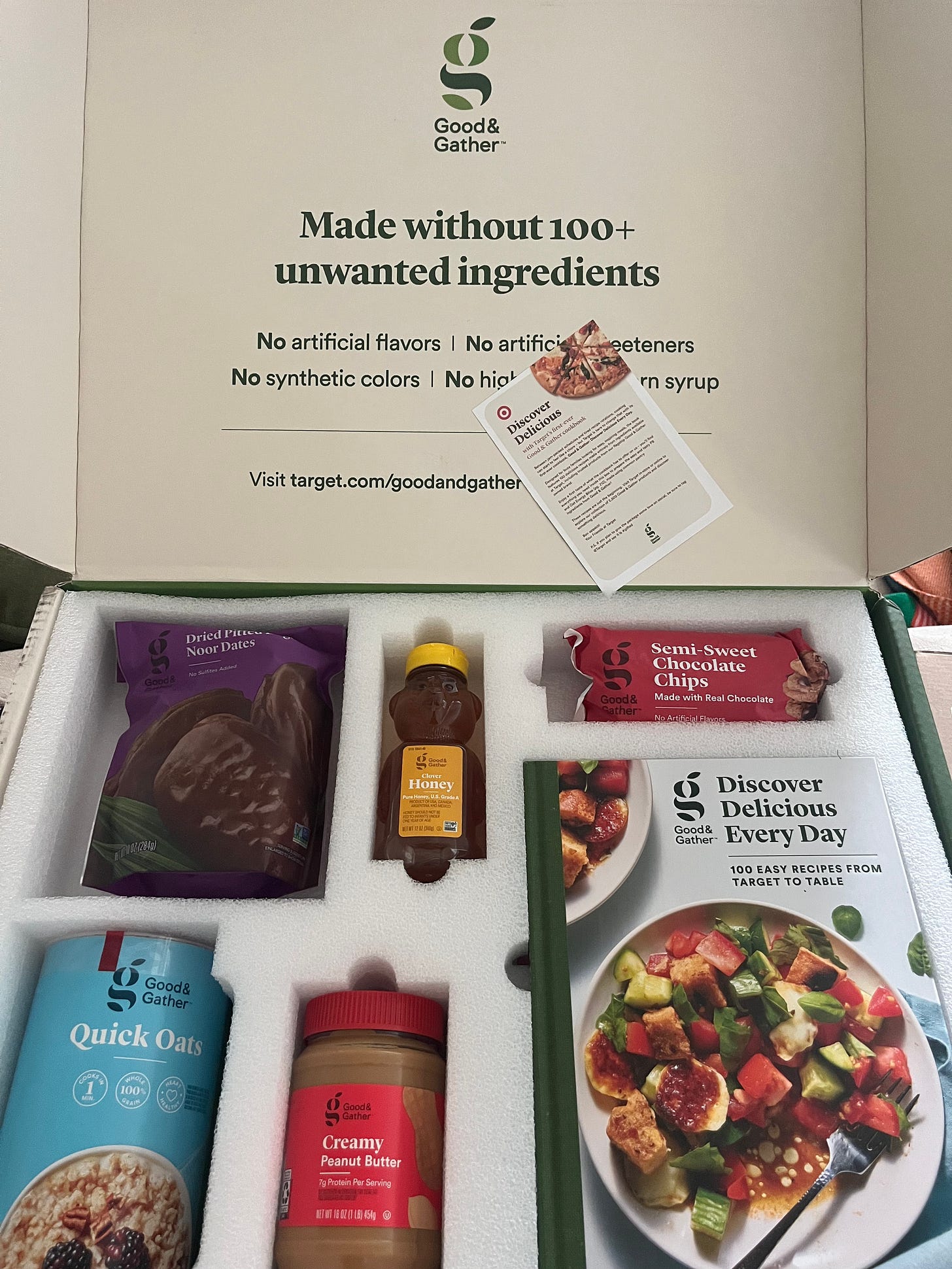
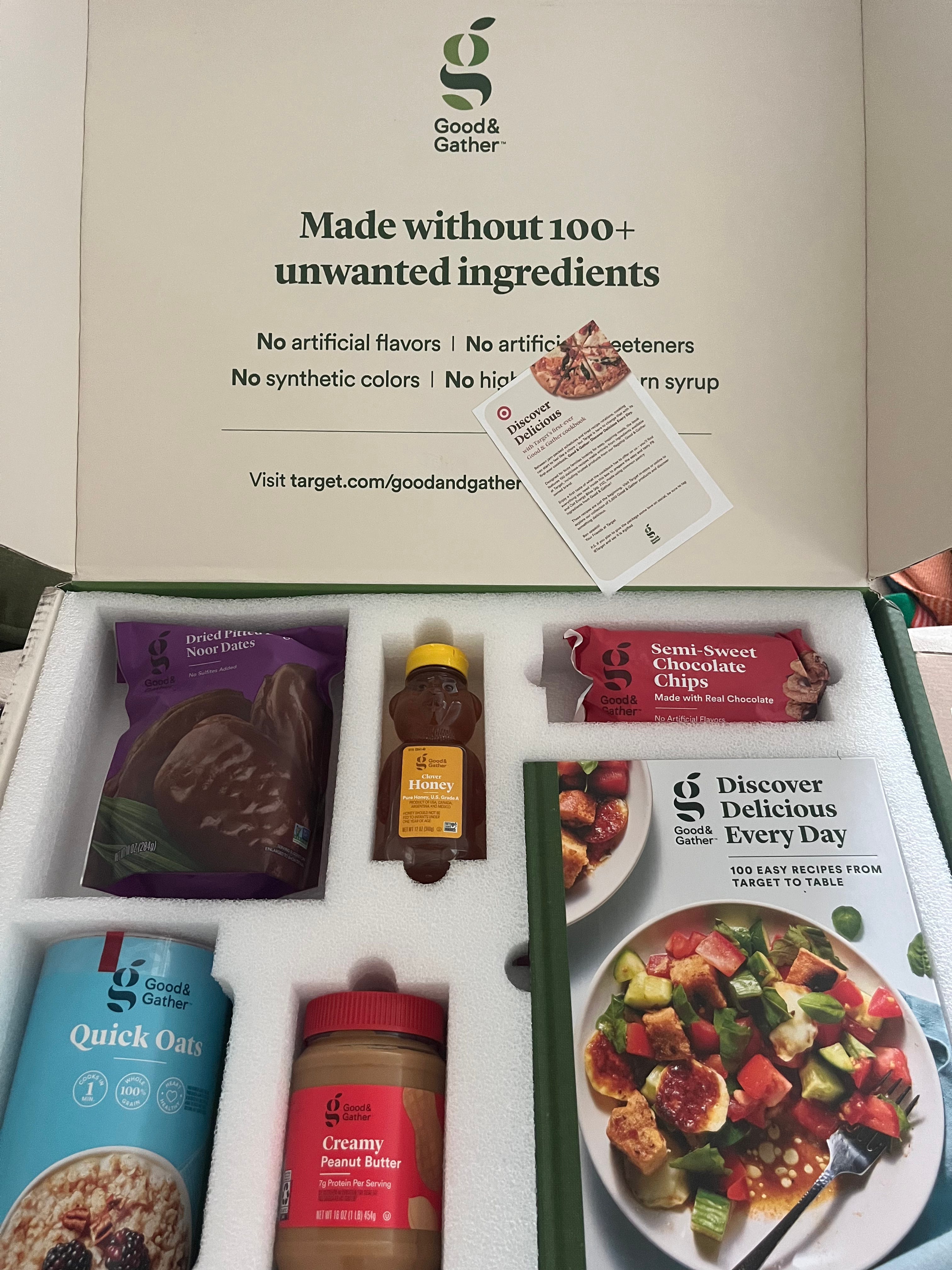
Flexing their grocery authority. Target has launched “Good & Gather: Discover Delicious Every Day,” its first-ever cookbook featuring 100 recipes built around its owned food brand with every single ingredient listed shoppable at Target.
We (and countless people online) have said this over and over again over the past year, “Target is the new Whole Foods.” It’s become this amazing grocery destination for both quality and discovery—we wrote about it here. Using a cookbook as a way to market that is genius, better to show, not tell!
Private-label used to feel like the lesser choice, the option you go for if you’re shopping on a budget. But Target is pulling out all the stops to make Good & Gather feel aspirational—from partnering with Michelin-star chefs on exclusive Good & Gather product lines to creating this cookbook and sending out sharable PR mailers…
Another win for the legend of the mall. Claire’s is relaunching its in-store piercing experience across the US and Canada with redesigned store layouts and updated safety/training standards. The move is part of a broader brand rebuild under Ames Watson, which acquired Claire’s out of bankruptcy last year, and comes as the retailer doubles down on brick-and-mortar while expanding through licensing partnerships with Walmart, Kohl’s, CVS, and other retailers.
First Bath & Body Works is getting back in the conversation with its Ulta partnership, Amazon launch, and Hilary Duff-led new Fruit Fusion line. Then Gap is bringing back its ’90s fragrance collection as part of its broader beauty push. The late ‘90s-early 2000s mall is really having a moment, and it makes sense: The people who grew up on Japanese Cherry Blossom, Gap Dream, and Claire’s piercing chairs now have jobs, kids, and disposable income. Brands are realizing there’s some power in dusting off the emotional IP of the mall era and rebuilding it for how people shop today.
Sephora bets on K-beauty. Olive Young partnered exclusively with Sephora to bring 19 Korean skincare brands to 500 U.S. locations starting Aug. 20, with a dedicated Olive Young space at Sephora’s Times Square flagship.
This come four months after Olive Young opened its first two US locations in LA, with three more on the docket. Now, the retailer is expanding through the store-in-store format with Sephora. Though this does give Olive Young some credibility to the US consumer, we actually think Sephora benefits more in this partnership; U.S. K-Beauty sales hit $2.8B in early 2026, up ~48% YoY, and only seem to be growing. As Sephora battles its new competitor in beauty discovery (Ulta), it will need to present new occasions for discovery and social relevance. This partnership is a great starting point.
Funding news
Protein coffee 🤝 $1 billion. Javvy, a functional protein coffee brand sold at Walmart, Target, Sprouts and more with ~$300M in annual revenue, is exploring a sale that could value it at ~$1 billion.
As the brilliant Keven Ryan of Malachite Strategy and Research detailed in his newsletter, FoodStuff, the biggest opportunity for today’s protein beverage market is “protein layered onto an existing daily routine.” Rather than introducing an entirely new usage occasion, or trying to compete on macros alone, adding protein on top of an existing routine (like drinking coffee) is the “lowest-friction play”…and evidently, one that’s worth a lot. Pair it with mass-market distribution, approachable pricing, and constant flavor innovation (we must try the Cookie Butter), and you have a winning product.
The $3.8 billion acquisition decades in the making. Procter & Gamble acquired Thorne, a practitioner-trusted VMS (vitamins, minerals, supplements) brand, from L Catterton for $3.8 billion. Less than three years ago, L Catterton bought Thorne for $680 million. But, unlike Gruns’s acquisition, this was hardly an overnight success:
Thorne spent its first three decades building credibility the slow way, launching in Seattle in 1984 as a practitioner brand and earning trust through clinician word-of-mouth, NSF manufacturing certification (the brand is fully vertically integrated), and a 2016 Mayo Clinic research partnership rather than consumer marketing.
That clinical foundation became the launchpad for a DTC pivot starting around 2016, followed by a 2018 direct-to-consumer relaunch and a 2020 acquisition of at-home biomarker testing platform WellnessFX, the moves that let Thorne sell its practitioner-grade reputation directly to consumers instead of through doctors’ offices.
Thorne went public via SPAC in late 2021 at a $525 million valuation, but only temporarily; L Catterton took the company private in an August 2023 deal worth roughly $680 million (a 94% premium to Thorne’s unaffected share price), a signal that the growth story was still underwritten even as public investors soured on it.
Under L Catterton, Thorne leaned into a generational repositioning, from prevention-focused boomer brand to performance-focused Gen Z and millennial pick, posting a 30%+ compound annual growth rate and crossing $500 million in revenue in 2025, growth fast enough to draw reported interest from Unilever earlier this summer before P&G locked in the deal.
The story here is really: a decades-old credibility moat gets rediscovered by a new generation, scaled aggressively under sponsor ownership, then sold to a strategic acquirer once the growth curve is steep enough to justify a premium multiple… sounds familiar (see: Garden of Life, Nature’s Bounty).
An all-in-one pet brand? The Farmer’s Dog has acquired Woof, the refillable enrichment brand behind the Pupsicle, expanding beyond fresh dog food into play and wellness. Financial terms were not disclosed, and Woof will operate as an independent division.
The hemp hype continues. Uncle Arnie’s raised $2 million from returning backers Mindset Capital and Boston Beer co-founder Harry Rubin’s investment office, doubling down on both recreational cannabis and hemp-derived THC drinks.
PE goes after hydration. Axum Capital Partners has acquired a controlling interest in BARCODE, the better-for-you performance hydration brand co-founded by NBA champ Kyle Kuzma, with NBA All-Star Victor Wembanyama staying on as shareholder and strategic partner. No deal terms disclosed.
Make! Alcohol! Fun! Again! (responsibly…). Unifying Spirits, makers of Boba POPS®—an alcohol-filled popping boba brand—raised $2.238M from 462 investors on Wefunder, bringing total equity financing to ~$8M. The brand hit $2.8M in revenue in 2025 (3.6x YoY growth) and is in 10,000+ doors across 75 national chains. The funding will increase manufacturing, distro, and innovation, including an upcoming ready-to-drink beverage line.
Founder Ray Rozycki, a teacher and entrepreneur, brought on some beverage and CPG powerhouses, including Mark Andrews, who built Castle Brands and sold it to Pernod Ricard for $300M.
More protein from leaves! Plantible raised $35M—a $25M USDA-backed loan via X-Caliber Rural Capital plus $10M equity from RA Capital—to expand RuBisCO production fivefold to over 1,000 metric tons at its Eldorado, Texas facility. A new duckweed strain has already boosted yield 40%!
A recap for those who missed the RuBisCO deep dive: RuBisCO is the most abundant protein on Earth, which exists in literally every green leaf. It has the best essential amino acid profile of any commercially available protein, a PDCAAS of 1.0 (Protein Digestibility-Corrected Amino Acid Score—1.0 is best-possible!), and digests 5-6x faster than whey.
As egg and whey volatility (avian flu, global whey shortage) create a demand catalyst for alternative proteins, companies like Plantible and Leaft will look to increase production capacity significantly.
If you haven’t yet, please subscribe, like, leave a comment, and share it! It helps us continue to bring you the most interesting news + nuance in consumer and retail every week.
This is sponsored advertising content. If you’re interested in partnering with Express Checkout on an upcoming newsletter, reply to this email!