



Hello hello!
Reporting live from a hot and humid day in Austin, Texas! 🤠 YEEHAW.
We’re so excited to have our (cowboy) boots on the ground for a few days in one of the coolest CPG cities. While we’re here, we’ll be hosting an event with our Austin community (in partnership with our friends at JPMorgan!) and spending some dedicated time planning the future of Express Checkout.
Yea, you read that right: we’re on a ~ company offsite ~ right now, which we’re not entirely sure you’re allowed to say as a two-person team, but we’re leaning in nonetheless.
As we dig into our larger strategy, we’d love to hear from YOU 🫵: if you have any feedback on our recent content (this newsletter, our socials, or The Curious Consumer podcast), ideas for future content/events/activations, or just want to tell Nate he looks pretty in his most recent TikTok, reply directly to this email.
CPG & Consumer Goods
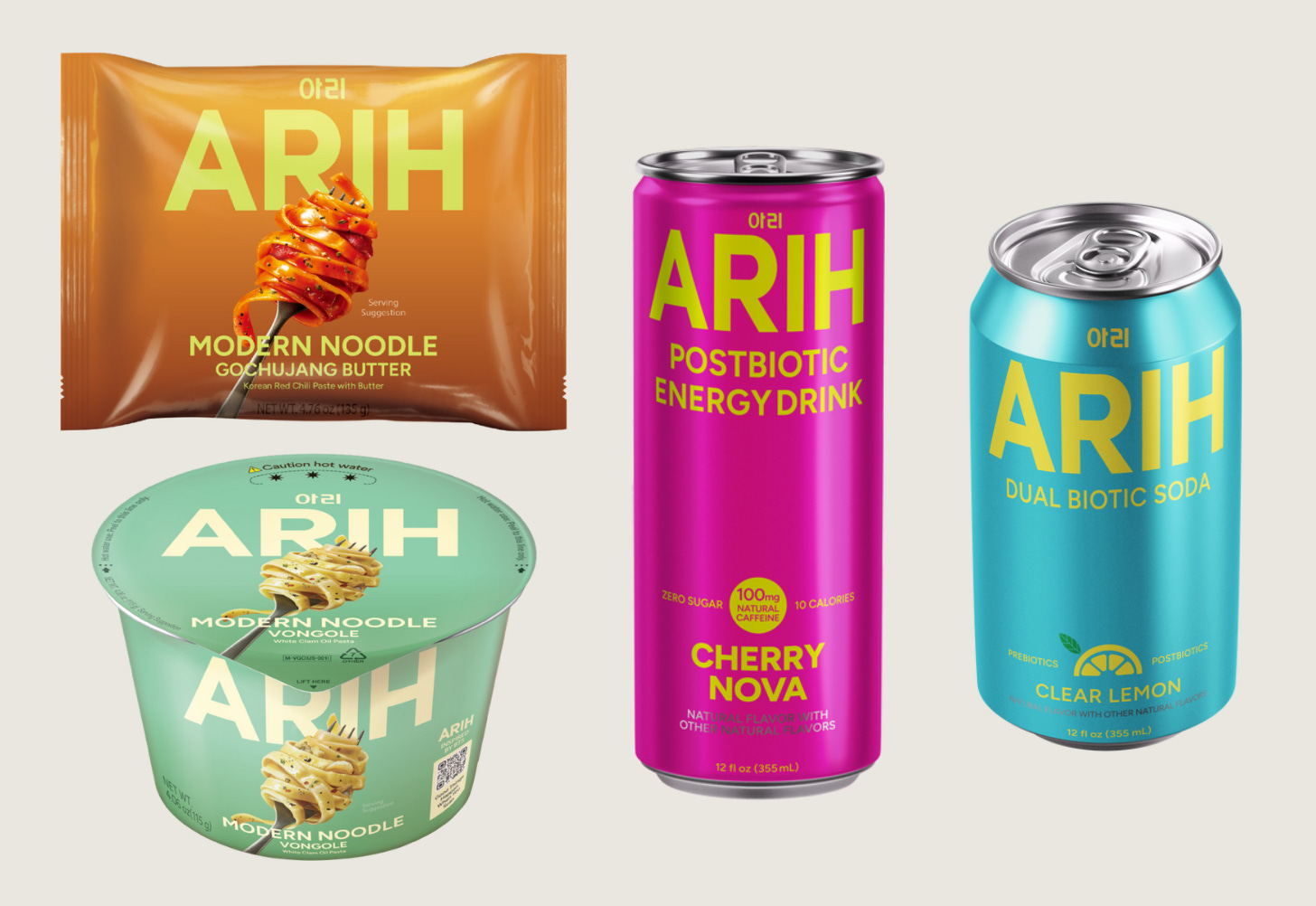
BTS, the K-Pop legends and CPG collaborators? Apparently so! Korean F&B conglomerates Paldo and hy launched ARIH, a Western-Korean fusion F&B brand developed “inspired by” boy band BTS, exclusively at Walmart US. The line includes stir-fried noodles in 7 flavors, called “Modern Noodles” and “postbiotic” energy drinks and “dual biotic” sodas (what a bizarre combination of products?!)
And there so many SKUs. The noodles are launching in a total of 7 flavors and 14 SKUs (7 pouch types and 7 cup types), the postbiotic energy drinks comes in 7 flavors, and the “Dual Biotic Soda” also comes in 7 flavors.
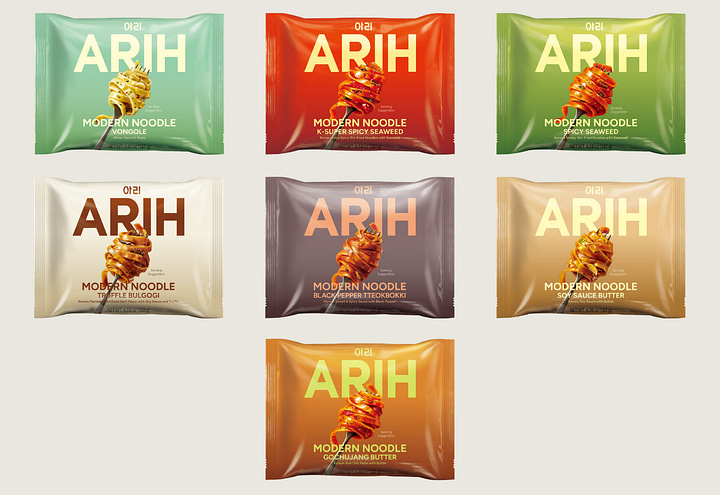
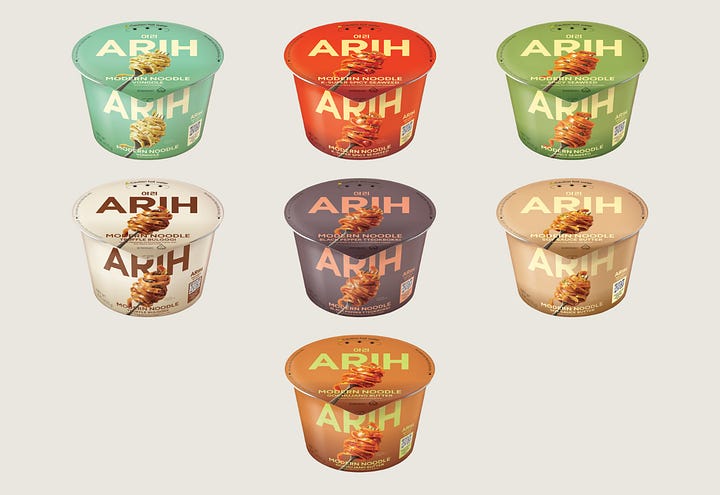
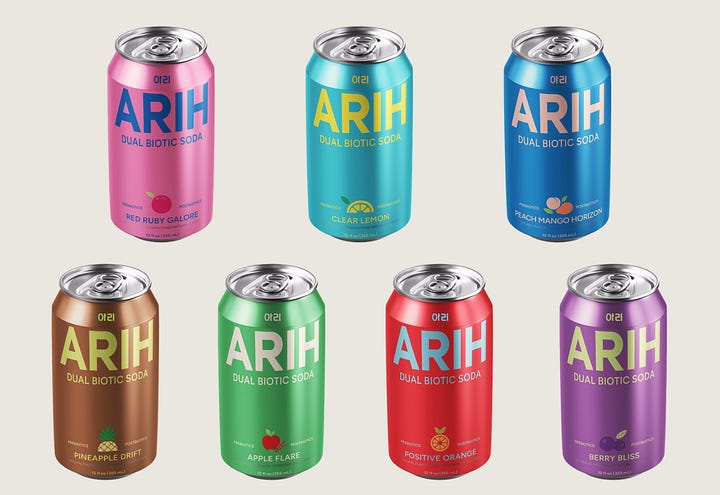
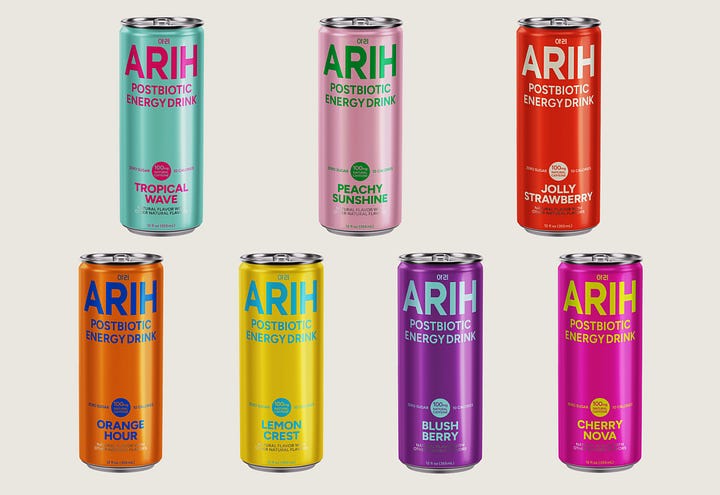
Just so many There’s such a disconnect here. If the brand is supposed to be “inspired by BTS,” why does it feel like a soulless private-label attempt at staying relevant in the growing—and wildly separate—modern soda + instant noodle categories? Beyond Korean-inspired flavors, there is absolutely zero connection between BTS and these product categories—let alone technical-sounding, wellnessy callouts like “dual biotic.”
We’ve seen many celebrity-backed brands succeed, but there’s a common thread: the celebrity’s personal brand needs to match the ethos of the products. Otherwise, it reads as glorified merch (see our additional thoughts on building the perfect celebrity bran from a few months ago).
Pickles will never die. Because Grillo’s, the king of pickle collabs, partnered with Burt’s Bees to launch a limited-edition lip balm called Fresh Cucumber Dill in Walmarts nationwide.
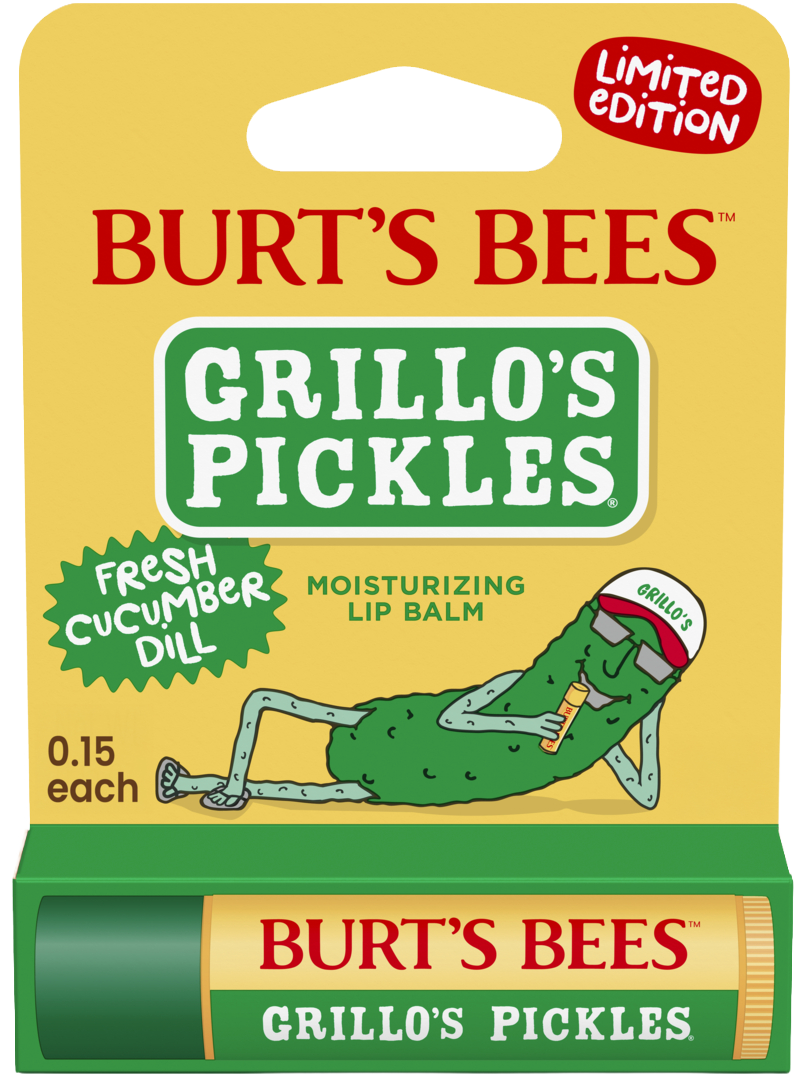
Yup Add this to the list of “collabs that don’t need to exist.” While we love a fun, gimmicky collab positioned for virality, it often feels like just that—an attempt to get people talking, not to create a genuinely innovative, usable product. We’ve especially seen this kind of clickbait collaboration (do I coin that?!) come from bigger brands like Velveeta, or in this case, Burt’s Bees. It’s cool to see that the BigCo brands are realizing they can’t create their own clout—it needs to come from a buzzy emerging brand—but at what point are brands just pushing out products for the sake of relevancy, and not true innovation? - Jenna
I, however, love pickles. KEEP EM COMING, BABY. - Nate
Hydrate or diedrate, friends. Capri Sun launched Hydrate, an electrolyte drink made specifically for kids, with 50% less sugar than leading sports drinks and no artificial flavors, colors, or preservatives, rolling out to Walmart, Target, and Amazon.
They’re not the only ones moving into kids functional hydration. Hiya Health and Cure Hydration launched kids electrolyte drink mixes in 2025. And Kinderlyte has been in the kids oral electrolyte solution space since 2019, founded on the argument that existing OES products were packed with artificial sweeteners and dyes. We covered the broader kids wellness wave—from snacks to supplements to beverages—in our February newsletter.
THC what?! Stir The Pot, a new cannabis brand, launched a hemp-derived THC-infused coffee syrup in 10 mg sachets, co-founded by former Jones Soda COO Eric Chastain and Grammy winner Kevin Smith, with initial rollout in Texas, Illinois, and Florida.
The cannabis market, despite some potential tumultuous headwinds (which we talked about last week), is truly blossoming. We’re seeing brands move beyond the seltzer can and into occasion-specific formats designed to attach to existing daily rituals. BRĒZ launched a cannabis and mushroom-infused spirit built for mixing and social occasions; Cann moved upmarket with a aperitif format; and Clebby’s launched hemp-derived cannabis baking mixes.
But what’s most interesting about this launch is how nonchalantly it communicates the new positioning of THC—it’s now a wellness ingredient, intended to be part of consumer’s everyday routine (in this case, coffee). While THC coffee syrup may sound insane at first blush, it’s a strategy that we’ve seen before: Stir The Pot isn’t asking consumers to adopt a new consumption habit, it’s asking them to include THC in an existing routine—similar to how companies like Ryze and Everyday Dose popularized adaptogenic mushrooms in coffee. It all feels part of a larger wellness trend of “calm focus” (see: rise of L-theanine, nootropics, “adderall alternatives,” etc).


eCommerce
Beauty goes agentic, on Google’s turf. Ulta Beauty announced a partnership with Google to make its assortment shoppable inside AI Mode in Search and the Gemini app via Universal Commerce Protocol, while also launching Ulta AI, a Gemini-powered on-site shopping assistant built on Gemini Enterprise.
While other retailers go for ChatGPT, Ulta is not like the other girls. Makes sense, especially after Sephora launched an app within ChatGPT. But what’s especially smart about going for Gemini—though it may not be as popular of a chatbot as ChatGPT—is that Gemini also feeds the answers for “AI Mode” on Google Search. So if a shopper googles “best moisturizer,” the AI Mode will likely populate with a pick from Ulta.
Retail
The OG home shopping experience is coming to an end. QVC Group has announced a prepackaged Chapter 11 restructuring that will cut its debt from $6.6 billion to $1.3 billion. Revenue fell 8% to $8.3 billion in 2025 as net losses topped $2.1 billion.
This was a long-time coming. When your core channel is cable, 2026 is a tough time to stay relevant. Add in ecomm and algorithm-driven discovery platforms, and you have a brutal recipe for a platform that refuses to adapt its long-form segments.
While “home shopping” may be over, live shopping is just getting started. As of January, the live shopping market reached an estimated $22 billion across North America and Europe, driven largely by platforms like WhatNot.
Clean-label pressure reaches the discount aisle. ALDI announced it will eliminate 44 more ingredients from its private label assortment by December 2027, expanding its restricted list from 13 to 57 (!!!)—including BHA, BHT, and titanium dioxide.
Whole Foods and Trader Joe’s have long promoted their long lists of “banned” ingredients in private-label products, and it’s interesting to see mass-market and budget retailers mimic this strategy. This is part of a much larger movement we’ve been seeing from affordable retailers as they try to meet broader demand for “clean” ingredients and have their private label products compete with better-for-you emerging brands.
At the end of last year, Walmart announced its new move to eliminate synthetic dyes and an additional 30 ingredients (certain preservatives, artificial sweeteners and fat substitutes) from its private brand food products.
The question that should arise from these announcements is: what are they replacing these ingredients with? Many now-banned ingredients, though they may be harmful in large quantities and certainly sound harmful, have been heavily tested in specific quantities for food products. When manufacturers go to replace them, they may be doing so with ingredients that haven’t been as studied. Just look at what happened when “BPA-free” went viral and brands all started replacing BPA with substitutes that were often *worse.*
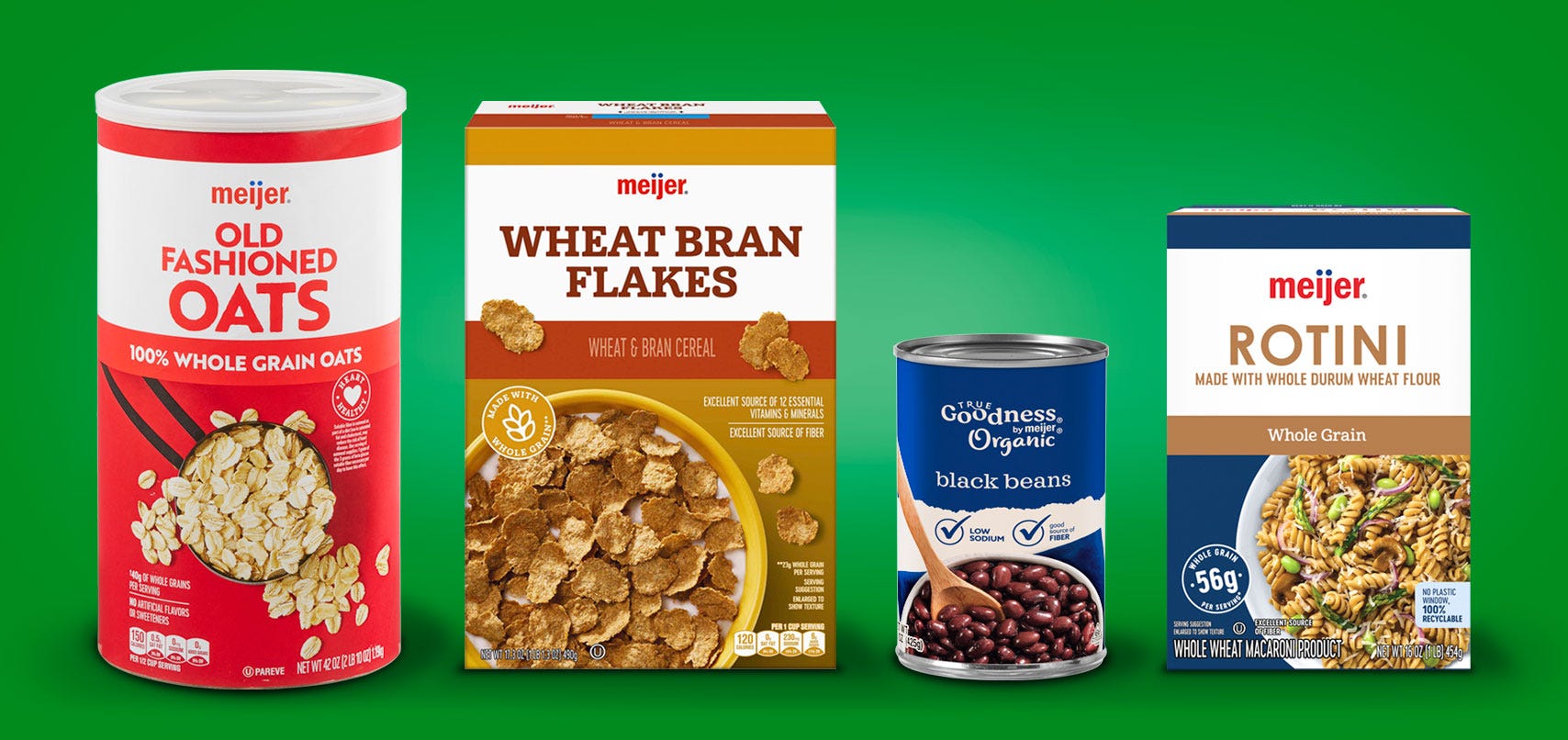
The three musketeers: private-label, protein, and fiber. Meijer, Midwest-based retailer with over 500 supercenters, is launching 300+ new private-label products targeting fiber and protein trends.
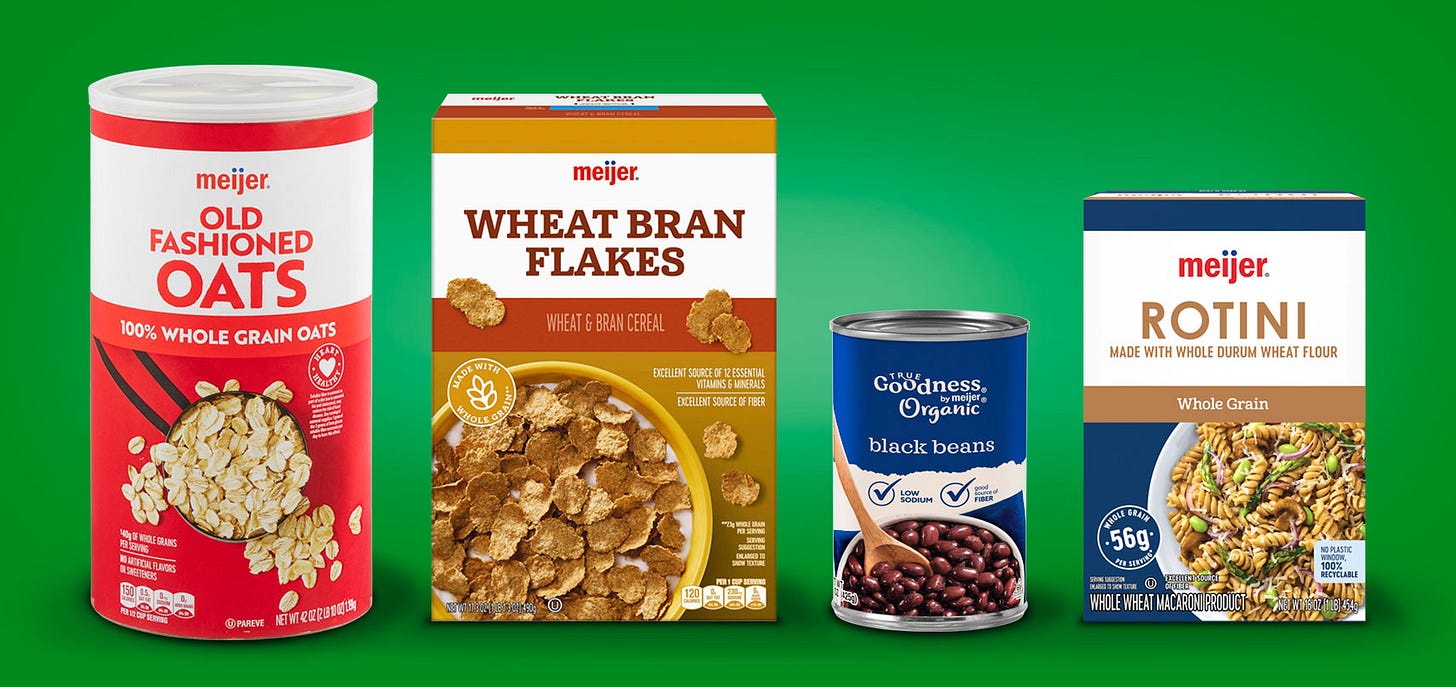
Shocker! Meijer is joining retailers like Kroger, which rolled out 80+ products in its Simple Truth Protein line last September, and ShopRite (Wakefern), which launched a “GLP-1 Wellness Starter Kit” in February.
While Meijer’s new products don’t explicitly name GLP-1 shoppers, at this point, the broader “fiber + protein trend” is essentially code for “GLP-1 friendly.”
Never! Fast! Enough!!!! Sam’s Club launched an enhanced Express delivery tier, promising checkout-to-doorstep in an hour or less across 600+ clubs—no minimum purchase, same in-club pricing. Since the April 2 rollout, ~65,000 orders have been fulfilled at an average of 55 minutes.
It seems like every retailer is finding ways to get product → hands ever-faster. Whether its Walmart scaling drone delivery or Uber Direct bringing one-hour local delivery to Shopify merchants, it seems that the only way to stay competitive as a retailer or ecomm storefront is to deliver products near-instantly.
Funding news
The anti-Gatorade just got funded. Leisure Hydration closed an oversubscribed Series A led by Midnight Venture Partners, with Asahi Group and Nutrabolt CEO Doss Cunningham among backers. The functional hydration brand—up 1,300% in revenue over two years— expanding to Target, Whole Foods, and HEB in 2026.
Leisure was wayyyyy ahead of the game. Last week, Gatorade announced its biggest brand refresh in 60 years—explicitly pivoting toward non-athletes. Leisure has been building for that consumer since its founding in 2022.
We wrote about the electrolyte category more broadly last summer, but the big takeaway is that plenty of other brands have been ahead of this shift, too:
Flerish Hydration, backed by Ja’Marr Chase as an equity partner, leads with l-theanine, B vitamins, and zinc rather than a sports formula; Pricklee rebranded from cactus water to “natural hydration drink” and raised $2M earlier in 2026; Coco5, backed by Devin Booker and Charles Barkley, closed $10M led by Loop Capital to push into wellness and hospitality channels beyond sports retail.
Meanwhile, DryWater, the real-fruit electrolyte powder brand founded in 2023, is already pushing $100M in annual sales and is sold across 22,000 doors nationwide including at Walmart—one of the fastest ramp ups the category has seen. Liquid IV, now under Unilever, still dominates the packet format. Cure has built a base around oral rehydration science. And Cadence, a UK-born electrolyte brand, just launched at both Walmart and Target with RTD drinks and sachets.
And there are so many more emerging hydration brands out there: Buoy, Corpse Reviver, DripDrop, Waterboy, Promix, Taste Salud…deep breath…Instant Hydration, Magna, Saps, LMNT, Prime, HY.Q, GoodOnya, Sparklinuts, Farmwell, Unwell, Rally (pickle juice shots) all the different coconut water brands, and even Plant People has an electrolyte gummy.
All this to say, plain water is dead fam.
Cold. hard.
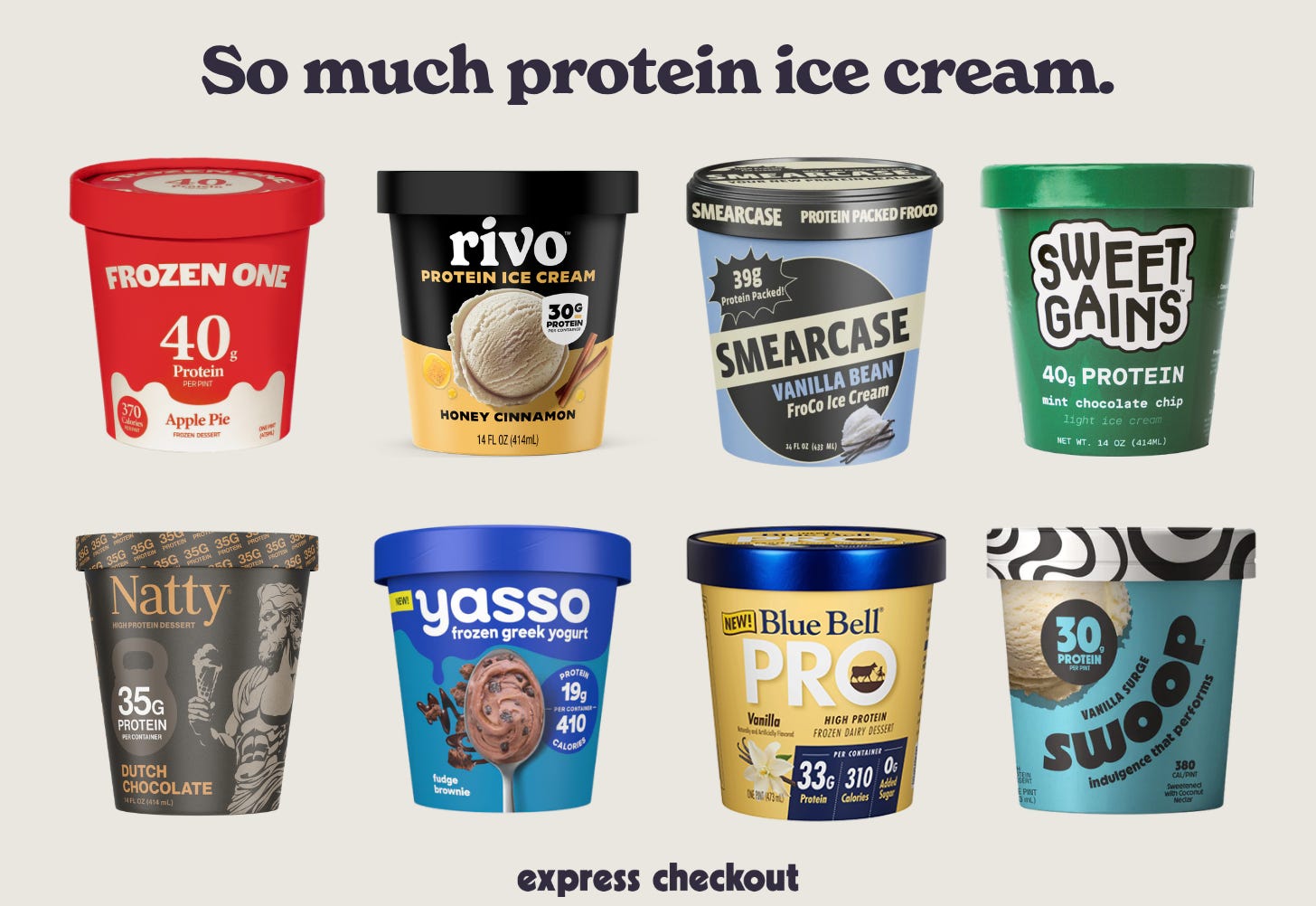
ice creamcash. Frozen One raised a $2 million seed round led by Supernatural Ventures and The Angel Group, with Tonic Ventures and Lucinda Capital also participating. The Austin-based high-protein, low-sugar ice cream brand will use the funding for retail expansion and manufacturing scale.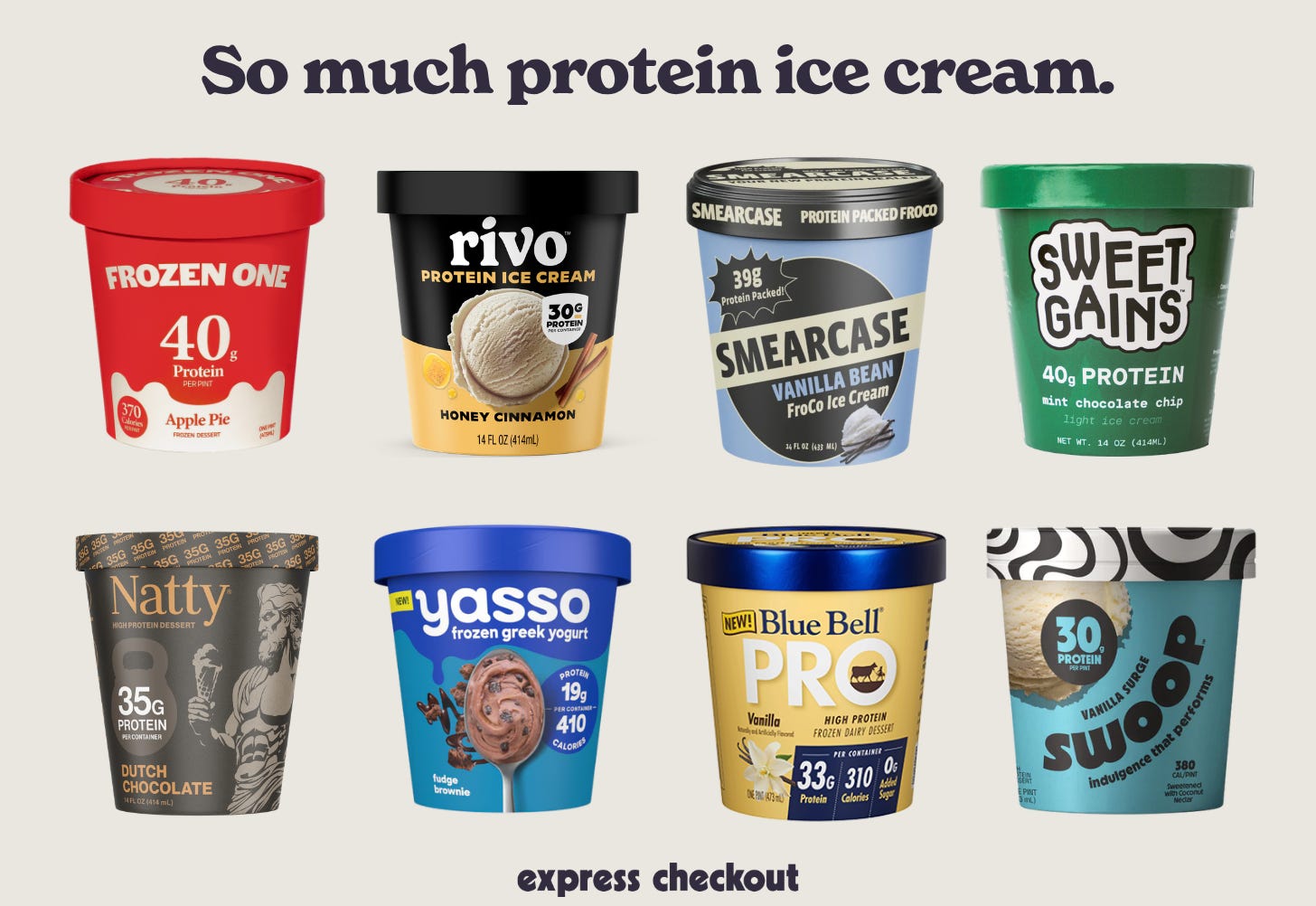
If you have eyes, you know protein ice creams are everywhere. Swoop launched at Target nationwide earlier this year with a protein-first, low-calorie pint; Protein Pints closed a $2M debt round and landed in 2,150 Kroger stores; and brands like Sweet Gains, Smearcase, Natty, and Rivo have all been building in the same lane and seeing varying levels of success. And, according to a literal truck sighting at Expo West, soon, we’ll see David Protein launch its own high-protein ice cream to join the club.
The difference between these protein ice creams and the OG “diet ice cream” trend (see: Halo Top)? This new wave of brands is actually nailing flavor and texture. And instead of focusing on super-low-calorie or dairy-free formulations, these brands are mostly emphasizing what they’re adding (protein).
Laird Superfood is on a superfoods shopping spree. Laird Superfood acquired Terrasoul Superfoods for $48M cash—the third acquisition in its Nexus-backed platform build. Terrasoul posted ~$65.8M in net sales in 2025, with a vertically integrated supply chain and strong e-commerce positioning.
Jason Vieth, CEO of Laird Superfood, said this is “a significant step forward in our mission to build the premier platform in superfoods and functional nutrition.” Key word: platform. Superfoods/adaptogens as a product’s core selling point has largely been fazed out—but Laird is making a bet on the superfood supply chain as a whole.
The new wave of makeup brands is here. Westman Atelier, a luxury makeup brand launched by celeb makeup artist Gucci Westman, raised $15 million from existing backers Prelude Growth Partners and Imaginary Ventures—bringing total funding to ~$52 million—as the ~$100M-revenue brand, ranked third-fastest-growing makeup brand by creator impact, positions itself for a likely strategic exit.
Prelude and Imaginary have both been deploying aggressively across beauty. Imaginary recently backed Alix Earle’s Reale Actives, Mikayla Nogueira’s POV Beauty, Sweet Chemistry, and Lore (which raised $5.5 million in 2025). Prelude led KilgourMD’s Series A in March 2026, put $20 million into OneSkin last year, and closed its third fund at $600 million in 2025, more than double its $250 million second fund.
Both firms are doubling down on Westman Atelier at a moment when the makeup M&A market is gridlocked. And that the exit queue is long and slow-moving: according to Beauty Independent, Makeup by Mario, Merit, Saie, Rare Beauty, Fenty Beauty, Kosas, Victoria Beckham Beauty, and One/Size by Patrick Starrr have all been tracked as potential deals.
More broadly, there’s been some big moves in beauty M&A. Henkel agreed to acquire Olaplex for $1.4 billion in March 2026 (55% premium to its trading price) and Estée Lauder and Puig confirmed they are in merger talks for a combined entity valued at more than $40 billion. And last year, e.l.f. Beauty acquires Rhode (Hailey Bieber’s brand) for ~$1 billion.
David Dobrik’s chips go global. WAVERS BY DOUGHBRIK’S, the chip brand co-founded by YouTuber David Dobrik and Veggie Straws creator Jerry Bello, announced a strategic partnership with Capital Q® Ventures to fund global expansion. It also reformulated to non-GMO, gluten-free ingredients and avocado oil, like every other chip brand in 2026.
Though he’s a sometimes controversial figure, David Dobrik has maintained his relevance as an influencer, recently named Creator of the Year at the 2026 Snapchat Awards. Makes sense that Capital Q Ventures would see the potential for global scale, but it feels a smidge ambitious for a brand that has yet to gain brand recognition at a national scale.
If you haven’t yet, please subscribe, like, leave a comment, and share it! It helps us continue to bring you the most interesting news + nuance in consumer and retail every week.