



Hello hello!
It’s 4/20 🍃, and for those who partake, this 4/20 looks a whole lot different than those of Aprils past. Instead of securing the (literal) bag(gie) from a shady smoke shop or sketchy neighbor, THC enjoyers can grab their luxe, wellness-coded hemp-derived goods from entirely legitimate and legal sites and brick-and-mortar stores—from Target (all locations in Minnesota) to Total Wine and even Edibles.com’s new flagship THC retail store in Atlanta.
Evidently, there’s been a lot of movement in the THC space over the past few years—it’s now a $28 billion industry with over 300,000 jobs. The industry has grown up a lot in the past few years. And this was all (largely) possible thanks to something called the 2018 Farm Bill, which legalized “hemp” defined as cannabis with less than 0.3% delta-9 THC by dry weight.
Important caveat: the law was designed to support hemp farming, not to create a market for products that get you high. But (conveniently), it only specified delta-9 THC and measured concentration by dry weight rather than by serving, which meant a 12-ounce beverage could legally contain around 10mg of delta-9 THC—a fully psychoactive dose—and still qualify as “hemp.” The perfect gray zone for an entire market to blossom.
But, as of this 4/20, hemp-derived cannabis is seven months away from being federally illegal.
Wait… what’s going on? Last November, Trump signed a spending bill to end the government shutdown—and it included a sneaky provision effectively banning most hemp-derived THC products.
This new law caps products at 0.4mg of total THC per entire container (for context: a 1mg single gummy is considered a “microdose”). It’s set to go into effect this November, and if it does, it would eliminate roughly 95% of existing hemp products.
To be clear, it wasn’t standalone legislation—it was a rider on a must-pass funding bill. And it was championed by Mitch McConnell, the same senator who authored the 2018 Farm Bill (and apparently regrets it… 🙃).
For the past five months, the industry has been operating business as usual in hopes that this legislation will somehow… disappear. New brands are still launching, existing brands are expanding distribution, and retailers are leaning in despite legislative uncertainty. Why? Because the consumer data says they should:
Nearly 40% of current alcohol drinkers also consume cannabis, CBD, or THC, and over 60% say it directly impacts how often they drink. Meanwhile, alcohol sales declined across every category in 2025: beer and cider down 3.3%, spirits down 4.1%, wine down 6.1%.
Target’s THC pilot in Minnesota came after several quarters of flat or declining same-store sales—THC gives them a way to drive foot traffic in a category growing double digits while alcohol shrinks.
Total Wine is stocking THC seltzers at over 100 locations across nine states, and the THC beverage market exceeded $1 billion in national sales last year.
After months of turning a blind eye to the legislative reality, there’s suddenly a beacon of hope. Last week, there Senators Rand Paul (R-KY), Amy Klobuchar (D-MN), and Joni Ernst (R-IA) introduced the Hemp Safety Enforcement Act Marijuana Moment—a bipartisan bill that lets states opt out of the federal ban as long as they enforce age limits and ban synthetic cannabinoids. The strategy is to attach it to the 2026 Farm Bill.
For brands, it’s a lifeline… but a complicated one. Ben Starmer, founder of Dad Grass, sees both the opportunity and the operational reality:
“It’s encouraging to see movement toward a more defined regulatory path for hemp-derived products. Giving states flexibility is an important step and reflects how much this category has already evolved.
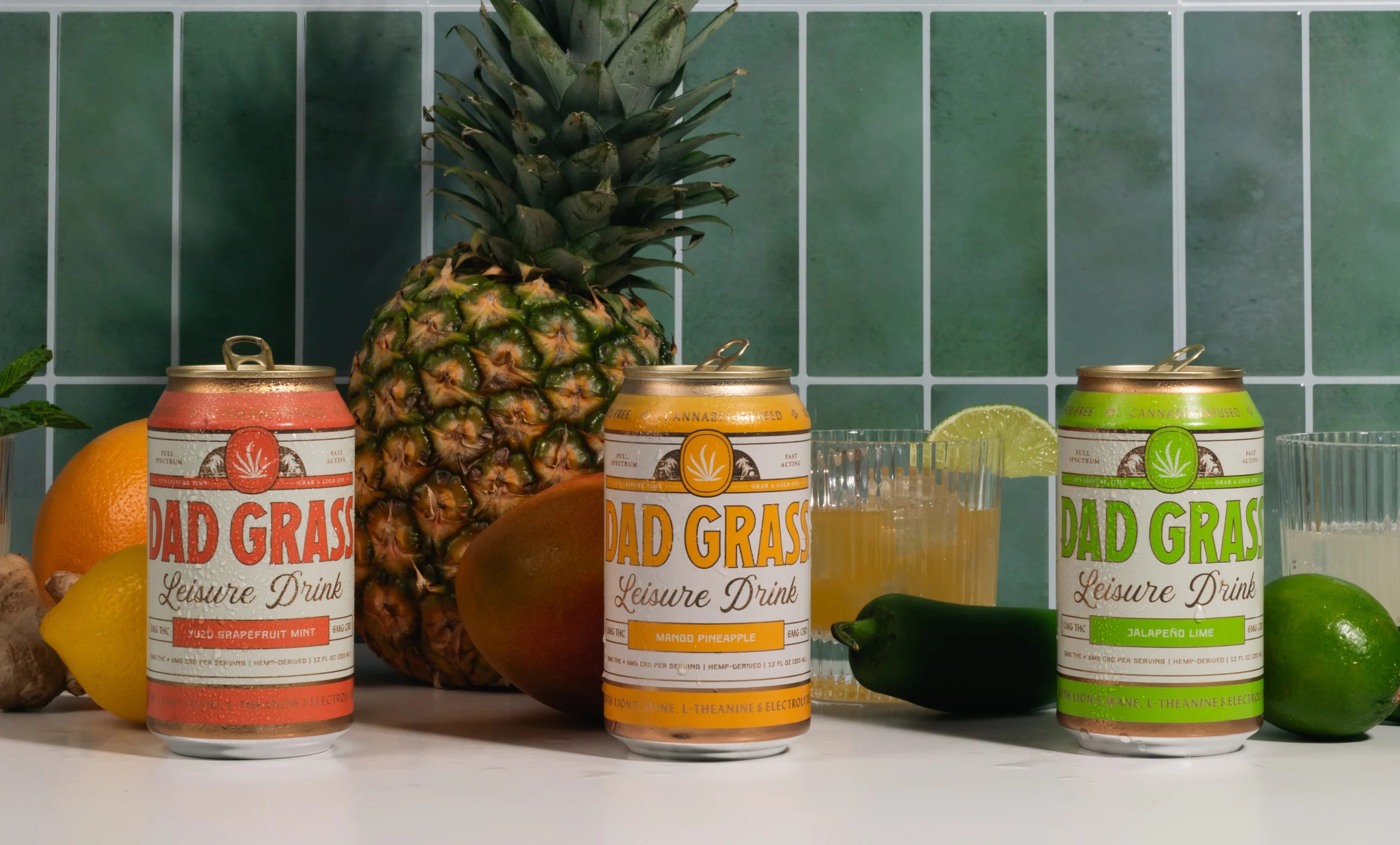
At the same time, the system needs to work in practice. The fastest-growing channels for us—grocery, convenience, and liquor—rely on national infrastructure like banking, payments, and multi-state distribution. Even if a state allows these products, the ancillary systems that make modern retail work—banking and payment processing—operate at a national level and tend to follow federal rules. Large retailers depend on those systems, so when they don’t align, it becomes much harder to actually sell and scale the product, even where it’s legal.”
That’s the real challenge. A state-by-state patchwork doesn’t just mean 50 different compliance environments—it means the infrastructure that enables modern retail operates under federal rules that could make these products effectively unsellable, even where they’re legal.
Looking ahead: Whether the shelves at Target and Total Wine stay stocked past November comes down to what happens in Congress over the next seven months. What’s already clear is that consumer demand is real, retail validation is real, and the cultural shift from “weed” to wellness is probably irreversible—regardless of what the law says.
As Starmer puts it: “Net-net, this is progress, and progress over perfection. We’re optimistic about where things are heading—but unlocking the full potential of the category will require better alignment between state-level frameworks and the broader systems that enable scale.”
Happy 4/20. We’re celebrating tonight at In Season, Express Checkout’s new quarterly event spotlighting three trends shaping CPG (spoiler: THC is one of them for Spring—and we’ll be featuring brands like Dad Grass, The High Confectionary, Clebby’s, Mary & Jane, and more).
Celebrate responsibly 🫡
CPG & Consumer Goods
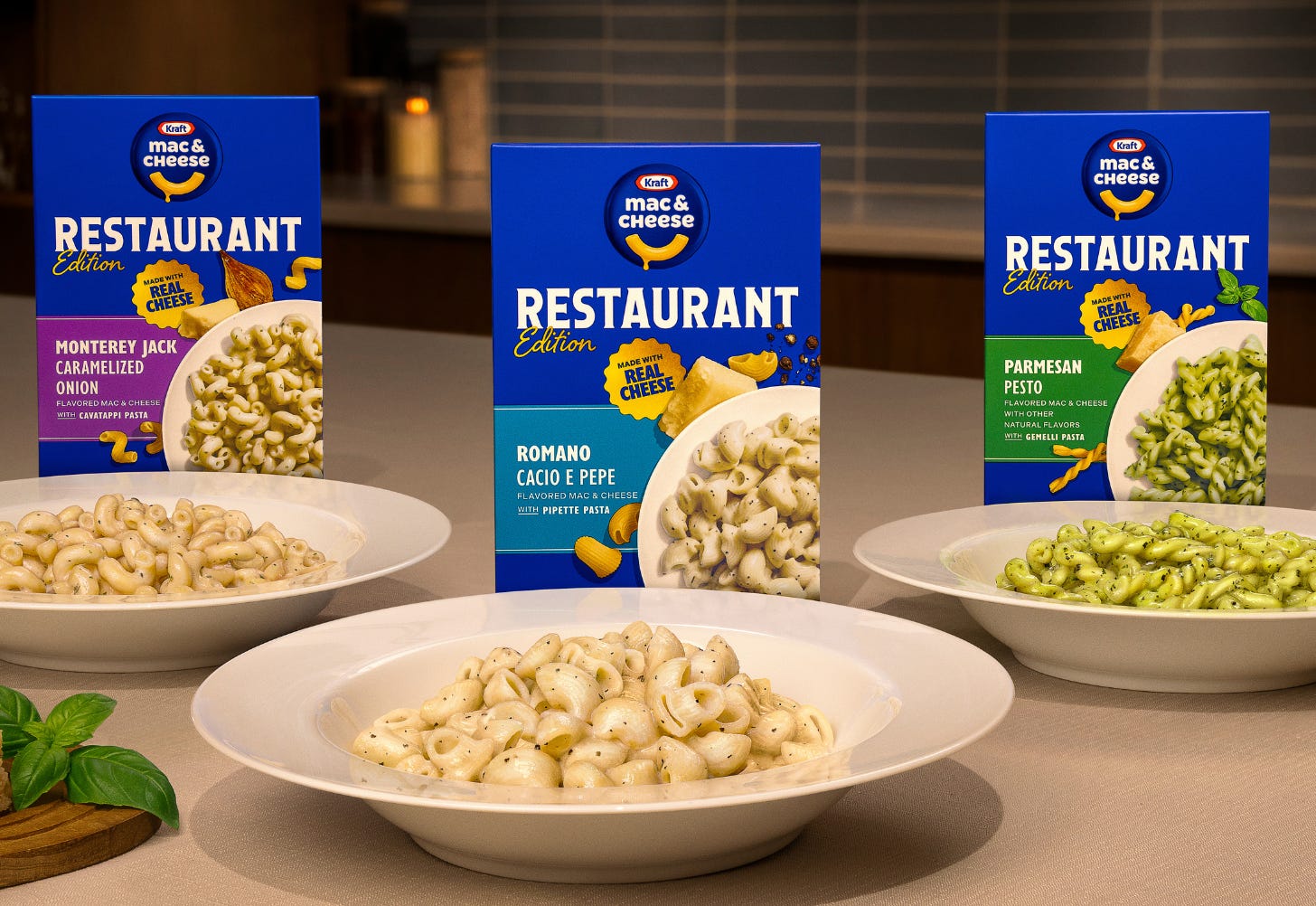
The blue box is sweating. Kraft Mac & Cheese is rolling out its new “Restaurant Edition,” a supposed elevatedline featuring three flavors: Parmesan Pesto, Romano Cacio e Pepe, and Monterey Jack Caramelized Onion.
Kraft is starting to lose the boxed mac and cheese game it invented back in 1937. According to the WSJ, buzzy upstarts like Goodles and supermarket private-label knockoffs are eating into Kraft’s market share. When Goodles first hit shelves in 2022, Kraft wasn’t especially worried. Now, Goodles controls 6% of the mac and cheese market, is driving 79% of the category’s total growth, and sells 3 boxes every second. With this new premium line and Kraft’s introduction of a protein line, PowerMac, the other week, it looks like Kraft is desperately attempting to differentiate and reclaim market share.
From fake burgers to fizzy protein water. Beyond Meat, now rebranded as simply Beyond, officially launched its new line of sparkling plant protein drinks, Beyond Immerse, into NYC retail through a distribution deal with Big Geyser. Three flavors (cherry-berry, peach-mango, strawberry-lemonade) are hitting 26,000+ outlets this summer, packing 10–20g of protein and 7g of fiber per can.
Just last month, the company dropped “Meat” from its name entirely, rebranding to Beyond The Plant Protein Co—its response to US retail sales of plant-based meat plummeting 26% over the last two years. Beyond’s revenue dropped 14% in the first nine months of 2025, its stock has been trading well below $1, and it had to publicly deny bankruptcy rumors after getting a Nasdaq delisting warning. CEO Ethan Brown is betting that if consumers won’t eat the burgers, maybe they’ll at least drink the protein, riding the GLP-1 and “fibermaxxing” trends. A protein bar is also set to come this summer.
I had a chance to try this at Expo West…these were sadly not good at all 😳 - Nate
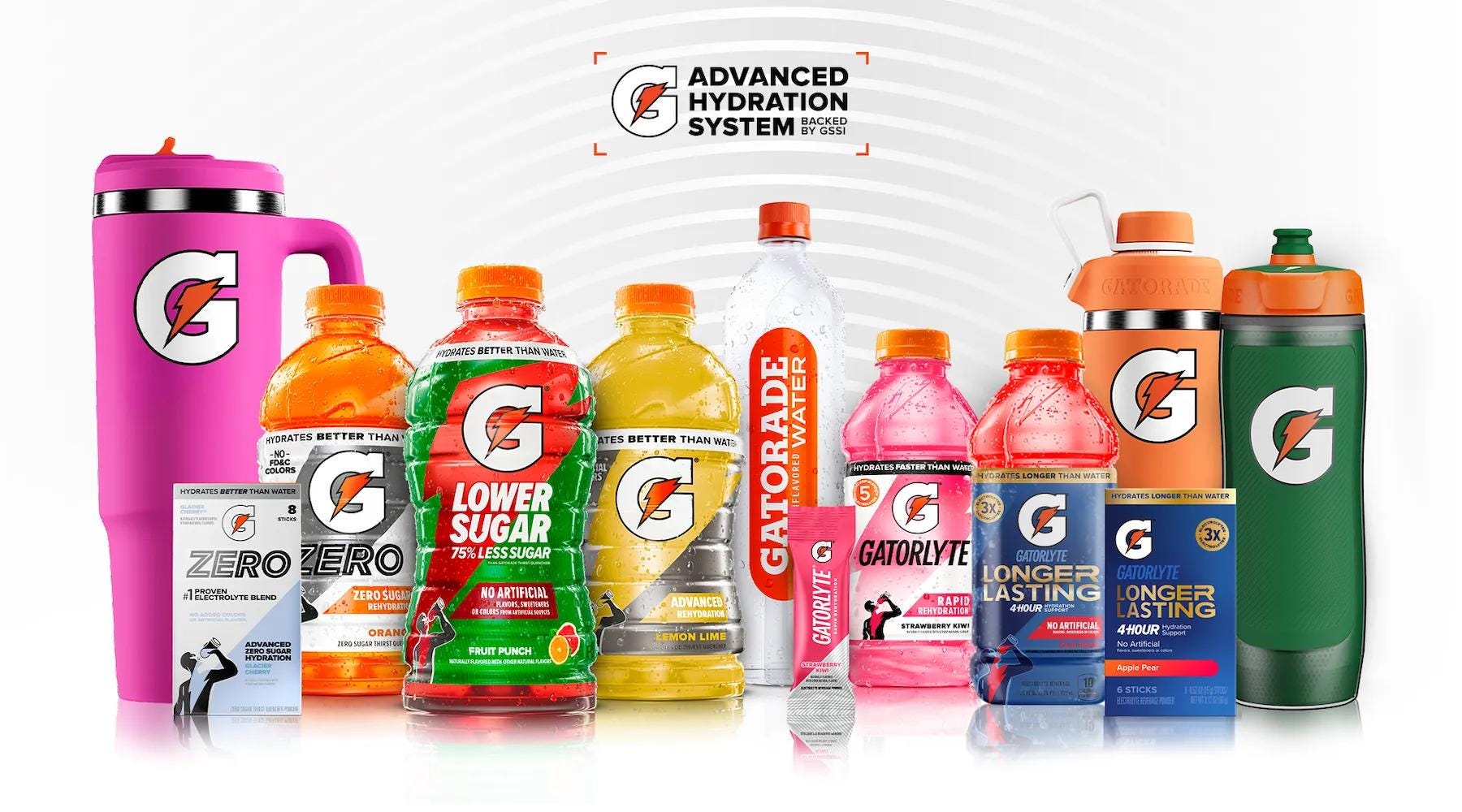
Gatorade without the Gatorade colors? PepsiCo is giving Gatorade its biggest refresh in 60 years…removing artificial dyes from its top flavors (Fruit Punch, Lemon Lime, Orange), launching a new “Advanced Hydration System” portfolio, and rolling out its highest-electrolyte RTD offering yet called Gatorlyte Longer Lasting. The brand is also expanding beyond sports into everyday hydration occasions.
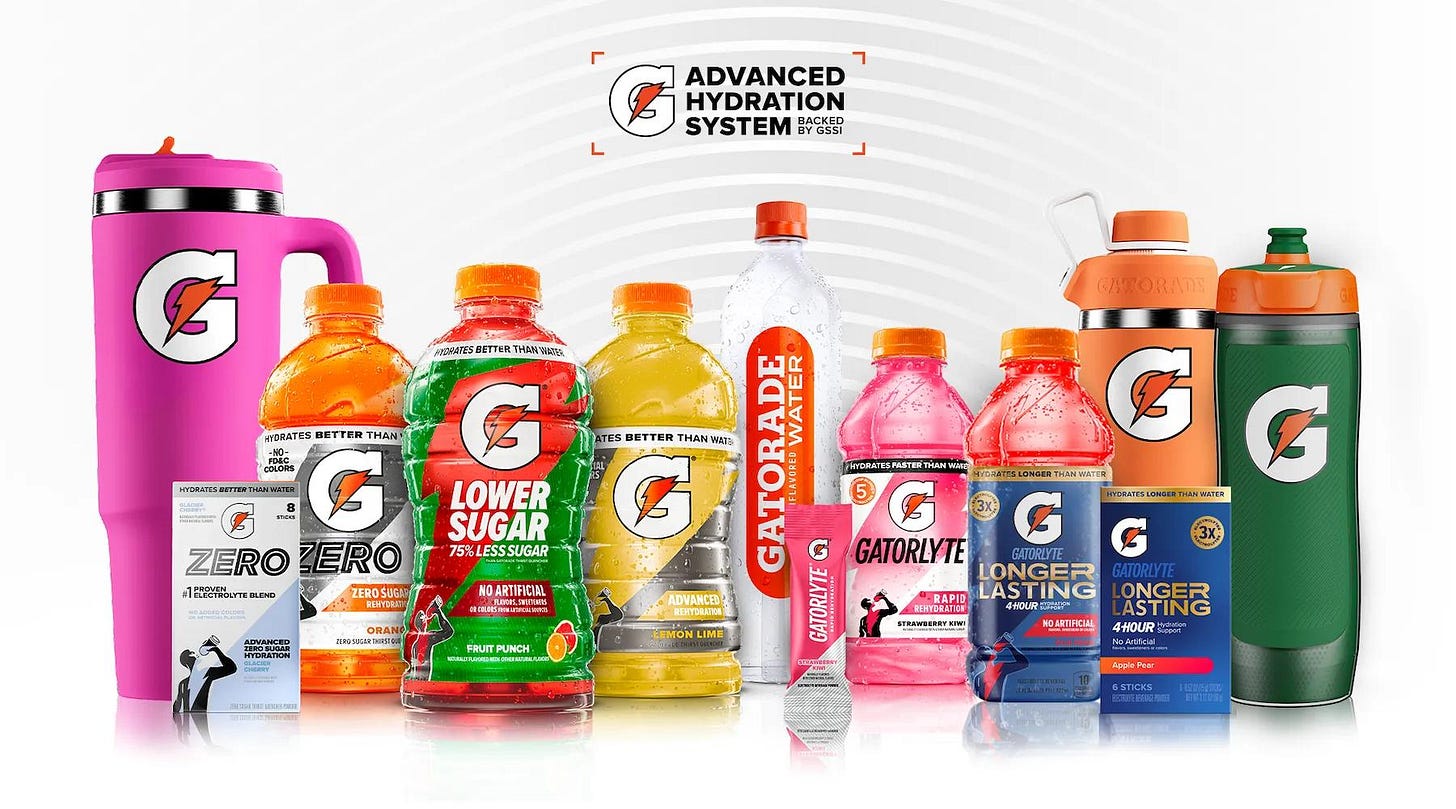
Gatorade’s neon colors are iconic. In many ways, they are the brand, so swapping to fruit and vegetable-derived colors while trying to keep that bold look is a tightrope walk and we’re curious to see how consumers react. But the bigger story should sound familiar. Just like Kraft in mac and cheese, Gatorade has been slowly losing market share and share of voice to upstarts that market themselves as more hydrating, more effective, and healthier. DryWater, for example, launched in early 2024 and is already pushing $100M in sales, sold nationally in Walmart. Brands like Prime, Liquid IV, and LMNT have reshaped what consumers expect from hydration. And in the every day hydration space, startups like Leisure are beginning to command market share.
David is back in the news. David Protein is ramping up production of its alt-fat ingredient EPG by five times, aiming for $300 million in revenue by 2026. As the brand, which passed $100M in gross revenue last year, expands into national distro in Walmart and Target in Q1, this figure doesn’t feel too far off.
For context: Last May, David acquired Epogee, the foodtech startup that produces the patented ingredient EPG (looks and functions like fat, but doesn’t get digested). Post-acquisition, David cut off EPG supply to Epogee’s other customers, which then led to a monopoly lawsuit.
We’re still waiting for the brand’s official ice cream launch, which was teased at Expo West via truck ads.
Pickle collabs are everywhere. Pabst Blue Ribbon and Grillo’s Pickles are shaking things up with a limited-edition pickle beer launching May 4th at retailers nationwide, blending the classic lager’s maltiness with Grillo’s dill-forward flavor (hmmm….).
Grillo’s has made a name for itself in collaborations. Grillo’s VP of Branding (and the brand’s first employee) Eddie Andre has played a big role in that: with a background as a musician and artist, he knew a thing or two about collaborations, and went all-in on them early.
From pickle bouquets for Valentine’s Day to a literal pickle toothpaste made in collaboration with Boka and a Pop-Up Bagels collab for the ages, this brand is so much more than a pickle company—at this point, it’s a lifestyle brand.
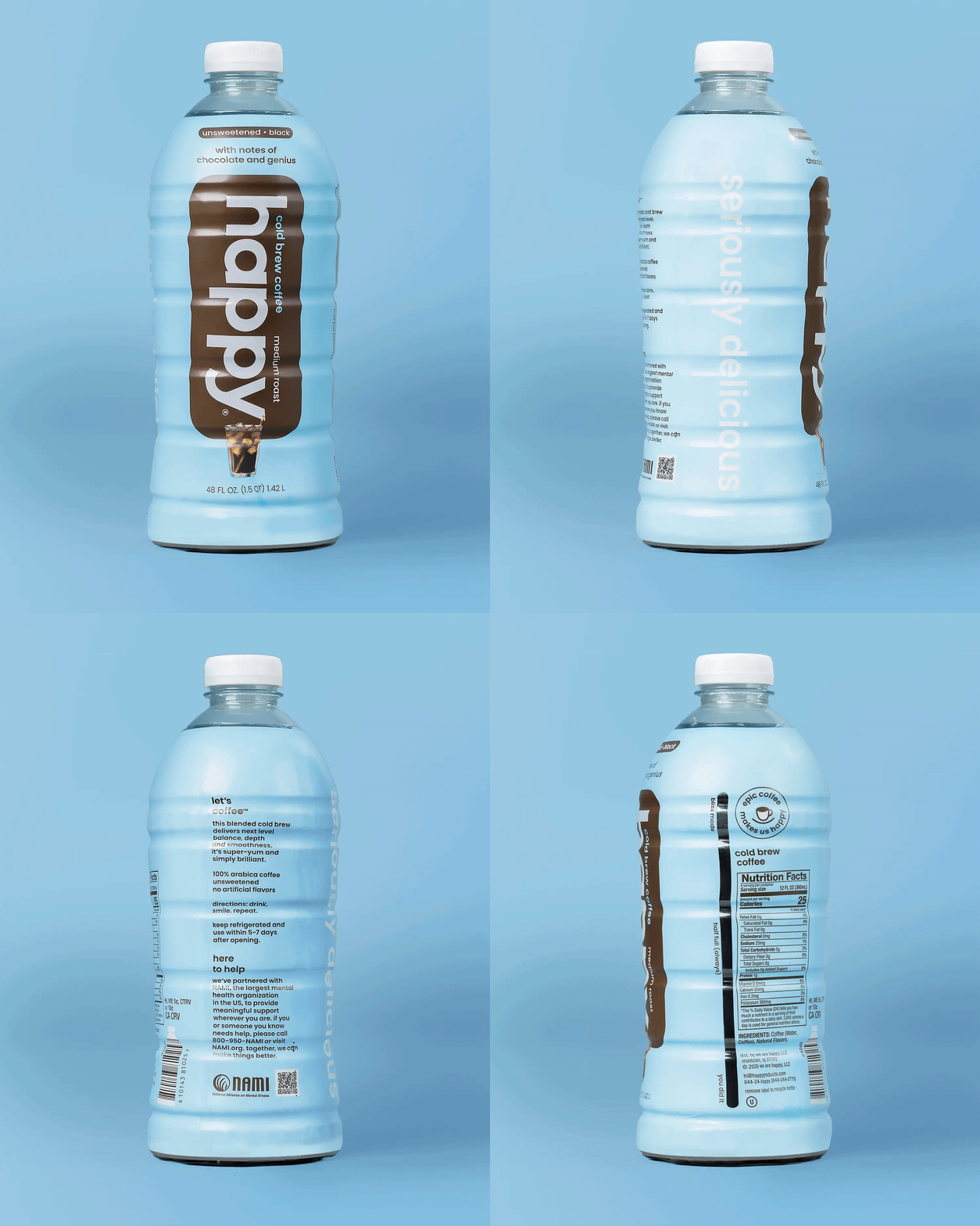
Now entering: Cold brew szn. happy®, the brand co-founded by entrepreneur Craig Dubitsky (hello, eos, method products) and Robert Downey Jr, is making its debut in the refrigerated coffee category with a new 48oz Cold Brew, available first at Kroger stores.
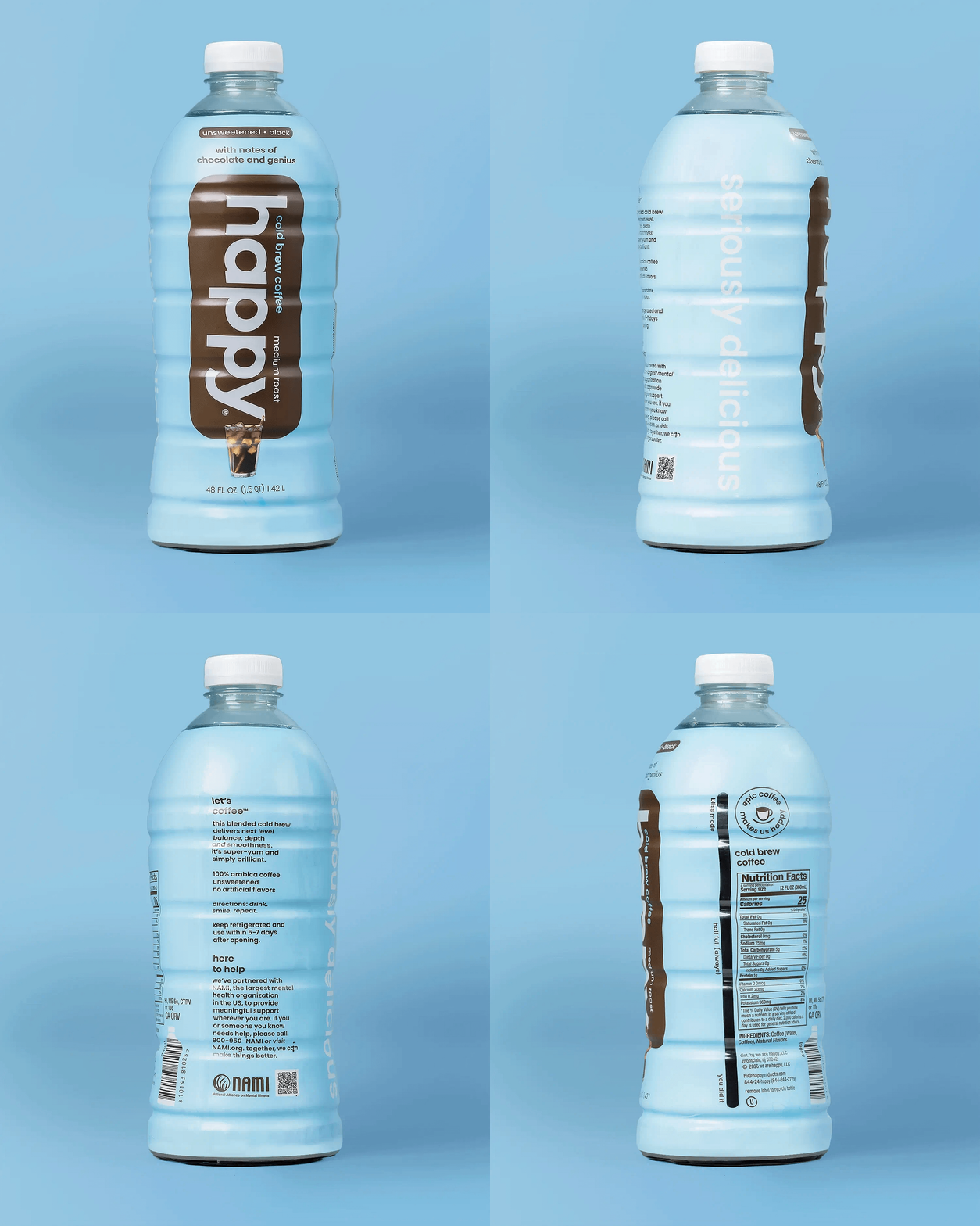
happy’s existing portfolio includes ready-to-drink lattes and cold brews. But as consumers increasingly bring the barista experience to their homes, brands like happy have been responding by shaping innovations for at-home occasions.
In the crowded coffee space, happy stands out with its distinctive packaging. Love these bottles:
Women’s hormone health is all the rage. And Amulet, a new hormonal wellness brand backed by Maria Sharapova and Gabriela Hearst, is responding with the launch of its flagship product, Daily Cycle Support gummies. This supplement, formulated with “bio-identical lactoferrin” and creatine, aims to sync with women’s hormonal rhythms.
Lactoferrin = a iron-binding protein found in milk and colostrum (which is found naturally in human breast milk or bovine milk) that supports the immune system.
Its interesting to see these ingredients promoted specifically for women’s hormone health. Colostrum (and lactoferrin) has had its moment as a gut health and immune booster, and creatine (as we covered last week) has only recently been promoted for women’s health—and not just a supplement for bodybuilders.
eCommerce
The anti-algorithm play. ShopMy is launching Noir, an SMS-based personal shopping concierge that pairs its highest-spending shoppers with real human curators. Shoppers text in what they’re looking for, answer a few questions (budget, preferences, vibe), and get matched with a creator who hand-picks product recommendations from across ShopMy’s catalog.
Tiffany Lopinsky, co-founder of ShopMy, told Express Checkout that they discovered that some of its most successful creators have as few as 2,000 followers yet drive tens of thousands/month in sales by essentially operating as personal shoppers and stylists. Noir productizes the product-discovery piece of that relationship at scale— a lighter-touch version focused specifically on finding the right products—rolling out first to gold and black tier members across fashion, home, CPG, beauty, and gifts.
Retail
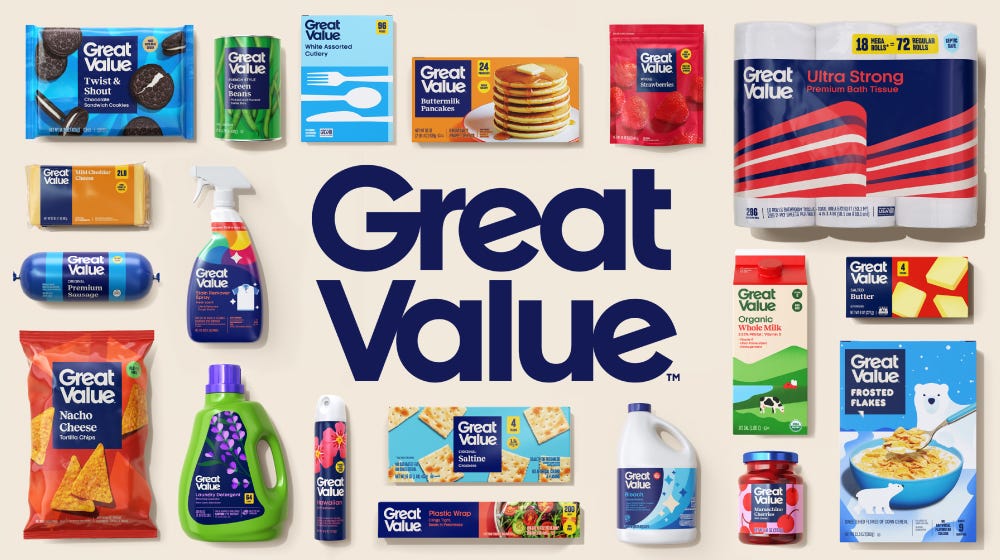
The gentrification of Walmart. Walmart is refreshing its Great Value brand for the first time in over a decade, enhancing packaging across nearly 10,000 items (that is WILD) with a more “modern visual identity and improved shoppability.”
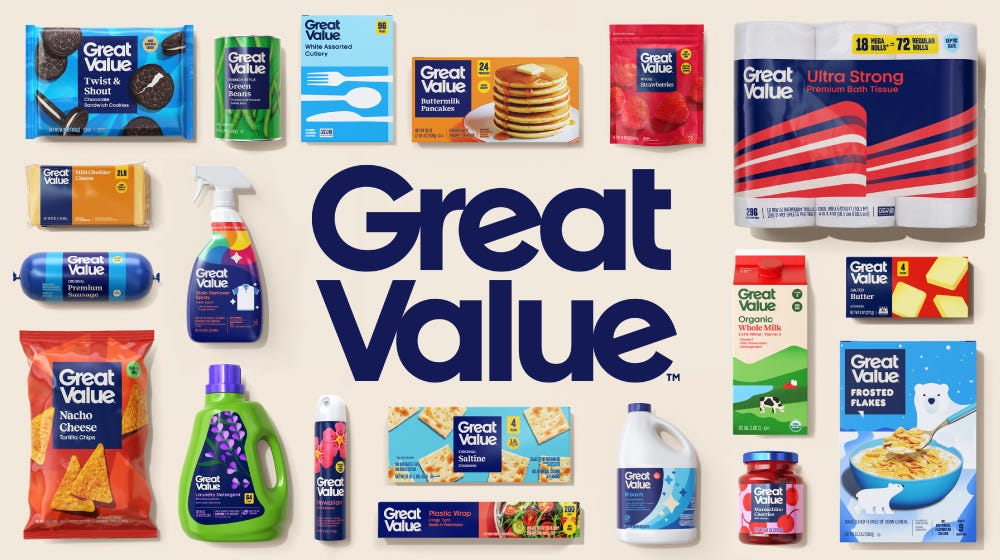
According to the brand, Great Value products can be found in nine out of 10 U.S. households and save an average family 35% per year.
And Walmart chose the right agency to complete this task. They leveraged Jones Knowles Ritchie (JKR), who recently did their corporate rebrand, to bring Great Value up to par with their other and newer private label brand Bettergoods.
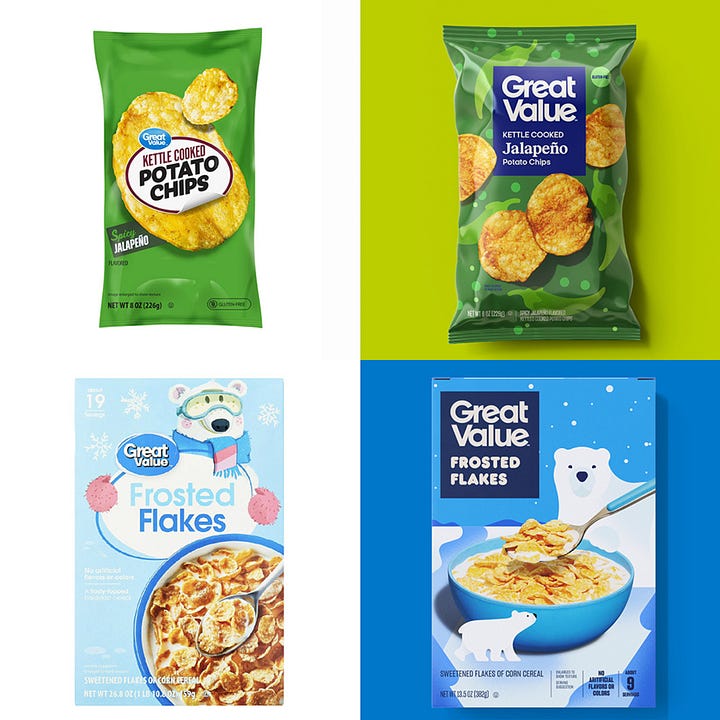
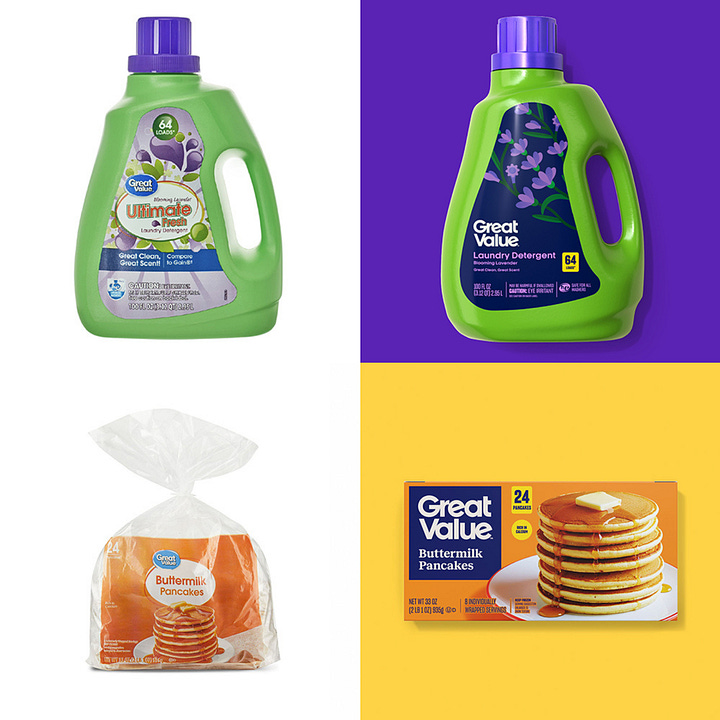
Not too shabby! This is clearly part of a bigger play. When Walmart launched Bettergoods in 2024—a premium, trend-forward private label line with clean ingredients and elevated packaging—we said it: they’re coming for Target. And now, with Great Value getting the full rebrand, the strategy is undeniable. Walmart is clearly repositioning their entire private label portfolio to compete with the private label juggernaut that is Target (think Good & Gather, Favorite Day, Dealworthy). Pair that with their growing assortment of non-store-brand products that skew younger and more premium, and it’s clear Walmart is gunning for a newer, potentially more affluent consumer—one who might’ve previously defaulted to a Target run.


Funding news
The new White Claw is here. Mark Anthony Group—owner of White Claw—acquired The Finnish Long Drink, aiming to scale the ready-to-drink brand across North America. The Finnish Long Drink, co-founded by celebrities like Miles Teller, is essentially a canned cocktail inspired by Finland’s national drink, launched in the US in 2018 but with roots in the 1952 Olympics.
We interviewed Evan Burns, CEO and co-founder of The Finnish Long Drink, and Long Drink’s “biggest fan,” DJ Waldow, for The Curious Consumer to learn more about how Evan built this new RTD behemoth, why it’s so beloved (by people of all legal ages, as DJ emphasized), and what the future of Long Drink looks like. Check out the episode here!

Give me the formuoli! Ripi, a chef-crafted frozen stuffed pasta brand, secured $2.4 million in funding to prepare for a national launch at Target, backed by the founder of Freshly.
Body care is booming… and L’Oréal is taking notice. L’Oréal’s BOLD Venture Fund invested in body care brand Hanni, which offers a streamlined, sensorial product line.
Launched in May 2021, Hanni aims to simplify body care while delivering effective results—its hero products include a water-activated moisturizer and an eco-friendly razor. Less than a year after its introduction, Hanni became the first razor partner in Sephora U.S.
Hanni has gone viral for its beloved water-activated in-shower moisturizer (perfect for the “everything shower” trend). And other brands are taking notice: Just last week, we pointed out that Dollar Shave Club’s new women’s grooming line looks like a near copy-paste of Hanni’s products.
The future of senior nutrition is here. Iris Ventures led a multimillion-dollar investment in Lucille, the new brand creating high-protein, high-fiber shakes aimed at older adults. The shakes are now available DTC and via assisted living facilities.
We wrote about Lucille in a past newsletter, talked about it on The Curious Consumer, and shared a grocery haul with founder Jess Haghani over on our IG! If you’re not yet familiar with the brand, you’re about to become as passionate about it as we are :)
Clean x science prevails. AAVRANI, the Ayurvedic beauty and haircare brand, has been acquired by Nivora Group, a consumer private equity firm. With over $15 million raised and a launch in Sephora U.S. and Canada, AAVRANI’s founders will exit post-acquisition as Nivora plans to scale distribution in the U.S. and internationally.
AAVRANI built its business on a premise we’ve been talking about a lot: that consumers are looking for a combination of “clean,” natural positioning and science-backed, clinically-proven ingredients in the beauty world. In this case, AAVRANI combined Ayurvedic ingredients with modern formulation standards and supported by scientific testing.
If you haven’t yet, please subscribe, like, leave a comment, and share it! It helps us continue to bring you the most interesting news + nuance in consumer and retail every week.