



Hello hello!
Excited to share not one, but TWO fantastic upcoming events for our NYC CPG friends, from our partners at Wayflyer, the go-to growth capital provider for the fastest-growing businesses:


This Wednesday (7/29) from 6-9PM, Wayflyer is hosting From Cart to Shelf—where you can discover your next favorite CPG brands all in one place! This night brings together 20 rising names for hands-on product discoveries, tastings, candid founder chats, and genuine connections over drinks and a live DJ. Expect a room full of energy, insight, and good company, with founders, investors, and operators mingling alongside brands like Sourmilk, Baris, Motif, Pandy, and more. RSVP here!
I’ll be there!! - Nate
And on August 26th and 27th, Wayflyer is bringing its iconic Visionaries Summit (which was held in London earlier this year) across the Atlantic. They’ve brought together the best minds of innovative brands across New York for this FREE event. Hear from brands such as Jones, Stakt, Buttergirl, Ghia, Bobbie, Random Golf, Bub’s Bakery and more! Sign up to get your ticket at launch here.
Both events will be stacked with some of the coolest founders and operators in NYC. Couldn’t have put together better rooms ourselves ;)
Now, let’s get into the news of the week →
News of the Week
If we’ve learned anything in 2026, it’s that the 2010s are hot again. Frozen yogurt is all the rage, we’re gushing over flavored rice cakes like they’re a real treat and not a diet snack, and coconut water has re-entered the zeitgeist as if it’s sauntering in for the very first time.
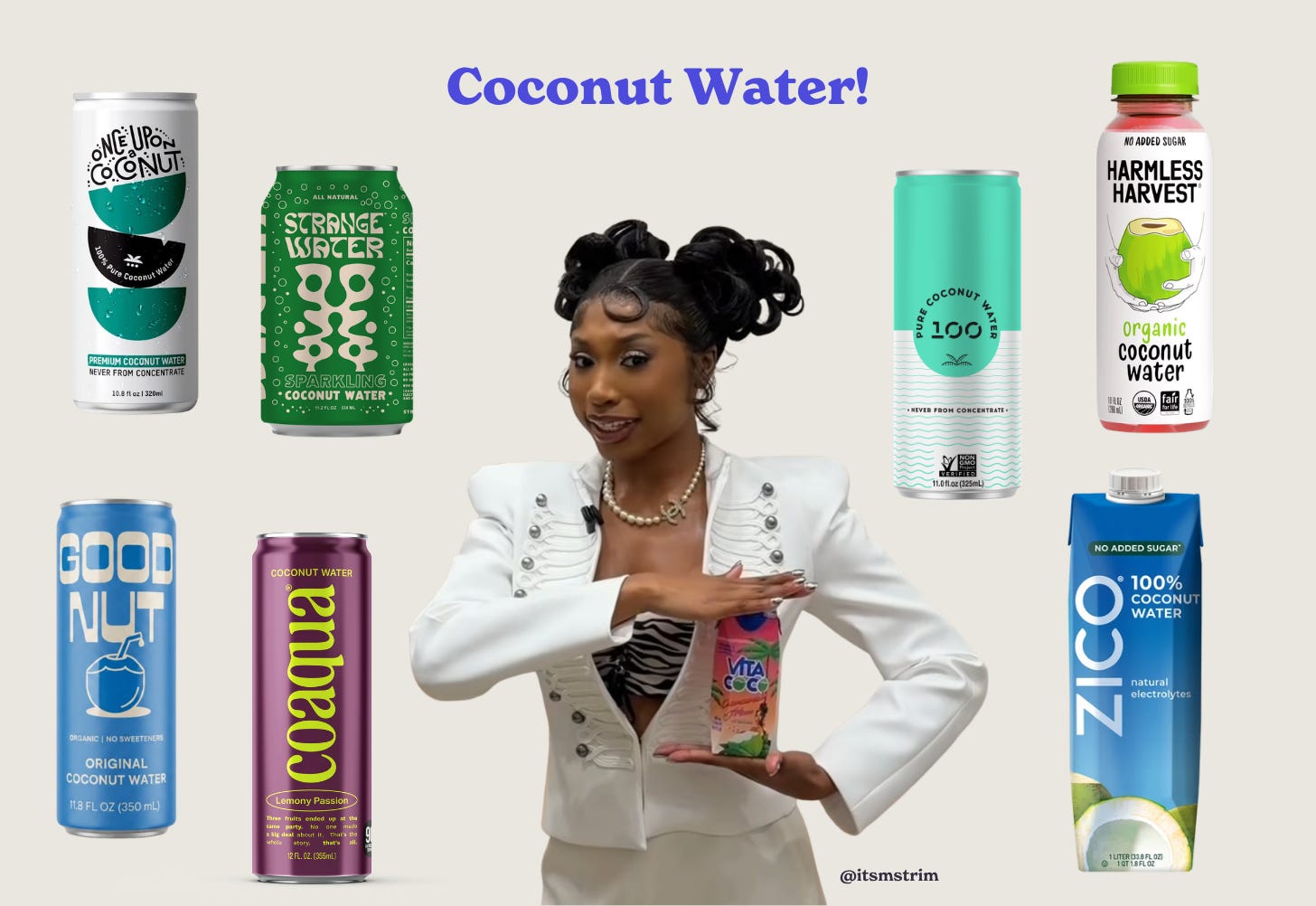
This week, Vita Coco—the public brand that controls more than half of the US coconut water market—acquired Copra, a super-premium cold-chain coconut water brand, for up to $275M ($175M upfront plus a $45–$100M earnout in 2029). The brand currently has a goal of reaching $1 billion in sales within the next five years, and it’s looking increasingly possible with this acquisition.
One brand, staring down $1 billion in a category that we could’ve sworn would disappear in 2016? How the heck did we get here?
Let’s back up to 2004, where it all began. After meeting two Brazilian women in a NYC bar who said they missed coconut water, Michael Kirban and Ira Liran founded Vita Coco to bring packaged coconut water to the US. (Very convincing women, or very desperate potential founders?)
Side note: this was also the same year that Zico, the other breakout coconut water, was founded. It ultimately saw a very different trajectory… a fascinating story for another time.
After chugging along for 5 years, Vita Coco got its time in the sun when Madonna invested in the brand in January 2010 and brought in a slew of other celeb names. That halo had serious leverage, powered by a distribution deal with Keurig Dr Pepper that year. It was the perfect bev for the time: consumers were starting to move away from sugary carbonated drinks and sought beverages they perceived as more “natural.”
The growth curve was explosive, which created a crazy feedback loop. Vita Coco went from $20 million in sales in 2009 to $40 million in 2010 to an expected $100 million in 2011—hockey-stick growth that pulled in competitors, retail buyers, and more celebrity money simultaneously.
… and then, it all came crashing down. In 2012, Vita Coco was sued for false advertising for exaggerated health claims. It settled for $10 million, plus a commitment to regularly test nutritional content.
At the same time, multiple other coconut water brands were sued for similar reasons, and the FDA issued warnings in response to the volume of complaints and lawsuits over misleading health claims industry-wide.
By 2016–2017, the category was already being described as “maturing and consolidating.” Zico had been bought by Coca-Cola a few years prior in 2013, and then Coco Libre got acquired by New Age Beverages, leaving Vita Coco as basically the only large private player standing as smaller entrants got squeezed out or bought up.
During coconut water’s lull, Vita Coco continued pushing ahead through:
Private label, starting in 2016. Vita Coco shifted strategic focus in 2016 to also serve private label demand for major retailers, most notably Costco. Private label eventually became roughly 24% of its business.
Expanding beyond coconut water: In 2018, it acquired Runa, a guayusa-based plant energy drink (that was, in retrospect, too early for the natural energy drink trend), and Ever & Ever, a canned water business. Though neither brand stuck around, these hedges helped protect against the declining coconut water category.
Staying independent gave them room to try, fail, and refocus on the core brand without a parent company pulling the plug (the opposite of what happened to Zico inside Coca-Cola, which is now private yet again trying to gain lost ground).
And by 2021, the company IPO’d at a fully diluted market value of roughly $1.1 billion, with Vita Coco holding a 46% US coconut water share, a 36-point advantage over its next closest competitor. The proceeds from the raise funded the launch of PWR LIFT, a protein-infused post-workout water.
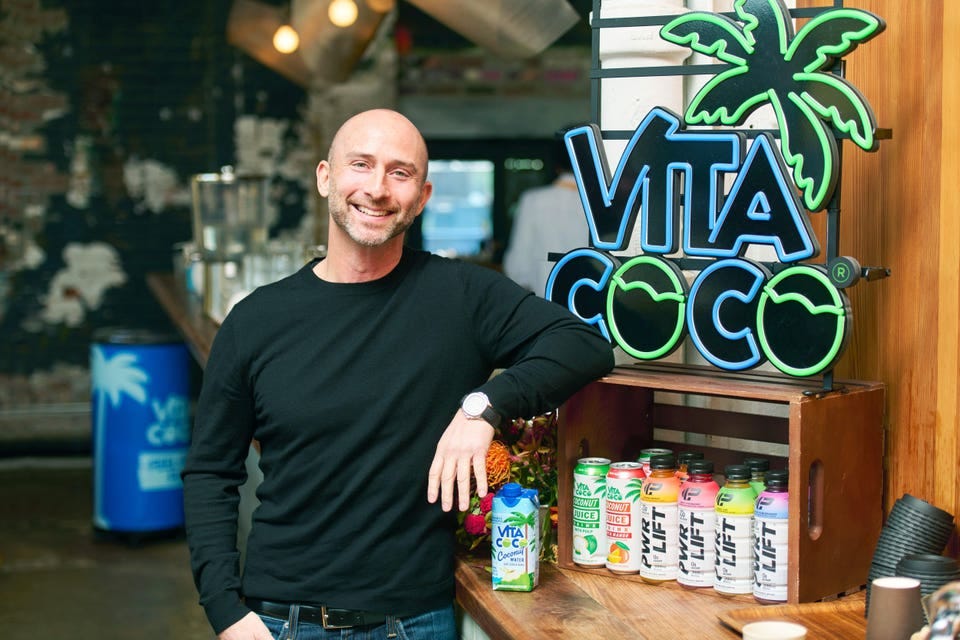
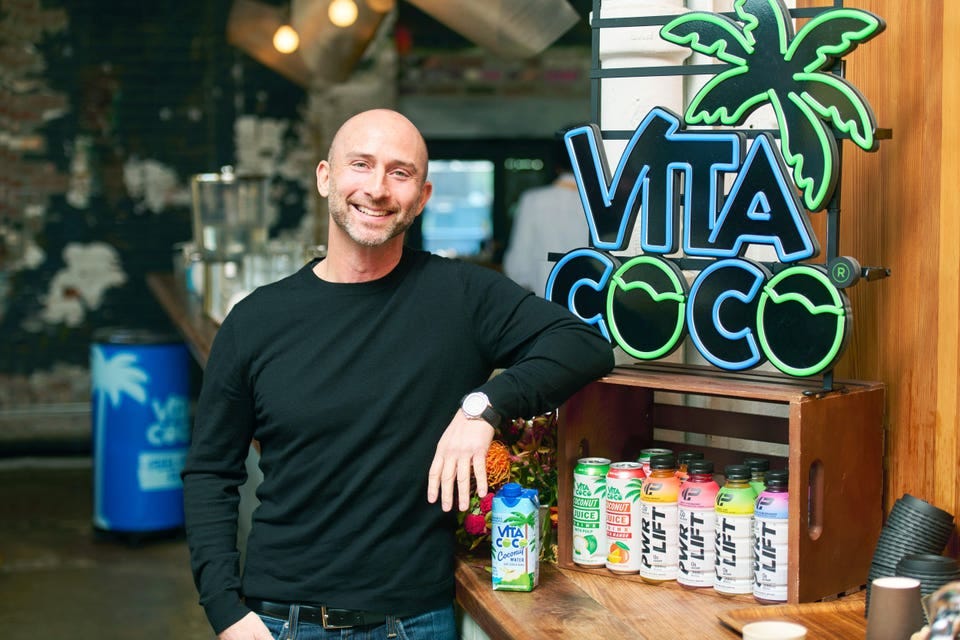
Mike Kirban, Co-Founder and Executive Chairman of The Vita Coco Company
Fast forward to 2026, and we’re in a very different place than the OG 2011 coconut water boom. Back then, it was celebrity investment, newness, and a vague health halo creating aspirational buzz. This time, it’s:
The “loaded water” trend on TikTok. Loaded water (water customized with electrolyte powders, fruit, coconut water, caffeine mixes, or supplements) has gone viral on TikTok, with creators assembling elaborate, visually stacked concoctions. Coconut water here is a base component people reach for, a default hydration ingredient rather than a standalone category.
Coconut water is coming for sports. Back in January, Vita Coco announced it was returning to its fitness roots because coconut water was taking share from Coca-Cola’s BodyArmor and PepsiCo’s Gatorade. Kirban said sports drink customers had been driving a third of the brand’s growth, and that the pace had accelerated. The consumer education push now leads with: “coconut water has 3.5 times the electrolytes of the leading sports drink.”
Minimal consumer education required. Unlike other functional beverages, coconut water’s whole pitch is that it’s…. just coconut water. While hydration beverages with added ingredients require some speculation on dosing and claims, coconut water, as a single-ingredient bev with previously established health benefits, is immune to the functionwashing that many new beverages see.
New households, not just new shelves. Vita Coco says roughly two-thirds of its US branded growth is coming from increased household penetration and a third from velocity per household, with category penetration at about 25% (which also means that 75% of households can still contribute to incremental growth).
And the category’s got some fresh faces. There’s been a surge of cool and buzzy new brands bringing life back into this dusty category. 100 Coconuts is running Costco road shows and Kroger end-caps this summer off its strongest year yet; Tom Brady launched Good Nut (yes, Good Nut… see our thoughts here) with Gopuff in three flavors; Coaqua is doing flavored cans; Strange Water is selling still and sparkling in mini cans and is behind some of the trendiest cafes’ matcha coconut water concoctions. Rather than competing on health claims, these entrants are often competing on format and occasion—cans, carbonation, even chocolate—all indicating new addressable moments rather than fragmenting its shelf.
Meanwhile, Vita Coco’s shares are up 43.2% year-to-date and 98.6% over the trailing 12-month period. Which brings us back to Copra: Copra, which uses Thai Nam Hom coconuts and avoids high-heat pasteurization, posted $100M+ in 2026 sales and a 48% 3-year CAGR. Now, Vita Coco can participate in the emerging + premium market with these new players, without sacrificing its OG mass-market brand.
The coconut water boom of 2010 didn’t die because of demand; it died because of over-claims. Now, in an industry run by better-for-you brands fraught with claims and added ingredients, coconut water is refreshingly transparent and simple. Cheers. 🥥
CPG & Consumer Goods
The PB&J Wars are truly in full swing. Just two weeks ago, we were talking about how Welch’s just entered the ready-to-eat, crustless PB&J space. Now, here we are again, experiencing some deja vu and also a sudden hankering for a paper-bagged lunch, and reporting about even more PB&J innovation:
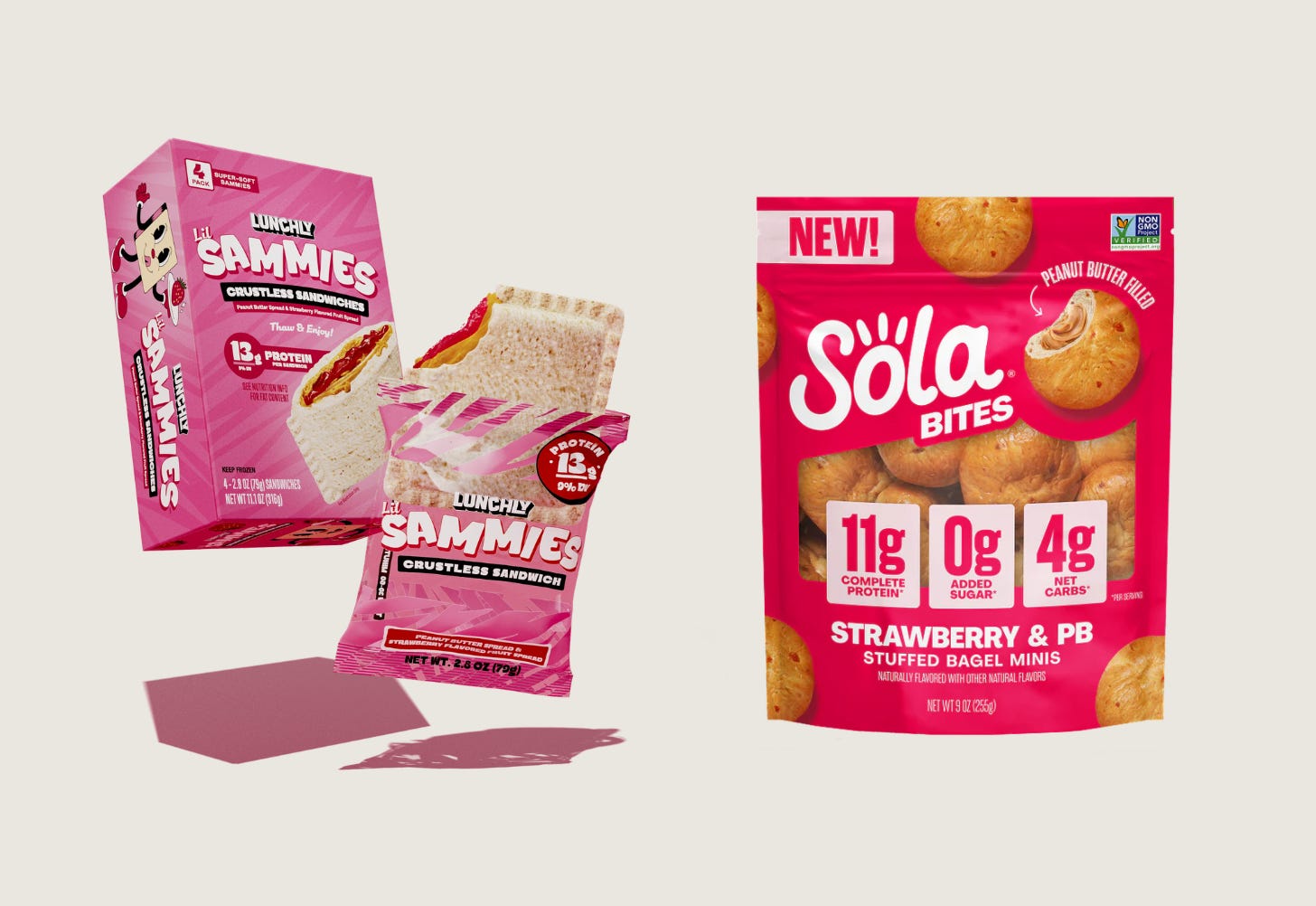
Lunchly, the brand from MrBeast and Logan Paul, has launched Lil Sammies. These are, you guessed it, crustless peanut butter sandwiches with 13g of protein per pack, now rolling out to retailers. Lunchly also launched an innovative Cookies & Cream flavor, with no PB or J—almost closer to an ice cream sando.
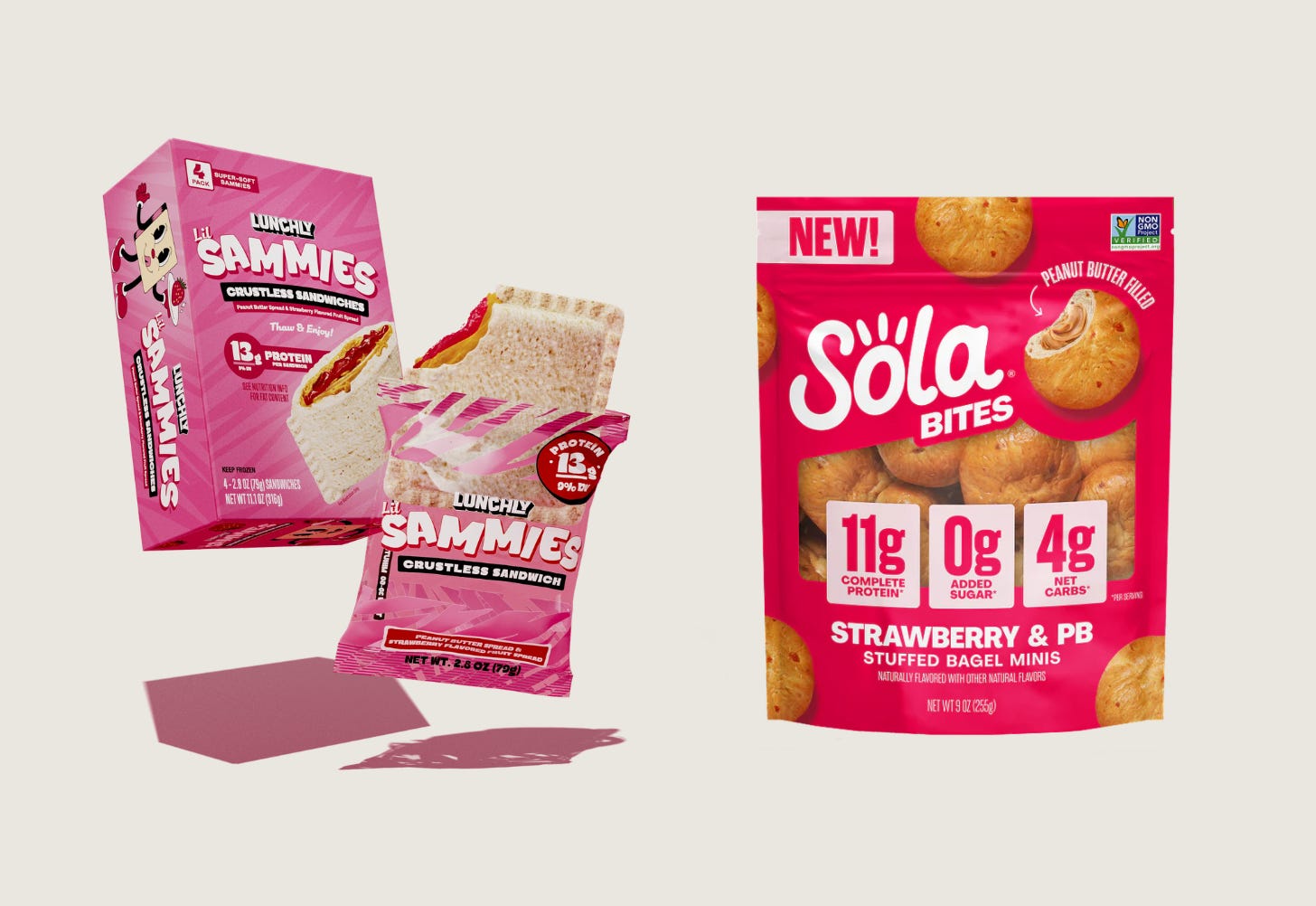
Sola, makers of high protein bagels and bread, launched Sola Bites, peanut butter-filled bagel bites exclusively at Walmart in two flavors, Grape and Strawberry. Each serving packs 11g protein, 17g fiber, and 4g net carbs. At least they decided to go for balls rather than sandwiches.
Smucker’s (Uncrustables) owns roughly $1B in category sales and has been litigious in defending the format—which killed Chubby Snacks and threatened Trader Joe’s. Now, there are so many competitors that either Smucker’s lawyers will be pulling all-nighters, or the brand will decide to thoughtfully compete rather than litigate.
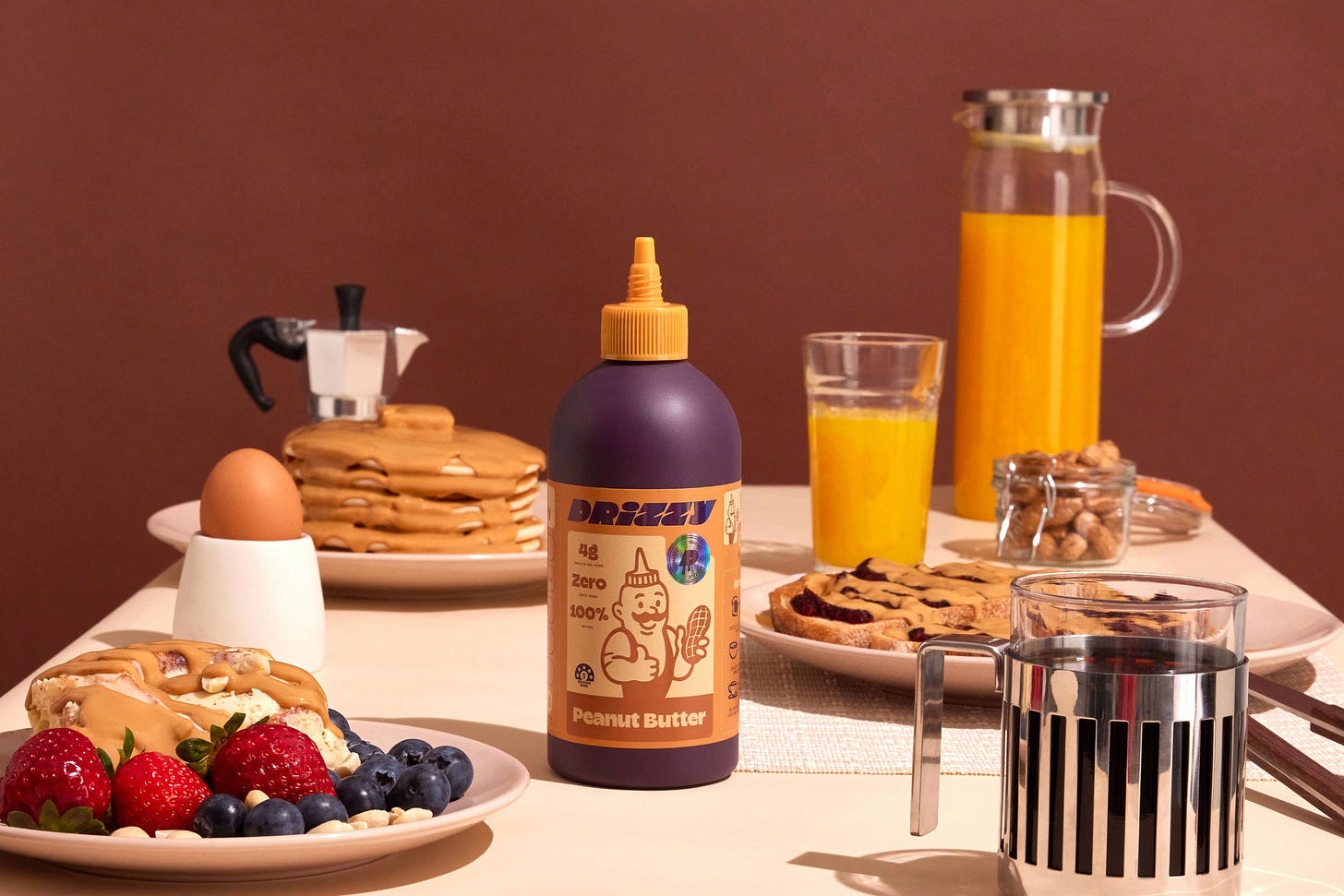
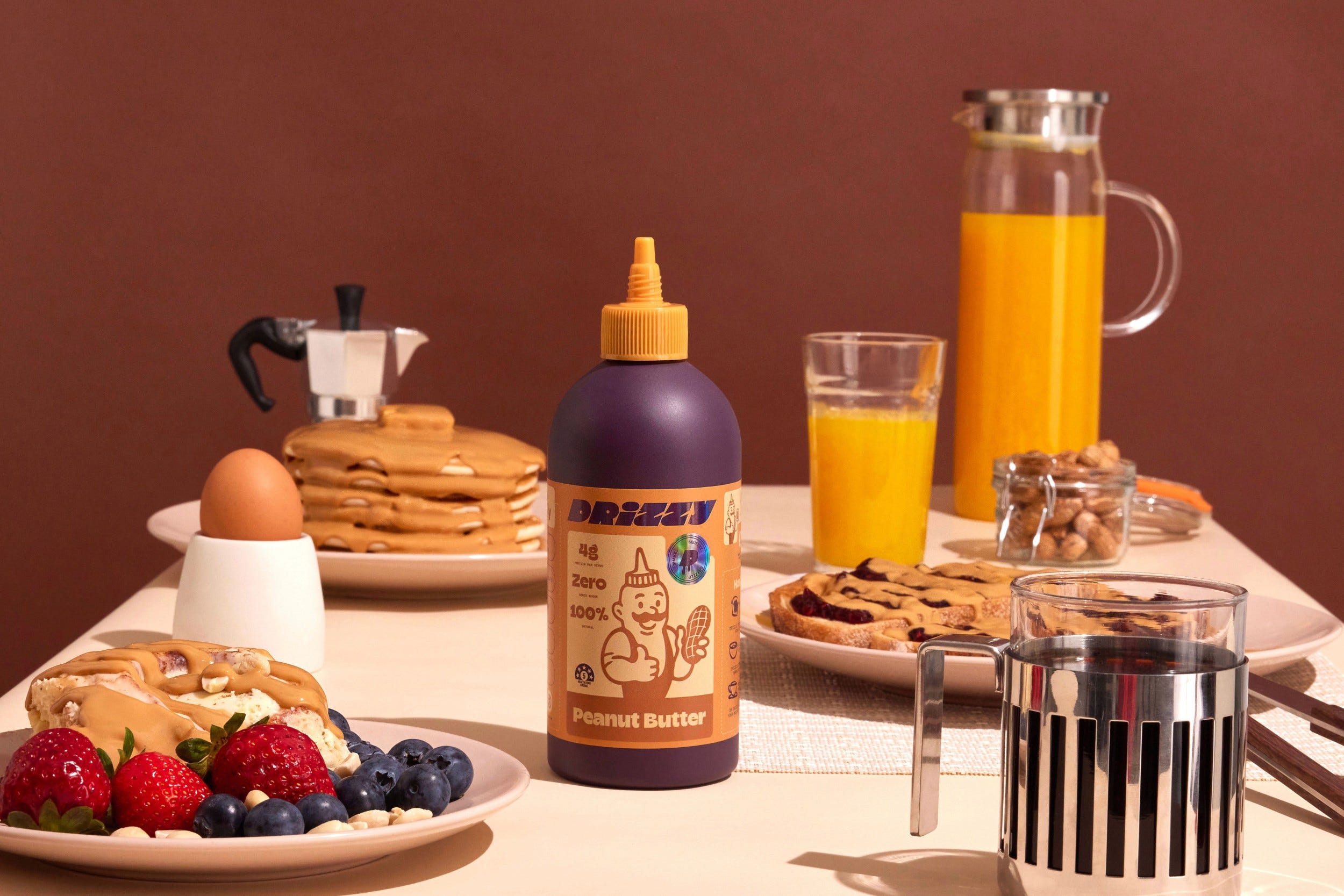
Speaking of peanut butter… Drizzy, an Australian brand backed by Alexis Ohanian’s Seven Seven Six, RiverPark Ventures, and Nucleus Network, has officially launched in the U.S. with a two-ingredient squeeze-bottle peanut butter—because you know people love a squeezy bottle!! It’s made with American peanuts and peanut oil, with no added sugar or palm oil.
The ultra-filtered milk boom continues. Nurri, the canned protein milk brand, just launched multiserve ultra-filtered, lactose-free protein milk with 20g protein nationwide at Walmart.
Ultra-filtered milk is just 7% of total milk dollars but growing dollar sales 14.8% and unit sales 5.5% over the last year, and Fairlife alone accounts for 96% of that category’s dollars. Nurri is the third major multiserve entrant this year, after Organic Valley’s Protein Plus in March and Muscle Milk’s ultra-filtered reformulation in May
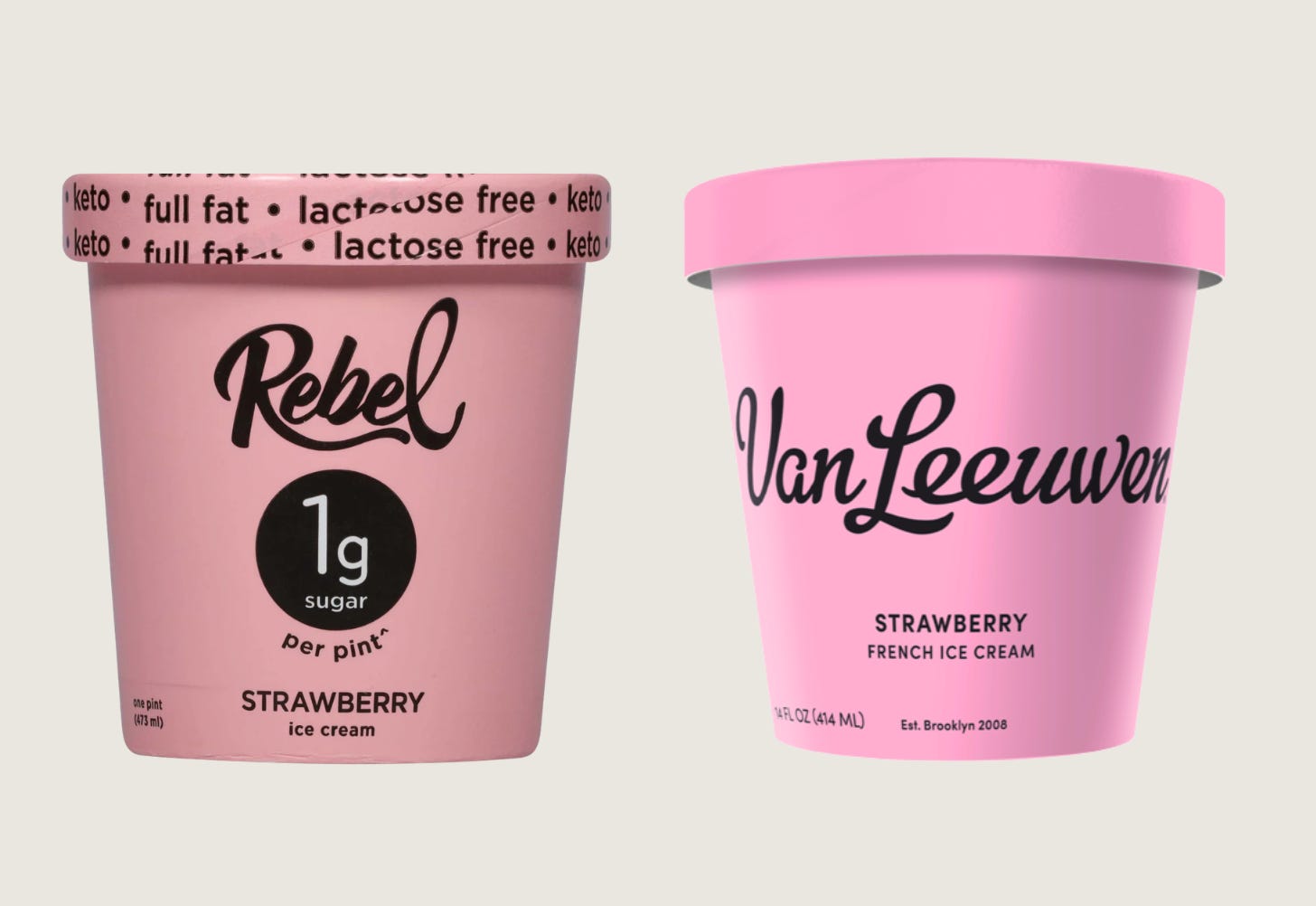
Pastel is protected. Van Leeuwen won a $23.8 million federal trademark ruling against better-for-you ice cream brand Rebel Creamery after a judge found the brand deliberately mimicked its monochrome pastel pints and black cursive script. Rebel has been ordered to redesign its packaging from scratch.
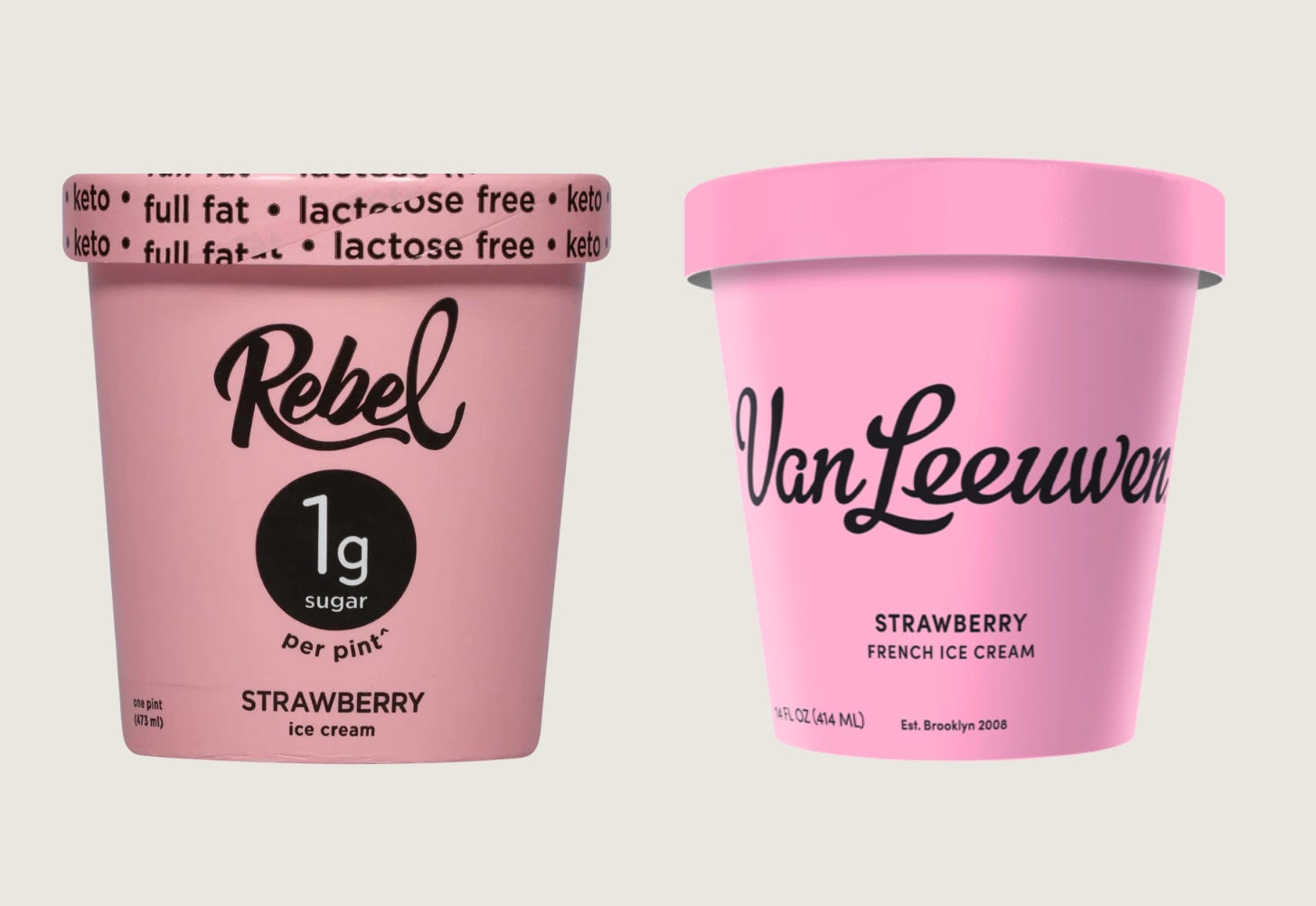
👀 It’s hard to look at this and not see it as a deliberate attempt to communicate that Rebel is “just like Van Leeuwen, only better-for-you.” And this should be a wake-up call for all BFY founders: the “better-for-you version of X” isn’t enough of a moat. It’s—frankly—a lazy way to feign brand affinity, and falls apart as hastily as it was put together.
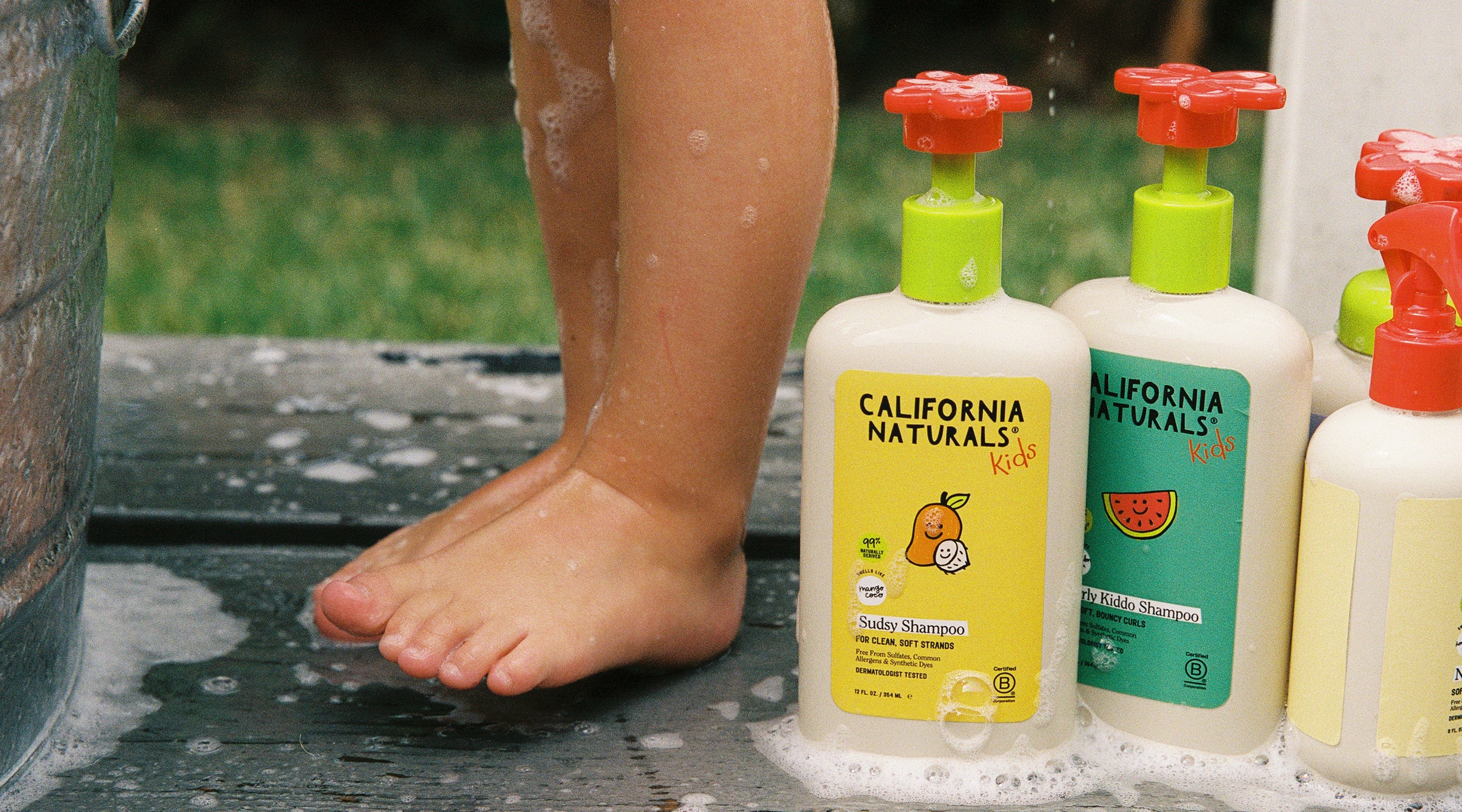
For a cleaner bath time. California Naturals, a brand known for accessible naturally derived hair and body care, has launched a new kids’ collection. The line features gentle and dermatologist-tested formulas designed specifically for kids.
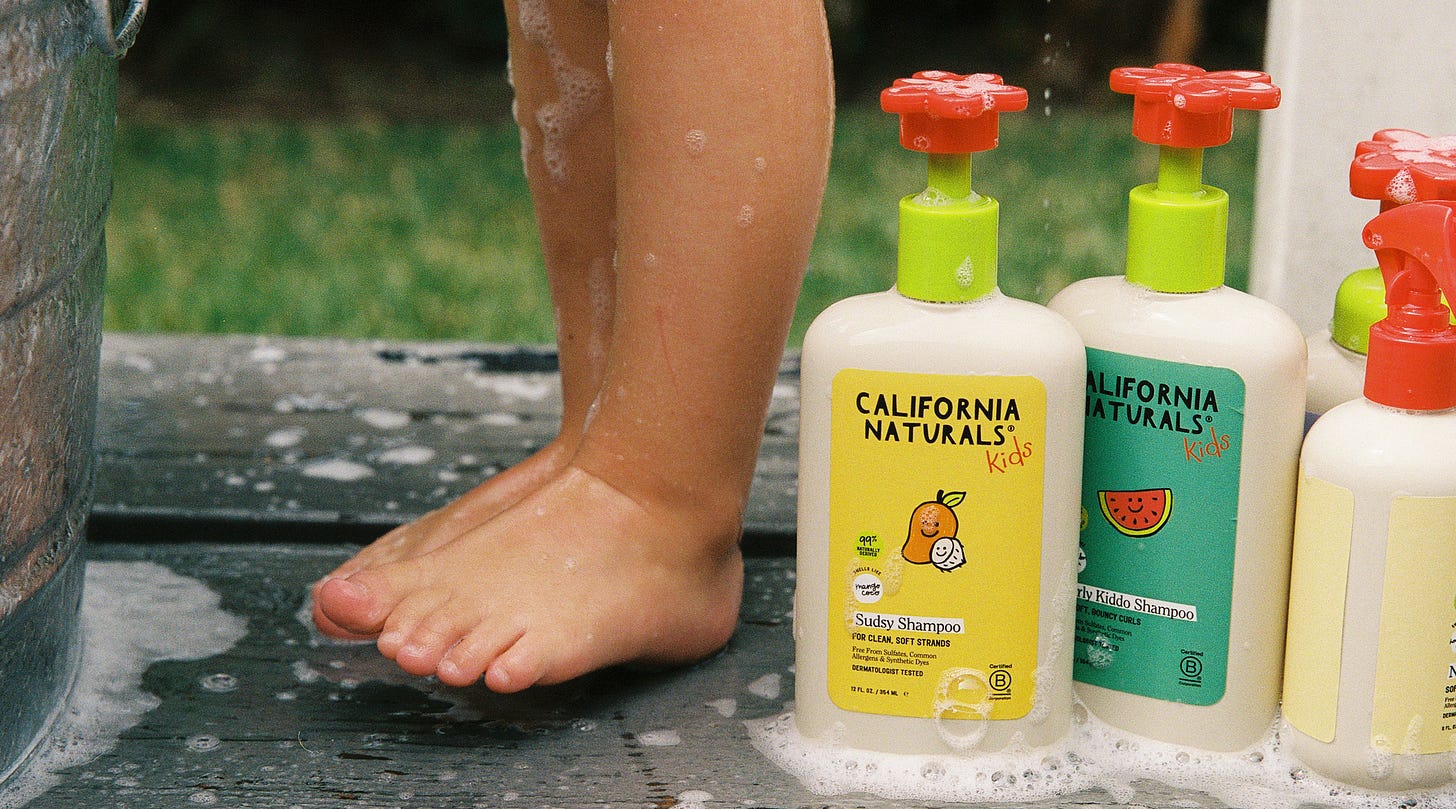
Will this be as iconic as L’Oreal Kids was for us? We’re not sure if anything can really beat those products, but these are some damn cute bottles. The pump, the colors, it all just screams products for kids yet with an elevated status—perfect for the trendy millennial parents buying it. This launch fits into this new set of skincare and body care for kids that we’ve been talking about for months now. Parents are looking for everything they get in products marketed towards them, but designed and built for their offspring. They want the same ingredient transparency, cuter branding, and “clean” yet effective formulations.
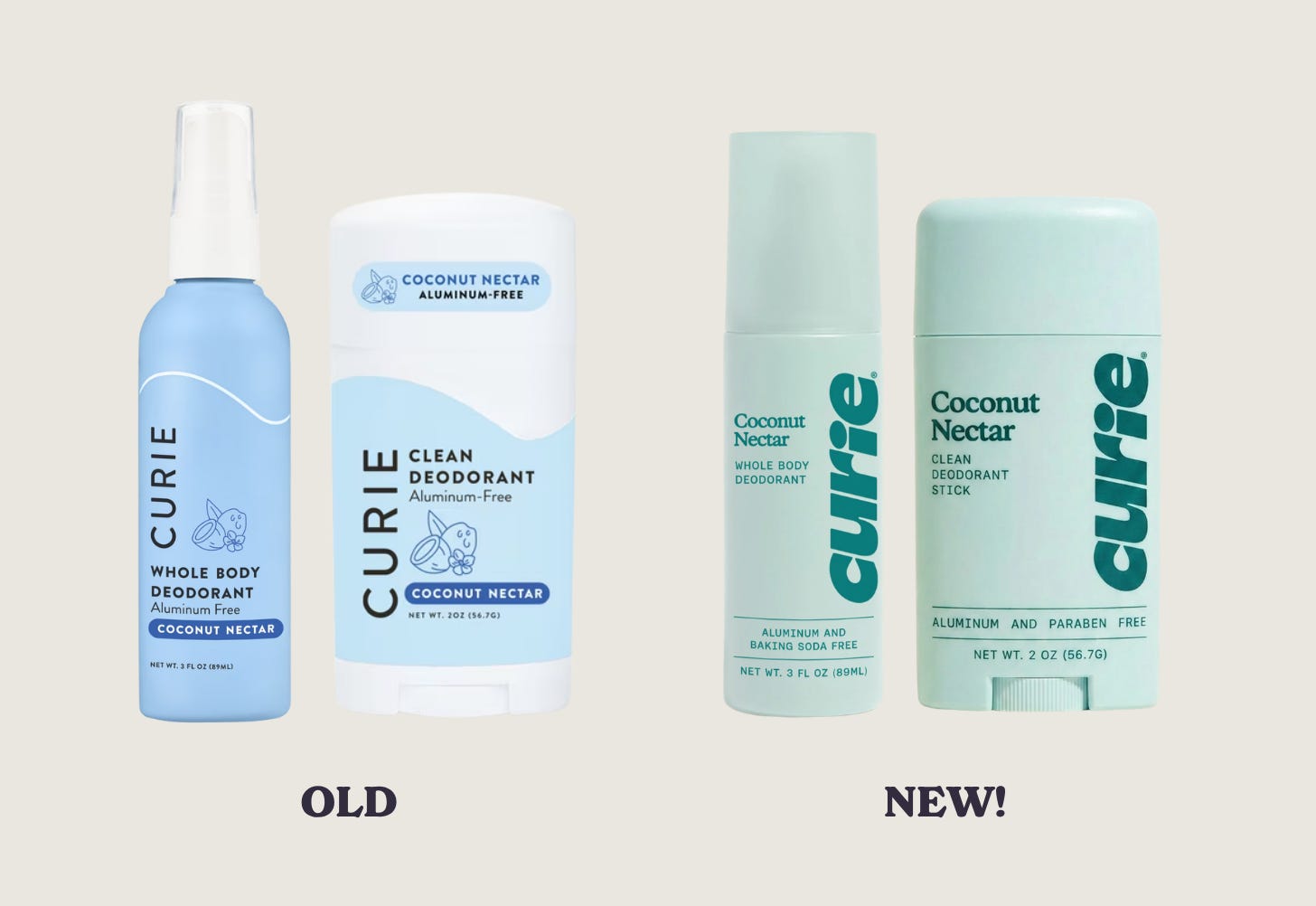
Back at it again. Curie unveiled a sweeping gender-neutral rebrand built around “clean performance.” The seven-year-old, eight-figure body care brand refreshed pretty much everything but the name. They redid packaging, logo, messaging, and its DTC site. The goal is to showcase its evolution beyond being just a deodorant brand and lean into active lifestyles more broadly, with natural products formulated for active consumers.
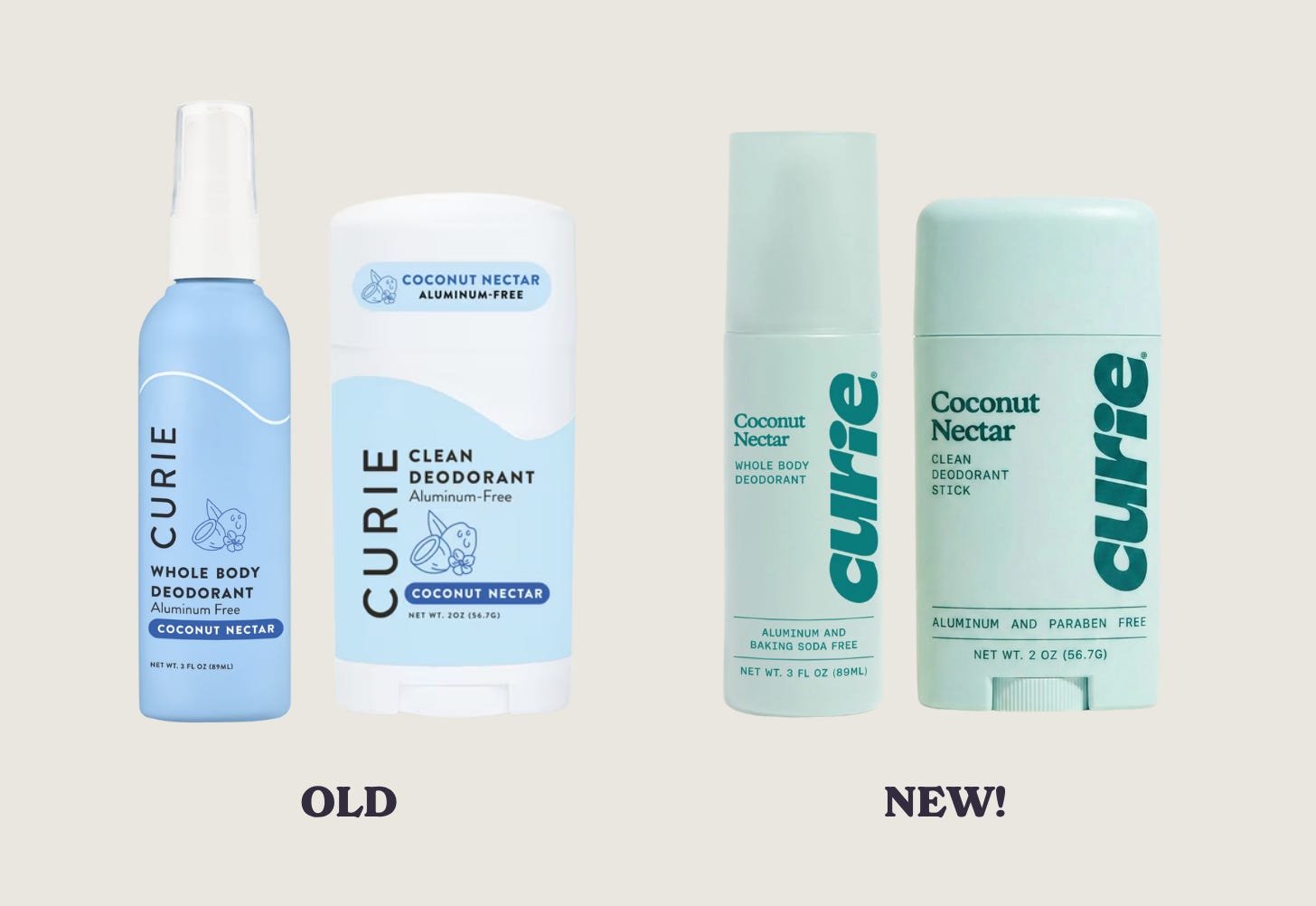
The overhaul was reportedly driven by shelf data from the 4,300 Walmart stores Curie has been in since 2023, with founder and CEO Sarah Moret bringing in iconic branding agency Gander—the Brooklyn studio behind Graza, Magic Spoon, Banza, Yellowbird, and Pop Up Grocer. Gander knows how to take a brand and make it both feel new and fun, but also accessible to a wide audience of consumers.
Curie has really been around the block. Moret, a CPA turned VC investor, started it back in 2018. Within their first year they did $125K and grew that to $700K by 2020. And then they went on Shark Tank in 2022. Post-air, Curie did $250K in three days (double its entire first year) and rode that to ~$10M in revenue, per the company. This success and Shark Tank episode got them into Walmart stores by 2023.
This is a great example of a brand built for a different era that was willing to change and evolve. The product Curie created had a strong angle, branding, and story for 2018‑early 2020s. Today, consumers want a brand that feels natural yet more aligns with their active, fitness‑focused lifestyle. Curie’s new branding and brand identity maintains the same clean ingredient standards that many consumers still want while appearing more effective to consumers than the previous branding. It’s less crunchy, and will probably reach an even broader audience than before.
Is this the future of licensing? Kraft Heinz just struck a multiyear deal with the Walt Disney Company, including becoming the exclusive provider of select condiments, mac & cheese, and cream cheese across Disney’s North American parks, resorts, and cruises; access to Disney characters and stories for 10 Kraft Heinz brands; and Kraft Heinz funding co-created content with Disney’s studios and streaming platforms.
Earlier this year, Kraft Heinz partnered with the NFL on a similar, five-year deal: the league’s first-ever global condiment partner across stadium visbility, co-branded marketing, and even international games.
The BigCo is trying to regain relevancy through experiential and foodservice. As buzzier brands enter the condiment scene, and sales continue to decline (organic net sales decrease 3.4% for the full year in 2025 and has projected declines between 1.5% and 3.5% for 2026), the company is lifting marketing investment to roughly 5.5% of net sales, up from 4.9% in 2025, as part of a broader push back to profitability.
The pretzel king goes private. 105-year-old Utz Brands has been sold in a $2.9 billion go-private deal to Germany-based Intersnack, exiting public markets after debuting on the NYSE via SPAC six years ago. The snack maker owns Utz, Zapp’s, On the Border, and Boulder Canyon.
More protein RTDs. RYSE has launched a bottled RTD protein shake line, leveraging its supplements/powder credentials as it scales beyond energy into broader functional beverage. The 12 oz shakes feature 30g of milk protein blend and are rolling out at GNC, The Vitamin Shoppe, and Walmart, with a goal of reaching ~10,000 doors by year-end.
It’s only going to get increasingly more challenging to stand out in the crowded RTD protein space. The 30g callout is no longer all that impressive (just look at fairlife’s 42g Core Power line…), so RYSE will need to compete on something other than macros. It looks like it’s going to borrow from Ghost’s playbook: co-branding (and therefore leveraging the credibility of household names) on flavor collaborations like Fudgsicle®.
Gen Z actually is drinking. IWSR’s Bevtrac survey found that Gen Z drinking rates have stabilized at 74% (up from 66% three years ago)—nearly matching the total adult rate of 76%—while Boomers actually hit a generational low of 71%, with the fewest occasions and smallest drinks per sitting (2.6 per occasion).
I’m (Nate) drinking right now as I write this! Having a brewski at Craft+Carry. I think a big issue in reporting on Gen Z drinking habits is that Gen Z was (1) younger and (2) more likely to underreport. Anecdotally though, I’ve never felt that our generation was drinking any less—though that may be because I live in NYC, where bars are constantly full and people are always out and about. - Nate
The industry loooved citing that Gen Z wasn’t drinking anymore—a result, we all presumed, of sweeping health and longevity culture (and perhaps something about less IRL socializing generally). Non-alc boomed, and we cited that, too, as an indication that the youngest consumers didn’t want the hard stuff. In reality, I think—like any generation—there are pockets of drinkers, occasional drinkers, and non-drinkers. The difference was that non-alc innovation finally enabled occasional-to-non-drinkers to make better swaps. Now, thoughtful, Gen-Z-minded innovation in alcohol is similarly bringing those occasional drinkers back to the category. Less a story about the generation, more a story about the industry. - Jenna
Prestige taste, Old Navy prices. Glampton, an accessories and self-care brand, is launching in 45 of Old Navy’s highest-volume stores this month, landing in the retailer’s new “Beauty Must Haves” set alongside Garnier, Neutrogena, Aveeno, Mario Badescu and Skin Gym.
The brand was founded in 2024 by beauty vet Lori Waiser (Bobbi Brown, Chanel, Barneys). They sell trend-driven basics at mass market prices: $10 disposable washcloths (its most viral item), $19.99 satin sleep sets, $14.99 shimmer mists, and $5–$10 lip treatments. It hit $1M in first-year sales and is reportadly growing 40% year over year.
Gap has much bigger plans here. It has flagged beauty as a new business category back in September 2025. They piloted it in 150 Old Navy doors and plan to be in all 1,200+ by the end of this year. The mix is in-house (Old Navy Beauty Co., $7.99–$16.99 hair and body) plus 40+ third-party brands like Glampton, e.l.f., Neutrogena, Garnier, Nivea, Aveeno, Mario Badescu, Patchology, Skin Gym, Mixik Skin, and K-beauty label TonyMoly. CEO Richard Dickson says beauty can be 5% to 20% of sales for fashion retailers that carry it, and Gap’s ‘90s beauty line reportedly did $200M–$300M, about 6% of revenue, in 1996.
Body-ody-ody-ody. Summer Fridays, the influencer-founded skincare brand, is launching into body care with a Body Fragrance Mist and Body Butter Balm.
Body care is one of the fastest-growing segments in U.S. prestige skincare, up 9% in dollar sales to $1.5B in 2025, and the brands winning are the ones dragging facial-care ingredients south of the neck. Brands that traditionally lived in hair, face, or lips are all broadening into body:
Amika, a haircare brand, just added a bodycare line. Bobbi Brown’s Jones Road, a makeup brand, rolled out a five-piece Body Collection. Tower 28 took its sensitive-skin SOS formula into a body wash. And Junoco, who we covered last week, debuted 14 products at Ulta on the back of its year-to-date body care sales up 115% from the same period last year.
Then there’s the investment and acquisition side of things: Humble Growth wrote a big check into Salt & Stone just two years before the brand got acquired by Advent International this year. Iota, the microbiome bodycare brand, took its first outside capital in March from Sidekick Partners, Touch Capital, Era VC, Palette Ventures, and Blueprint Capital to fund its Ulta and Nordstrom rollout, after self-funding to an estimated $8–10M in revenue. And L’Oréal’s BOLD fund put money into Hanni, months after backing Uni, which is now in all 1,600+ Ulta doors. Even the brand-new entrants are getting funded before they have scale, like Dewsy from ex-Kenvue and Church & Dwight execs, which oversubscribed its $4M seed.
Retail
So cute that Trump just dropped another 2.5% tariff overnight this week. 🙃 Our favorite EDI provider, Endless Commerce*, makes an awesome (free to use!) tariff calculator for brands trying to understand the impact to their bottom line and navigate the ever-changing situation!
Check it out and think of Endless Commerce next time you’re fed up with document fees, accepting an order with changes in SPS, or trying to make sense of next month’s inevitable tariff surprise.
It’s 30 min or BUST. This has really become the new standard, huh? Hy-Vee launched chainwide rapid fulfillment, so delivery or pickup in as fast as 30 minutes or less.
And we all know who set this new standard….why it was Amazon, of course. Amazon started testing 30-minute grocery delivery in Seattle and Philadelphia last December, after dropping perishables into Same-Day Delivery and pushing the service to over 2,300 cities. Walmart is doing this as well (20% of its delivery orders now land in under 30 minutes), Target’s testing overnight, and now a beloved Midwest chain is following suit. And this isn’t even including all the companies testing drone delivers all over the country getting to you in potentially even less time!
Funding
PE coming for your water. Nestlé has agreed to sell a 50% stake in its water business to Platinum Equity for $3.4 billion, forming a joint venture called Peranel to house Perrier, S.Pellegrino, and Acqua Panna. The deal values the combined unit at $5.6 billion and is expected to close in early 2027.
Perrier has been under a French regulatory investigation over undisclosed water treatment methods for two years now, a scandal that's cost Nestlé fines, plant shutdowns, and reputational damage in its home market. Structuring this as a 50/50 JV rather than a clean sale lets Nestlé bank roughly $3.4 billion in cash while keeping half the upside, but it also lets Platinum Equity absorb operational and regulatory risk that Nestlé no longer wants sitting entirely on its own balance sheet.
This fits Nestlé's broader retreat to core categories. CEO Philipp Navratil has spent the past year narrowing Nestlé's portfolio toward a handful of priority categories, and premium bottled water, capital-intensive, logistically brutal, and now a legal nightmare in France, doesn't fit that.
And back on that PB&J train… Smash Foods, makers of better-for-you chia seed jam and snacks (like its Jammy Protein Bites), raised an $18M Series B led by L Catterton, with The Family Fund and Eclair Ventures following on, to scale up production on the Bites line and roll out newer products over the next few years. The brand says it tripled its business over the past year, is profitable, and has doubled its store count since its Series A to over 10,000 doors. They’re in Costco, Target, and Whole Foods nationwide as well as in about half of Walmarts.
This is yet another signal that better-for-you pantry staples are still attracting growth capital as brands prove velocity and win broader mass retail placements. But one of the major reasons Smash secured $18M is because it isn’t just a single-aisle brand—it’s a platform brand. The Jammy Bites brought the brand to different aisles, and offered consumers a way to trial the jam in a fun, impulse-purchase format without committing to a jar.
Meet PB’s new rival: pistachio. Peppertux raised $2.35M in a bridge round led by Santatera Capital, with Lever VC participating, to expand its pistachio-based spreads and snacks into thousands of conventional grocery stores. The pistachio-only brand runs a full lineup—butter, dessert-ready cream, a pourable drizzle, and even pistachio coffee—and already sits on shelves at Costco, Target, Whole Foods, and Wegmans, where it bills itself as America’s #1-selling pistachio spread (their claim).
Pistachio’s peak was definitely surrounding the Dubai chocolate craze, which took off on TikTok in 2024. By 2025, it felt like every single brand had a pistachio SKU, even pistachio fragrance searches spiked 852% YoY.
And while the moment has definitely cooled, especially as search interest for Dubai chocolate is down, that doesn’t mean pistachio spread and pistachio-based products have no place. The move is a bet that pistachio can graduate from just a viral flavor to a more permanent pantry staple. Peppertux literally markets its unsweetened spread as a “rich man’s peanut butter,” and this raise is the wager that enough peanut butter and Nutella shoppers will trade up to make pistachio a real fixture in the nut-butter-aisle rather than a hangover from a viral trend.
Of course, they’re not alone in trying to make this the next PB: Brands like Pistakio, Stesh, and even private label spreads from Whole Foods and Walmart’s Bettergoods. Outside of private label, we predict there can only be one or two winners here.
Cans that sell one every four seconds. Moth, a London-based canned-cocktail brand, raised £11m (US$14.78m) from Puma Growth Partners, Beringea, Guinness Ventures, and Rianta Capital to expand UK convenience retail and push into the US, after posting £20.9m in 2025 revenue—up 67% year on year. The brand sits in more than 40,000 UK locations, with convenience accounting for 54% of sales by value.
Moth competes in the “real cocktail in a can” lane with Cutwater, Tip Top, and On The Rocks, the spirit-forward segment that climbed from roughly 8% of the RTD market in 2021 to nearly 18% in 2025. Its edge is the proven convenience velocity most US entrants launch without (thanks to our lovely three-tier system…).
Tons of money for another functional brand, eh? Canadian “wellness platform” (AKA superfood and supplement brand) Organic Traditions has raised $10.5M to fund its U.S. expansion. The family-owned brand is under its second generation of leadership, now one of Canada’s fastest-growing wellness brands. Its product portfolio includes daily greens, mushroom coffees, functional lattes, and a fiber line, Fiber Flow.
Expansions like this one feel like a no-brainer when the brand is offering something that simply doesn’t exist in the US. But not only do these kinds of products exist within the US, but they are some of the most capital-drenched categories in US wellness. The daily greens category saw Bloom, AG1, IM8, and more. Mushroom coffee is already a billion-dollar US category led by Ryze, Everyday Dose, and Mud\Wtr. Fiber may have a little more wiggle room as a more emerging category, but brands like Belliwelli, Supergut, bio.me have already captured customer attention as “the modern Metamucil” subcategory. That being said, Organic Traditions has been incredibly successful in Canada for decades, and it’ll be interesting to see where (and how) it wedges itself into the existing US superfood/supplement market.
If you haven’t yet, please subscribe, like, leave a comment, and share it! It helps us continue to bring you the most interesting news + nuance in consumer and retail every week.
I recently tried Strange Water and it changed my life 😍😍😍