



Hello hello!
As a two-person, fast-growing startup, our biggest weakness is... we have no idea what the actual heck we’re doing when it comes to our finances! And the more we talk to emerging CPG brands, the more we realize you share the same dirty secret 👀
That’s the gap Ever Ledger was built to close. They’re a full-service accounting and finance partner for high-growth CPG brands (and us!!!), handling bookkeeping, tax, and financial modeling under one roof instead of forcing founders to stitch together three different vendors.
Ever Ledger works with brands anywhere from pre-revenue to $10M in revenue, and pricing starts at $1,000/mo. If you’re just getting off the ground, ask about their startup package!
Whether you’re prepping for a raise, planning retail expansion, or just done with an accountant who can’t keep up, check them out!!!
News From the Week
Guess what?? Express Checkout went to yet another trade show. I (Nate) just got back from Denver, Colorado, where I attended the third annual Newtopia Now show. We always enjoy these events because we get to try new products, meet founders, and, of course, catch up with longtime friends in the industry.
While this show isn’t the biggest of the year, I noticed a few patterns that have been showing up at trade shows for a while now. They’re reinforcing themes we’ve been seeing across the CPG world. So first I’ll go through some of the themes that I saw at the show and then I will talk about my favorite bites and sips that I had.
Themes from Newtopia Now 2026
Sweet as a Bee
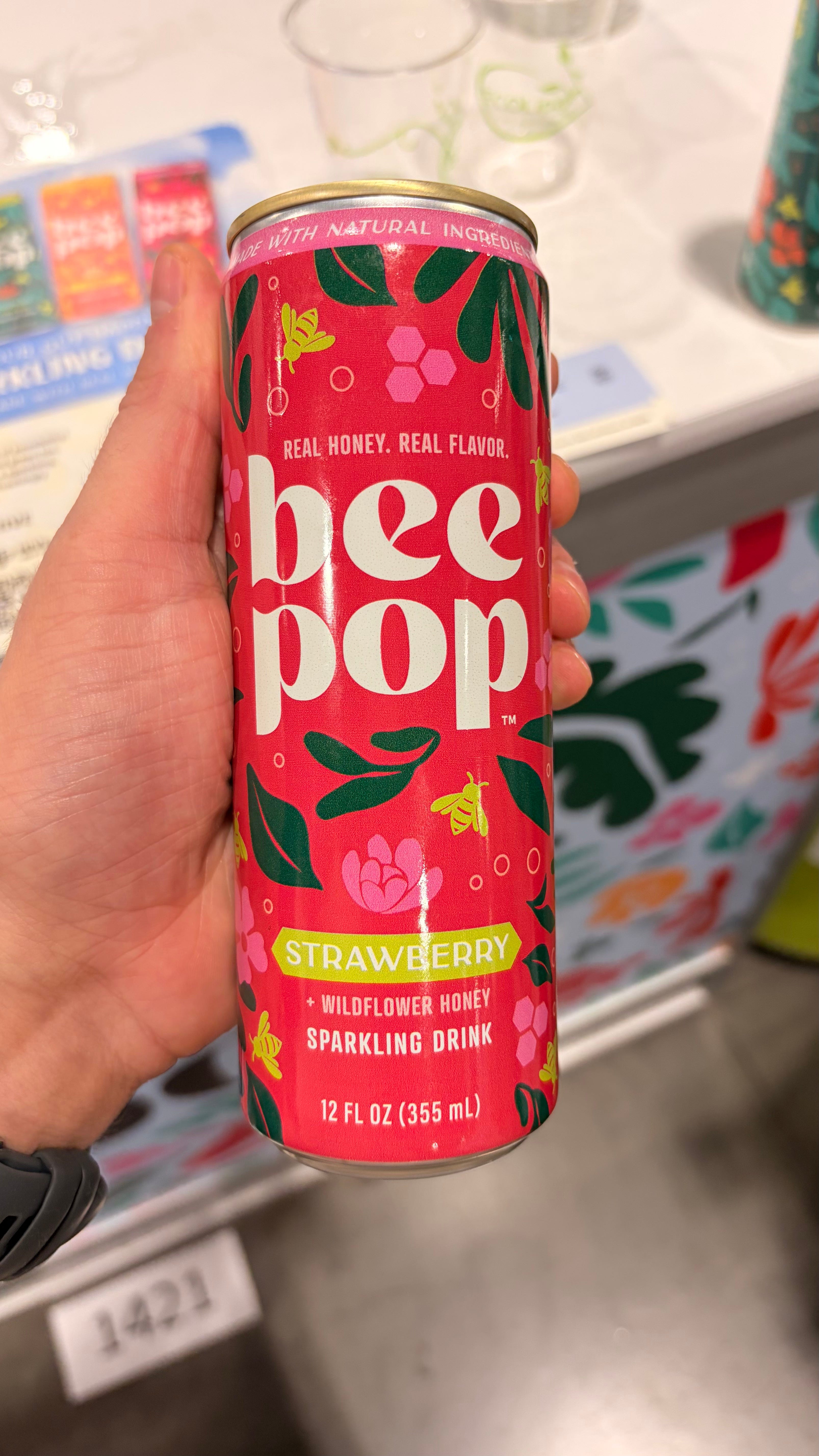
Honey, as either a stand-alone product (like Manukora or Honey House) or as a sweetener (like in BEEPOP or Yes Honey), was very present at the show. For good reason. As some consumers push back on artificial sweeteners and even some other natural sweeteners (sorry monk fruit and stevia), I think we’re going to continue to see a push towards very natural-leaning sweeteners like honey or date in a lot of the products, both food and beverages. Honey is something that people are very familiar with and are also very much leaning into the health benefits of. As more brands want to add more function to their products, if your sweetener doubles as a sweetener and a functional ingredient, why the hell not use it?
Innovative international
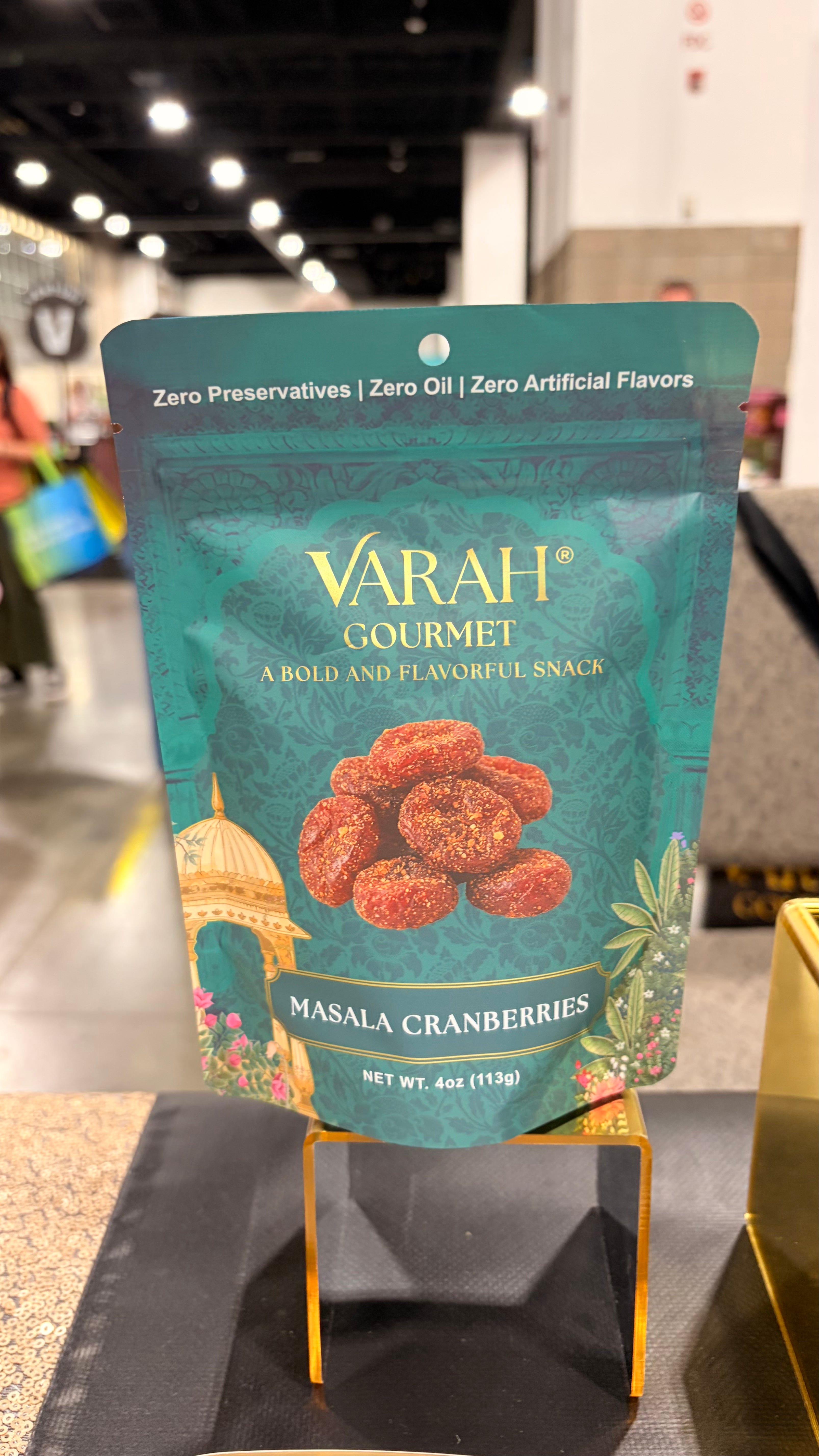
International and globally inspired flavors is definitely something we’ve been seeing over the past few years start to come up a lot more, especially Indian and certain Asian flavors. One thing I noticed on the show was a resurgence of innovative international formats. Definitely in prior years there were normal American snacks with an international flavor twist on it. I feel like those went away and now they’re starting to trickle back as hopefully consumers are more open to globally inspired flavors. At the show we had everything from bars (like from Posana and Beni Bites) to pad thai popcorn (Party Of) to masala dried cranberries (Varah Gourmet) to potato chips (Keyas Snacks) and to ice cream (Heratige Kulfi).
Protein still going strong.
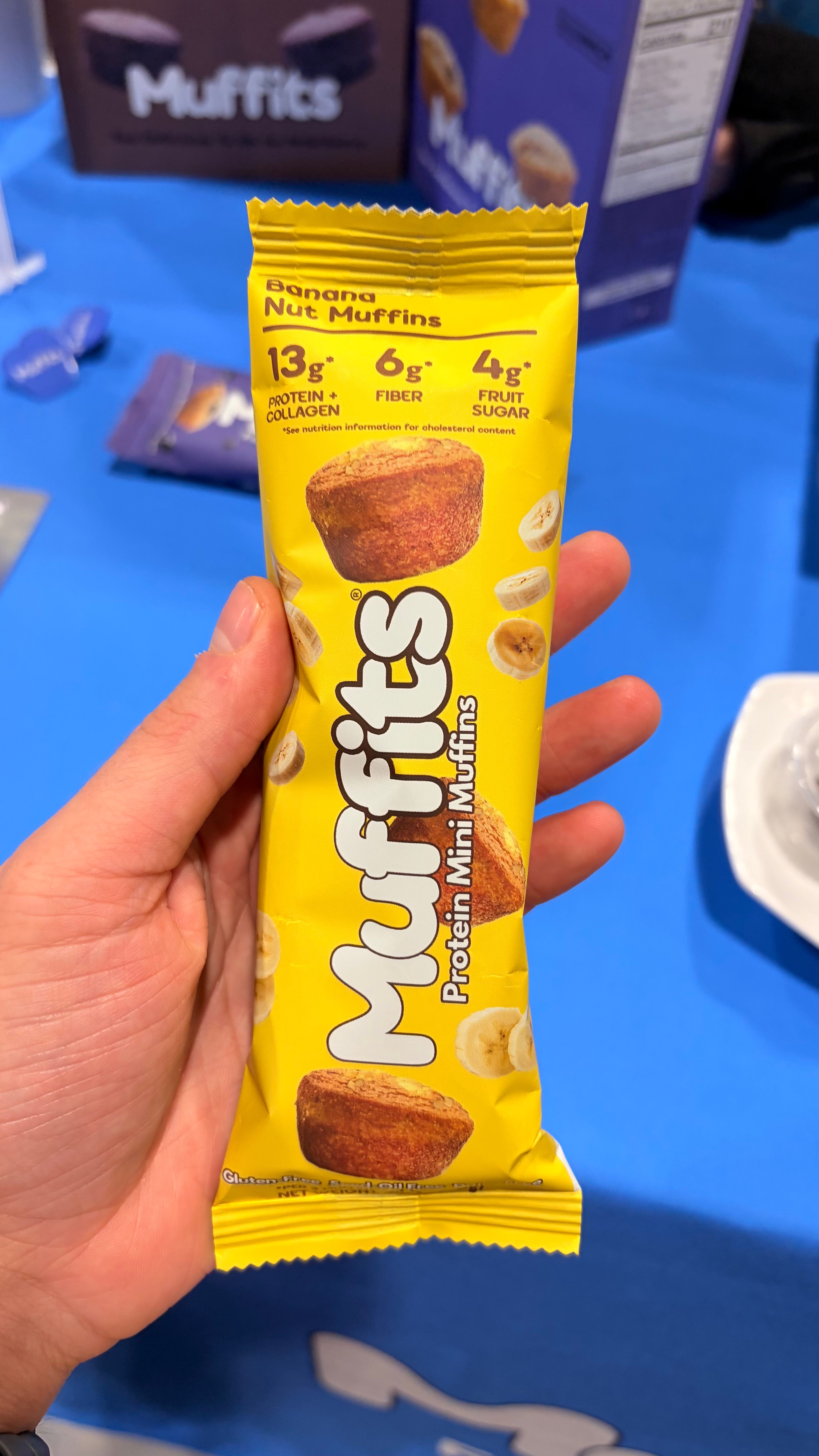
It’s 2026. Did you expect me to not mention protein as a trend in the food and beverage space? You’re crazy. There was absolutely no way protein was disappearing and it shows no signs of stopping or slowing down. You can thank GLP-1, the broadening wellness category, and also just all of the brands that are making protein products are creating a lot of me too products in that space as well. I think a lot of brands are feeling like they need to add protein to stay relevant in this current industry. Protein showed up in muffins (Muffits), chocolate spread (Smudge), all the bars (like Mosh’s new 20g protein bars), and even drinks (Drink LOVE clear protein).
Liquid (and powder) function
Everything and their mother is a functional beverage these days. I feel like we had a brief reprieve when it was all just gut health focused and now you can find every damn function in a can or a sachet. And guess what? They were all at Newtopia Now! Brightside, Journee, Preme, Avro, Melting Forest, The Cycle, Joggy, Skewl, Four Sigmatic, and so many more. While there were plenty of brands that had products with solo functions such as focus or energy, there were lots of brands that had products with stacked functions. Mixing protein, gut health, fiber, energy, creatine, and so many more functions all together.
Favorite bites and sips from the show floor
This is what everybody really wants to know…. What was my favorite thing at the show? Well I had a few! There’s always so many amazing brands I could never just pick one. And these were all products that were new to me that I haven’t had before. There were plenty of other products there that I’ve had before that are absolutely excellent.
Tangoz - there’s a lot of dried mango and dried fruits out there but this one tastes so much different. These are infused with flavor and it is some of the boldest most real tasting flavored dried fruit I’ve ever had. Like the sour lime one tasted like you put fresh lime on a mango. It was insane.


El Horno Chimi - yes this is another crispy oily condiment but it’s a chimichurri and it is so damn good. I think one of my favorite things about it was that the crunch felt incorporated throughout the entire condiment rather than there just being sort of like big pieces of crunchiness. It felt almost like there was this puffed rice throughout the product that went to a really good mouth feel.
Venturi - this is a brand new coffee company that just launched at the show. Alongside having regular Nitro cold brews, they also have a few SKUs that are 80% cold brew iced tea and 20% cold brew coffee, which is something I have never seen before. It was incredibly delicious and incredibly smar. This strawberry hibiscus one was probably my favorite sip at the booth but they also had a blueberry one. They had a maple flavored one. They were so good.


Tozi - This brand knows how to use corn. These tortillas and tortilla chips were absolutely excellent. They’re made with amaranth, which is an ancient Aztec superfood, and it just adds this boldness to it. They all just taste so fresh and good. I really appreciate the level of thickness and salt on the tortilla chips. Too many tortilla chips are either too thin or way too thick and these are the absolute perfect thickness.


Oatlandia - I was drawn to this brand because it falls into this category of products we’ve been seeing around the new lunchbox. There are all these new kids’ brands that are elevating themselves to what adults normally eat but are branded and formulated for kids. I think they did a really good job with building a very aesthetically pleasing brand that’s very fun but not juvenile. They also knighted me with a giant spoon, which was very fun.
CPG & Consumer Goods
At this point, is anyone even dehydrated anymore? Hydration brand Cure is launching in 4,500 Walmart stores and online—its largest retail expansion to date—bringing its total door count to 27,000+, up 35% YoY. The brand, reportedly profitable since 2024, has grown 561% over three years!
The category itself is sizable but not exactly defensible on formulation… the global electrolyte drinks market sits around $7.1 billion and growing near 9% annually, yet a mix of sodium, potassium, and magnesium is effectively unpatentable, meaning differentiation has to come from brand and distribution (and perhaps flavor) rather than the function itself. LMNT is the clearest proof of that: reportedly built on under $5 million raised, it became one of the category’s most recognizable names through podcast ads and a free-sample funnel rather than massive distribution.
Today, the massively saturated hydration category almost feels more like a group of micro-tribes than one big winner: Liquid IV (Unilever) still largely owns mass, but LMNT seems to own the health optimizers, Nuun still gets the endurance athletes, and Cure is coming for the casual wellness consumer looking to switch it up from Liquid IV.
Rocky Road to court. A federal judge dismissed seven of ten claims in Ben and Jerry’s (the founders of Ben & Jerry’s the brand) lawsuit against Unilever, which alleged censorship of its social activism and $4.5 million in missed payments. Magnum, which acquired the brand from Unilever last year, now steps in as the primary defendant.
So why is this all happening? It all goes back to the 2000 merger, which handed the brand unusually strong protections with an independent board that had primary say over its social mission, carried over from their 1978 founding. Things started to unravel after the 2021 decision to stop selling in the West Bank, and the board says Unilever spent the years after blocking posts calling for ceasefire, withholding approved donations to various causes, skipping $4.5 million owed under a 2022 settlement, and abruptly removing CEO David Stever back in March 2025. Unilever denies censoring anyone and says that Stever left voluntarily. And now with the ice cream business spun into Magnum, the case comes down to whether that independence will keep on going under the new owner.
In the meantime, Ben Cohen in particular has been about as loud as a founder can get, posting nonstop about Gaza, healthcare and free speech, and even getting arrested at a Senate hearing for interrupting RFK Jr. to protest the Gaza blockade. He and Jerry have since run a public #FreeBenandJerrys campaign and tried to line up investors to buy the brand back for $1.5–2B, which Magnum has out right refused. It’s pretty clear that selling to Unilever in 2000 for $326M is one of the biggest regrets of their lives.
Protein for relevance. Caulipower (now owned by Urban Farmer, a specialty dough manufacturer) debuted a high-protein pizza made with greek yogurt, extending its better-for-you frozen pizza lineup beyond its cauliflower-crust roots and leaning further into the protein-forward convenience trend.
Caulipower built its brand on what it didn’t have (gluten, excess carbs) in an era that was obsessed with paleo diets and restriction. Now, the tune is changing to emphasize what’s being added, and Caulipower needs to catch up with its new competitors in the frozen pizza aisle. Brands like Yough! which really introduced the greek yogurt base and went nationwide at Target in March this year, and Loopini, which makes high-protein frozen pizza using lupini beans and is now in multiple regions of Target and Whole Foods, have already brought incredibly high-quality, taste-forward, high-protein pies to the freezer section—it’ll be interesting to see how a big brand like Caulipower competes through its sheer scale (read: price).
Your favorite mall kiosk snack just got healthified. Hero Bread teamed up with beloved Auntie Anne’s on a limited-time SKU, their new Hero Pretzel Bites. For each 5-bite serving, these come in at 110 calories, 3g net carb, 16g of protein, 18g of fiber, and 0g of sugar.
This is a GENIUS collab for so many reasons, tapping into basically every trend: nostalgia (who isn’t still dreaming about the mere scent of Auntie Anne’s?) meets protein + fiber. But while the Auntie Anne’s name holds a lot of weight, Hero Bread’s name is catching up quickly. The brand just hit number 122 overall in Inc’s 5000 fastest-growing businesses (#4 in Food & Beverage), and hit ~$54 million in revenue last year. Meanwhile, they are innovating like crazy, constantly putting out new products that seem to defy the rules of carbs, from croissants to scones and even noodles. In other words, 🚨 SLEEPER BRAND ALERT 🚨
From Vegas Strip to Target aisles. UNDO Gummies launched at select Target stores nationwide and Target.com, backed by a $1M seed round. The pre-alcohol DHM gummy brand hit 1,000+ retail doors in 18 months and outsold leading hydration brands 5-to-1 at MGM Resorts.
Dihydromyricetin (DHM) is a natural extract from the Hovenia dulcis (oriental raisin tree) vine that naturally supports liver function. UNDO isn’t first to the ingredient. Cheers, founded in 2014, popularized DHM in capsule form and now sits in 30,000 retailers; No Days Wasted, founded in 2017, built a following doing the same. As with most supplement categories, format ends up mattering more than the active ingredient once a market matures, and gummies have consistently outperformed capsules on repeat purchase.
The rest of the pre-alcohol field split into two other camps rather than DHM gummies. ZBiotics took the genetically engineered probiotic drink route, has raised $40.3 million, sold more than 15 million units, and posted roughly 113% compound annual growth from 2021 through 2025 while reaching profitability, now expanding into Total Wine, BevMo, and restaurant accounts. Myrkl came in from Sweden with a proprietary probiotic pill, sold out its UK launch, and entered the U.S. at a premium $35 price point. Both prove the demand is real, but neither has UNDO’s edge in occasion-based retail.
What UNDO did particularly well was immediately getting in front of its target audience—during the exact occasion they’d be using the product—to demonstrate its efficacy. The brand used the Vegas Strip as its proving ground, growing from a launch party with The Chainsmokers (ok, flex) to MGM Resorts’ six-month testing program for new brands where it saw explosive consumer demand.
Cheers and No Days Wasted built DHM awareness through capsules and Amazon, and ZBiotics and Myrkl created the broader market for “pre-alcohol supplements.” But UNDO’s move was skipping the supplement aisle entirely and planting itself inside the exact drinking occasions where the product’s value is obvious, then using that proof point to get into Target. Brilliant.
Drive-thru brand goes shelf. 7 Brew has launched canned coffees and energy drinks at Walmart, moving the fast-growing beverage chain from foodservice into retail.
The rollout is sizable for a chain this young. Canned 7 Brew Coffee lands in roughly 4,400 Walmart stores and 7 Brew Energy in over 1,100, a national footprint that outpaces the brand’s own physical presence of 800+ stands across 38 states. Retail shelf space is reaching markets 7 Brew hasn’t opened a drive-thru in yet, which functions as free brand introduction ahead of real estate.
7 Brew isn’t first through this door. Dutch Bros signed with Trilliant Food & Nutrition in 2025 to launch ground coffee, K-cups, creamers, and ready-to-drink lattes, now sitting in Walmart, H-E-B, Albertsons, and Amazon. Dutch Bros was explicit that the goal is brand awareness in states where it doesn’t yet have stores, which is what 7 Brew seems to be testing.
The category context matters here too: Coffee-adjacent RTDs and energy drinks are two of the more crowded shelves in beverage right now, so a drive-thru brand entering isn’t finding white space, it’s betting that existing customer loyalty transfers to a canned format sitting next to Celsius and Starbucks Doubleshot.
Looks like fast-growing regional chains are now treating retail as a growth lever (alongside unit expansion) instead of waiting until they’re a mature national brand to license into CPG. Both 7 Brew and Dutch Bros hit retail while still under 1,100 physical locations, using shelf presence to do brand-building work their store count can’t yet do on its own.
Landing your dream retailer soon (Whole Foods, Target, Sephora...)? Get ready for the impending catch... EDI. Current providers like SPS Commerce make it SO slow, clunky, and riddled with fees... which is why we recommend Endless Commerce. It’s the all-in-one platform for EDI, inventory, orders AND warehouse—and setup takes mere days.
eCommerce
Look, up in the sky! It’s… hand soap? Amazon recently announced it will be expanding Prime Air drone delivery to nearly 500 U.S. cities by end of 2026 adding Atlanta, Chicago, and Cleveland as it battles other retailers like Walmart and DoorDash for fast-shipping supremacy.
And Walmart has been doubling down here all year. In January it committed to adding drone delivery at 150 more stores with Alphabet’s Wing, building toward 270+ locations and 40 million Americans covered by the end of 2027. In June they named seven more metros—Philadelphia, Phoenix, San Diego, the SF Bay Area, Salt Lake City, Memphis, and New Orleans—pushing them to nearly 20 U.S. markets. Wing has now cleared over a million commercial deliveries, so it’s looking like drone deliveries will be a serious thing across the US in the near future.
Drones are really just the flashiest piece of a much bigger delivery speed race. Amazon delivered nearly 70% more items same-day in 2025 than the year before, pushed same-day perishable groceries into 2,300+ cities and towns, rolled out one- and three-hour delivery windows across the U.S. in March, and is spending $4B to triple its rural delivery network. Even FedEx jumped into same-day this spring with a partnership with OneRail. And shoppers are pulling right along with it—AlixPartners’ 2026 home delivery survey found consumers now expect free delivery in 2.7 days on average, down from 3.5 days or more in prior years, and in under a day for groceries. The bar for “fast enough” keeps moving, and drones are a great way to beat it.
Retail
Target is officially cooking again!! Q2 was a genuinely great quarter across the board. Their net sales grew 5.3% to $26.5 billion (with a B!), comps rose 3.8% on 3.6% more traffic, all six merchandise categories grew, and EPS doubled to $4.11.
A big chunk of the shine did come from a $994 million pretax tariff refund.
The quarter’s biggest winner was food & beverage, which did $5.99B in sales, up ~7% year over year and comfortably Target’s biggest category by far—bigger than beauty, apparel, or home. This is exactly what we were getting at in Is Target the new Whole Foods? Target has spent years building grocery into a destination and discovery trip instead of just a fill-in errand, and the doubling down is clearly paying off!
Gopuff is going deeper on private label. Gopuff is expanding its Crave Shoppe and Basically lines with its first-ever seasonal assortment: iced pumpkin cake, pumpkin donut holes, edible cookie dough, apple cider, and snack mixes, all limited-time. The company says it built the lineup off its own ordering and search data after fall-flavored sales jumped 19.4% YoY last fall. Private label now shows up in nearly 1 in 5 Gopuff orders and is up 20% YTD in 2026.
Private label keeps taking share across retail. U.S. store brand sales hit a record $282.8B in 2025, up 3.3%—nearly 3x the 1.2% growth of national brands—with dollar share at 21.3% and unit share at 23.5%, both all-time highs per PLMA 2026 Private Label report. Dollar share has also climbed every year since 2021 (19.1%), which is why retailers from Walmart, to Target, to Gopuff are treating own brands as brands.
Hey Walmart… welcome to the 2020s? Walmart FINALLY announced support for Apple Pay and Google Pay starting Aug. 24, with full U.S. rollout planned by end of 2026—joining the 85% of U.S. retailers that already accept Apple Pay.
Funding news
An $11M tan. Dolce Glow, the at-home self-tanning brand founded by celebrity spray tan artist Isabel Alysa, has raised an $11 million Series A led by CAVU Consumer Partners, with more than 10 celebrities and influencers joining the round. Miley Cyrus became an investor back in 2023 and returned for this round alongside Sofia Richie Grainge, Olivia Culpo, Jaclyn Hill, and others.
That’s some goooood cash for a glow. But it makes sense for the moment we’re in: there’s been rising UV and skin cancer awareness pushing people away from sun exposure and towards protection… but people still crave the confidence boost of a tan. As SPF products gain popularity, the complementary product would be a self-tan product—protection without aesthetic compromise.
The celeb-service-provider-to-brand-aficionado pipeline is strong: Mario Dedivanovic went viral off a Kim Kardashian tutorial and built Makeup by Mario into a $200 million brand; Patrick Ta bootstrapped to $30 million before taking outside money; Gucci Westman’s Westman Atelier raised roughly $37 million on the strength of her A-list client roster. A celebrity clientele becomes the origin story, and the origin story becomes the marketing engine. Where Dolce Glow diverges is financing structure, those brands raised from traditional growth equity, while Dolce Glow stacked its cap table with the celebrities themselves, turning ambassadors into investors.
And the retail + product expansion timeline has been intentional, with Ulta in 2024, then roughly 300 Sephora doors plus online this past February, with bestsellers sitting at premium price points ($36 for the Acqua Hydrating Face Mist, $49 for the Lusso Self-Tanning Mousse). The August launch of a $28 self-tanning blush pushes the brand toward hybrid tanning makeup, widening the category it’s playing in rather than just adding SKUs to the existing one.
Ice cream courtroom drama. Rebel Creamery has filed for Chapter 11 after losing a trade dress suit to Van Leeuwen, which sued in 2021 claiming Rebel copied its pastel, minimalist pint packaging.
Rebel listed about $13.78 million in assets against $23.85 million in liabilities, with the Van Leeuwen judgment alone accounting for nearly all of its unsecured debt. A company selling in Walmart, Kroger, and Safeway nationwide got wiped out by a single packaging decision.
Sazerac goes K-wave. Sazerac launched Dalho, its first soju brand, in the U.S. in four flavors with a 50ml bottle—a category first for a spirit traditionally shared at meals. The U.S. soju market is projected to grow 16% annually through 2029.
Dalho slots into an acquisition run that’s been almost entirely about category diversification, not brand consolidation. In the past year alone, Sazerac picked up SVEDKA from Constellation Brands, Western Son Vodka and Distillery out of Texas, and RTD brand Dirty Shirley, then signed to acquire UK canned-cocktail brand Au Vodka, the country’s top-selling RTD line.
The throughline is chasing growth demographics rather than defending core bourbon share. SVEDKA hit a Super Bowl spot and 16.7% year-over-year growth within a year of joining the portfolio; Au Vodka brings a Gen Z-coded ambassador roster (Jake Paul, Floyd Mayweather, Soulja Boy) straight into the fold. Dalho fits the same logic applied to a spirits category the U.S. barely has yet.
If you haven’t yet, please subscribe, like, leave a comment, and share it! It helps us continue to bring you the most interesting news + nuance in consumer and retail every week.
Nate, thank you for featuring Varah Gourmet and our Masala Cranberries in this week’s Express Checkout Substack! We’re thrilled to be recognized alongside so many innovative brands bringing globally inspired flavors to the snack aisle.
Honey everywhere is certainly interesting. Would love to know how the wellness community responds to it as it has a high glycemic index (how fast your sugar blood levels spike), which doesnt happen with other natural sweeteners as dates, stevia and monk fruit