



Hello hello!
Hello from Lisbon (Nate) and Denver (Jenna)! We’re both technically on vacation this week, so there’s no deep dive, but we couldn’t not keep you in-the-know on all the consumer brands and retail news.
But first: some CPG footage from our respective locations:


CPG & Consumer Goods
Is Starbucks the new destination for brand discovery? Floura Fiber, founded by Jeni’s Ice Cream founder Jeni Britton, is rolling out its Blueberry Matcha Daily Fiber Bar to Starbucks nationwide—its first major retail rollout since launching back in January 2025.
Starbucks is no stranger to bringing emerging brands into its stores. Over the years, it has carried Popchips, Koia, Spindrift, OLIPOP, Country Archer meat sticks, SkinnyDipped, SoL-Ti, and Perfect Snacks—often giving these brands one of their first, or at least earliest, national retail accounts. Starbucks is keeps its assortment limited, but it has made some great bets.
Recently, it seems to be making more bets than usual. Chomps and Floura hit stores, and Starbucks also announced a partnership with Owala to launch co-branded bottles when they normally made their own. Just a few months ago, Khloud popcorn entered Starbucks and it sounds like it’s been a great channel for them. The strategy makes a lot of sense: Starbucks needs to give consumers more reasons to come into its stores, and trendy CPG brands (especially those promising fiber and protein) are one way to do that. Starbucks gets to borrow some of these brands’ equity and cultural relevance while giving consumers another destination to grab a quick snack instead of defaulting to some corner market.
It’s never been easier to get your protein. Chomps, the beloved meat stick brand, simple keeps on growing. The brand is now in more than 65,000 retail locations, with recent launches at Starbucks nationwide, Costco Canada, Marriott, and Home Depot.
This really is a beast of a brand. Forbes estimates Chomps will surpass $900 million in revenue this year, up roughly 36% from $660 million last year, selling around 2 million sticks per day!! So much meat.This is a wild ride from the $4 million in revenue in 2016, $20 million in 2018 and $100 million during the pandemic. The brand also controls around 10% of the meat-snack market.
Just to show you how impressive this brand is: earlier this year, its new chicken line became the No. 1 brand in the chicken-meat-stick segment within 12 weeks, capturing 43% of dollar sales. Its products are also the three fastest-selling chicken items in the category, and 34% of chicken buyers are completely new to Chomps! We interviewed Stacey Hartnett, SVP of Marketing at Chomps on our podcast to learn more about the logic behind the chicken launch.
Clean tea energy. Saint James Iced Tea launched Saint James Yerba Mate, its first new line outside its organic iced teas. This line will come in three flavors with 150mg natural caffeine, 20-25 calories, and 3-4g sugar per 16oz bottle, expanding to Kroger and Albertsons nationwide.
Saint James is chasing bev where it’s actually going: energy. US retail energy drink sales climbed 15% last year, setting the pace for the entire beverage sector. Yerba mate lets a tea brand step into that momentum without walking away from the organic, clean-label identity it already owns.
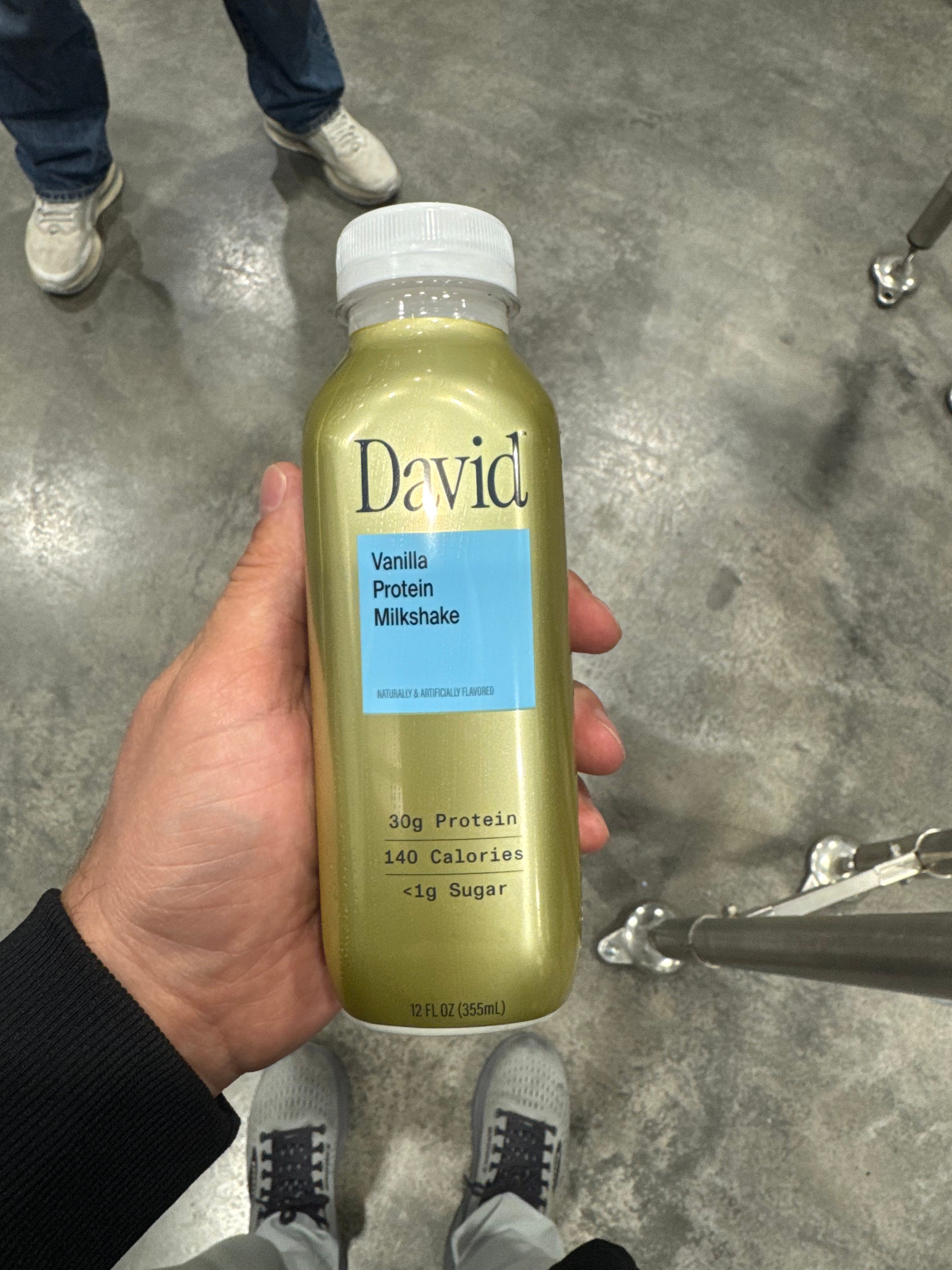
The bar guy goes liquid. David Protein launched gold-labeled (of course), ultra-filtered RTD protein shakes. The shakes only have 140 calories, are packed with 30g of protein, and less than 1g of sugar… basically their bars in liquid form.
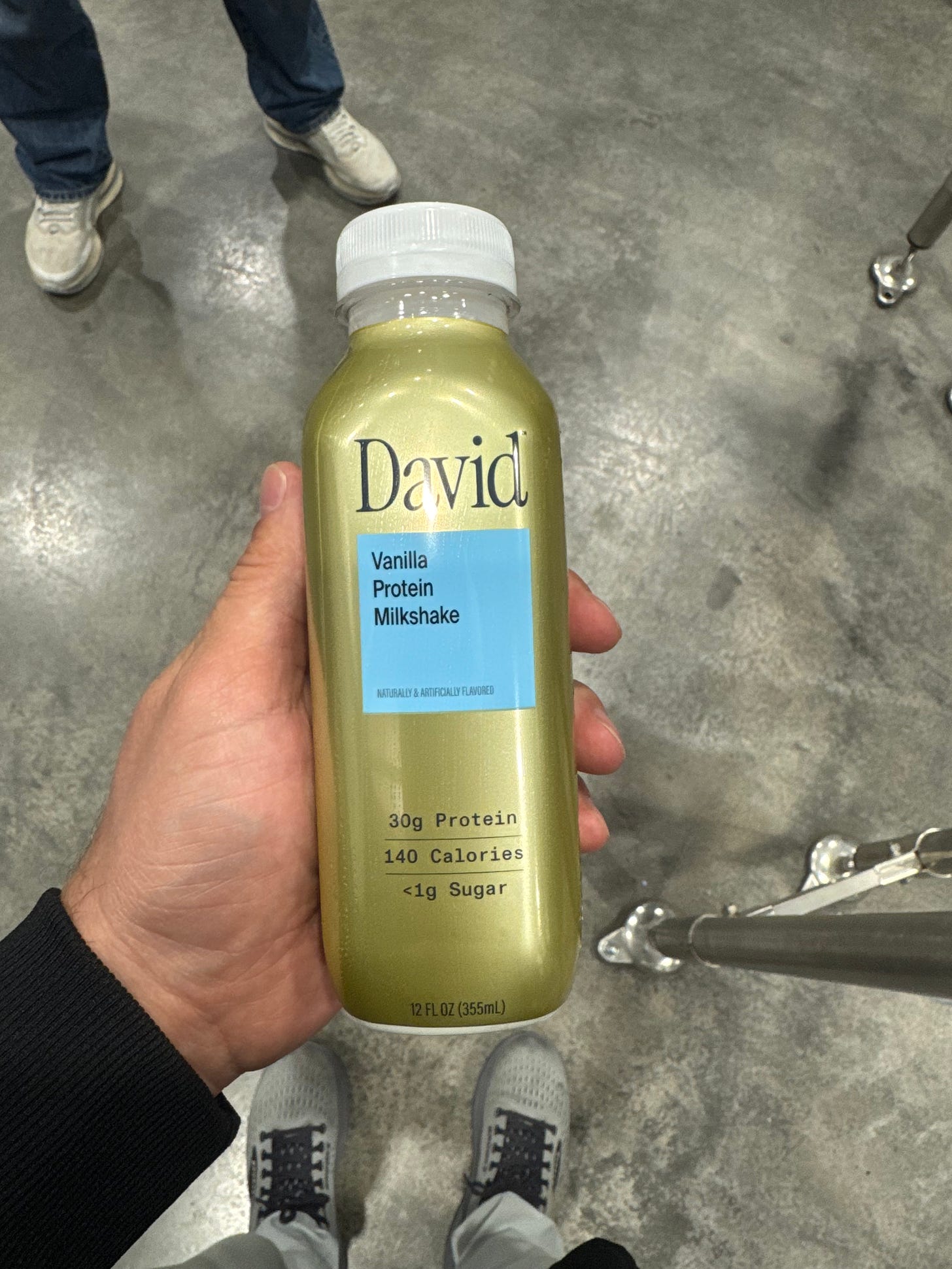
Image credit: Peter Rahal (David Founder) Unlike the protein bar aisle, where David clearly wins on protein-to-calorie ratio, the ready-to-drink shake category is a little different. Brands like Fairlife, Nurri, and Slate all boast similar macros and calories thanks to their ultra-filtered milk base (which removes milk’s water and lactose, concentrating natural protein and calcium for a naturally higher-protein liquid).
So if David isn’t competing on protein-to-macro ratio, which has been the brand’s whole shtick (lest we forget the cod ordeal…) what exactly is it competing on? Though we haven’t yet tried the product, we predict the differentiator here will be mouthfeel. This product still employs EPG, the novel fat ingredient produced by Epogee (which David acquired) which should make this a thicker, richer, more full-fat-tasting indulgence—actually closer to a “milkshake” as advertised. If the taste isn’t obviously more indulgent, I (Jenna) predict that this will likely be the first David line extension to get cut.
Come for the tennis, stay for the brand activations. The US Open officially kicked off last week, which is effectively the Met Gala of US sport events. Over the past few years, this Grand Slam has become an increasingly cultural moment, particularly in food + bev (see: the Honey Deuce craze). This year, the USTA announced its first “official hydration beverage,” Electrolit—separate from its official water sponsor, Evian. Even the USTA is saying that mere water isn’t enough.
Electrolit is a 76-year-old (!!) bev brand founded in Mexico, and it continues to find ways to stay relevant, culturally and globally. This past weekend, Electrolit hosted an Aryna Sabalenka fan contest with FINI Pizza in NYC. And spoiler alert: we are ELATED to be attending the US Open with Electrolit in T-10 days!!!! Recap to come :)
Talk about product-market fit! Wiz Khalifa is taking his premium cannabis lifestyle brand into the beverage aisle with Khalifa Kush & Orange Juice, a hemp-derived THC ready-to-drink created in partnership with Scofflaw Brewing. The drink comes in 5mg and 10mg available in select U.S. states.
Nothing like a glass bottle. Tom Holland’s fast-growing non-alcoholic beer brand, BERO, has launched its Kingston Golden Pils in glass bottles nationwide—the first craft NA beer in the US to do so.
This is leaning hard into expanding their on-premise opportunities to keep elevating and growing market share of the brand. Switching to glass gives the brand a premium feel, offering distributors, retailers, restaurants, and bars more opportunities to sell the product in various settings that match the vibe they’re going for.
The category is also still very early. Domestic NA beer volumes are projected to grow 18% annually through 2029, but very few brands—big or emerging ones—are really chasing the premium end of the market. BERO has a massive opportunity to own that lane, especially on-premise, before everyone else can catch up.
Beyond Meat’s comeback plan. Amid six consecutive quarters of revenue declines—including a 15% drop last quarter to its lowest quarterly total in seven years—rumored bankruptcy, a Nasdaq delisting warning, and a reverse stock split, the brand is trying a few kind of weird things to claw its way back:
Milk Bar, the famous bakery chain by pastry chef Christina Tosi, has partnered with Beyond Meat to launch its first savory products in many years: two limited-edition vegetarian items, a sausage and egg spiral and a meatball parm roll. In all honesty, we do not see this moving the needle. Another viral foodie brand can do a lot in validating a product, but when that brand is known for its ridiculously indulgent birthday cakes, it’s hardly selling Beyond’s new approach to messaging around health.
Beyond is also launching its Beyond Immerse sparkling protein drinks at all 14 Erewhon locations in Southern California. This is the brand’s first brick-and-mortar retail push beyond New York, where it’s sold via Big Geyser since June 2026.
Thanks to Beyond’s existing retail relationships, it feels like the sub-brand could launch anywhere. Choosing Erewhon seems to signal that Beyond wants its drink line to be perceived as premium and up-and-coming, not established and mass-market.
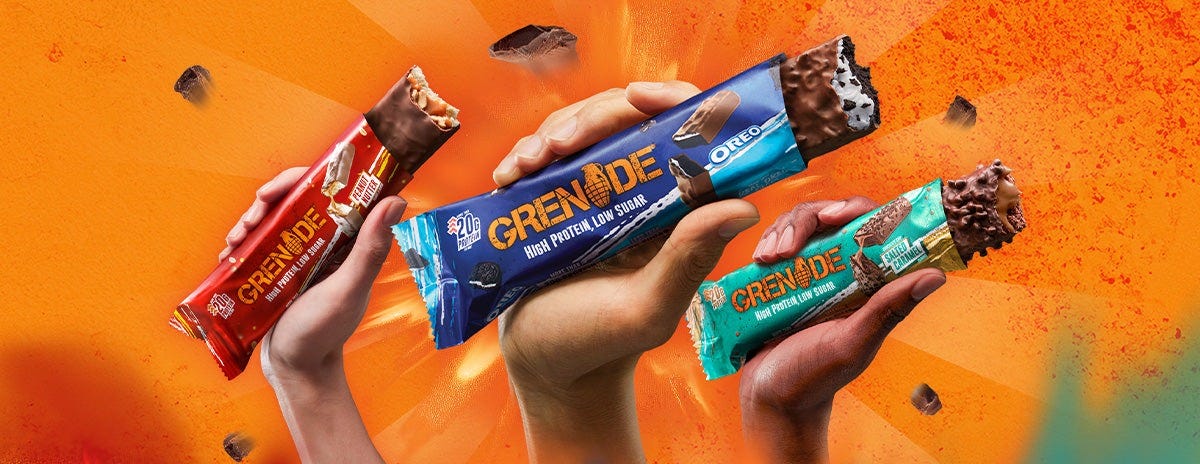
The protein bar wars are getting heated. Mondelēz is launching Grenade—the UK’s top-selling protein bar—in the US, debuting four flavors including Oreo, each with 20g protein and 1g sugar. The brand will first be available at GNC, Vitamin Shoppe, and Amazon.
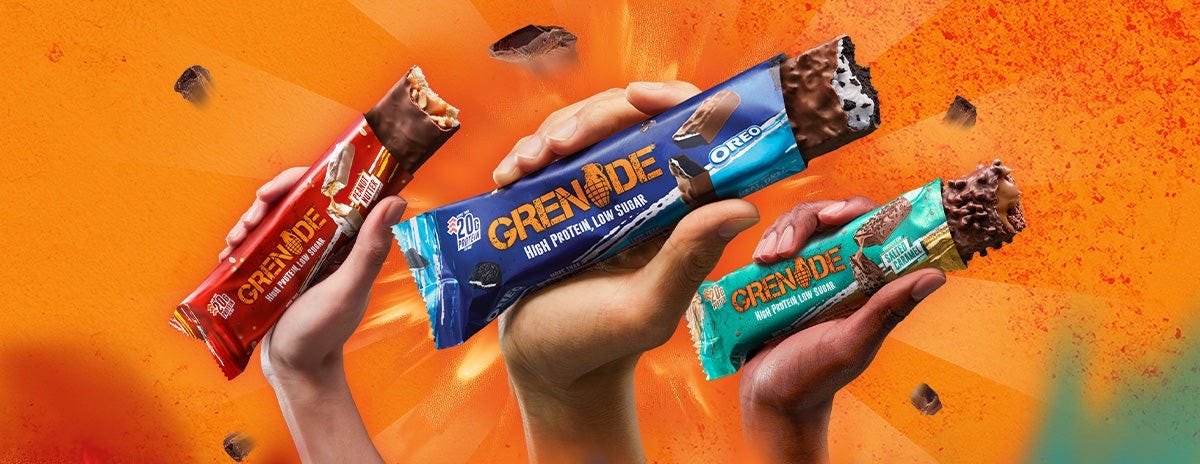
We know what you’re thinking: do we really need another protein bar? But this launch makes sense: it’s a wildly popular protein bar brand (similar in texture and taste to the beloved Barebells) that continues popping up in online rankings, despite its lack of presence in the US. I (Jenna) discovered this bar over four years ago while visiting my family in South Africa, and became so obsessed I brought home a handful. My family was shocked to hear that this brand hadn’t yet made its way to the US!
We’ve also seen many UK brands launch successfully in the US. As we covered a few months ago in our newsletter, The British (brands) are coming, UK brands like TRIP, Misfits (another protein bar), GROUNDED (plant-based protein shakes) have all successfully made their way across the pond. With Mondelēz backing Grenade, the brand will enjoy incredible distribution and marketing opportunities, and, as we see with this launch, great flavor collaborations with Mondelēz’s iconic brands such as Oreo.
NA beer + THC bevs have officially converged. The founders behind Quality Meats, an award-winning creative agency, are launching Herb Light, a lager-style beverage with zero alcohol and just 1mg of THC and 1mg of CBD. It’s for people who want a little more than an NA beer, but less than a typical microdosed cannabis drink. Herb Light is now available around Chicago and online via their DTC site.
From acquisition to lawsuit. In 2024, Simply Good Foods (owners of Quest) purchased protein drink brand Owyn for a cool $280 million—and two years later, there’s a class-action lawsuit targeting the acquirer. Investors are suing Simply Good Foods, saying that it botched Owyn’s integration by switching to an inferior pea protein supplier. This has, supposedly, lead to quality issues, lost distributors, a 70% stock drop, and ~$200M in brand impairments.
Butt care is going mainstream. Future Method, a sexual wellness brand focused on anal health, is bringing douche kits and dilators to 800+ CVS stores nationwide. The brand was started by anal surgeon Dr. Evan Goldstein to offer safer, clinically backed products, and education for a category largely ignored—and hidden—in mainstream retail.
Just the other week, we did a whole deep dive on the new sexual wellness aisle. But(t) this is bigger than just sex. Nearly every “unsexy” category is being wellnessified as brands turn taboo topics into modern, shelf-ready—and even trendy—products. Norms and Asset are doing it for butt care, Dame and plusOne for intimacy, and even Wonderbelly and Lemme for bloating (not as taboo, but not something everyone wants to talk about). These aren’t exactly topics most Americans readily discuss, but it turns out a good rebrand can do a lot.
When in doubt, launch a sleep gummy. Willie's Remedy+, the “social tonic” (AKA THC beverage) brand by Willie Nelson, is expanding beyond beverage with the launch of its Stardust Sleep Gummies, tart cherry bites designed for full-night sleep support and inspired by Willie Nelson's iconic album exclusively at drinkwillies.com.
Creatine-in-hydration. Create launched a four-flavor Lemonade Collection for its Creatine + Electrolytes line—Classic, Strawberry, Raspberry, and Peach—each with 5g creatine monohydrate, 1g+ electrolytes, and 1g taurine. Create’s Creatine + Electrolyte line launched earlier this year, and this expansion indicates that something is going well.
Beyond betting on hydration, Create is also clearly betting on format diversification. Create launched as a creatine gummy brand—and as more and more consumers seek out creatine, they’re also discovering the many studies exposing gummies as an iffy format for creatine delivery. Though Create has loudly supported its claims with its own research, it’s wise to offer additional, more familiar formats in a plethora of flavors for the skeptics.
Retail
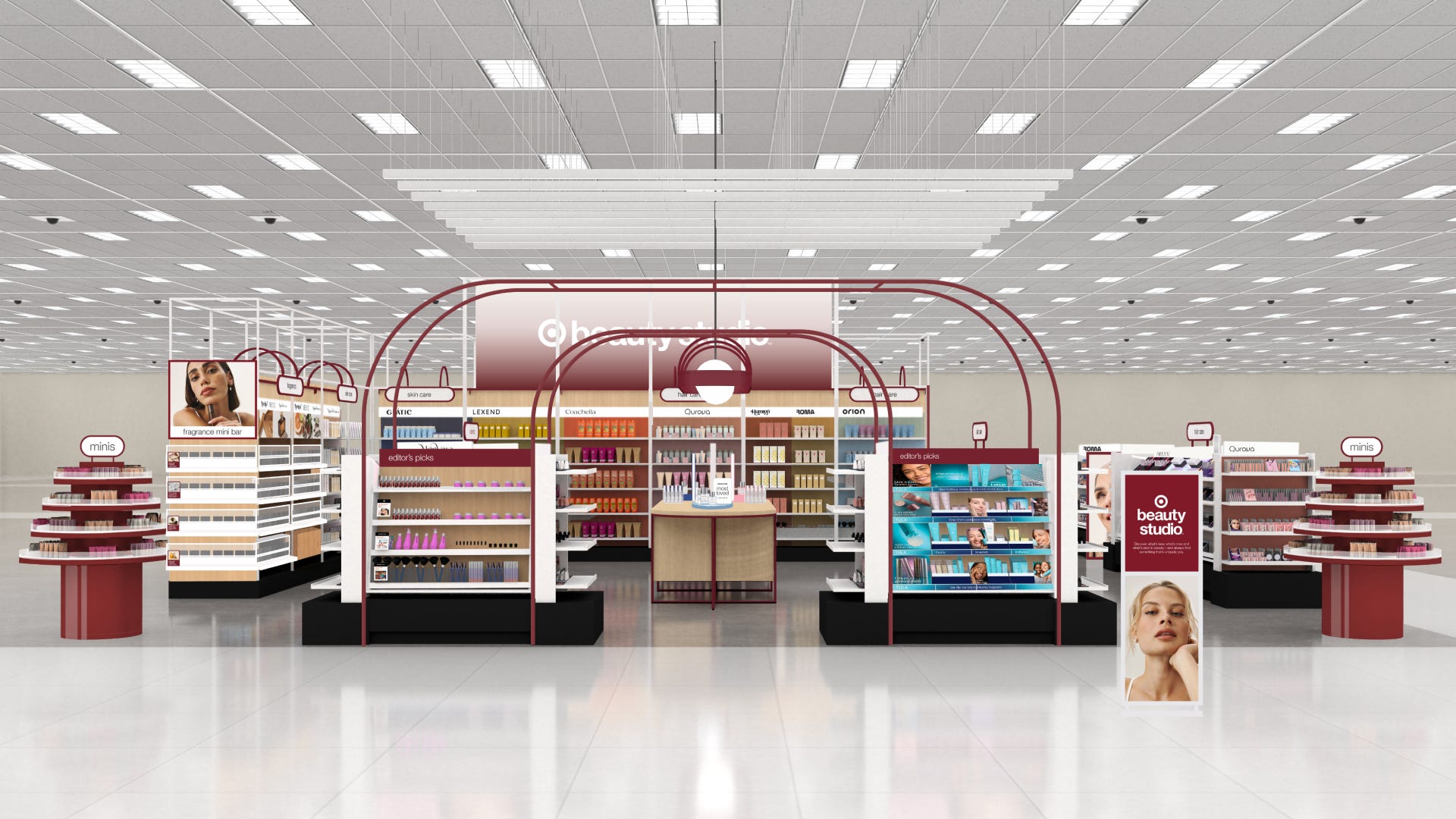
Target goes all-in on beauty. Target is launching Target Beauty Studio on Sept. 10 in more than 600 stores and on Target.com, bringing together 1,600+ products from 90 prestige and emerging brands—most of them new to Target—alongside dedicated Beauty Advisors and exclusive Target Circle offers.
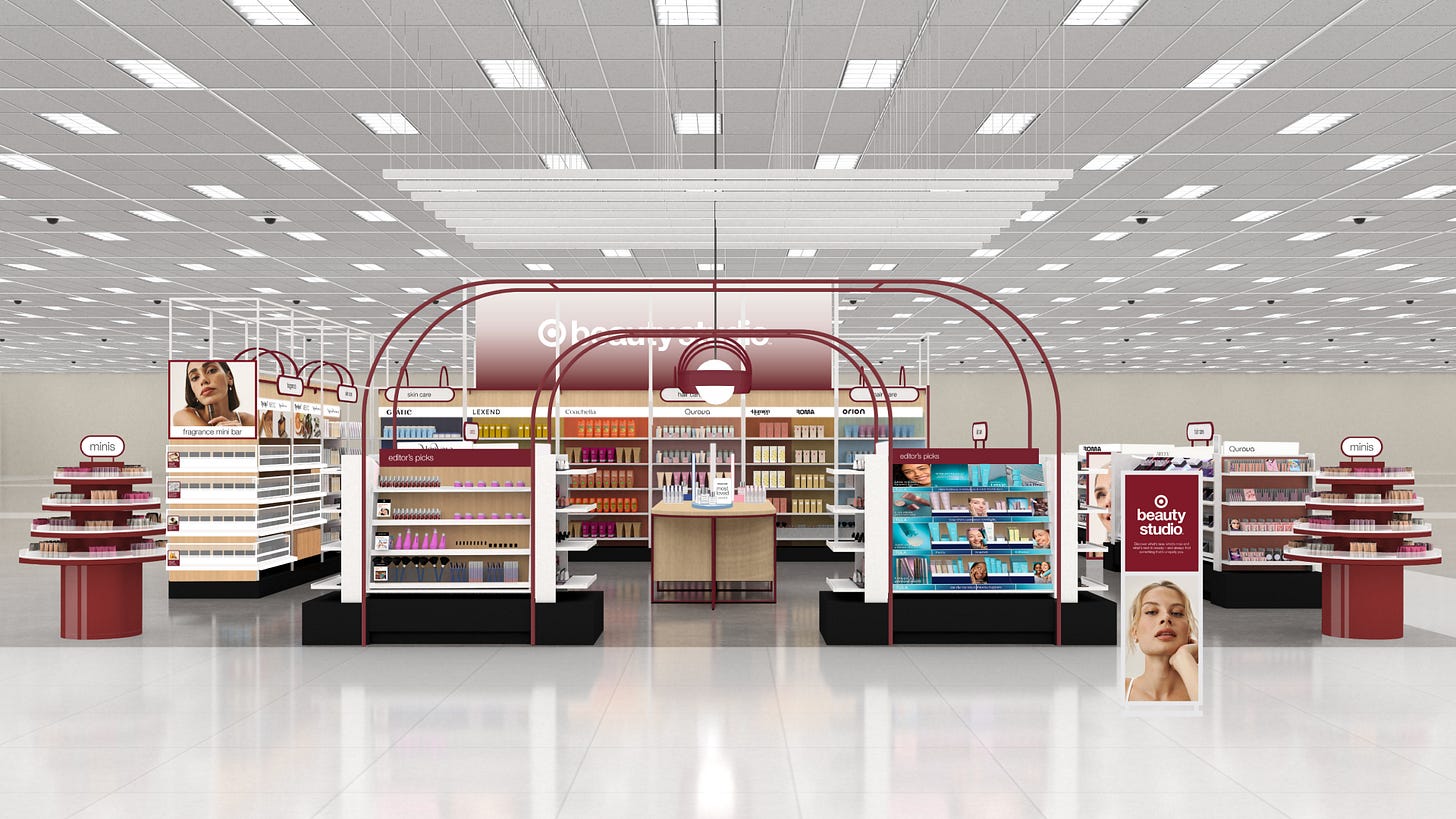
Earlier this month, we wrote about how Target is becoming the next Whole Foods. Now it looks like it’s becoming the next Ulta, too. When the two retailers announced their breakup almost exactly a year ago, we predicted Target would lean into affordable products, strong merchandising, exclusives, and discovery… and they’re doing just that.
This is Target using the same playbook that is clearly working in grocery for beauty and skincare, mixing trusted staples with buzzy emerging brands and affordable aspiration. If it works, Target becomes the one-stop shop for everything cool and new in CPG. Come in for paper towels, find a new protein bar, and leave with a viral K-beauty serum.
Meanwhile, Ulta (now Target’s ex) continues killing it. Ulta Beauty reported Q2 net sales up nearly 9% to $3 billion with comps +3.8%, and raised full-year guidance to 6.7%–7.2% net sales growth. Fragrance remained the company’s biggest growing category, and hair care comps also increased in the period.
Landing your dream retailer soon (Whole Foods, Target, Sephora...)? Get ready for the impending catch... EDI. Current providers like SPS Commerce make it SO slow, clunky, and riddled with fees... which is why we recommend Endless Commerce. It’s the all-in-one platform for EDI, inventory, orders AND warehouse—and setup takes mere days.
Funding
That’s too much mustard. Unilever is putting Colman’s Mustard up for sale ahead of its £33 billion food business sale to McCormick. Since McCormick already owns French’s, combining the two mustard giants could get a little too spicy for regulators. Premier Foods and Associated British Foods are reportedly interested, though there’s no further details yet.
The founder bought it back. Nyakio Grieco and original backers Brain Trust and Fearless Fund have reacquired Thirteen Lune, an inclusive online retailer for global beauty brands, from SNR Capital.
As a quick refresher, Thirteen Lune’s rise was fast, but so was its fall. After expanding its J.C. Penney partnership to over 600 stores, the company fell behind on vendor payments, saw their revenue drop from $24 million in 2023 to $7 million in 2024, and went through an assignment for the benefit of creditors—basically an alternative to bankruptcy—before SNR acquired it in December 2024. J.C. Penney later ended the partnership altogether. Now, less than two years later, Grieco and the original backers are taking it back in their control.
Period care is consolidating fast. TowerBrook Capital Partners has invested in Rael, the organic cotton period care brand projected to hit $125–$150M in global sales last year, with distribution in 40,000+ U.S. and South Korea doors. Terms undisclosed; TowerBrook typically takes majority stakes.
Premium water keeps winning. Path, a purified-water brand in reusable aluminum bottles, raised an undisclosed late-stage round from Agility Ventures (the corporate VC arm of global logistics firm Agility) to fund US and international expansion.
If you’re a brand trying to understand the nuances of creator marketing (and how it’s different from—and more sustainable than—influencer marketing) you’re gonna want to listen to the most recent episode of the Express Checkout podcast, featuring Agentio.
Check it out below or on your pod streaming platform of choice!
If you haven’t yet, please subscribe, like, leave a comment, and share it! It helps us continue to bring you the most interesting news + nuance in consumer and retail every week.
Killer roundup! Also can't believe the protein bar hype just never gets old. It's literally candy bars for adults at this point.