



Hello hello!
If your fiscal year starts in January, your 2027 budget should be built in the next 90 days. 😬
And this year, there’s even more to account for than usual: tariffs are back in the picture, demand is soft, and DTC inventory is sitting at 133 median days with real cash tied up. A single static budget just... doesn’t hold up against that.
The smartest brands budget differently. That’s why our finance pro friends at Drivepoint took what their best customers do, and turned it into a playbook. This FREE guide breaks down what it actually takes to plan a year that can flex, including...
A month-by-month calendar. August data cleanup through December plan lock, laid out as a checklist you can run with your team, no matter when you’re starting.
The five million-dollar decisions. Tariff pass-through, inventory buys, channel mix, marketing efficiency, and cash runway, each one grounded in a real number. (One brand modeled a “cost-saving” facility delay and found $4M hiding in it!!)
The software math. Where FP&A tooling actually fits in the budget cycle, and why that decision window closes in October.

This playbook is already used by finance teams at 100+ consumer brands, including Oats Overnight, Mad Rabbit, Graza, True Classic, and Curology!
Get the FREE 2027 Planning Playbook →
News of the Week
It’s time to talk about sex(ual wellness).
Over the past few years, the pharmacy has slowly but surely been overtaken by wellness culture. Aisle-by-aisle, we’re seeing emerging consumer brands bring prestige and a wellness lens to just about every traditionally unsexy category within the walls of a Walgreens.
It started with overhauling vitamins and supplements (in favor of gummies and powders), then it was about denoting a “cool” factor to acne care (see: Bubble, Starface, Good Molecules), yassifying Metamucil (BelliWelli, Bio.me), bringing modern branding and organic claims to feminine care (LOLA, Cora, August), and recently, swapping oral care’s bulky brushes for trendy devices (SURI) and functional toothpastes (Dayly, Boka).
Most of these categories, in their ultimate premiumized form, have expanded beyond the sterile, blindingly-lit aisles of CVS to wellness-focused, discovery-oriented retailers like Erewhon.
Yet somehow, new-age retailers have overlooked one critical aisle: sexual wellness. Though premium brands like Dame, Maude, Mila, and more have entered the category, K-Y Jelly, Trojan, and clunky vibrators still occupy those dusty pharmacy shelves—and wellness destinations steer clear of entire subcategories.
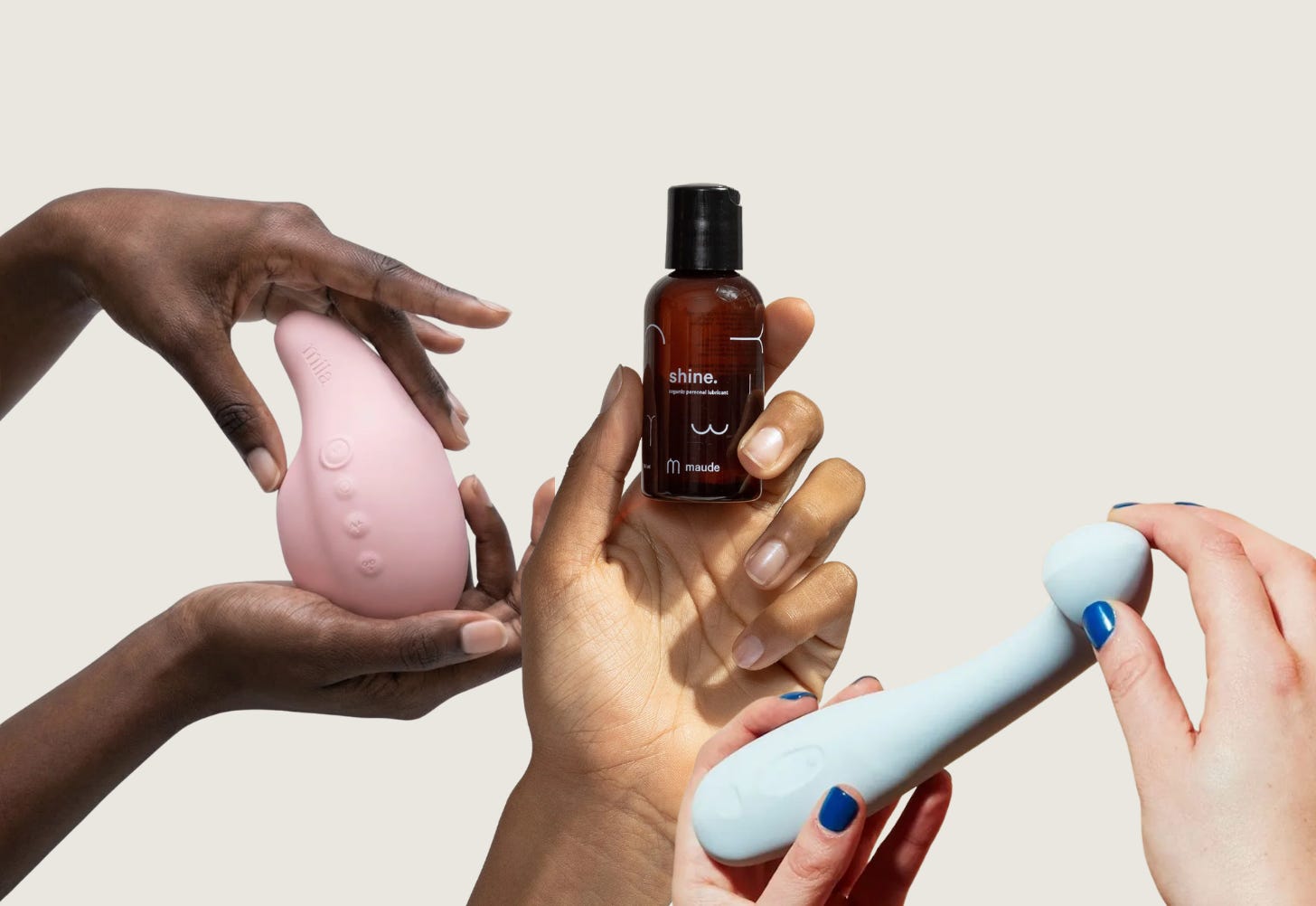
Retailers have been opting for “libido supplements” or massage oils that nod to sex as a concept, while avoiding the players that are in the room where it happens: vibrators.
At one glorious point, things were different. In February 2022, Sephora introduced premium brands like Dame, Maude, and Smile Makers, bringing their vibrators, lubes, and more into stores and online. But since that groundbreaking launch, Sephora has slowly (and silently) pulled back.
As of the end of last year, Sephora unceremoniously halted sales of all sex toys. Now, when you browse the “intimate wellness” category on Sephora’s website, you’ll find a shrunken line of massage oils, ingrown hair treatments, and “pH-balancing” washes—no toys or lubricants.
But where Sephora is shrinking its sexual wellness assortment, another beauty retailer is seeing it as an opportunity to go deeper: Ulta Beauty. This week, plusOne, the sexual wellness brand and market share leader of devices in the US, launched in Ulta Beauty’s Wellness section—proving that devices are part of wellness.
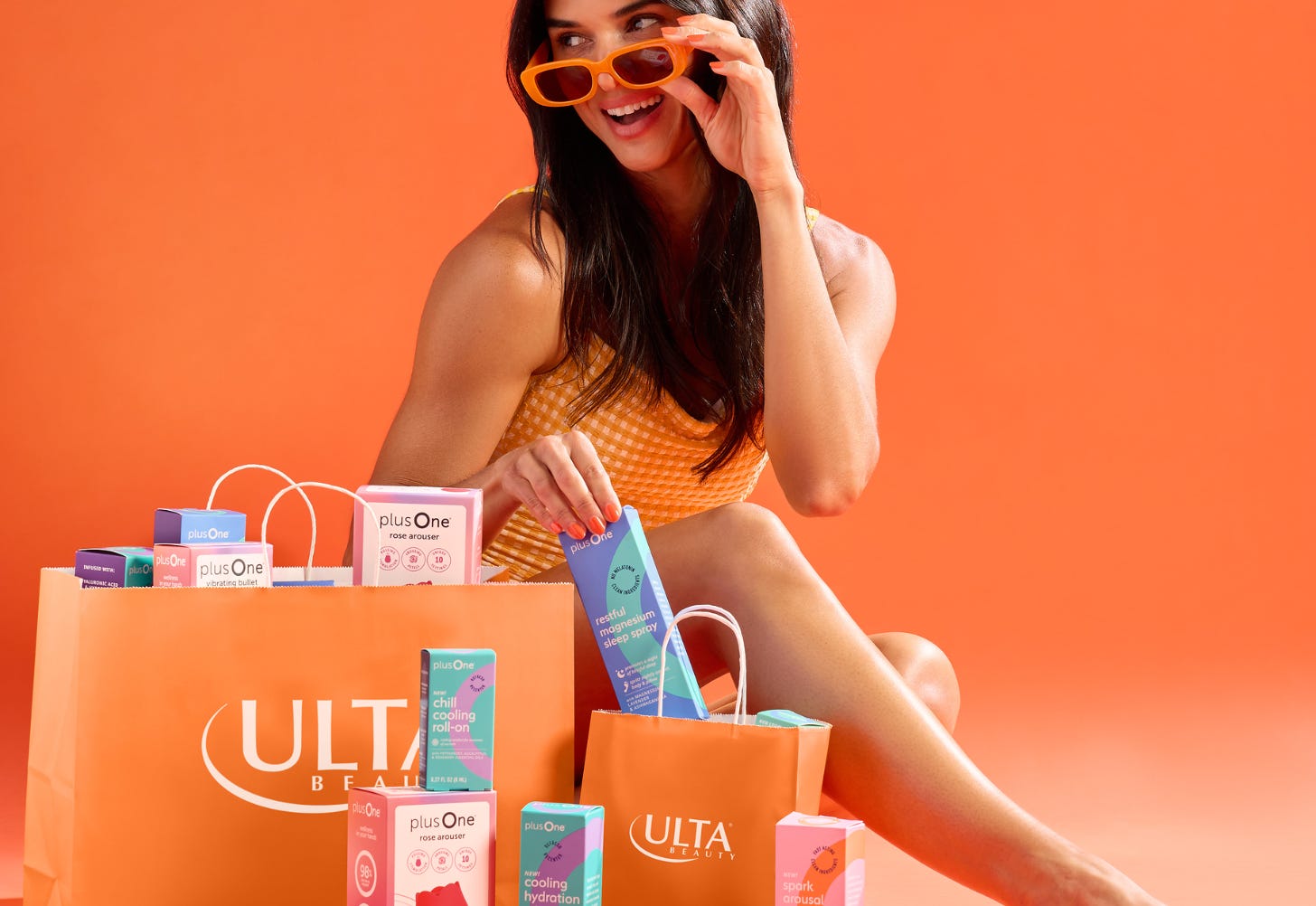
The brand started in Walmart, and has since moved to drug stores. Though brick-and-mortar is its largest channel, over time, the brand has run up against some restrictions in its mass-market and drug channels: products are tucked behind glass cases or strapped with spider wrap.
Kathryn Pratt, SVP of Marketing and Innovation at Beacon Wellness Brands (parent co of plusOne), told me that delivery services have also come into play in a big way, with consumers Instacarting and DoorDashing devices (either out of convenience or to avoid the social discomfort of shopping IRL).
Ulta and specialty retail makes products that much more accessible. “This is just as much about where we’re in-store, as how we’re in store,” Kathryn told me. At Ulta, she explained, shoppers can touch and feel the product, see the packaging in full, and—perhaps most critically—interact with highly educated store staff to break that social barrier and isolation that can come with shopping for sexual wellness products.
Just a few years ago, this same conversation would’ve looked vastly different. Kathryn attributes much of sexual wellness's come-up to the destigmatization of adjacent women's health categories—perimenopause and menopause chief among them. As those conversations went mainstream, they brought sexual wellness with them… just a few steps behind.
Over the last two years, hormone health and menopause care have been reframed by VCs, retailers, and media alike as essential—a wellness and longevity play, backed by health claims. Sexual wellness is on that same road, but hasn't yet earned the same language.
Alexandra Fine, cofounder and CEO of Dame (a premium sexual wellness company once carried by Sephora), made this exact case in an op-ed published today (what timing!!): that the system has somehow decided that erectile dysfunction is medicine while women’s sexual pleasure is a lifestyle choice—and that double standard isn’t just a branding problem, it’s a health one.
She spent two years suing the New York MTA after it rejected Dame's subway ads for their "sexual nature," all while Hims plastered the same trains with cheeky ads for ED pills…. and Dame won (bad-ass). The push just hasn't reached everywhere yet: ad platforms like Meta, insurers, and VCs still treat women's pleasure as optional in ways they don't for men. But Fine's own comparison is the hopeful one: menopause care spent decades buried under shame and a flawed cancer warning (HRT) and is finally climbing out. Sexual wellness is on a similar climb, a few years earlier in the timeline.
Which is why the plusOne launch matters more than a single retail deal usually would. When a mainstream beauty destination like Ulta puts this many sexual wellness products on its Wellness section shelves, it's validating the category, very publicly, in the place shoppers already trust for the rest of their routine.
“What Ulta brings to any category is that stamp of validation, which is a massive shift” - Kathryn Pratt, SVP of Marketing and Innovation at plusOne
And the demand side is only pushing harder. Kathryn, who talks to plusOne customers ranging from college students to postmenopausal women, sees the shift coming straight from the next generation. “I’m very optimistic about how younger generations are embracing and open about sexual wellness and aren’t carrying taboos,” she told me.
Thanks to retailers like Ulta, we're closer than we've ever been. We're just still not saying the quiet part out loud: women deserve orgasms!! And THAT—far more than random greens powders, unregulated injections, adaptogenic toothpaste, and god-forsaken colostrum soda—IS wellness!!
xoxo, Jenna
CPG & Consumer Goods
Don’t worry, your ultra-filtered high-protein milk is safe. Coca-Cola says fairlife has resumed most production after a ransomware attack temporarily paused operations. Retail availability has apparently been unaffected thanks to existing inventory, product safety was not impacted, and the company does not expect any financial hit.
Mycelium is eating the breakfast aisle. MyForest Foods has entered Wegmans with MyBacon, its plant-based bacon made from whole-cut organic oyster mushroom mycelium. The brand reports 74.8% growth and a 35.5% dollar share in the natural channel, even as the broader plant-based breakfast meat category contracts.
As we’ve talked about a lot over the past few years, the alternative meat market has not exactly been a runaway success story. Beyond has seen significant losses, repositionings, and pivots recently, and Impossible also hasn’t really borne the fruit of all that early hype. But that clearly does not mean plant-based meat is dead. There are still consumers who want these products.
It’s also worth noting that Beyond is moving in a similar direction with mycelium, launching a whole-cut steak filet at Wegmans and H-E-B.
Two massive Target launches:
David Protein launched its high-protein frozen dessert pints (don’t say ice cream, or the internet gets mad at you) at Target nationwide, priced at $7.99. Each pint packs 30g protein and 210–260 calories across four flavors. The brand’s online debut of this product sold out in 28 minutes.
Cravings by Chrissy Teigen expanded into two aisles at Target, bringing its mochi pancake mixes into ~1,600 stores and cake kits into >1,200—building on an earlier launch and pushing the brand past 3,500 retail doors nationwide.
Getting fizzy with it.
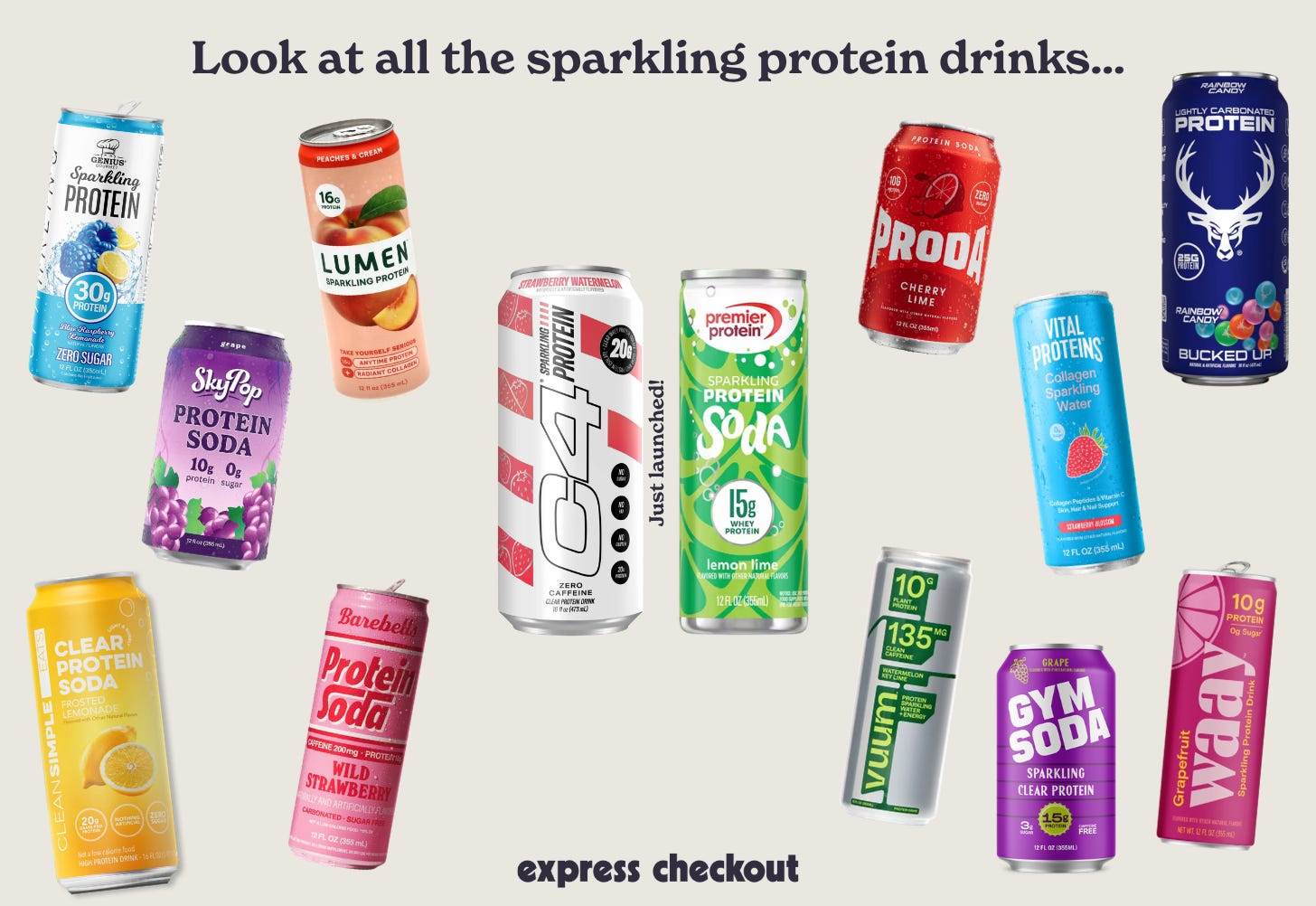
C4 launched C4 Sparkling Protein, a caffeine-free RTD beverage with 20 grams of protein, zero sugar, and five vitamins and minerals.
Premier Protein also launched a sparkling protein soda with 15g whey protein isolate, 90 calories, and 3g of sugar in four flavors.
While protein + sparkling might sound weird, the real ones know this is not the first brand to do it! * cracks knuckles * there’s Genius Gourmet, Lumen, Waay, Gym Soda, Clean Simple Eats, Bucked Up, Vital Proteins, Vuum, SkyPop, Proda, and even Barebells.
You can’t escape the hydration train. Truvani, the clean-label wellness brand best known for organic protein powders, launched a powdered electrolyte mix with 585mg of electrolytes, zero sugar, and monk fruit sweetener in three flavors.
Poppi founder’s next gig. Allison Ellsworth is officially teasing her next startup, which she claims will be the “next billion dollar brand.” They’re already hiring in ops, sales, marketing, HR, and more… which means they’re (likely) pretty far along already. The brand, according to the email address listed in the hiring callout, will be called The Vacancy Project. Any predictions?!
The natural next step. Nello, makers of functional drink mixes, has officially entered the ready-to-drink category with the launch of Nello Energy, a clean, zero sugar, sparkling energy drink beverage. They’re launching with one flavor, Apple Rush, perfecting timing for fall.
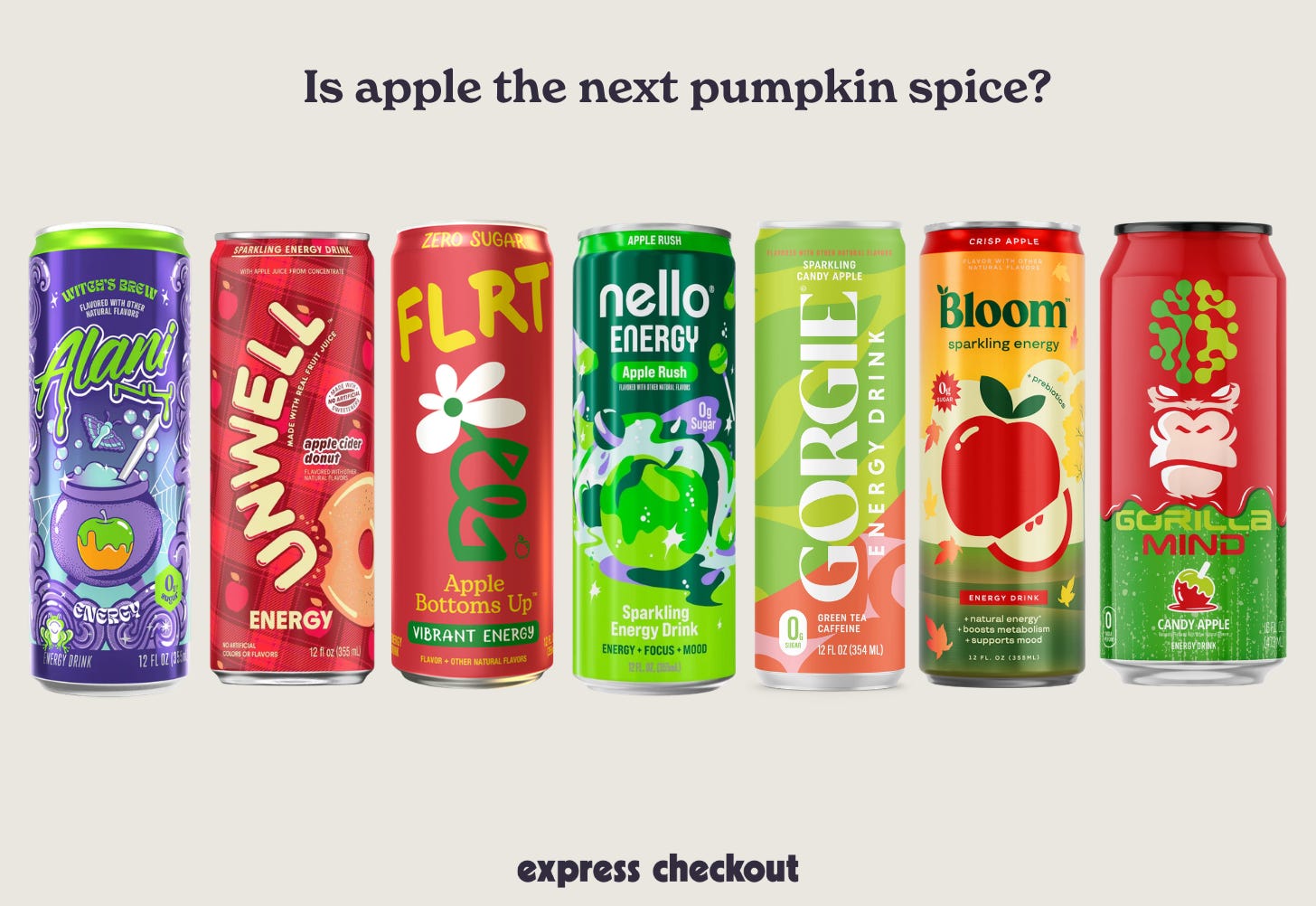
Apple is gearing up to be the next pumpkin spice this fall 👀—especially in energy drinks. Gorgie launched a candy apple flavor; Bloom has had one since last season; Unwell Energy launched an Apple Cider Donut flavor; FLRT is launching Apple Bottoms Up; Gorilla Minda launched a candy apple; and Alani Nu is rereleasing its Witch’s Brew flavor (similar to candy apple) while also dropping a second apple flavor, Ruby Apple.
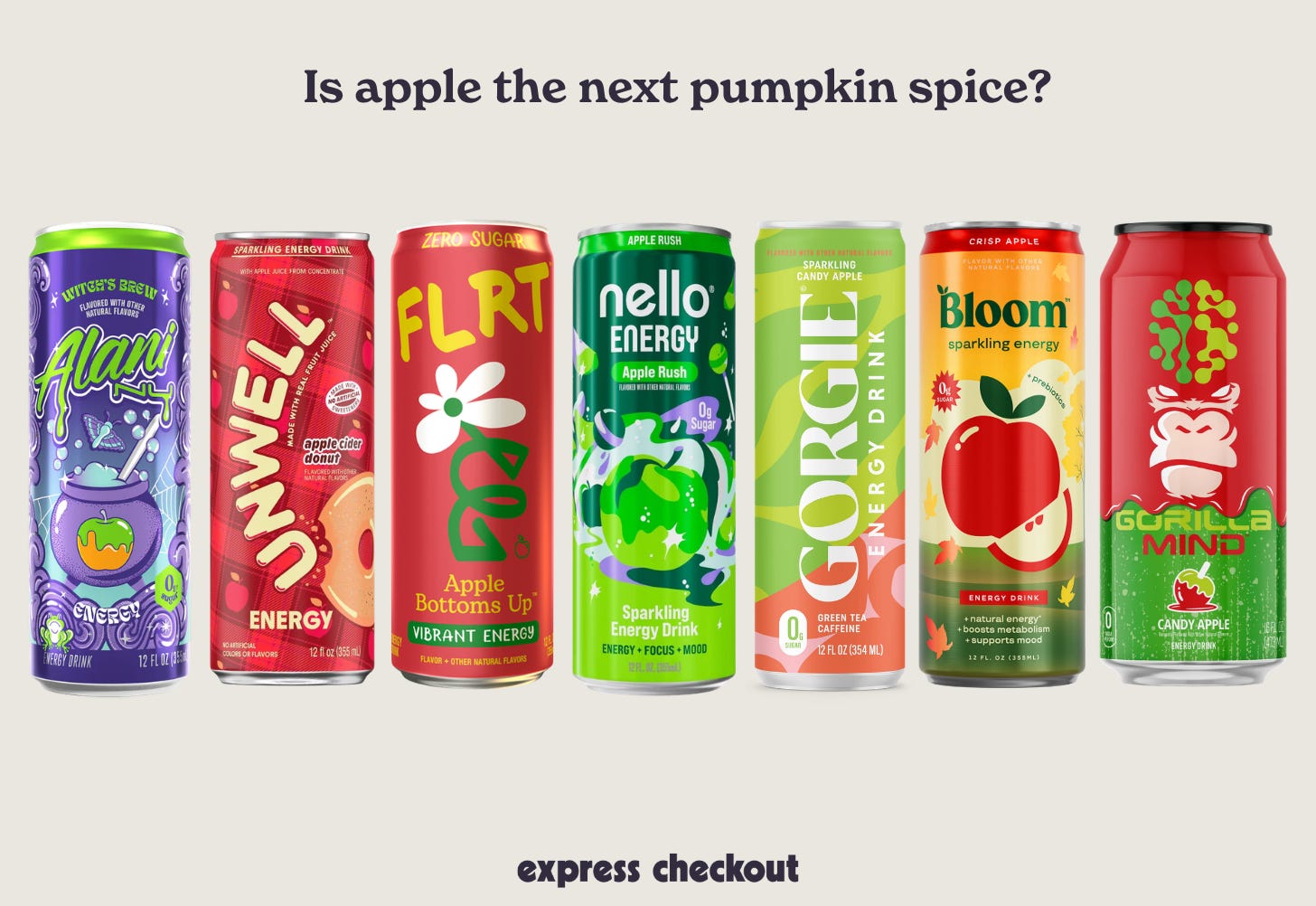
And that’s just energy drinks—apple is showing up across lots of other brands too. Poppi just launched sour apple; Samuel Adams is launching a Apple Spice Ale; and Noosa yogurt launched an apple pie flavor.
Caffeine alone is no longer enough. Free Rein Coffee, founded by actor and entrepreneur Cole Hauser, launched a Protein Coffee Collection—K-Cup pods with 10g protein and RTD cold brew cans with 20g protein—alongside near-chainwide Walmart distribution for its core line.
This is just one of many recent protein coffees we’ve seen hit the market (though the K-Cup format is admittedly really innovative). There are many protein RTDs that have developed a coffee SKU (like Slate, Premier Protein, Nurri), but seeing brands make the opposite move—from coffee-only to coffee + protein—has been a more recent development.
Smelling nostalgic. Gap is relaunching its 1990s fragrance line reimagined as a modern, premium scent collection. The launch includes five eau de parfums priced from $20 to $52
Gap is really betting on beauty as part of its comeback tour. The last two years have gone pretty well for them. Zac Posen made Gap a red-carpet thing, there was the KATSEYE denim campaign that was everywhere, and they keep dropping absolute heat in store.
And now, it’s pushing all that attention into beauty, which carries better margins and gets repurchased every few months instead of every few years. Gap Inc. announced the expansion back in September 2025 focused on Gap and Old Navy stores. It’s been a phased rollout with a 150-store pilot toward its full 1,200+ fleet. They’re launching their own internal brands alongside mass market brands like TonyMoly, Neutrogena, Skin Gym, Patchology, and Mario Badescu.
Retail
25 states are suing over Trump’s tariffs. If you’re affected by the 99.4% of US imports impacted by tariffs (how is this real…), you’ll want to check out this awesome (free to use!) tariff calculator by our favorite EDI provider, Endless Commerce*, to understand the impact to your bottom line and navigate the ever-changing situation!
Check it out and think of Endless Commerce next time you’re fed up with document fees, accepting an order with changes in SPS, or trying to make sense of next month’s inevitable tariff surprise.
NYC is opening its own grocery stores. Mayor Mamdani unveiled that the 5 city-run grocery stores opening up over the next few years will provide a 30% discount on a core basket—all produce, meat, seafood and ~20 pantry categories.
Hunts Point will be the first location in the Bronx opening by end of 2027, then La Marqueta in East Harlem. The Brooklyn, Queens, and Staten Island sites are still TBD.
The discount applies to everyone regardless of income, and prices get locked in monthly rather than swinging week to week. The city projects it’ll cut the average grocery bill by 15%, or about $90 a month and ~$1,000 a year.
The city has allocated ~$70 million in the capital budget to pull this off, and NYCEDC just issued an RFP for private operators to actually run the stores (responses due October 16). More information can be found here.
Funding
Dairy proteins, no cows required. Israeli startup Plantopia raised $9M—led by Schreiber Foods and Siddhi Capital—to build a molecular farming facility that grows all four types of casein proteins in sprouted oats, targeting $15–20/kg parity with conventional casein.
We talked about molecular farming in our piece about the new alternative protein market that’s forming as a result of the whey protein shortage. While plant-based protein options saw a drop in demand, it’s looking like the supply-side of things is bringing real dollars and innovation back to the animal-free market.
...but real dairy is certainly still kicking: Whisps (the cheese crisp company)’s parent company, The Farmer Companies, raised a $17M Series A round to support manufacturing, retail expansion and potential M&A—bringing on former Dot’s Pretzels CEO Randy Johnson as chief executive, with founder Adam Farmer shifting to chairman.
Beef tallow is still getting bucks. Vaca Chips raised $1.5M in a Bam Ventures-led round to scale its DTC beef tallow tortilla chip brand, positioning as a mainstream-friendly alternative to Masa.
While we do think beef tallow is actually a “healthy” ingredient (it’s very high in saturated fat and calories, and is certainly not “healthier” than seed oils), consumers do seem to enjoy the taste. As brands like Masa make their rounds in the spotlight at a casual $14+ at many luxury retailers, it’s a smart move to present a more mass-market option in familiar, fun flavors.
The spirits industry’s biggest game of chicken. Sazerac has renewed its $15B all-cash bid for Brown-Forman (maker of Jack Daniel’s) at $32/share, disclosing projected combined 2026 revenues of $12B+ and a 30%+ EBITDA margin—but the Brown family, holding 50%+ voting control, has already called it “not actionable.”
If this merger were to take place, they’d be a behemoth of a bev company: second only to Diageo in revenue, per Forbes. But for now, it looks like that will remain Sazerac’s (public) pipedream.
Queen B bought out the house. Beyoncé has acquired full ownership of SirDavis American Whisky from Moët Hennessy, LVMH’s spirits arm, which co-launched the $89 rye-barley blend with her in 2024. Financial terms were not disclosed.
Creators on the cap table. ESW Beauty—a women-owned, K-beauty-inspired skin care brand best known for affordable sheet masks and eye patches—announced TikTok stars Katie Fang and Aliya Rachinski as its first “creator equity partners,” marking the brand’s first outside investment in nearly seven years. ESW generated more than $11M in revenue in 2025 and is projecting more than $20M in 2026, with distribution in 19,000+ doors including Whole Foods, Target, Walgreens, and Urban Outfitters.
While we’ve seen a lot of creator-led and creator-run brands, we’re starting to see more creator-invested brands. Creators are basically the new celebrities, so it makes sense that they’re joining the cap tables of brands they already love, promote, or want to help build. There’s even a company called Bulletpitch hosting dinners in NYC that pair creators ready to invest with brands looking for capital and more cultural relevance.
Consumer VC is still open for business. Align Ventures closed an oversubscribed $125M Fund II to back around 15 to 20 early-stage consumer brands with $2M–$10M checks. The firm is leaning into categories like beauty, personal care, health, wellness, pet, and home—areas where it already has some wins in with names like Hims (public), Billie (acquired by Edgewell), Touchland (acquired by Church & Dwight), Coterie (acquired by Mammoth Brands), Olipop, Starface, Jinx, and California Naturals.
PE’s got its claws in body care. TSG Consumer has acquired a majority stake in Saltair, the masstige body care brand founded by Iskra Lawrence in 2022. TSG—which previously backed PHLUR (fragrance brand) and Summer Fridays (which also launched body care just last week)—plans to accelerate growth across e-commerce and retail.
More money pouring into dermocosmetics. Epicutis raised $25 million in a Series C led by GroundForce Capital (Bobbie, Liquid Death) to scale its professional dermocosmetics channel. The Princeton bioscience-derived, patent-protected skincare brand has 4,100+ active accounts across medspas and dermatology practices nationwide on the back of ~100% CAGR over two years.
The science-backed skincare wave is only growing. It feels like every week, we see more investments geared towards science-backed brands (see recent raises by REMEDY, Good Molecules, OneSkin). Epicutis in particular emphasizes “biotechnology,” with its core ingredients being TSC (tetramethylhexadecenyl succinoyl cysteine, its patented molecule) and DSD (disodium S-phytyl diglycoloylcysteine).
For years, chemophobia loomed large in beauty, and these ingredients could’ve been seen as a major deterrent for consumers. Today, consumers seem to be seeking efficacy above all else—a stark contrast to behavior seen in food and beverage that emphasizes minimal-and-”clean.”
If you haven’t yet, please subscribe, like, leave a comment, and share it! It helps us continue to bring you the most interesting news + nuance in consumer and retail every week.
Seriously ulta is the coolest!!! They’re innovating all the time and it feels like Sephora is just staying stagnant. I’m curious to see how that works for them in 2-3 years time
Stay tuned for news...