



Hello hello!
Retail ops is hard, and gets HARDER with every incremental store door.
When a PO lands, someone has to enter it, validate it, route it, schedule it, ship it, invoice it, and close it out across a maze of disconnected systems.
EDI. Email. Retailer portals. Freight platforms. 3PLs. WMS. ERP. QuickBooks. And somehow, it all ends up managed in one giant MASTER TRACKER.
Jampack AI is a retail order management platform that runs your entire PO-to-cash lifecycle. Its AI agents:
Ingest POs from EDI + email
Route orders to your 3PL or warehouse
Optimize + book freight
Send ASNs + invoices
Sync everything back to your existing systems
Brands like Fishwife, immi, and PATH use Jampack to get paid faster, reduce chargebacks and freight spend, and eliminate hundreds of hours of manual work.
For Express Checkout readers: the first 30 brands to sign up get one free EDI trading partner connection.
News From the Week
There’s no ignoring it: money is pouring (dare we say, flooding?) into CPG right now. In the past two weeks, we’ve seen two historic acquisitions and one mind-boggling raise:
Purely Elizabeth was acquired by Ferrero Group, the global giant behind Nutella, Kinder, Ferrero Rocher, and Tic Tac.
GOODLES was acquired by Barilla Group, the 149-year-old Italian pasta company.
Medici Brands, the parent company of David Protein and now HallPass, raised $250 million at a $2.25 Billion valuation (with a B) in a round co-led by Greenoaks and Valor Equity Partners.
Three very different transactions, three very different brands. But taken together, they’re a pretty perfect snapshot of why CPG—specifically food & beverage—is so exciting right now.
Let’s get into the deets →
Ferrero bought its health halo. We already talked about the Purely Elizabeth deal when it was announced, so we won’t rehash it. The short version:
After spending $3.1 billion on WK Kellogg, Ferrero bought one of the clearest leaders in modern, better-for-you breakfast.
Purely Elizabeth reportedly generated around $200 million in brand sales in 2025 and more than doubled sales in two years, building a portfolio on granola, oatmeal, whole grains, protein, fiber, and cleaner ingredients—the exact qualities legacy cereal has struggled to own.
Ferrero is making a serious bet on the American breakfast aisle, and it’s buying the health halo it couldn’t build itself.
Barilla bought the future of mac & cheese. GOODLES was founded in 2020 and hit shelves a little over four years ago. It already controls nearly 8% of U.S. consumer spending on boxed mac & cheese and added roughly 2 million new customers in the last 90 days (!!), according to the brand.
That’s wild for a startup going up against Kraft, which literally invented the category in 1937. GOODLES won by making boxed mac and cheese exciting again: more nutrition, bolder flavors, packaging worth looking at, and a brand voice pitched at adults as much as kids.
We’ve seen some great analyses on how this brand won through brilliant brand world building and a keen focus on product. But one point we haven’t seen raised was that it also won because it both was, and strategically wasn’t, a celeb brad:
Gal Gadot was presented as a co-founder at launch, her name attached to just about every news item in the early days of the brand, and then seemingly fell off of all promotion. Today, we’d bet that next to nobody picking up a box of Goodles at the grocery store knows that she was ever involved. This isn’t what we’d normally tout as a prime example of a great celebrity brand; usually, we look for a celebrity who is deeply involved in the brand, regularly uses it in their daily lives, and doesn’t just slap a name on it and disappear.
The fact that this ultimately wasn’t a celebrity brand is almost key to its success: Gadot gave GOODLES credibility and, critically, capital at the start. But the brand was built on a product, not a person, which is why it survived her exit and why Barilla wanted it.
GOODLES will reportedly stay standalone, with co-founder and CEO Jen Zeszut, all 73 employees, and the Santa Cruz headquarters in place. Post-acquisition independence is easy to promise, but consumers have watched plenty of brands in this exact position get sanded down. Whether Barilla can scale GOODLES without dulling its sparkle is the question.
…and David reached $2.2 billion valuation at startup speed. Then there’s David. Oh, David. Medici Brands raised $250 Million at a $2.2 billion valuation less than two years after David was founded in 2024, possibly the fastest any CPG company has ever crossed the $2 billion mark (Grüns certainly tried to give it a run for its money).
When you look a little closer, it all comes together. David launched with an extreme promise: the most protein possible for the fewest possible calories. Its original bar delivered 28g of protein, 150 calories, and zero sugar… unheard of.
David didn’t stop at the bar. It acquired Epogee, the company behind EPG—the modified plant fat that makes those unheard-of macros possible. Medici then used that technology and brand-building machine to expand David into ice cream (well, “frozen pints”) and protein shakes, launch HallPass (a better-for-you candy brand), and soon, chips.
As Chuck Cotter, Partner at Morrison Foerster (the law firm that’s advised David since its early days) told us, “Through its parent company Medici, the team isn’t just growing category-defining brands—they’re building a next-generation nutrition platform.”
Medici is building a platform around the EPG ingredient, emphasizing what consumers increasingly want: indulgence and restriction at the same time. That’s also made David controversial from day one. It’s faced lawsuits over EPG, calorie claims, and allulose labeling (more on that below), all while pulling off some insane marketing stunts. As Jenna wrote on LinkedIn, David keeps pissing people off, generating discourse, and selling anyway. You don’t have to love the tactics to respect the outcome.
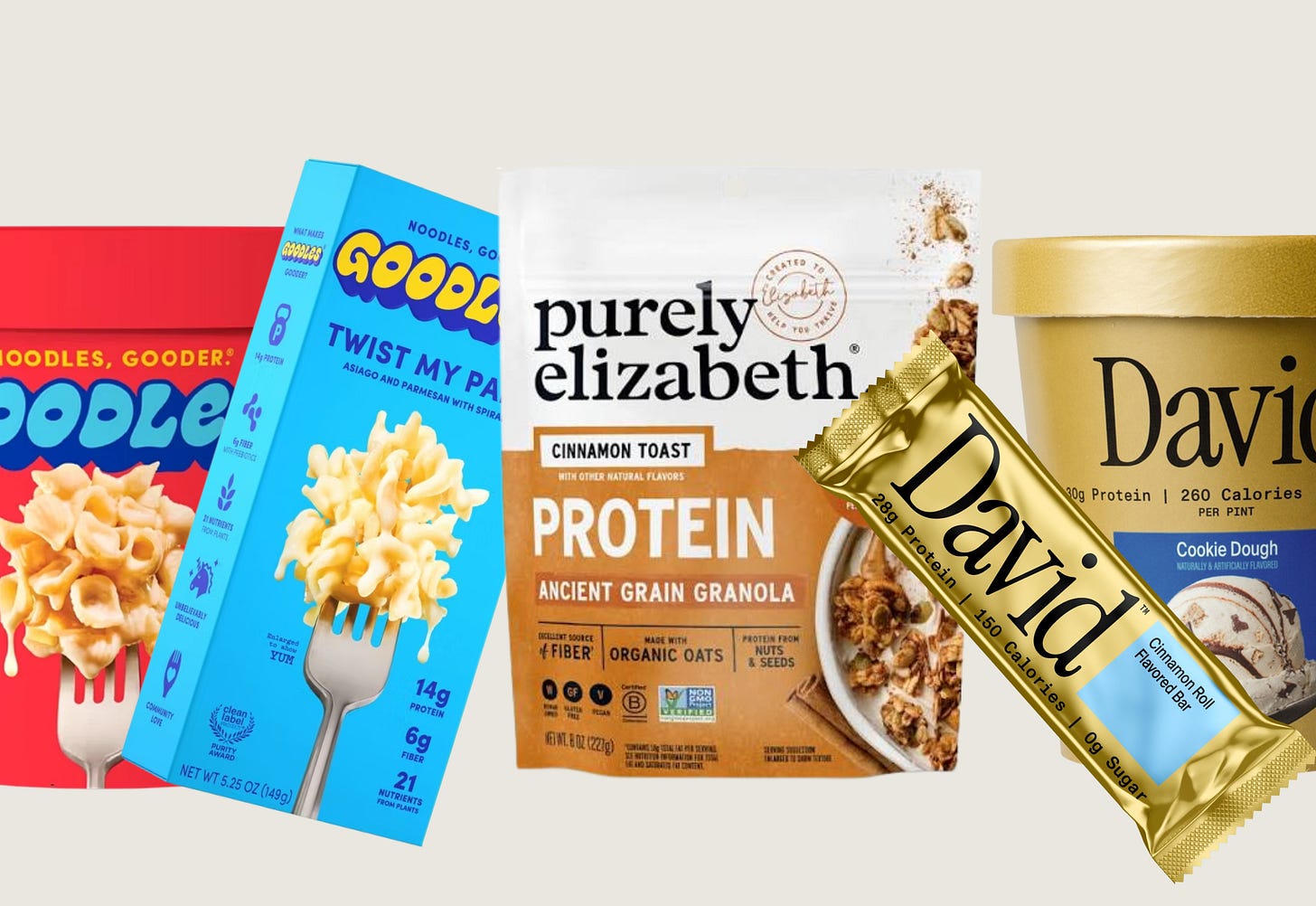
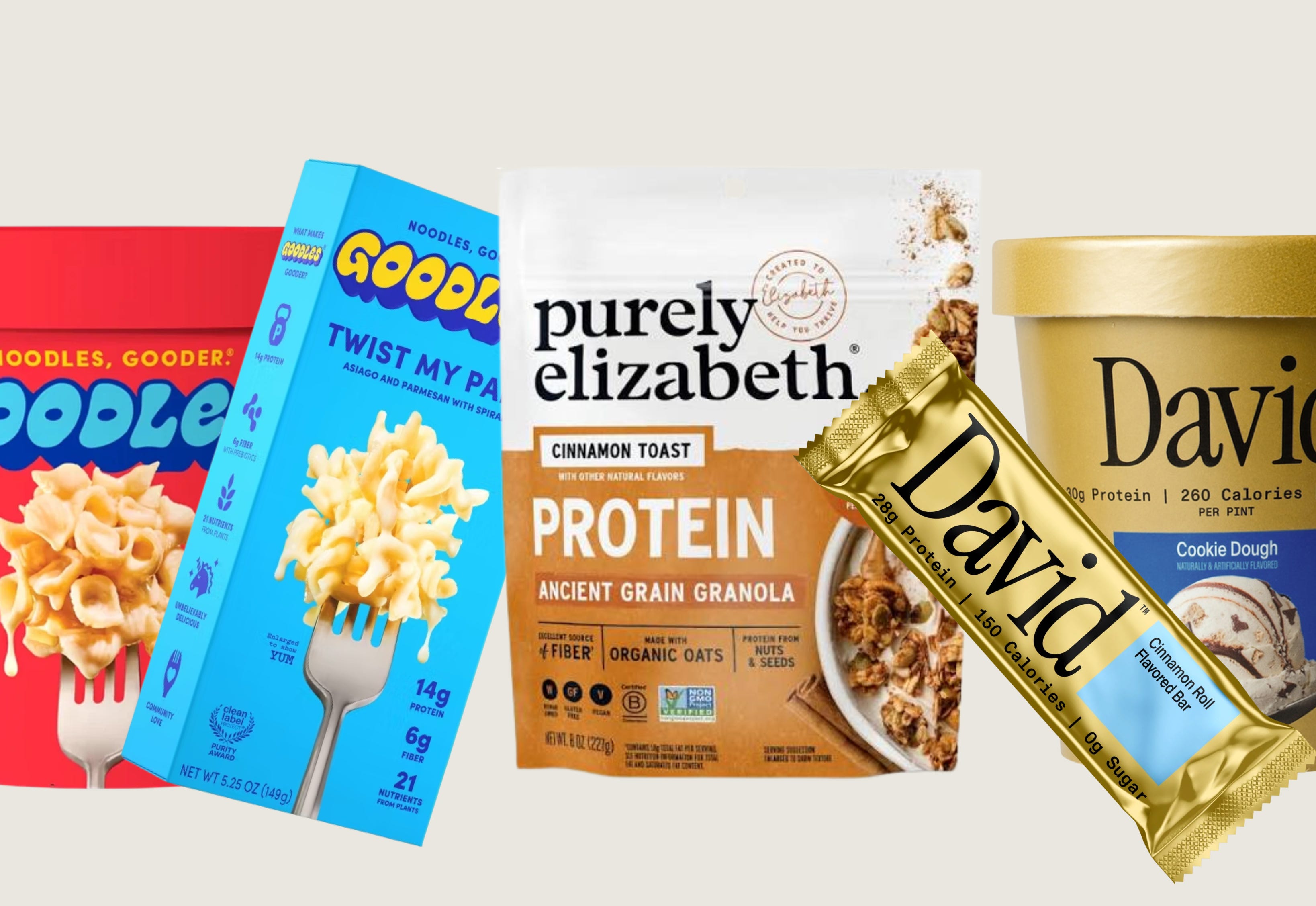
So, what ties these deals together? All of these brands changed what people expect from a category the giants assumed was finished or oversaturated. They’ve evolved the breakfast aisle, the protein aisle, and the boxed mac and cheese aisle into something way more culturally relevant, with better (or in one case, more innovative + macro-friendly) ingredients.
They’re all playing in the same intersection of forces pushing CPG forward: more protein, more fiber, fewer calories, cleaner labels, better taste, sharper branding, and products that manage to feel functional and indulgent at once.
The strategics are paying attention because challengers keep proving the same thing: the oldest, most familiar categories are never done evolving—the incumbents just aren’t the ones who evolve them. There’s always another tired aisle waiting for someone to make it better, and another giant that will have to buy its way back in.
CPG & Consumer Goods
“Zero-sugar” is on trial. Liquid Death, David protein, and now Grüns each face class action complaints over zero-sugar labeling after an FDA amicus brief confirmed allulose—a natural sweetener in both products—counts as sugar under federal law, citing a revived Chobani lawsuit as precedent. There’s a lot going on here, so it’s worth breaking down:
Allulose is a completely natural sweetener (simple sugar, or monosaccharide) found in foods like figs and molasses. But allulose isn’t like the other sugars: it has a rare molecular structure that doesn’t get broken down by the body into energy (read: calories) and therefore contributes no glycemic response. For all intents and purposes, it offers a sweet taste to your food, and then you pee it out—no calories contributed or blood sugar spike. We SHOULD see this as a really exciting, naturally-derived ingredient, but instead, it’s being subjected to some silly scrutiny.
Basically, the claim here is that allulose is technically a sugar, and therefore these brands shouldn’t be able to claim “zero-sugar.” The FDA’s guidance states that sugars are “the sum of all free mono- and disaccharides” —if a product contains >.5g of “sugar” by that definition, it cannot be advertised as “sugar-free.” Definitionally, the litigators have every right to sue. But frankly, this is a misleading lawsuit.
In my (Jenna’s) opinion, the point of something being labeled “sugar-free” isn’t to confirm that there is nothing molecularly similar to sugar in the product; it’s to confirm that someone who is trying to limit their sugar intake or is managing blood sugar can enjoy the product. In the case of allulose, they can. This kind of litigation only encourages companies to opt for more artificial alternatives—the exact kind of alternatives that similar scare tactics are trying to push consumers away from. Consumers seeking sugar-free options will see this headline, and, in all likelihood, they will not opt for an apple instead; they’ll go for the yogurt, bar, or soda sweetened with (gasp!) aspartame or sucralose. Is that really a win?
My concern is that this could also steer food companies back towards real sugar—great for some consumers, but really harmful for others. In demonizing all sugar alternatives, even the natural ones, we’re simply limiting food options. Would love to hear opposing POVs, though—feel free to reply to this email if you have thoughts!
It’s no surprise that David was on the target list here. It seems that litigators are hellbent on exposing David as nutritionally fraudulent, from claiming its calories were wildly underreported thanks to its fat source, to now claiming its sweetener source is actually sugar. If you’re looking at David like a real food, then yea, you’re gonna spot some red flags. But David isn’t trying to be “real food,” and never was—its nutrition label literally lists ingredients in “systems” (ex. “fat sytem,” “protein system”). And as evidenced by David’s raise last week, these lawsuits aren’t achieving their goal. You’re going to have to get a lot more creative to take down this brand. 🤷♀️
Chobani keeps building. Chobani is acquiring a Keurig Dr Pepper facility in Allentown, PA for $125 million and investing $1.2 billion total to convert it into a high-protein milk and shake production hub, creating 900 jobs—part of a $4B+ U.S. manufacturing buildout fueled by 20% annual growth over three years.
While everyone fears data centers and AI stealing their jobs, yogurt, of all things, is creating jobs. We <3 CPG.
We’ve said it before, we’ll say it again: Chobani is the next 100-year brand. Even as the aforementioned allulose lawsuit, along with multiple other lawsuits like Danone’s over its high-protein claim, the brand seems to be pushing forward with no signs of slowing down. We’re excited to see the innovation that comes along with its increased manufacturing capabilities!
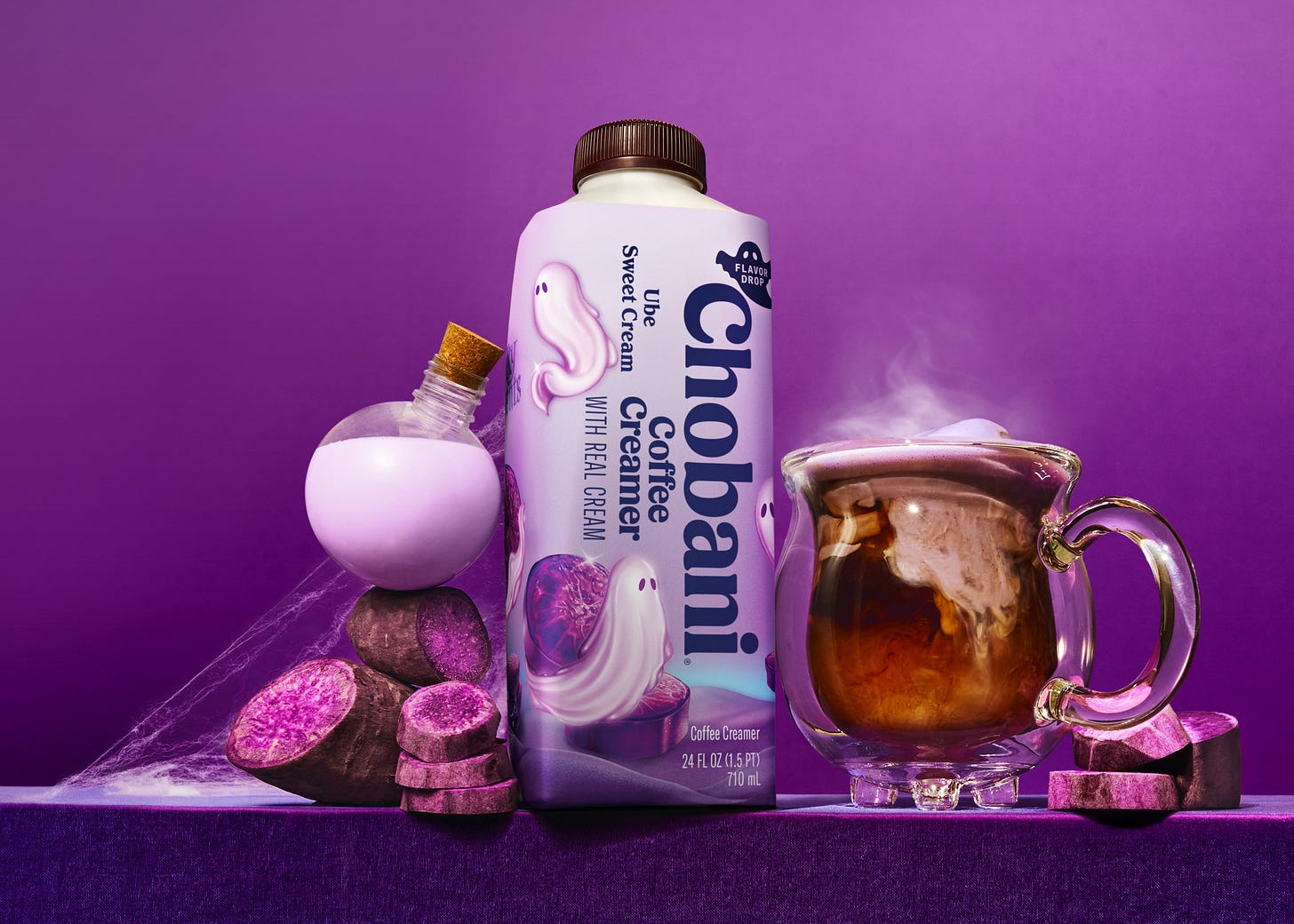
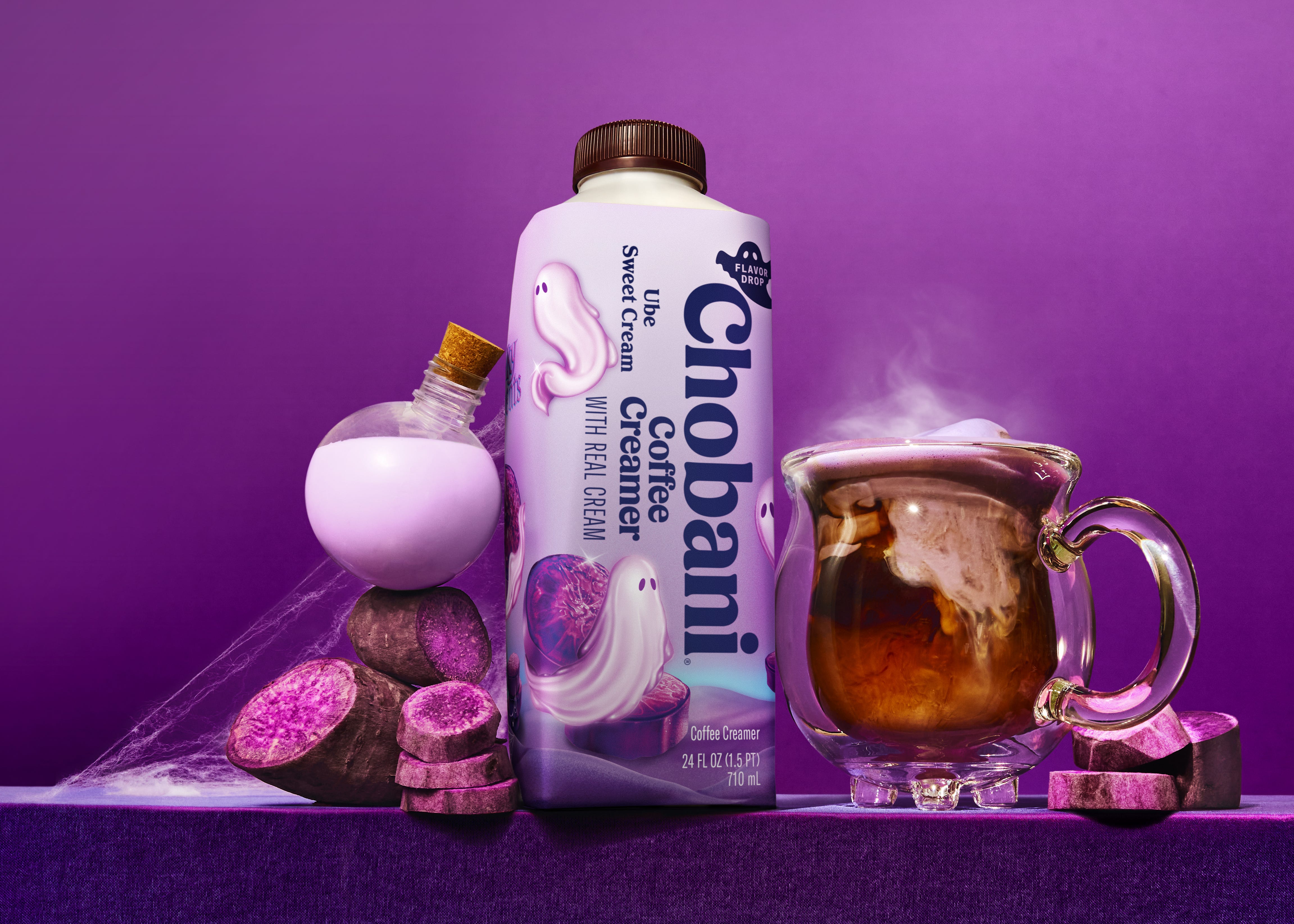
Separately: this week, Chobani launched its newest SKU in its delicious line of creamers made with simple ingredients, Ube Sweet Cream! Chobani partnered with an artist from the Philippines on the spooky packaging, celebrating the origins of this trending flavor. I already tried my sample and it may just be my favorite of their whole line (not to mention the stunning purple color, achieved solely through real ube!).
Battle over the crustless rages on. J.M. Smucker Co.’s Uncrustables lawsuit against Trader Joe’s ‘dupe’ has moved forward after a federal judge ruled the case can proceed. Smucker’s alleges Trader Joe’s frozen “crustless” PB&J sandwiches and packaging are too similar to their Uncrustables’ trade dress.
Hopefully the other crustless PB&J brands are keeping a close eye on this one. Smucker previously sued Chubby Snacks for trademark dilution and false advertising; the startup shut down in early 2025 after four years, citing financial and legal difficulties—including its fight with the $1 billion (with a B) Uncrustables brand. Smucker also came after Gallant Tiger over its crustless PB&J back in 2022.
The cupcake leader is back. CRUMBS Bakeshop, the iconic bakery brand, is launching Piñata Cakes nationwide in nearly 3,000 Kroger-owned stores. The new line brings candy-filled, three-layer cakes into the supermarket aisle.
CRUMBS originally helped build the gourmet cupcake category and turn cupcakes into a full-blown nationwide obsession in the early 2000s. After being sold off, founder Jason Bauer bought the brand back a few year later for around $300 and is now rebuilding it as a retail-ready bakery brand.
Kangaroos in the candy aisle. Australia’s No. 1 better-for-you candy brand, Funday Natural Sweets, is launching five flavors in around 1,200 Target stores. And Funday isn’t a tiny brand with no traction setting off in pursuit of the American Dream: it surpassed $100 million in Australian sales just a few months ago.
Funday is entering a packed better-for-you candy aisle. SmartSweets grew into a major acquisition and a brand you can now find pretty much everywhere. JOYRIDE went from relative obscurity to Target’s No. 1 non-chocolate candy brand in just a few short years, largely on the back of viral YouTuber Ryan Trahan and his millions of fans. Then there’s a growing bench of brands like Harken, Rotten, Blobs, BEHAVE, Better Sour, Good Greed, and Good Candy all fighting for their own piece of the shelf. Consumers clearly know the category exists—62% are aware of better-for-you confectionery—but only 10% buy it regularly. So Funday’s real challenge is giving them a reason to choose its candy over countless others.
We’ve seen a similar playbook with established UK brands coming stateside—and wrote about the British brand invasion here. TRIP, Misfits, and Barebells, for example, all built meaningful traction at home before chasing the US market’s higher prices, greater volume, and more discovery-driven consumer. Funday is a big opening bet by going directly into roughly 1,200 Target stores. Its Australian success lowers the risk, sure, but they need to treat America like a brand-new launch, not an extension of the home market. Americans don’t even know half the brands sold nationwide anyways!
Plant-based keeps innovating. Daring Foods launched six frozen skillet meals at Sprouts Farmers Market, delivering 21–25g of protein and 9–13g of fiber per serving: a direct play for GLP-1 users.
This is happening within the context of a plant-based meal segment that fell 12% last year. While other alt meat players like Beyond scramble to pivot into entirely different categories (like beverage), Daring is taking a different approach: maintain alternative meat as the hero ingredient, just make it more convenient, emphasize macros, and put flavor first. If you look at the packaging, these just look like convenient ready-to-heat meals with tons of protein—you have to squint (or already know the brand Daring) to understand that it’s not real chicken.
As a veg girl myself, I love seeing a brand make this move. You can’t convince people to swap to plant-based for ethical or sustainability reasons… you just need to create a product that’s better than its meat counterpart, on all fronts: flavor, convenience, and macros. Excited to try these!
Power Crunch needed a reset. Ferrero has announced a full relaunch of the wafer protein bar—new formula, packaging, and “A Lighter Way to Protein” slogan—after sales slipped double digits in the year since its 2025 acquisition.
All the trends, in one small shot. Pure Genius Protein, co-founded by Mel Robbins, launched Protein + Fiber shots: 20g protein and 5g fiber in a 3.38oz, 100-calorie, zero-sugar shot. The brand says they’re targeting GLP-1 users, busy parents, and older adults with shrinking appetites. We were destined to get a product like this at some point, just shocked it wasn’t a gummy 😂
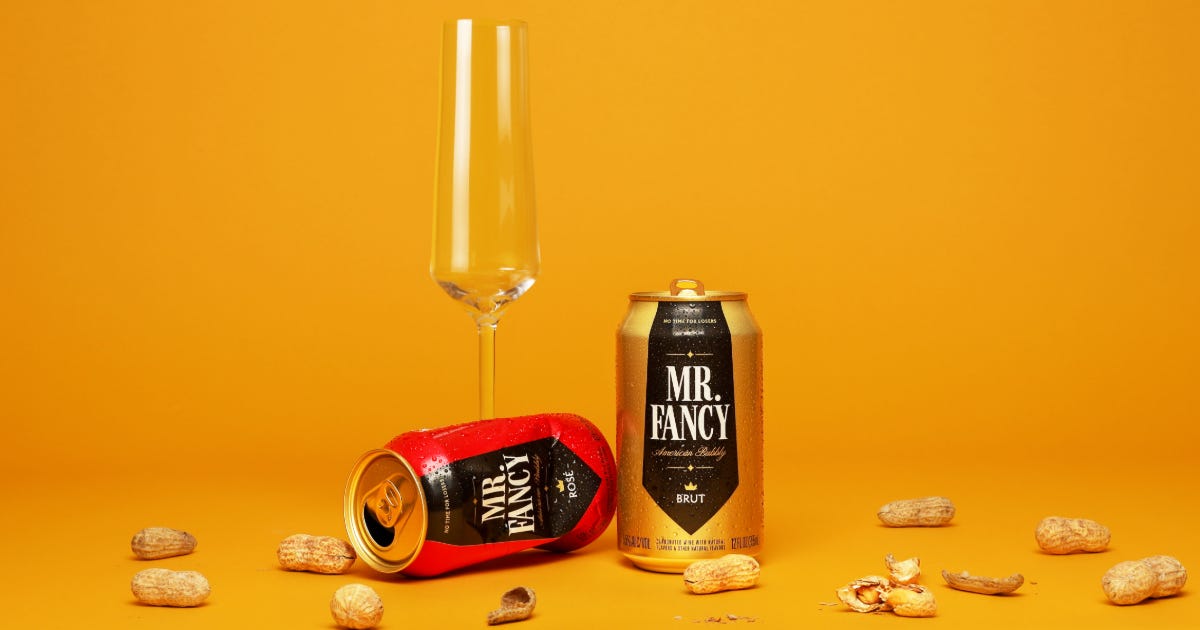
Back with more bubbles. Mike Cessario, best known as the founder of Liquid Death, is partnering with spirits giant Sazerac to launch Mr. Fancy, a ready-to-drink canned sparkling wine positioned as “American bubbly.”
This is a very interesting departure in many ways from the Liquid Death brand. For one, it’s booze! Liquid Death’s whole shtick was giving people who didn’t want a drink a way to look like they were, to make it less taboo to not drink in normal drinking settings. Also, the branding is so….tame, even leaning on generic. It doesn’t have the same pizazz as Liquid Death did at launch and over the years since then. Maybe that restraint is intentional. Maybe it was what Sazerac wanted. After years of building Liquid Death, perhaps Cessario learned some vital insights about what consumers want and what will last.
Coulda had a V8. The Campbell’s Company, owners of V8, is doing what any reasonable bev owner would do in these trying times: adding electrolytes to its energy drink line.
V8 is actually one of my favorite energy drinks! It’s only 80 mg of caffeine and made with real fruit and veg juice (quintessential to the V8 brand) and no artificial sweeteners. It feels like real juice, because it is, with a hit of a pick-me-up that doesn’t leave me jittery. - Jenna
Adding electrolytes is just about the least surprising move Campbell’s could make, as every brand seems to be coming out with a “hydration” line.
Retail
So smol!! NYC is getting a minis-focused beauty store near Union Square called Little Luxuries. It’s being launched by Beautyspace, the prestige beauty curator formerly part of Space NK, and will carry a little over 100 brands. Loyalty members can credit mini purchases toward corresponding full-size products online.
This is such a smart concept, and I really hope we see more stores like it! Target’s mini section is already one of my favorite ways to sample a new product—or grab a travel size—without committing to a full sized bottle. Especially if something is pricey, I want to know if it’s really worth the investment. Plus, with beauty interest booming and new brands launching constantly, a dedicated discovery format feels like a no-brainer. - Nate
Funding
Nestlé continues selling out. Nestlé sold its mainstream vitamins and supplements portfolio—Nature’s Bounty, Nuun, Puritan’s Pride, and four other brands—to Yellow Wood Partners (yes, private equity) for $1 billion. The business did $1.2B in 2025 sales; Nestlé retains premium brands Solgar and Pure Encapsulations.
This is all part of a much larger move for Nestlé to shift its focus to its best businesses: coffee, petcare, food, and snacks. In July, the company sold half of its premium waters business to private equity for $3.4 billion, creating a joint venture including S.Pellegrino, Source Perrier and Essentia
As CEO Philipp Navratil said in a statement, “This is another important step in the strategic transformation of our portfolio. We are focusing our resources where we have the strongest competitive advantage.”
Everyone is betting on personal care.
Dollar Shave Club acquired Truly Beauty, a Gen Z-focused mass-premium body care brand with a viral TikTok marketing engine, in its first acquisition—pivoting from grooming challenger to multi-brand personal care platform across Ulta, Walmart, Target, and CVS. Financial terms were not disclosed.
Skyline Beauty Group acquired men’s skincare brand Lumin alongside its sister-brand Meridian, from Pangaea Holdings for an undisclosed amount.
The NBA loves coffee. Beekeeper Coffee, a ready-to-drink latte brand founded in 2023, raised an undisclosed round from NBA players Draymond Green, Anthony Davis, Zach LaVine, Fred VanVleet, and De’Aaron Fox, plus sports agent Rich Paul. It’s now targeting Target and natural grocery after reaching 2,500+ retail doors.
If you’re a brand trying to understand the nuances of creator marketing (and how it’s different from—and more sustainable than—influencer marketing) you’re gonna want to listen to the most recent episode of the Express Checkout podcast, featuring Agentio.
Check it out below or on your pod streaming platform of choice!
If you haven’t yet, please subscribe, like, leave a comment, and share it! It helps us continue to bring you the most interesting news + nuance in consumer and retail every week.
Ferrero… Barilla… Medici… the Italian-ification of CPG!
I literally was just talking about Allulose yesterday and researched it intensely so thank you for this