


Hello hello!
With Expo West just 2 days away (!!), we’re prepping to hit the show floor. It’s going to be a busy show, but if you’re hoping to say hi, come meet us at The Angel Group booth (Hall A, Booth #874)! We’ll be live podcasting there every morning :) And look out for our incredible intern Natalie on the show floor—she’ll be our boots-on-the-ground reporter gathering all the behind-the-scenes goodness.
If you’re not attending Expo, we want to know: What content are you hoping to see? Respond to this email and let us know!
Big things coming from sunny Anaheim… but more on that next week! This week’s news cycle was packed, so let’s get into it.
Curious what high-growth ambassador programs do differently?
They recruit. Consistently.
High-performing programs build predictable recruiting systems: Daily outbound, follow-ups, and active response handling. Often, teams spend hours every day keeping the pipeline active.
But the reality is, most brands don’t have that team. Consistency becomes the bottleneck.
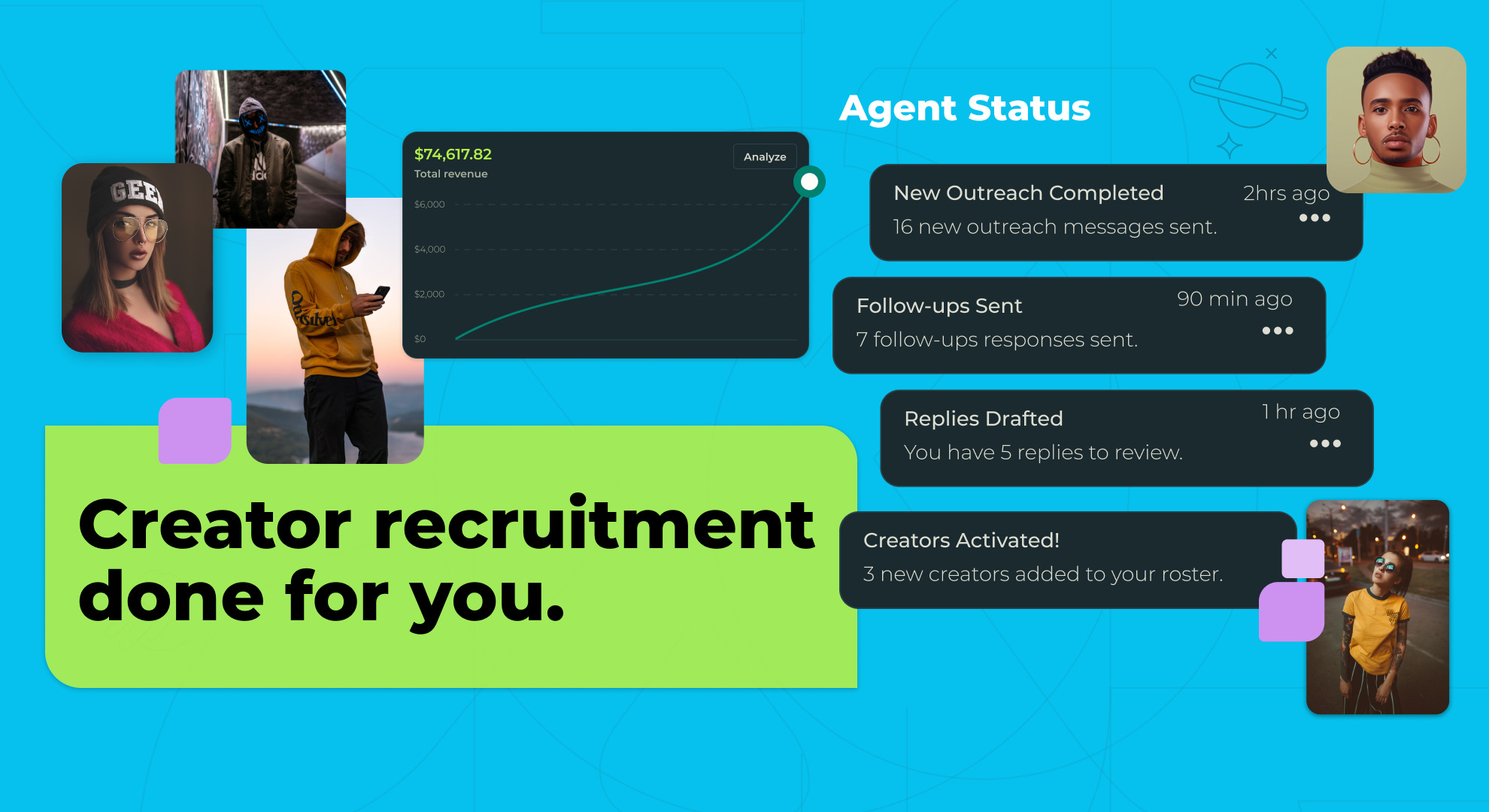
Endlss’s Creator Recruiting Agent runs targeted, on-brand outbound aligned to your brand voice and alerts you when qualified creators engage.
It’s targeted, personalized, and structured—like having a recruiting team built in, without adding headcount.
Turn recruiting into a predictable growth lever.
News From the Week
This week, SURI—the UK-founded, plastic-free, aluminum-based electric toothbrush brand—is landing in over 400 Target stores in the US. It’s the brand’s first mass-retail US entrance after building a massive DTC audience and making its US debut in Erewhon.
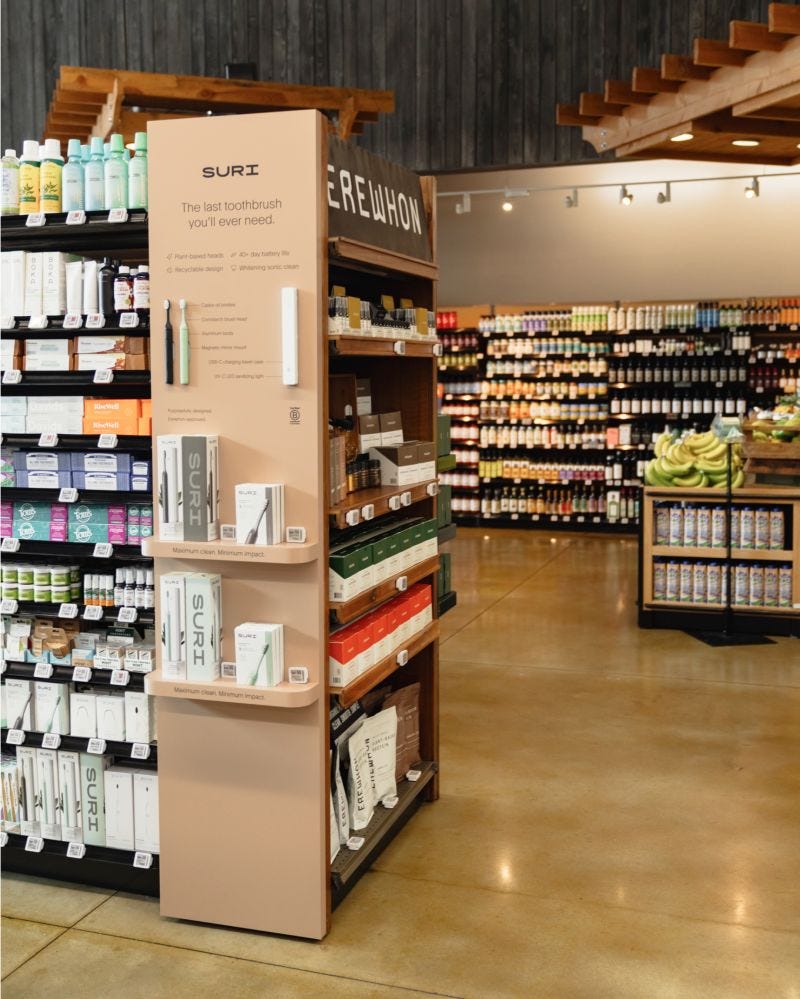
SURI is the latest in a long, increasingly loud line of UK and European brands that have decided the Atlantic is worth crossing:
TRIP—the calming beverage brand built on magnesium, ashwagandha, and aspirational pastel branding—has recently surpassed $300M in valuation, closed a $40M funding round, and is now in over 10,000 US doors.
DIRTEA, the functional mushroom brand that built its cult following in the UK through Harrods and Selfridges, rolled out to all 640+ Vitamin Shoppe and Super Supplements stores nationwide last fall.
GROUNDED—dairy-free, high-protein ready-to-drink “milkshakes”—launched in select US Whole Foods stores after rising the ranks to the top-selling protein shake in Whole Foods UK.
There’s a clear pattern here. So why the US?
The pull of the market—and the push away from home
The obvious answer is scale, and the ease of entering an English-speaking language with English packaging. But to really understand the pull, you have to understand what UK founders are pushing away from:
As Grace Bryan, CEO of Juicy Brick (a UK food & bev development agency) told us: The UK grocery landscape is dominated by five supermarket chains—Tesco, Sainsbury’s, Asda, Aldi, and Lidl—which together account for the overwhelming majority of grocery spend.
Two of those five, Aldi and Lidl, run almost entirely on private label—90% and 80% of their respective assortments—which is a clear structural ceiling for branded CPG. Yes, we’re starting to see more private-label prominence in the US. But in the UK, this was already the norm, and it’s only growing more prohibitive for emerging brands.
The UK consumer, according to Grace, also shops differently—driven more by discount than discovery: “I think the US customer is much more open to trying and buying new products that aren’t purely driven by reduced pricing or offers,” she told us. “In contrast, a new product launching into Sainsbury’s is usually led by a discount, and that’s the primary appeal.”
The US also offers unique opportunities, namely: higher unit prices, higher volume, and a brand-building tier of retail that simply has no equivalent in the UK.
We’re talking about the Erewhon effect. The UK retail landscape runs almost directly from indie specialty into the Big Five supermarkets. There’s no meaningful middle tier—no class of retailer whose primary value is cultural legitimacy rather than volume.
Meanwhile, the US has an entire tier built around exactly this. SURI co-founder Mark Rushmore credits Erewhon as central to the brand’s US success: “[Erewhon] don’t just put your product on a shelf and hope for the best, they really get behind it. They truly care about how it shows up in-store, from the merchandising to more collaborative brand moments. It feels like a genuine partnership.”
Sebastian Hayto, founder of Middlebox—a firm that helps DTC brands like DIRTEA enter US retail—calls these “mascot accounts.” Places you go not for volume, but for brand equity and content. Think:
For UK brands making the jump, it’s one of the most underappreciated advantages of launching here. You can be a tiny brand and still get the Erewhon stamp—which does real work with the next retailer in line.
What makes a UK brand sticky in the US? Plenty of brands have made the leap across the Atlantic… and quietly disappeared. As Sebastian told us, the ones that stick tend to share a few traits:
They don’t underestimate the cost. “Talent in the US often costs twice what you’d pay in the UK, so there’s always a reluctance when it comes to building the early US team.” And it’s not just headcount: The sheer dollars required to properly A/B test go-to-market content in the US is staggering compared to what it would cost to saturate another European country. Meta CACs are brutal everywhere right now, but the US market’s size means you have to spend at a different order of magnitude just to find signal.
They treat the US like a new launch entirely, not an extension of their UK business. Focus on hero SKUs, and leave the full innovation pipeline at home. The UK customer who knows your whole range is not who you’re talking to anymore.
They build a DTC flywheel before going anywhere near major retail. TRIP spent years building a social following—it became the top-selling drink on TikTok and cultivated an aspirational community around the idea of “calm” before it had national US distribution. When merchants eventually came looking, there was already proof of demand to show them.
SURI followed a similar path: a loyal, vocal subscriber base that predated any retail conversation.
They understand that awareness drives shelf velocity, not the other way around. As Sebastian warns: brands that go too big too fast with retail will fail fast, and the P&L damage can take years to recover from.
The “Made in America” vs. “European quality” tension. One of the more interesting questions for UK brands entering the US: how much to actually lean into being from the UK? The answer, from the brands navigating it best, is less than you’d think—but more strategically than most realize.
GROUNDED is emphatic they’re “proudly Made in America.” Co-founder Gabriel Bean put it plainly: “’British invasion’ marketing works for heritage products—Scotch Whisky, shortbread, tea—but for us, it’s simply about being the best on the shelf.”
Yet co-founder Bryn Ferris notes they still import select ingredients to ensure quality and consistency never waver. The “Made in America” stamp handles the patriotism; the UK sourcing quietly signals quality.
American consumers are currently primed to believe that European products are held to higher standards. The FDA-vs-EU ingredient gap has existed for decades, but it’s now a socially viral talking point… and UK brands are the accidental beneficiaries.
None of these brands are explicitly marketing themselves as “European = better.” But they also don’t have to. SURI’s aluminum body and recyclable brush heads read as a brand that operates by different standards. DIRTEA’s clinical-grade mushroom formulations read as trustworthy in a supplement market rife with underdosing. TRIP’s “nothing artificial” positioning fits neatly into a consumer trained to be suspicious of what’s in their can.
Consumer associations with European standards (and demonization of US standards) does the work for them anyway.
So… will we be seeing more UK/EU brands hit US shelves? Almost certainly. There’s a real pipeline of UK and European brands—particularly in wellness, personal care, and functional food—that have spent years building exactly the profile the US rewards right now: founder-led, social-native, ingredient-transparent, aesthetically intentional.
The more interesting question is which ones are built for the long game. The US market is more open, more lucrative, and more forgiving of premium pricing than most markets in Europe… but as we know very well (as do the 3,000+ brands attending Expo), it’s also pretty darn competitive out here.
CPG & Consumer Goods
A strategic glow-up. TRUFF—makers of truffle flavored hot sauces, aiolis, and dipping sauces—just dropped its first-ever packaging refresh after nearly a decade, rolling out new designs across its full portfolio spanning over 17,000 retail doors. And people had thoughts….
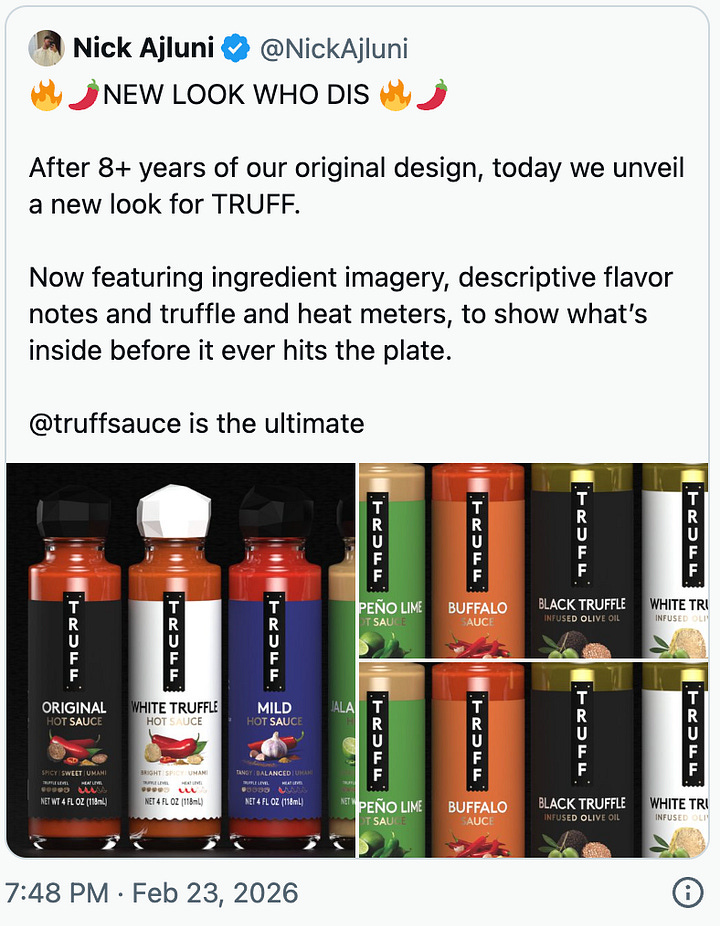
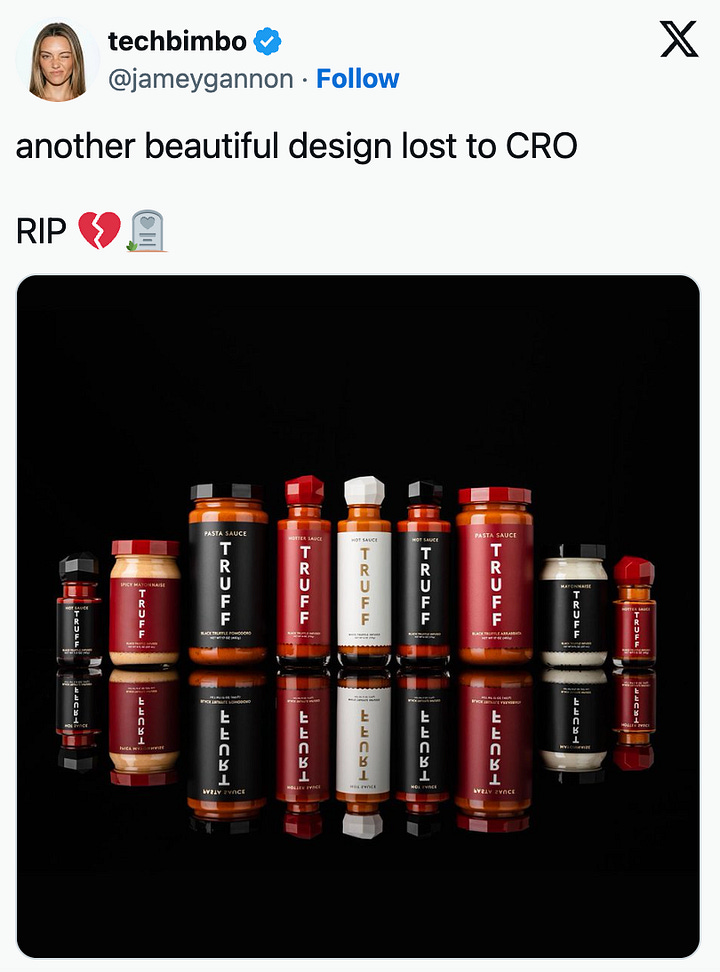
Some say the brand lost its edge, it’s too busy, or straight up ugly. But those who sell in retail know, DTC branding doesn’t always translate over successfully. On shelf, you only have a few seconds to grab someone's attention, you need to get across what the product is instantaneously. Truff’s old branding, while sexy, didn’t successful do that. This new branding greatly positions them for growth in retail.
Friend of the newsletter Cameron McCarthy, founder of Westock penned a piece for his Substack Consumer Mindset diving into why Truff’s new packaging is actually great.
Caffeine is so last year 🙄. Kim Kardashian is stepping into the growing energy drink market as a co-founder of UPDATE, an energy drink that uses paraxanthine—a caffeine metabolite—instead of caffeine to eliminate jitters and crashes. The brand was originally founded in 2022 by Daniel Solomons and members of the Hess family (yes, that one), with Kim discovering the product in 2023 and eventually partnering to relaunch it this year.
Starting March 1, Walmart will stock five flavors across 4,000 stores nationwide in one of its largest beverage rollouts in history.
Given Kim’s natural discovery of the product—and her marketing of it thus far (including reposting our story on her IG?! pinch us??)—this feels like a celeb partnership primed for success. But as we know, the Kardashians tend to get their hands in a lot of projects… we’re excited to see if she maintains this level of involvement in the long run.
The “milk drinks” keep comin’... Ghost Energy is launching a Yoo-hoo inspired high-protein drink with 25g protein and 110 calories per 11oz can.
This is yet another entrant into the now almost-saturated canned, high-protein “milk drink” category—joining brands like Barebells, Spylt, Nurri, and Slate.
Nobody does licensed nostalgia plays like Ghost—the brand has essentially turned IP licensing into a genuine brand identity. They’ve worked with Oreo, Sour Patch Kids, Bubbalicious, Chips Ahoy, Warheads, and Swedish Fish just to name a few. The company is valued at over $1.5 billion.
Glenn is coming for every aisle. Smash Kitchen, the better-for-you food brand co-founded by actor Glen Powell, is expanding into salty snacks with Non-GMO Kettle Chips in four flavors launching at over 4,000 Walmarts nationwide.
The brand, which only launched in Spring of 2025, already offers 19 different products sold nationwide exclusively at Walmart. It launched with its own versions of classic condiments like ketchup, BBQ sauce, mayos (so hot right now) and mustard, then expanded into oils (no seed oils here, of course).
Right now, this brand reads more like a premium Walmart private-label brand than a standalone brand with a celeb co-founder. Given its accessible price point—and the fact that private-label generally is upping the ante—this isn’t necessarily a bad thing. But it is perhaps a nudge to expand into other retailers to dispel this perception.
The earth is warming, and so are your Uncrustables. The J.M. Smucker Co. announced that beloved frozen brand Uncrustables will be fridge-friendly starting this year, with a five-day refrigerated shelf life. They’ll still be sold in the freezer aisle, but they won’t need to be stored there.
If you haven’t been following, Uncrustables has been one of the most successful brands for J.M. Smucker. According to the company, “Uncrustables sandwiches are in the top 10% of fastest growing brands in dollars and units across all categories of the convenience channel,” and with this update, it will finally reach status of a billion dollar brand in 2026. Granted, it’s not far off—the brand saw sales leap 15% to $920 million in fiscal year 2025.
The new era of flavored syrups. Former Hims executives launched POCA, a new on-the-go zero-calorie sweetener in flavors like Vanilla, Caramel, and Pistachio. POCA is sweetened with allulose and monk fruit instead of cane sugar, and includes fiber from chicory root—an ingredient that’s gained popularity since its inclusion in OLIPOP.
There have been a boom of new flavored sweetener syrups launching in the US trying to compete with the ubiquitous Torani and Monin coffee syrups. Brands like Transcendence Coffee, Motif, Jordan’s Skinny Mixes, and Nooly are all setting the stage for a new era of at-home barista-ing—featuring global flavors, more low-to-no sugar options, and now with POCA, the addition of fiber.
Watch this space. As more and more consumers are making their coffees at home (and sharing it online in viral social moments), they’ll be seeking more variety to mimic the cafe experience. And, like every category, coffee add-ons will be impacted by the rise of GLP-1 usage—emphasizing low-sugar and high-fiber.
Long live the pickle ✊. e.l.f. Cosmetics is diving into unexpected territory with a new limited-edition pickle-flavored lip balm aptly named Big Dill.
This is a very interesting (read: kinda bizarre…) move for e.l.f., leaning into novelty and food-inspired flavors to capture attention in a crowded market.
But at the same time, the pickle trend shows no signs of slowing down. Just last week Khloud Popcorn launched a dill pickle flavor and even partnered with viral pickle-upstart Good Girl Snacks on their PR kits.
According to Spate, the hashtag #pickles has 6.3B views, seeing +18% WoW growth on TikTok.
Step aside, tinned fish. Chef Dan Barber’s Row 7 Seed Company is introducing tinned vegetables that could rival the tinned fish trend. The line includes organic varieties like Badger Flame Beets and Sweet Prince Tomatoes, debuting at Whole Foods Market for $7.99 each—because who doesn’t want gourmet veggies in a tin?
What’s interesting about this launch is that it’s not positioned as a vegan alternative to tinned fish—it’s positioned as an upscale, gourmet version of vegetables. The tins will be merchandised in the produce section of Whole Foods, showcasing the versatility and potential of veggies.
So much for lowering grocery prices…The USDA forecasts a 3.1% rise in food prices for 2026, with food-at-home prices up 2.5% and food-away-from-home prices rising 3.7%. There is some variability though, as egg prices are expected to plummet 27.4% while sugar and sweets could see a 6.7% increase. Add this to the list of reasons why private label will continue to surge this year.
Finally improving plant-based protein. If you’re a protein fiend who’s sensitive to whey, you know the battle: plant-based protein often… kinda sucks. That’s why Ingredion is expanding its protein fortification arsenal with the launch of VITESSENCE® Pea 100 HD, a pea protein tailored for cold-pressed bars. This new ingredient promises to tackle formulation concerns around texture and mouthfeel while supporting “clean label” strategies. Ingredion is betting that, as the protein trend continues, consumers will seek alternative options to whey.
The creator to founder pipeline remains strong. Creator duo and life partners Alexis Androulakis and Christina Basias Androulakis (@thelipsticklesbians) launched Leaked Labs, a brand with a fascinating premise: sourcing innovative formulas from manufacturers that big brands ignore, releasing them as “leaks” for consumer feedback, then iterating, launching, or shelving based on response.
This model really only works with creators. They have the agility, dedicated audience, and momentum to sustain rapid and varied product cycles that traditional brands can’t match. If anyone can democratize access to innovative formulas that would otherwise gather dust, it’s a duo like the Lipstick Lesbians, who’ve built serious trust and engagement with their community.
Functional makeup. Susanne Langmuir, who built and sold Bite Beauty to Kendo Holdings (an LVMH-owned beauty incubator) in 2014, returns to Sephora with her new brand Lixr. The brand offers 59 waterless, preservative-free “skincare disguised as makeup” products ($28-$49), launching online in the U.S. and Canada.
We’ve been seeing more and more of this “skincare as makeup” positioning—the beauty world’s answer to increasingly functional claims across other CPG categories. It’s not enough to just be makeup; products need to also be bettering your skin as they occupy it. We’re excited and hopeful about these early movers… but already dread the day that functionwashed brands enter the chat.


eCommerce
There’s an over-discounting epidemic going on. Sounds counterintuitive, right? Tapcart’s 2026 Mobile Trend Report interviewed 1,200+ shoppers and found that 50% of shoppers only need 25% off to convert, yet brands are still bleeding margin at 40-50%. We’re all for a good deal... but this margin leak is simply unsustainable for emerging brands.
Turns out, there are far better incentives for shoppers, like BOGO (the #1 most motivating promo for 2026) which drives value for customers wanting to stock up.
If you’re an ecomm brand, check out this report for strategies (including plug-and-plan Ai workflows you can implement instantly) from leading brands like Reformation, Gymshark, and Cymbiotika.
Retail
The end of the rainbow (aisle). Target is set to stop selling cereals with synthetic colors by the end of May 2026. According to the company 85% of its cereal sales today are from products free of synthetic colors. Major CPG brands like General Mills and WK Kellogg have already reformulated a lot of their portfolio to remove synethic dyes.
The grocery store wants to be your health coach. ShopRite is rolling out free “Wellness Your Way Starter Kits” for customers starting GLP-1 weight management therapy, available at ShopRite pharmacies. The kits include nutrition guidance from a registered dietitian, product samples (including items like Oikos Protein Shake, Liquid I.V. Hydration Multiplier, and Vital Proteins Collagen Powder), and coupons for grocery items like premium lean beef, Healthy Choice frozen meals, and The Fruitist Co. fresh blueberries.
As Wakefern (owner of ShopRite) explains in its press release, “supermarket pharmacies sit at a unique intersection of medicine and food.” This is a fascinating new way for better-for-you brands to get into the hands of shoppers. By introducing products to consumers alongside RD guidance, in a kit obtained from the pharmacy, they’re priming consumers to see their brands not just as health foods, but almost as part of a “prescribed” regimen. While it’s well-intentioned (help those starting GLP-1s ease into new shopping habits), it’s also a marketing opportunity that capitalizes on the vulnerabilities of someone making a major life change. - Jenna
The never-ending rise of private label. Fresh Thyme Market is set to revive its stale private label brand in 2026, introducing 200 new products and modernized packaging. With a goal to increase private label sales by 6%, the grocer aims to reflect current health trends while enhancing its organic offerings.
As we continue to belabor, private label has been on a nonstop tear and with grocery prices going up private label will continue to be at an advantage here. It’s a huge signaler that an organic natural retailer like Fresh Thyme is jumping on the trend—the stage has been set by others to prove out that private label can be seen and valued as high quality brands in their own right.
Funding news
More fresh powder for founder-led brands. Cutting Horse closed its first fund at $75 million, surpassing its $50 million target in under a year. The boutique equity firm focuses on partnering with founder-led consumer brands, offering not just capital but also hands-on operational support to help scale businesses effectively.
Wall Street discovered meat snacks. Archer Meat Snacks is securing $100 million from JPMorgan Chase to fuel its expansion, positioning for $500 million in sales. With a new manufacturing plant doubling capacity and sales growth soaring 90% year-over-year, the brand is racing ahead in the meat snacks category.
Meat snacks are having a moment: Sales in the category grew 6.6% in 2025 alone, outpacing the broader savory snacks market, according to Bank of America Global Research.
CPG’s investor class keeps expanding. Great Circle Ventures launched a $20 million fund aimed at boosting early-stage food and beverage CPG brands, focusing on healthier options.
With investments already in brands like MOSH bars and Alec’s Ice Cream, the fund aims for swift growth and potential acquisitions—without diluting stakes too much.
Sea plants are having a moment. Aqua Theon successfully raised $13 million in seed funding to enhance its marine plant-based beverage, OoMee, which is already in over 700 retail locations and boasts a 70% online repeat purchase rate.
OoMee is an interesting response to the prebiotic bev boom. It boasts “Seabiotics,” which is its fun way of marketing its star ingredient made with red algae, agar-agar.
The year of cultural condiments. Maazah, the Middle Eastern sauce and dip brand inspired by family recipes, raised $2 million in seed funding to fuel its US retail expansion. Known for its lentil-based dips and sauces like chutney and aioli, Maazah aims to enhance production and distribution while catering to a growing appetite for globally inspired flavors.
This is just the latest in a wave of culturally-rooted condiment brands finally getting the placement and investor attention they deserve. See also: Bachan’s $400M acquisition a few weeks back. There’s no doubt that condiments are having a moment right now, especially those promising bold flavors
We love to see a family- and women-founded cultural brand win.
Five brands walk into a bar… and merge. RIND Snacks, along with Oakhouse Bakery, MaGi Foods, Small Batch Organics, and Whirlybird Granola, merged to form Keep It REAL Foods—a new private label and contract manufacturing platform. This collaboration aims to leverage local strengths for nationwide distribution, signaling a shift in the snack landscape.
We’re starting to see more mergers among better-for-you brands—just look at the recent merger of Tuyyo Foods (agua frescas), Nemi Snacks (cactus snacks), and Todo Verde (taco seasonings) under the Tuyyo Foods name.
Spare your eyes, listen to us yap.
Check out our two recent episodes of The Curious Consumer!
If you haven’t yet, please subscribe, like, leave a comment, and share it! It helps us continue to bring you the most interesting news + nuance in consumer and retail every week.
The biggest mistake I see from Interntational brands is underestimating the capital and talent required to compete at US scale.
DTC proof of concept is powerful, but without operators who understand retail math, promo cadence, and velocity thresholds, the P&L can unravel quickly.
Thanks for the shoutout! Cya at Expo