



Hello hello!
We hear it all the time from our favorite brands: they finally land their dream retailer (Whole Foods, Target, Sephora...) and then face an operational reality that can feel totally impossible to manage:
Buried in the onboarding docs, there’s a three-letter acronym they suddenly have to become an expert in: EDI.
Most brands get stuck with that from a legacy provider like SPS Commerce, where onboarding is painfully slow, the software looks like it hasn’t been updated since 2007, and every document comes with its own little fee (which, if you’re doing the quick maths, add up fast).
Endless Commerce skips the middleman and builds EDI right into the platform already running your inventory, orders, and warehouse.
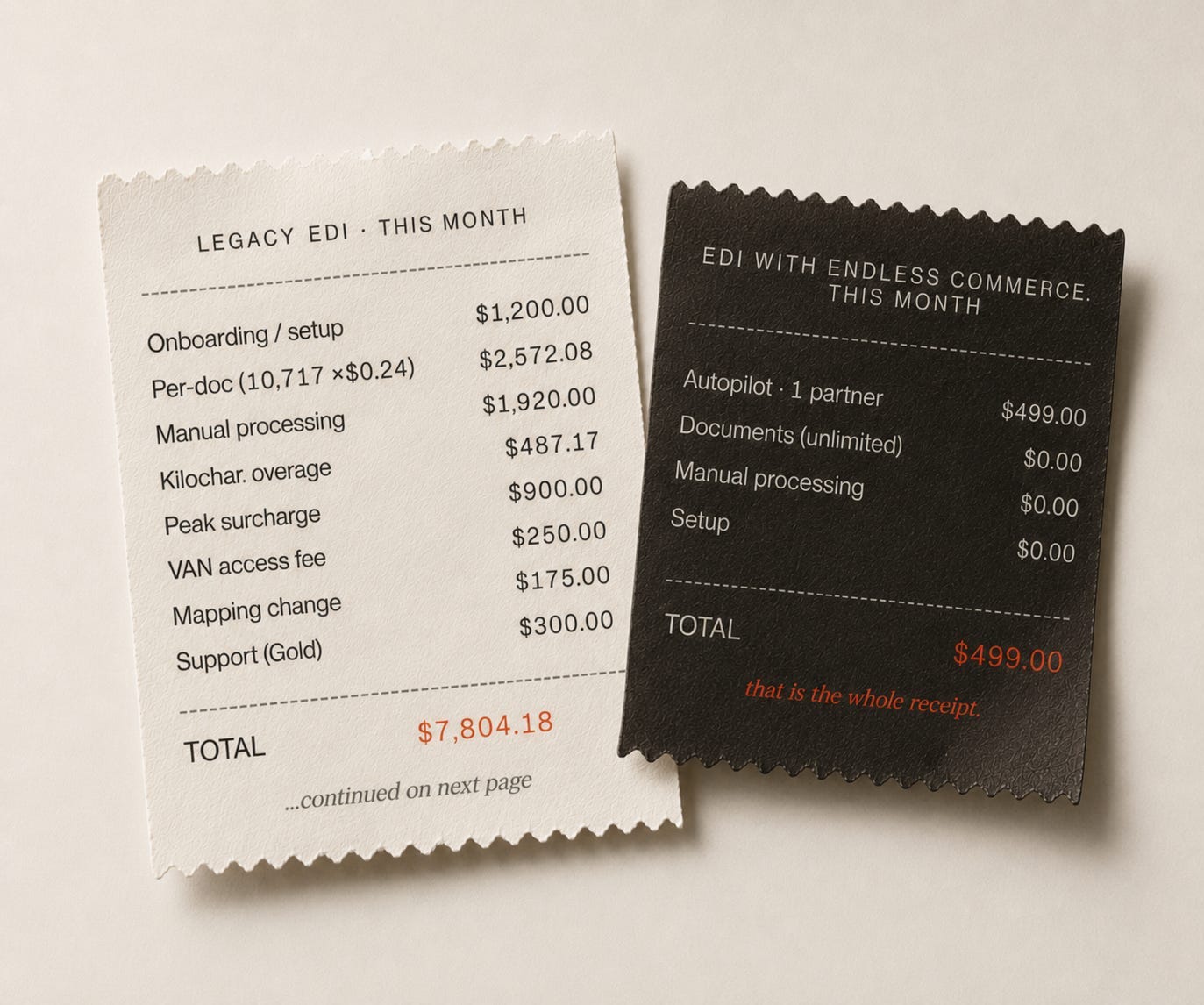
Setup takes days (not the mythical “6-8 weeks”), retail POs land like any other order, and you keep control of your ops. Consider it mission control for consumer brands, built by founders who’ve lived the operational chaos themselves 🙃
Book 15 mins for instant PO flow!
News From the Week
Every week, we get pitched coffee brands moving in entirely opposite directions. One end packs in added function—like protein, adoptogens, l-theanine—similar to what we see in other categories. The other camp strips function entirely, going full decaf mode.
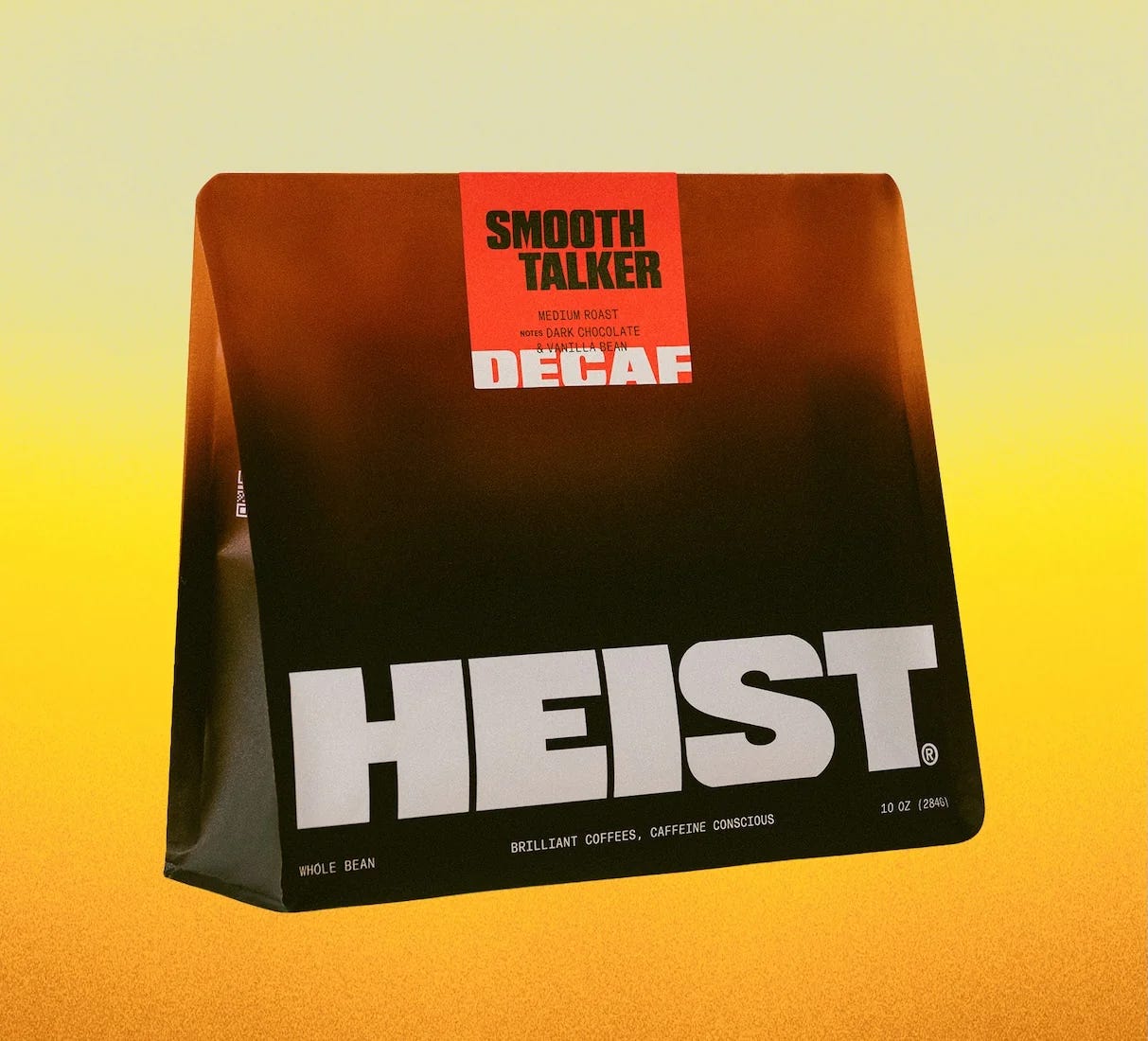
Today, Stephen Bruner, the former co-founder of Corkcicle, launches his first CPG brand: Heist, a premium decaf coffee brand with the bold goal of reframing decaf as a taste-first, high-quality category rather than an afterthought.
But Stephen isn’t alone: Decca (formerly Tranquila) and All Day Coffee Co are other recent entrants in the decaf space with similar founding stories, following in the footsteps of Cason Crane, who founded Explorer Cold Brew six years ago—the first successful brand (to our knowledge) positioned around leveled caffeine and quality decaf.
There’s a decaf wave forming… but what are they actually selling?
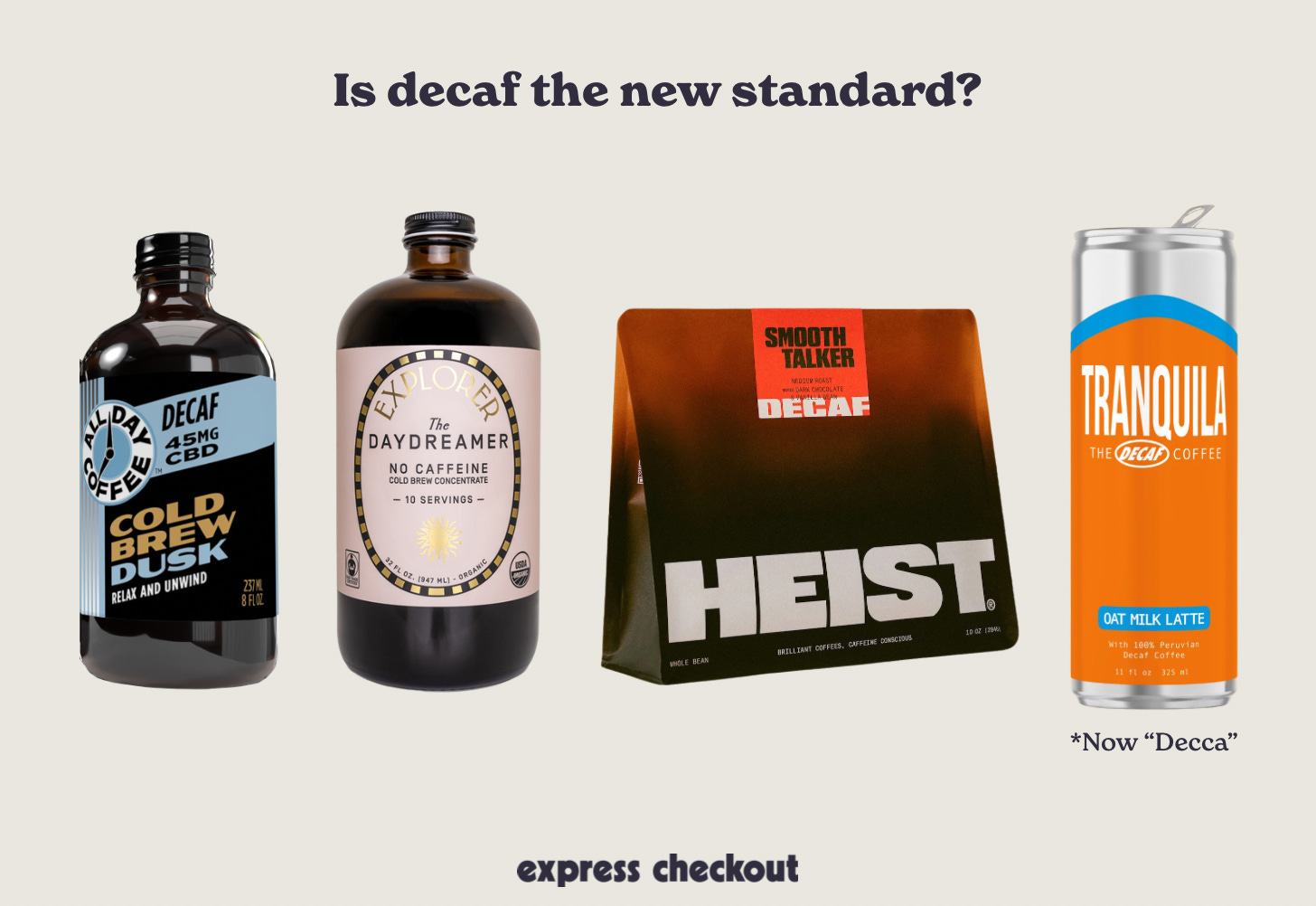
The pitch these founders share is less about restricting caffeine, and more about expanding usage occasions and removing negative perceptions around decaf:
Heist’s tagline—“coffee without a curfew”—bets the most compelling case for decaf is the second half of the day—evening espresso martinis, post-dinner affogatos, and late-night cappuccinos.
Eric Gonzalez, founder of Decca, shared the same: the goal for Decca’s decaf, RTD lattes isn’t replacing your morning cup, but owning the moment later in they day. That afternoon occasion is what pushed Decca into ready-to-drink—convenience over a multi-step brew—and positions it against soda and seltzer, each a $10B+ category in the US.
When Cason Crane founded Explorer Cold Brew in 2020, it was built around a spectrum of caffeination levels—and the promise of giving customers more control over their caffeine consumption in RTD coffee: decaf, half-caf, and full-caf.
He’s now building a whole platform brand around controlled caffeination. Earlier this year, Explorer acquired Savorista, a roasted coffee brand explicitly dedicated to decaf and half-caf—which Cason claims was a more specific shelf proposition than Explorer Cold Brew could offer on its own.
What all of these brands promise is a quality unlock—decaf options that don’t just taste different, but are derived differently. As chemphobia runs rampant, the callout of “only using water” in the decaffeination process is strong against the chemical-solvent processes most associated with bad decaf. Decca, Explorer, and Heist all boast the same “Swiss Water Process,” the only process certifiable as Organic.
Heist backs that promise at the source, developing its coffee alongside a Certified Q Grader (essentially a sommelier for coffee) to prove decaf can earn a taste-first reputation.
The ambition here is pretty lofty. These founders are trying to do three things at once: change the perception of a small subcategory inside of a massive one, invent new occasions for it, and educate shoppers at the shelf.
~70% of American adults drink coffee daily per the National Coffee Association’s 2026 National Coffee Data Trends, while decaf sales only make up around 12% of US coffee in 2025 (though that’s up sharply from 9% the year before). The opportunity is real and growing, but these brands are still fighting for a small slice and betting they can widen it.
Meanwhile, education remains a huge barrier. Many consumers have no idea what “decaf” even means—does it have no caffeine, or just low-caffeine? (According to Cason, the water-based method puts it at 99% caffeine-free). The obvious workaround for limited education is DTC, where there’s room to teach—but DTC feels like a non-starter for RTDs right now (acquisition costs are so high, shipping a heavy, low-margin bev doesn’t make sense).
So, is the market even there? Maybe, but it’s still early. To get past our bicoastal, wellness-focused bias, we used Pogo to survey* 526 frequent coffee drinkers from across the country and outside our networks—a group skewing middle-aged, lower- to middle-income, and female—and asked whether most Americans actually want less caffeine, or just the wellness-focused few.
Our findings told us that there’s no clear groundswell of people trying to cut back on caffeine: 56% said they’re satisfied with their current caffeine intake, and 77% are drinking the same or more coffee than they were three to six months ago.
But then we looked at why they drink coffee: 56% said they drink it for the taste, followed by morning ritual at 50% and indulgence at 44%, while only 22% pointed to productivity or focus (multi-select options). And when asked the one thing they’d improve about their coffee, a mere 7% named added benefits like protein or function.
This is a group that drinks coffee for many reasons beyond caffeine, and isn’t clamoring for more function on top—the exact audience decaf could win, it just doesn’t know it yet.
As Cason told me: decaf isn’t a category being pulled into the mainstream by a trend catalyst, the way seed oils went from fringe worry to shelf-clearing mandate once MAHA made them a villain. It’s the opposite pattern, where the product arrives before the demand.
The founders building it are, as Cason said, “the earliest of adopters.” Their job isn’t to ride a wave, it’s to show consumers a want they don’t know they have yet. That means creating reasons to try, teaching occasions for additional coffee enjoyment (not replacement), and killing the stigma the only way that actually works: by pouring something that tastes damn good.
Whether the decaf trend catalyst ever comes—a celebrity, a study, a politician, something nobody can schedule—is the one variable no founder controls. But the logic of the category is complete, and now, the quality players are there—so who’s going to add-to-cart?
*: We LOVED using Pogo to gather data for this piece!!! Pogo lets you survey or interview the people who actually bought your product, verified by their real purchase data, and get answers back in hours instead of weeks. All you need to do is share your research intent and audience of interest, and it will build the survey for you, run it (quickly), and give you clear takeaways and next-steps.
CPG & Consumer Goods
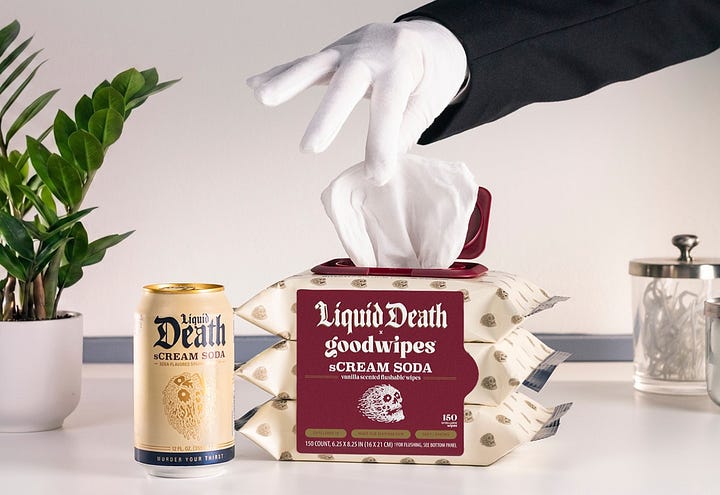
Liquid Death is on a collab roll. The brand launched a limited-edition pack of sCREAM Soda-scented flushable wipes with Goodwipes, negotiated by agency SonderCo. The collab includes The Buttler Sweepstakes—one winner gets a live-in butler to personally wipe them, which, in prime Liquid Death style, is criminally INSANE. But also so on-brand.
But that’s not the only partnership the sparkling water brand is running right now: two weeks ago, the brand launched its limited-edition, soda-style sparkling water flavored like MrBeast’s Feastables peanut butter cups. It contains no actual peanuts, so it’s somehow allergen-friendly, and transparently tastes like artificial chocolate above all else.
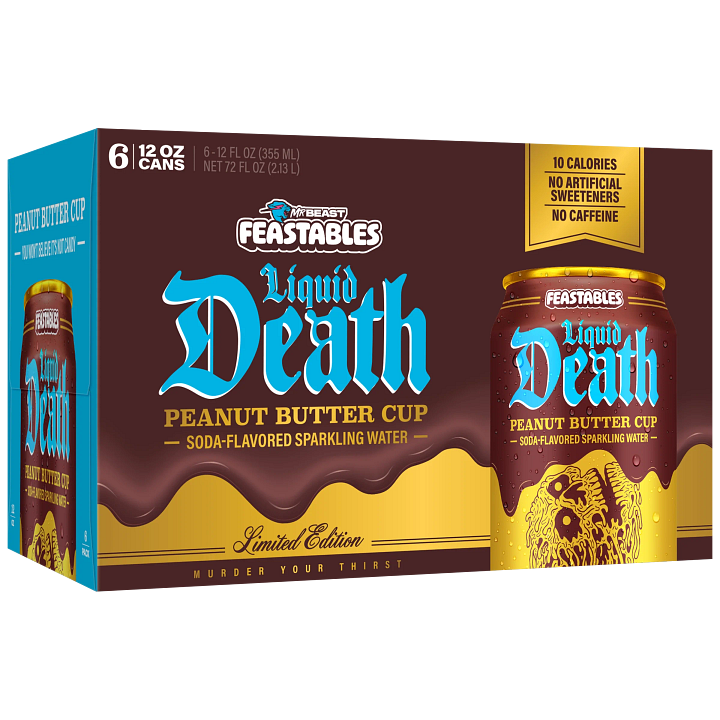
There’s another Liquid Death collab coming out tomorrow that just might be the wackiest of the bunch—more on that in our IG post tomorrow!
The David Protein founder is at it again. Peter Rahal, former founder of RxBar and current founder of the ever-controversial David Protein, just announced his latest venture (alongside Stuffed Puffs founder Michael Tierney): HallPass, a low-calorie, zero-sugar candy brand made possible by—you guessed it—EPG.
ICYMI: David, under the parent brand Medici, acquired the EPG developer Epogee last year, giving the company the opportunity to develop products outside of David’s bars with this magical plant-based fat ingredient.
HallPass’s peanut butter cups will launch nationwide at Walmart later this month, priced just slightly above Reese’s at $2.69—a strategy that looks far different from David, which still sells for a premium ~$4 per bar, even at supermarket chains. A Walmart launch this accessible pricing points to a more mass-market approach.
Farmer’s Dog’s first format innovation. The Farmer’s Dog, one of the OG premium, fresh DTC dog food brands (now valued between $2.5 billion and $3 billion+), launched Instant Fresh. This is the brand’s first format innovation beyond its original frozen meals—a shelf-stable dry food which rehydrates into a fresh meal in under 30 seconds via proprietary Low-Heat Drying Technology.
Last year, we wrote about the “human-grade” dog food boom—and it seems like the demand for more premium pup food options is only growing. Since we wrote that piece in October, Maev launched its Nordic Fish Raw Formulation, Citizens Pet launched its “air-dried” dog food recipes, and Ollie launched a turkey recipe, just to name a few. At this point, “human-grade” feels more like a baseline expectation than an added perk.
The Farmer’s Dog in particular seems to be gearing up for something big (perhaps an IPO? Canadian brand Open Farm is likely preparing for an IPO on the Toronto Stock Exchange…). Just last week, we wrote about how The Farmer’s Dog acquired Woof, an enrichment toy brand.
Celiacs, rejoice!! After years of consumers begging and begging, Goldfish (owned by Pepperidge Farms, under Campbell’s) is launching its first-ever Certified Gluten Free cheese crackers, hitting stores nationwide in November 2026.
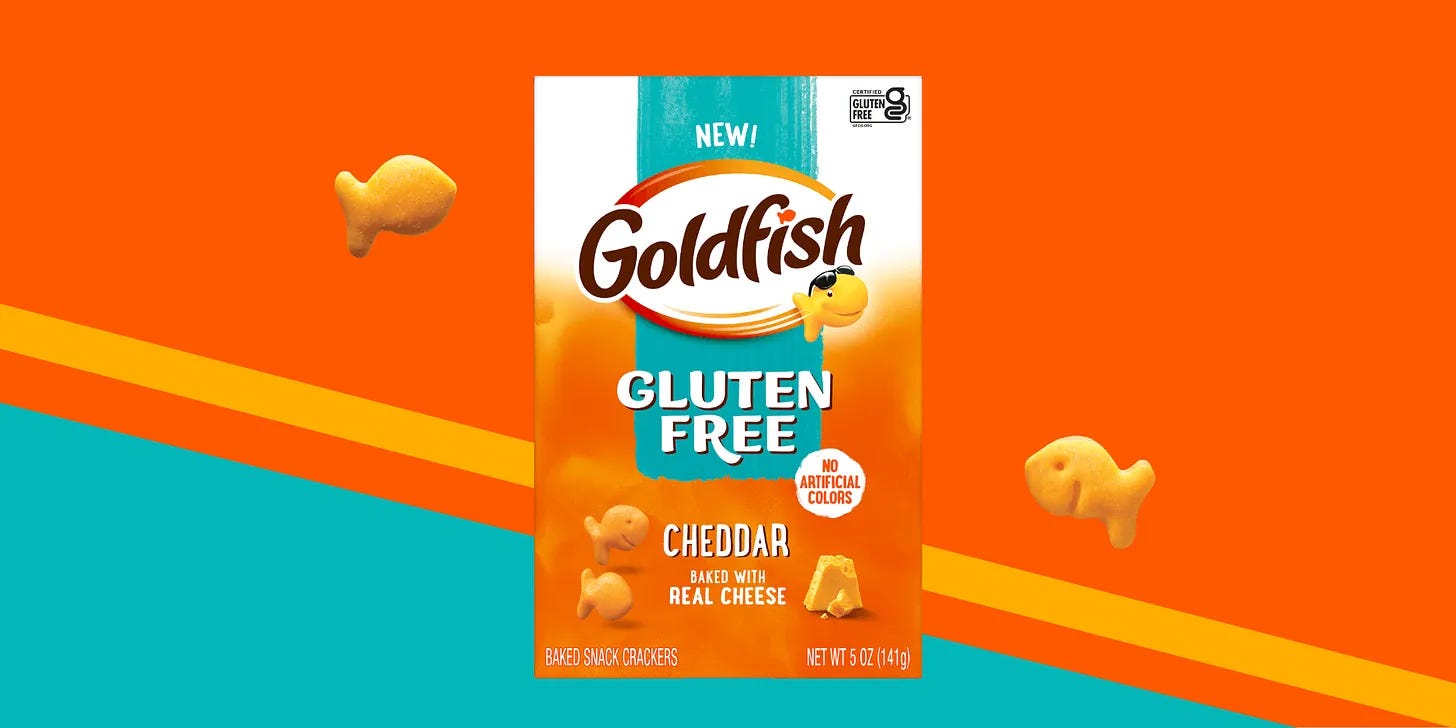
Ain't she perty 😍 We were curious why the HECK it took so long for them to develop this product, so we asked. The response (from Tiphanie Maronta, SVP, Crackers, The Campbell’s Company):
”[GF Goldfish] are one of our most requested products in brand history – and knowing how deeply fans desired a gluten free version, we wanted to take the time to make sure every detail, from the taste and texture to the iconic shape, was true to Goldfish.”
Earlier this year, Cheez-It also launched a gluten-free version after years of consumers asking for one. Sure, these companies can say they wanted to take their time and get the taste exactly right—but let’s be honest, they’re massive businesses making billions a year. They should be able to formulate this in their sleep…
Beverage isn’t for the faint of heart. Just one year after launching Unwell Beverage Co. in partnership with Nestlé, Alex Cooper is reportedly shutting it down per Bloomberg.
The timing is especially interesting, as the news comes right after the broader Unwell media empire scored some fresh funding at a $500M valuation. Sounds like some new investor was not down with the BRUTAL margins of CPG, and likely wanted Cooper to stick to her media thing. She’ll probably do better with brand deals and investing anyways.
There are probably countless reasons why this brand is shutting down. Maybe it was the taste, or maybe it’s because beverage—and particularly, the massively competitive hydration category—is hard. One thing it definitely showcases is that celebrity hype + a massive audience doesn’t always correlate to a successful business. Check out our analysis on IG. We also wrote about Building the perfect celebrity brand earlier this year.
We’re also looking at this within the context of other celeb hydration brands in particular: Just look at Logan Paul’s Prime Hydration, which has suffered a massive global sales collapse—dropping by as much as 70% to 90% from its 2023 peak—or Mas+ by Messi, the sports drink brand co-launched by Lionel Messi that was discontinued after less than two years on the market and struggling to secure long-term consumer demand. Is celeb + hydration particularly oversaturated?
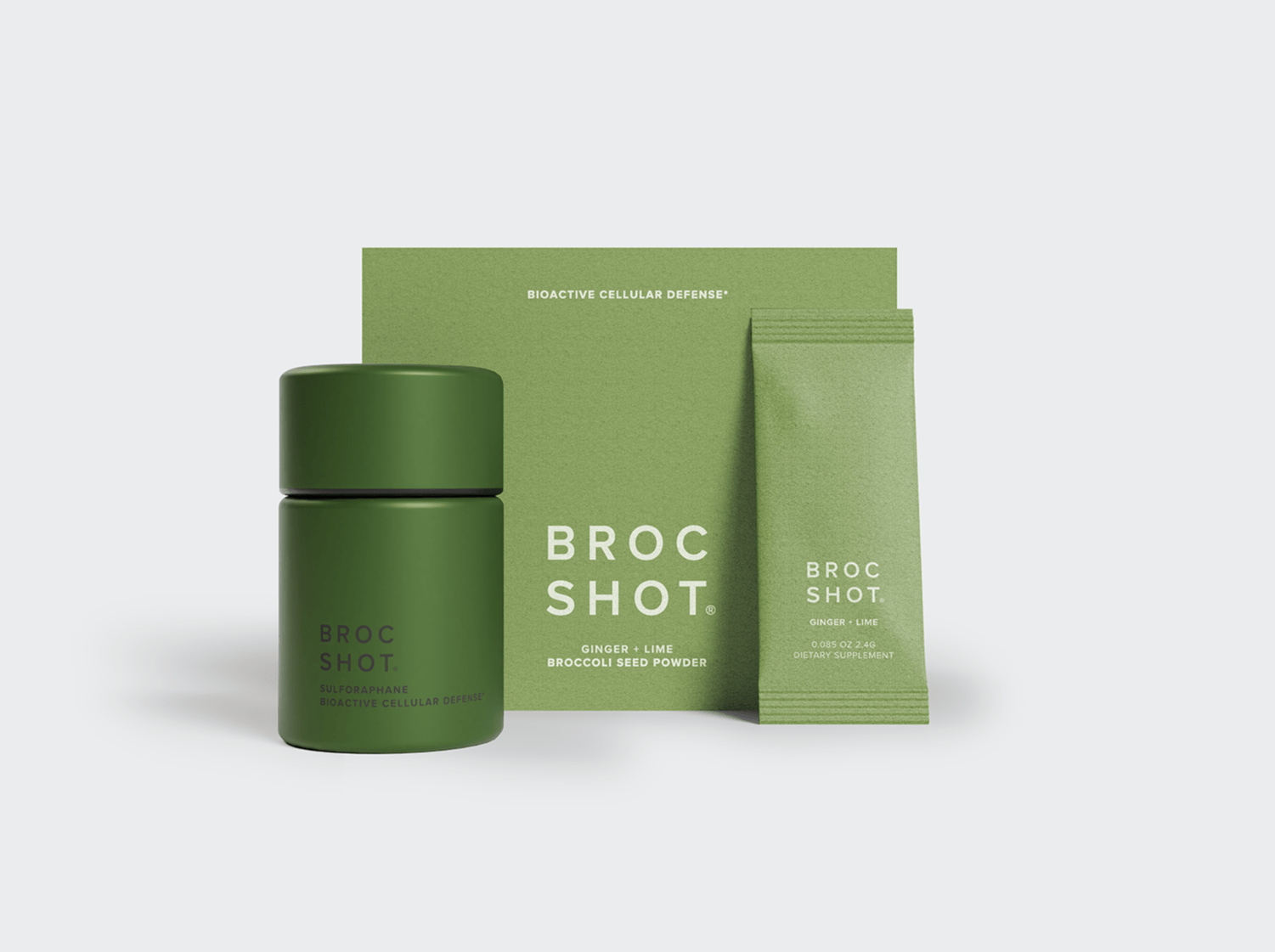
Kim’s psoriasis as a pitch? Kim Kardashian announced a brand advocate partnership with Broc Shot, a sulforaphane supplement and the first recognized by the National Psoriasis Foundation. The company projects 20x its typical daily revenue and 1 million new customers over the six-month campaign (!!).
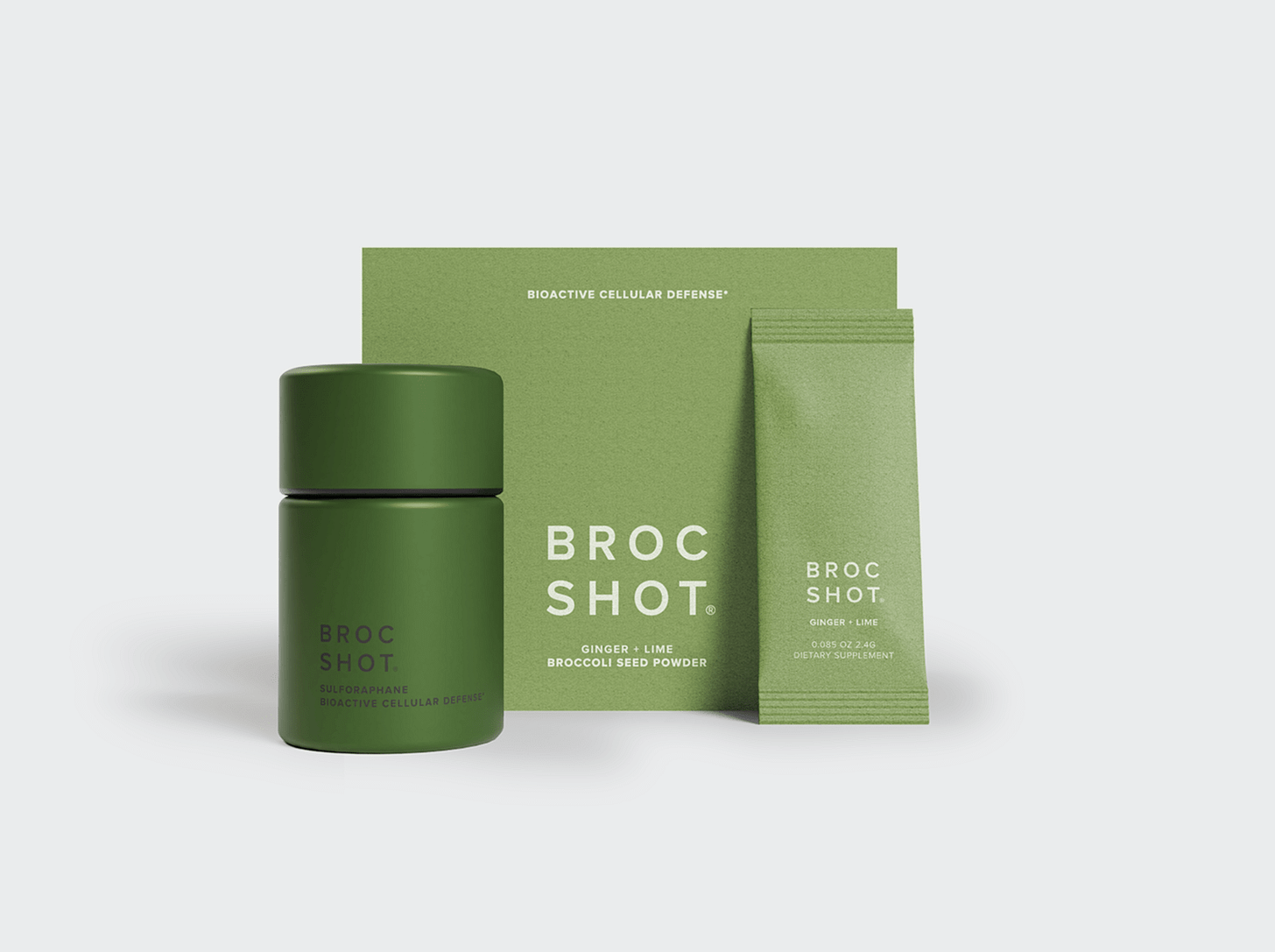
Now this is an interesting celebrity partnership. Rather than solely relying on the clout and general lifestyle influence of a celeb, Broc Shot is leaning into something much more interesting: a celeb endorsement of a cure to their medical condition. Kim has spoken publicly about her psoriasis for over a decade, so her credibility was pre-established. This is less about her being a figure with a following, and more about her being a poster child for a specific diagnosis—a version of celebrity marketing that (we think) actually has legs.
Every road leads to gummy supplements. The greens powder king, AG1, has launched AG1 Essentials Gummies. These greens gummies pack 50 vitamins and minerals into NSF Certified for Sport berry gummies.
CEO Kat Cole is framing it as a portfolio play, basically they can now tier out their whole supplement lineup: gummies for the casual wellness consumers, AG1 Next Gen for a significant step up, and AG1 Pro (with 5g creatine, launched in June) for the wellness maximizers.
When we first saw this launch, our knee-jerk reaction was that it felt a little desperate. Kind of like AG1 was trying to claw back share from brands like Grüns and Bloom Nutrition that made wellness feel more portable, snackable, and fun (and part of us still sees it that way). But the portfolio play framing brings some more clarity to the move. Not every wellness consumer wants the most optimized, top-tier daily greens powder. Some just want something easy, familiar, and still effective. AG1 has the capital, scale, and scientific resources to make a (slightly) cheaper, more accessible version of its OG product that still carries the real credibility the brand is known for. Also, this lets them serve the casual wellness consumer without abandoning the serious one, thus broadening their reach and getting new consumers in who will eventually upgrade.
The harder part is the brand tension. AG1 has spent years building credibility around science and efficacy, while gummies have often been treated by AG1 and other science-forward wellness folks as a less effective format than something like powders or capsules. So it’s interesting to watch the brand try to reconcile that, but this might be the format that actually gets more people to build the habit and upgrade to the other AG1 products.
Everyone wants in on kids’ routines. Frida, a brand best known for its baby, postpartum, and parenting products, is getting in on the kids skincare and personal care boom with Frida for Kids, a 32-piece line of “age-appropriate personal care essentials”—ranging from toothpaste to deodorant and shampoo—for kids ages 6–11. It’s now available at Walmart, Amazon, and Frida.com.
If you’ve been reading this newsletter, you already know that kids’ and tweens’ skincare and personal care categories are having a growth spurt. Just three weeks ago, we talked about California Naturals’ new line for kids, and only two weeks before that, we shared Rini’s new daily care collection for Gen Alpha. And for the past year or so, we’ve been citing multiple skincare brands built specifically for tweens and teens, like Sincerely Yours, Evereden, Rally Skin, JB Skrub, and more.
The move from baby → school-aged kids is also echoed in food + bev (we spoke about this in-depth in our recent newsletter, “the lunchbox officially grows up”. Brands like Little Spoon and Once Upon a Farm are bumping up their age range, giving parents options to “grow up” with their brands.
Side note: In February, Frida briefly got “canceled” for using sexual innuendos in its social media marketing and packaging design, which felt pretty out of place the baby aisle. Now, the brand is back—and gearing towards an older audience. It’ll be interesting to see if the brand can regain its pre-cancelation clout, especially with a new target.


eCommerce
Your new holiday shopping homepage. Shopify announced a multiphase holiday push for its Shop app, the app that started as a package-tracking hub but has become a place to discover and directly buy from brands. It now has 250 million verified shoppers and saw 70%+ GMV growth in Q2.
Shopify, even though a lot of consumers might know the name, is mostly B2B software. It is the infrastructure that lets so many brands sell online. But Shopify also wants to be consumer-facing, and that is where Shop comes in. It’s the company’s main consumer-facing arm. Anecdotally, I don’t think a lot of people really know much about the Shop app yet, so this push is about building brand awareness and keeping people inside the Shopify ecosystem before they go discover or buy somewhere else, whether that’s TikTok, Instagram, Amazon, or ChatGPT.
I love using the Shop app personally, of course for tracking my packages but there’s also sometimes better discounts and really good cash back offers directly within the app. - Nate
Retail
Apparel retailers want in on beauty. Anthropologie is expanding its beauty business with 50 shop-in-shops by year-end, up from 27 last year. The retailer has sold beauty and skin care for years through a mix of national brands like Phlur and L’Occitane plus private-label SKUs like Maeve, but now the category is becoming a bigger part of the store experience. Over the past 12 months, 1 in 6 Anthropologie customers bought a beauty product, and hair care has become one of its fastest-growing categories.
This is bigger than Anthro. Gap and Old Navy are also doubling down on beauty, with Old Navy rolling out beauty and personal care across more stores and Gap relaunching its iconic 90s fragrance business. It makes sense. Beauty is a great add-on category for apparel retailers, and the Gap CEO is saying that beauty can be anywhere from 5% to 20% of sales in the future.
Beauty and skincare are also just booming. As Modern Retail cited from Circana data, prestige beauty sales grew 7% to $17.1 billion in the U.S. during the first half of the year, while mass beauty also grew 7% to $39.2 billion. McKinsey also expects the global beauty market to grow 5% annually through 2030. A lot of that comes back to the same broader shift we keep seeing across the consumer landscape. Wellness. As consumers put more focus on self-care routines and looking and feeling better day to day, beauty and skincare naturally have become bigger spending categories. Then social media, celebrity-led brands, and new product demands amplify it all, turning beauty into something that shows up across more parts of everyday life including next to apparel.
Target built its own digital twin. Target announced its development of Proxima, an in-house inventory digital twin, an attempt to improve inventory levels in stores. A pilot with 63 fresh food items improved on-shelf availability by 2.5%.
Funding
Purely acquired. Ferrero Group, the global confectionery giant behind Nutella, Kinder, Ferrero Rocher, and Tic Tac, is acquiring Purely Elizabeth, the 17-year-old Boulder-based better-for-you granola and oatmeal brand.
Clearly Ferrero Group thinks that breakfast is the most important meal of the day, because this comes after their $3.1 billion acquisition of WK Kellogg Co, Kellogg’s entire cereal business.
So why Purely Elizabeth? It checks a lot of consumer boxes right now: “clean,” simple, filling, and better-for-you without being boring or overly processed. It’s high-protein and high-fiber (especially with the recent launch of its Ancient Grain Protein line), and we all know everyone is looking for more P&F. In comparison to cereal, which has been fighting long-term decline and a perception problem around sugar and processing, granola feels like the healthier alternative—which is why we’re seeing this acquisition, alongside endless launches of granola products from both new brands and established ones.
Purely Elizabeth is a leader in the modern breakfast set, reportedly doing $200M in total brand sales in 2025 and more than doubling sales in the past two years. So for Ferrero, this isn’t just buying granola; it’s buying a fast-growing better-for-you platform right as breakfast is being rewritten around protein, fiber, and cleaner alternatives to legacy cereal.
Euro (candy) summer. Orkla Snacks has acquired European Candy Group (CCI) for €207M ($239M) to scale production of its Bubs vegan gummies, which triggered a global shortage after going viral on TikTok in 2024. CCI posted €94M in 2025 revenue across four European facilities.
Swedish candy has been having a moment over the past few years, and it sits at the center of a lot of food trends we’ve been writing about. Part of the appeal is that it feels relatively “cleaner” than a lot of American candy. Many of these brands are vegan (no pork or fish gelatin), use real sugar instead of high-fructose corn syrup, and rely on natural fruit extracts for flavoring and coloring instead of the artificial dyes and flavors that the U.S. brands are now racing to remove. In this wellness-maxxing world, it gives those consumers permission to treat themselves without feeling like they’re buying the same old ultra-processed candy.
The other piece is virality, and this is where stores like Lil Sweet Treat and BonBon have really moved the needle. Lil Sweet Treat only launched two years ago and already has 10 stores across the country, a Poppi partnership, and millions of views across its social channels. BonBon has also helped make Swedish candy feel like a New York cult favorite. Together, these stores and their social content have educated consumers on what Swedish candy is and why it feels different from the mainstream American candy aisle.
Other brands like Katje’s (which smartly brought on Jake Shane as its Chief Creative Officer) and Sockerbit (which I’ve been obsessing over - Jenna) have leaned more into product: Swedish candy tastes and looks different enough from American candy to feel more exciting and exotic. The flavors are weirder, the textures are more fun, and the combinations feel way more interesting than another sour watermelon or blue raspberry gummy, which makes it perfect TikTok haul content.
Celebrities <3 (putting their money into) supplements. Alix Earle, the influencer and soon-to-be reality TV star, just invested in Cymbiotika, the liposomal supplement brand. She also previously backed Poppi before its nearly $2 billion PepsiCo acquisition, so her brand portfolio is starting to look pretty pretty solid.
Cymbiotika is a seriously impressive brand in its own right, reportedly doing $150 million in 2025 revenue. The brand has been on a run recently, raising $25 million in January with investors including The Weeknd and Post Malone, then quickly expanding into Target and Ulta Beauty.
For most celebrities and influencers and talent, this is probably the best way to leverage your fame and fortune: invest in the brands. More often than not, the biggest unlock for a growing consumer company is not that a celebrity starts it themselves, it’s that they bring capital, cultural relevance, and a massive awareness engine. They can help open doors, create press moments, get in front of buyers, and keep putting it in front of consumers over and over again. A celebrity investor almost gives it more credibility than if they started it themselves—it’s less heavy handed than starting a brand and gives the product more credibility. We’re in a world where celebrity-brand fatigue is a very real thing. As we’ve talked about with Alex Cooper, attaching a famous person as the face and founder of a company does not automatically make consumers care. But when the celebrity is used more like a amplifier, someone who brings attention and trust to a product with some PMF, it will feel more effective.
Building a beverage brand stack. Axum Capital Partners announced a strategic partnership with L.A. Libations, the beverage incubator and commercialization platform behind a bunch of emerging health and wellness brands. As part of the deal, L.A. Libations CEO and co-founder Danny Stepper is joining Axum’s advisory board to help portfolio companies with brand strategy, retail expansion, distribution, operations, and go-to-market.
Axum might sound familiar because just last week it acquired a controlling stake in BARCODE, the better-for-you performance hydration brand. Adding L.A. Libations gives Axum more of the operating and retail muscle to actually scale brands like BARCODE, not just buy them.
If you haven’t yet, please subscribe, like, leave a comment, and share it! It helps us continue to bring you the most interesting news + nuance in consumer and retail every week.