



Hello hello!
We’ve got something very exciting coming to NYC next week!
On October 6th, we’re hosting the second edition of In Season—Express Checkout’s quarterly event spotlighting the season’s three biggest trends and the brands bringing them to life. This time, we’re taking over a gallery in downtown NYC and turning it into a museum of trends, complete with plenty of opportunities to taste your way through it. Willy Wonka would be proud (hint hint). You’ll want to be at this one!
A quick note: This event is reserved for select brands, investors, media, and tastemakers. If you’re a B2B platform or service provider interested in attending or activating, reply to this email to learn about our remaining sponsorship opportunities!
We can’t wait to bring so many members of our NYC community together in one room. :) If you’re interested in hosting a highly curated private dinner for our network of CPG professionals—or want to get involved in one of our larger events—just hit reply.
Let’s get into it →
News From the Week
When every brand seems to be launching into Target… what does a Target launch actually validate?
A few years ago, a Target launch meant something big for a growing brand: you’ve finally reached mass-market appeal, you’re widely distributed, you’ve made it. But as Target shifts as a retailer, the meaning of the bullseye logo shifts, too. This has been coming up in countless conversations we’ve been having with investors, and we decided it was time to finally dig in.
A little background: Last week, we talked about how many better-for-you and premium brands are skipping the natural/specialty channel launch strategy and launching straight into Target (or Walmart).
It looks like a win-win from both ends:
Target, as we’ve covered before, is looking to change its reputation to be seen as a discovery channel for buzzy food, bev, and wellness brands.
Brands seek the mass-market appeal of a Target launch. Adding that coveted Target logo to their decks, sharing that (AI-generated) social post of a giant rendering of their product in front of a Target store, means that they really made it.
Or, at least, that’s what it used to mean. As more and more emerging brands launch into Target every week, the bullseye may not be the prize it used to be.
Disclaimer: This isn’t a knock on Target. Target is still choosy about what it brings in, but it does want to test a lot of brands; to become a grocery + wellness destination, so you need an exciting assortment.
At the same time, when a retailer is testing that many brands, some won’t take off for a variety of reasons, and some just aren’t built for a nationwide footprint.
We asked 5 investors how they’re evaluating this brand milestone. We’ve anonymized answers at the request of interviewees.
Investor A (VC firm targeting early-stage brands):
“Getting into Target used to be a really big validation and milestone for an emerging food & beverage brands, but over the past year or so that distinction has lost its sheen as we’ve seen a surge of approvals to launch at Target including brands with little to no traction elsewhere. It seems Target is throwing everything at the shelf and seeing what sticks.
We have also seen that, without signing up for Roundel, Target’s in-house retail media network, emerging brands have very little chance of being successful because they won’t even be eligible for placement in out-of-aisle displays and endcaps that drive real trial and increased velocities.
Target is still a leader in the beauty and personal care space for emerging brands, and a stronger signal for us there [than food and beverage].”
Investor B (PE firm targeting growth-stage brands):
“Performance at Target has become increasingly important for the brands we diligence, in part because Target is often the first brick-and-mortar or mass retail partner for emerging brands. How a brand performs there is a leading indicator of how it will fare in a truly competitive retail environment, versus eComm or the more curated natural channel.
Performance immediately post-launch can be hard to parse. Target often invests heavily behind new launches—end caps and other preferential real estate in a brand’s first few weeks—so early numbers can flatter. What matters most is repeat purchase and velocities versus competitor brands.
Retail remains hyper-competitive, and the pace of innovation and new product launches only accelerates year after year.”
Investor C (VC firm targeting venture-stage and growth-stage):
“Target seems to be willing to bring in almost anyone very early these days. While it’s still an awesome signal to land the account, what ultimately matters is what you achieve once on shelf.
I have a theory that Target is basically pitting brands against each other by bringing in multiple new brands per category before determining who actually gets a placement. As an investor, I now want to know how your product performs at Target, not just that you won the placement.”
Investor D (VC firm targeting early-stage, seed):
I wouldn’t say it carries any more or less weight than it did 5 years ago, because national mass distribution at Target is a huge accomplishment. Now every large retailer has built an emerging brands funnel. Shelf count went from scarce to abundant. The thing that matters most, both then and now, is VELOCITY.
Other major signals for us are:1. Cohort repeat. Not “we have x% repeat rate,” but “what is the repeat rate at 90 and 180 days, and whether it is improving with each cohort.” This is the single most predictive stat to look at in consumer.
2. Unsupported velocity in challenging door. a brand doing top decile in U/S/W in a chain with no promos, no demos, and no trade budget tells me much more than a national launch with significant discounts, trade spend, and sampling. It shows true product-market fit.
3. Full price sell-through. Is your product moving without giving it away?There are a few risks to launching in target:
Scaling a leaky bucket. If your repeat rates aren’t proven, then national distribution doesn’t solve that for you. It just makes the problem larger.
Cash. Free fills, slotting, inventory build, trade spend, and long payment terms all hit before you receive a dollar back!
Failure is public. You only get one national launch at target- and if you blow it you are ‘screwed.’
Concentration. One merchant can control a large majority of your sales.
Investor E (VC firm targeting venture-stage and growth-stage):
“Target is a fantastic retail partner, but just getting in isn’t enough. We need to see Target is investing in the brand over time - more stores, shelf space, additional SKUs, preferential retail marketing opportunities, etc.”
”It’s critical to ensure there’s already demand built up for your product, and that consumers will be looking for it on shelves as organic discovery won’t be as efficient. Also important to ensure the supply chain is set up to support such a large retailer as you won’t get the chance to redo a Target launch again.”
What do you think about Target launches?
CPG & Consumer Goods
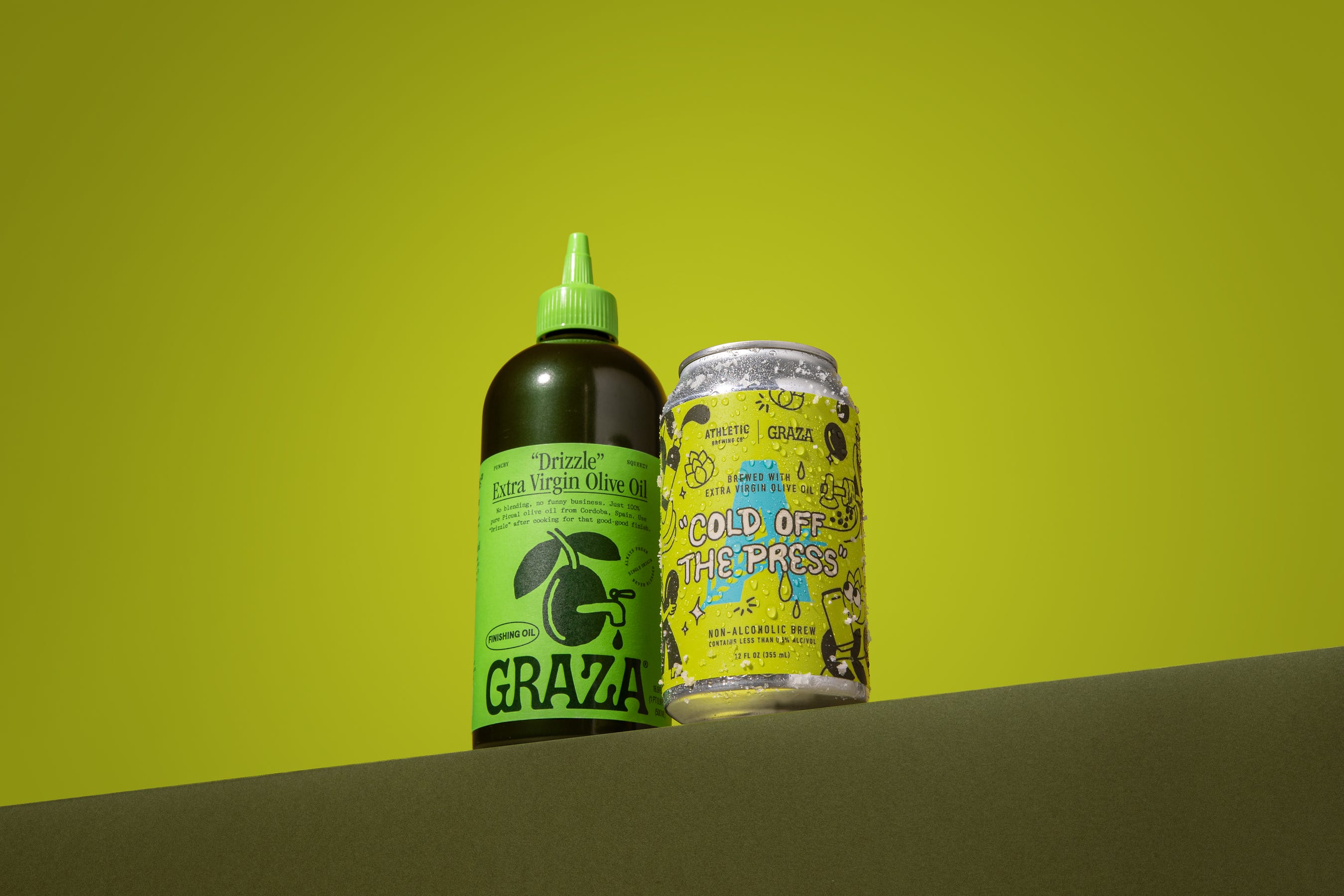
Would you drink an EVOO beer? Athletic Brewing and Graza launched Cold Off The Press, a limited-edition non-alcoholic pils actually brewed with Graza’s Extra Virgin Olive Oil!
Graza looooves testing a new category via a collab—it’s how the brand proves its thesis that olive oil can be a platform brand, without having to commit to creating that product from scratch. Historically, this has looked like:
An Olive Oil Hummus with Ithaca Hummus
Olive Oil Crackers with Firehook
Olive Oil Popcorn with BjorQorn
And even another non-alc bev, its Olive Oil Martini (”Dry Guys”) with Aura Bora (RIP)
This is one of those brands that feels like it’s collab’ing with everybody (see also: Good Girl Snacks and Fishwife), so seeing another Graza Collab surely induces some eye-rolls. But with Aura Bora’s bev out of the picture, and the name recognition + brand loyalty of Athletic Brewing, this one is actually a collab we can get behind.
Just last week, we talked about how we’re seeing a lot of innovation in the NA beer space. For the past three weeks, we saw an NA innovation every week: first, Herb Light came out with a first-of-its-kind NA beer featuring 1mg of hemp-derived THC. Then, Optimum Nutrition launched the first protein NA beer. And last week, C4 Energy launched a beer-flavored energy drink, All Hopped Up, with its classic 200 mg of caffeine and added vitamin B12. This week marks a full month of NA-beer-related innovations, which tells us that brands are seeing this category as ripe for innovation—or at least as a strong base for testing LTOs.
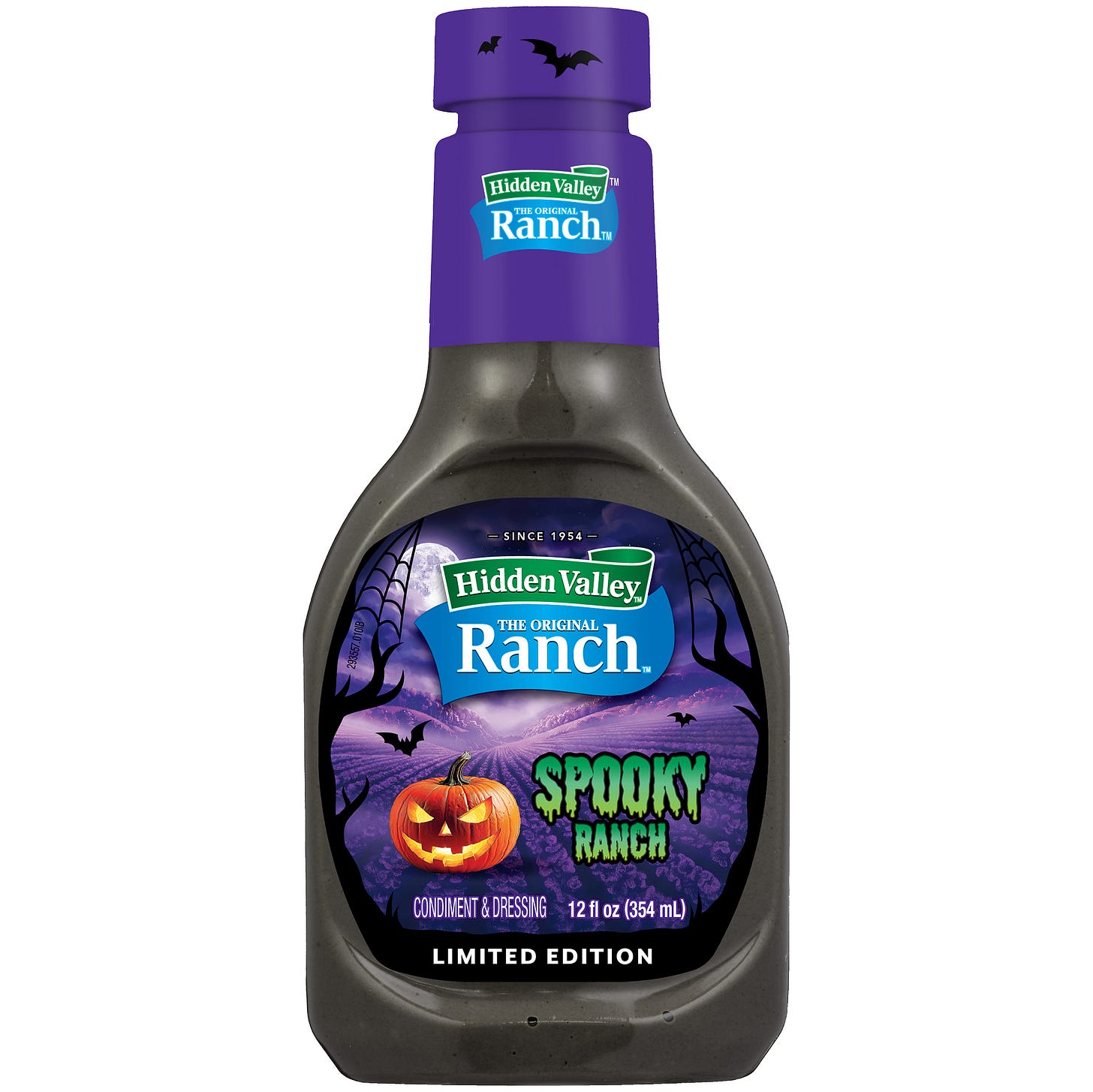
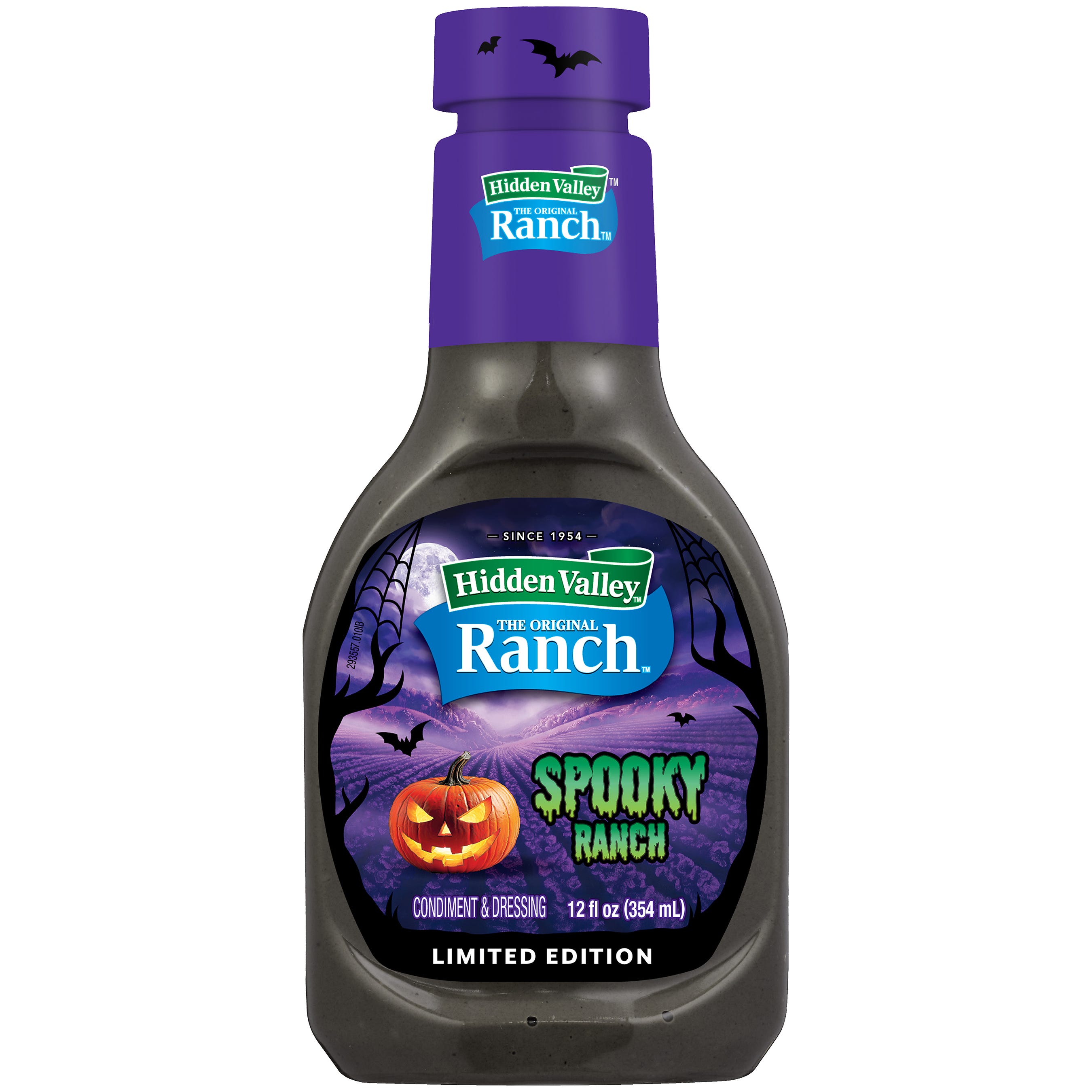
There’s a first for everything. Hidden Valley Ranch has launched its first-ever seasonal holiday release, Spooky Ranch, a limited-edition black-colored dressing made with fruit juice and cocoa, all packaged in a fun glow-in-the-dark bottle.
It’s wild to think that Hidden Valley hasn’t done any seasonal launches yet. This is their first one, ever. They’ve done a lot of different flavors and collabs (who remeber Van Leeuwen?) but they haven’t done a seasonal product, which is a staple of the CPG world now. Every big (and small) CPG brand has at least one season a year they’ll make a product for. At the end of the day we’re just happy it wasn’t pumpkin spice flavored.
Beyond, take notes. Voyage Foods, a food-tech startup that makes cocoa-free chocolate, beanless coffee, and allergen-free spreads, is exiting retail to double down on B2B ingredient supply. Voyage will partner with Cargill to bring its ingredients to CPG and foodservice companies at scale, using its nearly 300,000-square-foot Ohio facility it built last year to help lower costs, shore up supply, and hit sustainability goals.
A quick Voyage Foods recap: Voyage Foods was founded in February 2021 by food scientist Adam Maxwell and co-founder Alec Lee. Their goal was to build a food technology company that makes alternatives to cocoa, coffee, and peanuts. Its mission is to separate popular foods from supply chains that are unstable or ethically troubled. The company uses up-cycled ingredients and cheap commodity crops like grape seeds and grains to match the taste and texture of the originals. Its core strategy is built around keeping those products affordable and allergen-free. Voyage came out of stealth in May 2022 with a $36M Series A and later that year, it launched its first product, a Peanut-Free Spread, starting at Sprouts. In October 2023, its Peanut-Free and Hazelnut-Free Spreads went nationwide at Walmart and online. In 2024, Voyage signed an exclusive global distribution deal with Cargill and raised another $52M, bringing its total to about $94M. It also announced a 284,000-square-foot manufacturing plant in Mason, Ohio, backed by a roughly $25M USDA-guaranteed loan. This May, Voyage and Cargill launched NextCoa, its cocoa-free chocolate ingredient, in the US.
This pivot makes a ton of sense. Many of the food-tech startups that took off in the early 2020s assumed consumers would care about the science upfront. Most shoppers really just care whether something tastes good, is priced right, and makes their lives better. Often, once they hear a product isn’t “real,” there tends to be some backlash and confusion. We’ve seen this play out across plant-based meat, with Beyond Meat struggling to turn innovation into lasting demand. The B2B angle lets Voyage keep the technology behind the scenes and sell brands on benefits that actually move the needle. And, honestly, that may be where a lot of food-tech startups belong. They can build incredible science, but they’re often not great at branding or world-building or giving consumers a real reason to care. It makes more sense to become a valuable ingredient supplier and to let the founders and teams who actually know how to build brands turn that innovation into products people want to buy.
No one is safe from the Costco. This week, Costco’s Kirkland Signature brand launched its very own Liquid IV competitor: their hydration electrolyte drink mix.
Costco is building a health-and-wellness empire. Kirkland Signature already has whey protein and ready-to-drink protein shakes, and earlier this year it launched an energy drink aimed squarely at Celsius. Their energy drink in particular made some serious waves. Celsius’s namesake sales fell 12% year over year during the quarter, with CEO John Fieldly reportedly pointing to Kirkland’s lower-priced competitor as a main factor. Costco is a HUGE account for Celsius, representing roughly 11% of Celsius’s global revenue last year before rolling out the dupe. Brutal stuff, man!
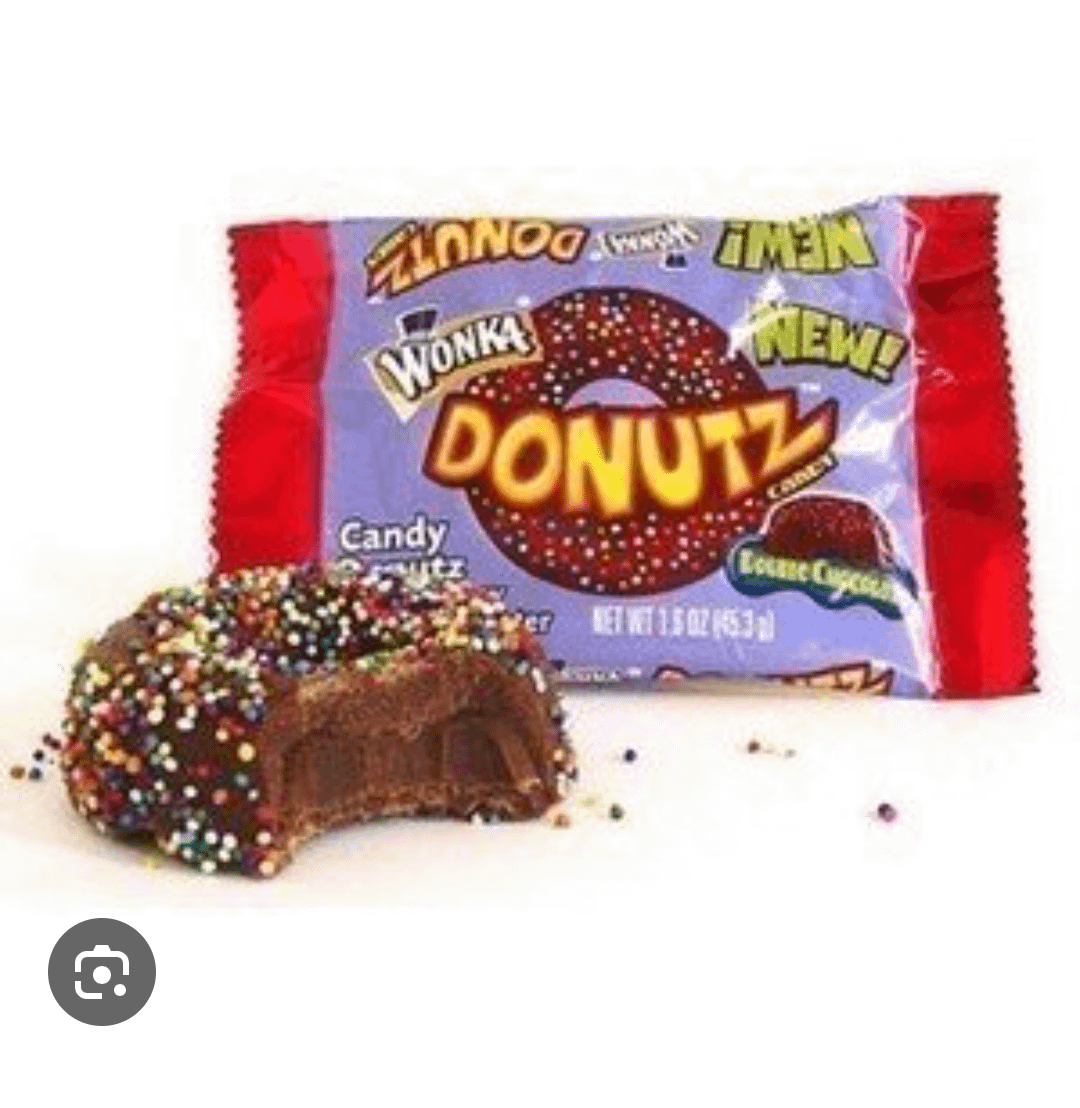
I’ve got a golden ticket! Ferrero is bringing the iconic Wonka candy brand back to shelves with four new limited-edition treats tied to Netflix’s new series, Wonka’s The Golden Ticket—and it looks like this is more than a one-off collab. After the brand largely disappeared from US shelves around the time Ferrero acquired the rights back in 2018, the company is calling this the start of a “new chapter” with reportedly even more Wonka products already in the works.
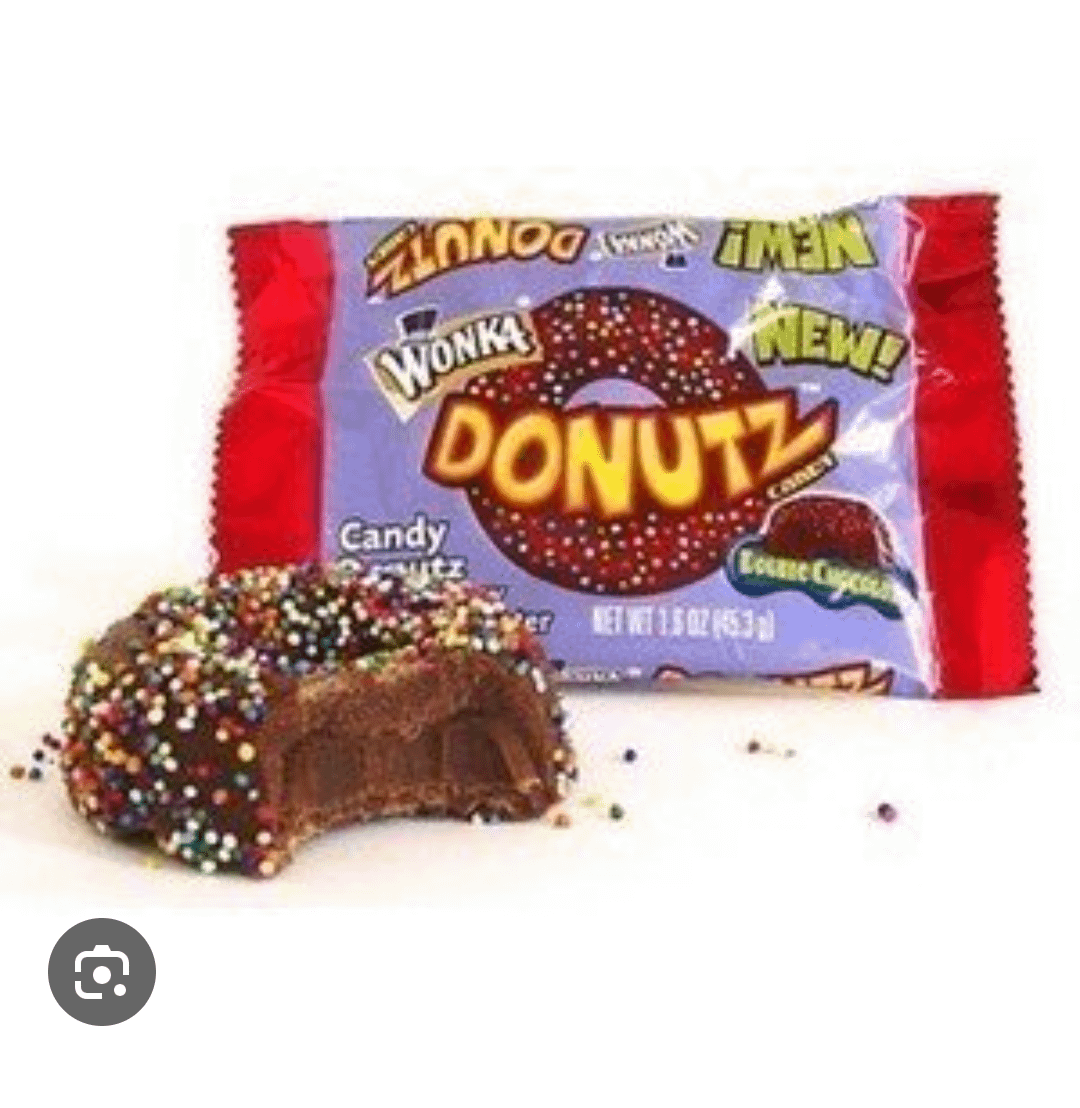
And if we got anybody from the Ferrero and Wonka team reading this newsletter, please bring back the Wonka donut! For the love of God, that was one of my favorite candy products ever. It’s probably my golden goose of discontinued products. - N
BEST THING EVER
Sexual wellness is back on the beauty shelf. Maude, a premier sexual wellness brand founded by Éva Goicochea, is entering more than 600 Target Beauty Studios and nearly 400 Ulta Beauty stores in its largest retail expansion to date. The rollout includes its lubricants, massage products, and vibrators.
Sexual wellness is becoming one of beauty and personal care’s next frontiers as retailers stretch “wellness” beyond skincare and supplements. Ulta now counts intimate care among four key wellness growth areas and believes wellness could become its next $1B category. The bet both Target and Ulta are taking stands in sharp contrast to Sephora, which brought Maude into US stores in 2023 but has since scaled back its overall wellness assortment and moved several sexual wellness products—including Maude’s Vibe vibrator— to online only 🤷♀️
For more on how sexual wellness is moving into mainstream beauty and personal care, read our deep dive: Let’s talk about sexual wellness!
Haircare you can drink. Arrae, a wellness supplement brand best known for its Bloat capsules, launched Hair Protein. A real thing. It’s a lemonade-flavored daily stick pack with around a 3g keratin-and-collagen protein complex. It’s designed to target shedding, stress, and overall scalp health. The brand developed it with celebrity hairstylist Chris Appleton and his daughter, Kitty Bluu, positioning it as a protein-first alternative to the endless sea of biotin gummies.
Beauty is getting a lot more snackable. Ingestible beauty used to mean pills, like a lot of pills. Then collagen powders and gummies came on the scene, and those formats have only gotten bigger and bigger thanks to brands like Lemme, Grüns, and even Arrae. But now, the category is getting broader in format and much more targeted in what each product is supposed to do. Freaks of Nature launched an electrolyte for skin-barrier and UV support. Kylie Jenner’s k2o made a skincare-focused hydration stick with collagen and hyaluronic acid. ARMRA even put its very popular colostrum into a can. And now Arrae is making a protein powder specifically designed to support your hair.
And haircare overall is absolutely booming. The category has moved way beyond simple shampoos and conditioners into scalp serums, growth systems, supplements, hard-water treatments, and even menopause-specific solutions. Hair, like body care, is getting the full skinification treatment.
Third time’s the charm? Skims has confirmed a 2027 launch for Skims Beauty, Kim Kardashian’s latest cosmetics play after KKW Beauty and SKKN by Kim. The $5 billion brand has already hired Ami Colé founder Diarrha N’Diaye-Mbaye as Executive VP Beauty.
All we have to say is this is going to absolutely CRUSH it.
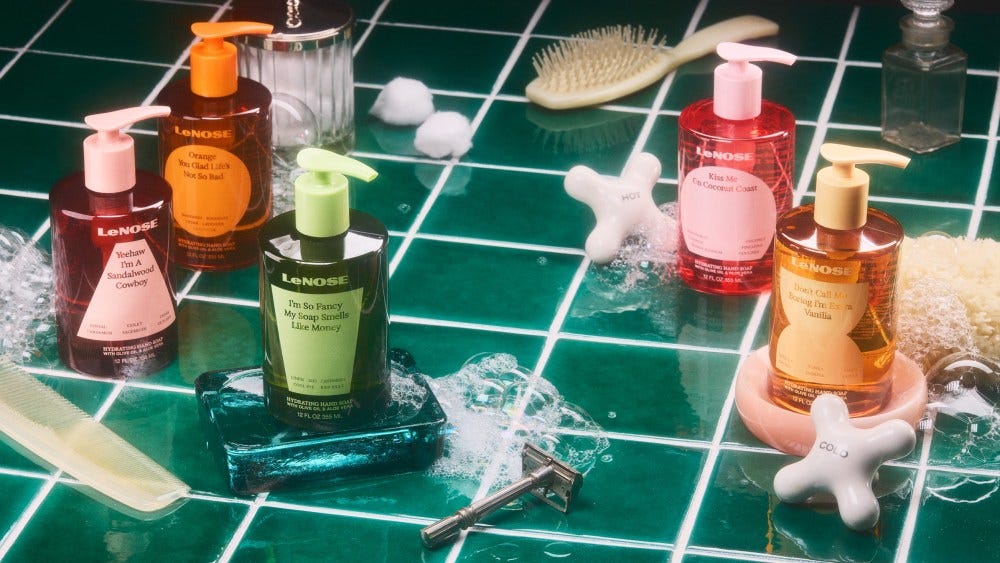
Is this the next viral soap? Three former Bubble Skincare execs have launched LeNose, a $10 Soap de Parfum line backed by a $3 million oversubscribed pre-revenue round from Era (Aesop’s early investor) and Fifth Growth Fund. They’re launching across DTC, TikTok Shop, and Amazon before entering retail in 2027.
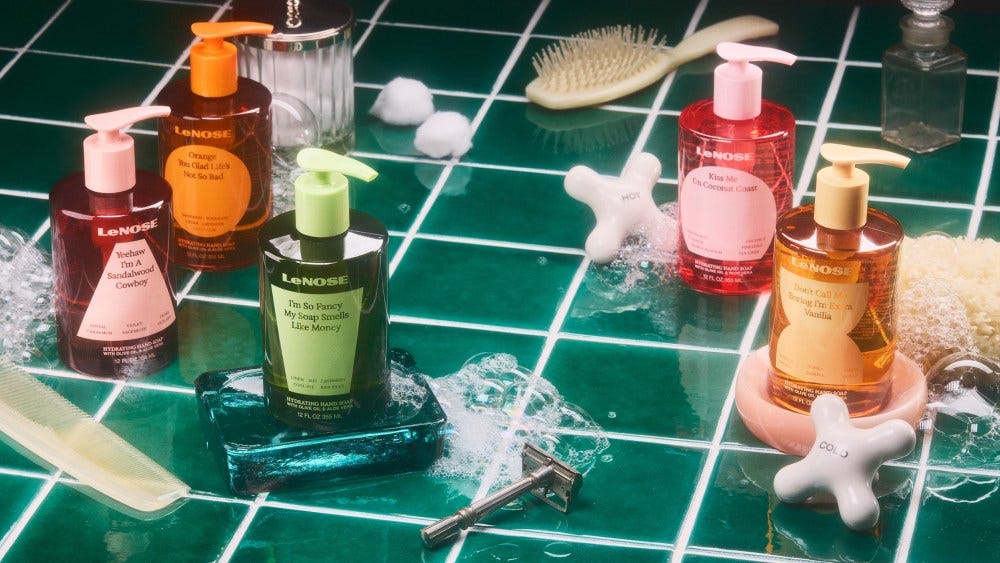
Accessible luxury is bleeding into every corner of consumer. Gen Z is finally growing up, I mean the oldest are nearly 30! These newly formed adults have jobs but that doesn’t mean they have a whole lot of disposable income to fill their apartments and homes with Aesop. Shoppers are more price-conscious than ever, but they still want the scent, taste, vibe, and visual language of a luxury product. Luckily, founders everywhere heard them. We’ve watched brands like Laundry Sauce, Snif, and Homecourt turn everyday home products into these little luxuries by making them smell better, look good enough to leave out, and cost WAY less than the products they’re trying to emulate. LeNose is making the same bet at the sink. Gen Z has taste, but not everyone wants to part with a crisp $100 bill for a few ounces of soap. A crisp $10 bill, though? That just might work. And they’re not being subtle about the ambition either. They named it Soap de Parfum not just hand soap.
You can also see plenty of Bubble in the launch. Bubble took a sleepy, colorless, medical feeling category and made it bright, cheaper, and very very Gen Z coded and it very much worked. Bubble does over $100M in annual sales, is sold in over 17,000 doors and hired Centerview last year to explore a sale. LeNose is that playbook applied to the home. Era’s Claire Cherry made the comparison herself, saying the team’s ambition is “akin to what the team achieved with Bubble.”
And this is just another note in the fragrance boom we’ve been seeing. Scent is no longer the job of a traditional fragrance brand. Traditional fragrance is popular, more than ever, but fragrance is so much broader now. Body care, personal care, haircare, home care, and even laundry brands are treating fragrance as a core reason to buy, layered on top of any efficacy claims. Efficacy, is basically table stakes now. Fragrance is one of the easiest ways to make an everyday product feel expensive. For Gen Z consumers—who increasingly treat scent as a form of self-expression but don’t always have full-size perfume money—a $10 hand soap is a pretty low-stakes way to buy into luxury. We made the same point in our luxe-laundry deep dive from a few weeks ago.
Retail
ALDI is coming over for dinner. The grocer is launching its first fresh ready-made meal line, with five single-serve options under $8 and two family-size meals under $15. The protein-forward lineup begins rolling out in October and will reach stores nationwide by January 2027.
There’s a lot more here than another private-label launch from a major retailer. Prepared foods are becoming a regular grocery habit for shoppers. According to McKinsey’s State of Grocery North America report, 61% of consumers now buy ready-to-eat grocery meals at least monthly and purchase frequency overall rose 9% year over year for the category. Roughly one-quarter are using them instead of restaurants largely for convenience and time savings efforts.
And yes, there’s a GLP-1 angle here as well. With around 11% of U.S. adults now taking GLP-1s for weight loss—up from 3% in 2024—the market for smaller, fixed portions is growing rapidly. ALDI isn’t explicitly targeting these shoppers, but single-serve meals with 30–46 grams of protein fit neatly into how many consumers are eating now. They want less volume, more protein, and fewer leftovers. We wouldn’t be surprised if this was a main driver here.
Funding, Mergers, & Acquisitions
Squeezing toward an exit. Graza, the viral olive oil brand, has reportedly hired Lazard to explore a sale that could value the company between $450 million and $600 million. The brand generates a reported $30 million in EBITDA and is seeking a 15x–20x multiple.
This ambitious price reflects Graza’s crazy rapid rise to stardom. The company is now the fifth-largest national olive oil brand, drove a reported 24% of the category’s growth in 2025, and doubled its retail footprint to more than 11,000 doors. After generating $48 million in gross sales last year, Graza says it’s on track to triple that figure this year alone.
Graza’s impact extends beyond the numbers too. Its instantly recognizable squeeze bottles became fixtures in viral recipes and stylish kitchens, helping to turn olive oil from a basic pantry staple into a design-forward, relatively accessible, and culturally relevant CPG category. Just look across the olive oil aisle today and you’ll see basically everyone has launched their own version of Graza.
Fertility for all! Fertility supplement brand Bird&Be raised $13M to expand its product line and double down on a “both partners” approach to reproductive health. BDC Thrive and BFG Partners co-led the round, with participation from BAM Ventures, Founder Collective, Rejuvenation Ventures, and HSR Ventures.
Fertility has long been marketed as a women’s issue—even though conception isn’t really a one-person undertaking in making a baby. That’s what makes Bird&Be’s approach so refreshing. Fertility—and as we mentioned earlier, sex more broadly—has been treated as awkward and taboo for way too long, with women expected to carry most of the burden here. Bringing both partners into the conversation makes the category feel a lot more honest and equitable and actually reflective of how making a baby works.
Bye bye silver foxes. Unilever Ventures, alongside existing investors Greycroft and Female Founders Fund, invested in Arey’s Series A round. The haircare brand makes supplements and topical products designed to slow—and potentially reverse—gray hair using vitamins, antioxidants, and peptides (classic). Funding terms were not disclosed.
In case you missed it… 🎧
Last week we sat down with Aaron Butterworth, Senior Specialist in Product Development at Häagen-Dazs, who’s been developing flavors for the brand for over 20 years! We learned how Häagen-Dazs thinks about then actually makes new pints and flavors of ice cream!
Catch the full episode below 👇
If you haven’t yet, please subscribe, like, leave a comment, and share it! It helps us continue to bring you the most interesting news + nuance in consumer and retail every week.