



Hello hello!
Last week, we spent a few days on our company offsite in Austin, planning out the future of Express Checkout. We’ve got a lot of exciting things in the works, and can’t wait to share with you!
In the meantime, we’d love to hear from YOU 🫵: if you have feedback on our recent content, it would mean SO much to us if you could take two minutes to respond to this short survey with your thoughts!
The new wave of caffeination is calm.


Or, at least, that’s the new messaging adopted by both BigCos and emerging brands alike: This week, Pure Leaf—Pepsi’s famed iced tea brand—launched its first functional sparkling line, “Mental Focus” packing in ~70mg caffeine and added L-theanine. In the same week, the creator-founded beverage brand Neutonic raised $6M at a $60M valuation on the back of a caffeine + L-theanine stack.
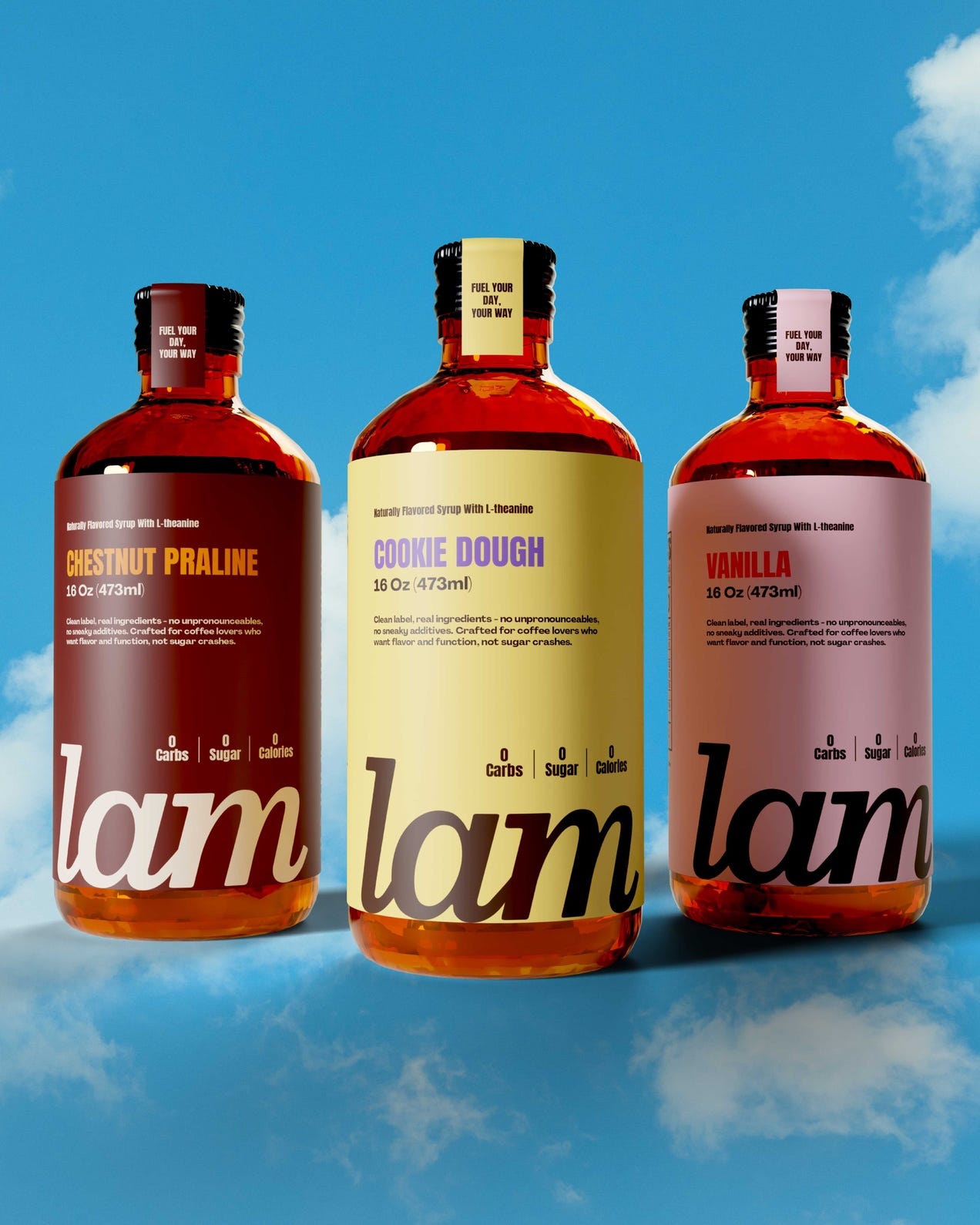
Both followed a string of recent L-theanine moments: Neuro (the energy gum + mints brand built on the same combo) returned to Shark Tank in March, becoming the first company in show history to come back after rejecting a deal and secure investment on a second appearance. And just last week, LAM Beverages launched a line of L-theanine coffee syrups marketed for “crash-free” focus for the at-home barista.
Wherever there’s a new energy product, it seems, L-theanine will make its way to the label. So let’s back up: what is it, and where did this cult combo come from?
L-theanine is a non-protein amino acid found almost exclusively in the tea plant, Camellia sinensis. Discovered in 1949 and isolated from gyokuro tea leaves (a shade-grown tea, similar to matcha) in 1950, researchers spent the following decades documenting what tea drinkers had long described anecdotally: that green tea produced a different kind of alertness than coffee.
Studies in the 80s and 90s linked L-theanine to alpha brain wave activity (the relaxed-but-awake state) and showed it counteracted some of caffeine’s stimulant edge.
The problem was, extracting L-theanine from tea directly was inefficient and prohibitively expensive. So in the late 90s, Japanese ingredient supplier Taiyo International developed Suntheanine, a patented enzymatic process that mimics how the tea plant produces L-theanine naturally.
Suntheanine made L-theanine commercially viable as a standalone ingredient for the first time and—fun fact!!—is still the dominant form on most labels today.
L-theanine supplementation isn’t all that new. By the late 2000s, L-theanine was the functional darling that was supposed to define the next generation of energy drinks—Big Beverage placed real bets, and press covered it as a sure thing. From a 2009 article in the Cape Cod Times, aptly titled “New beverages with L-theanine come into focus” (disclaimer: it didn’t age well…):
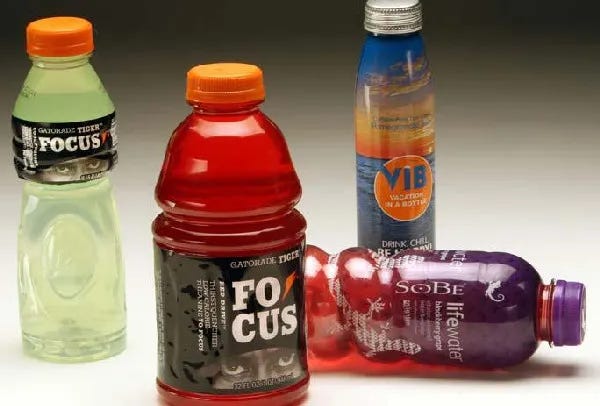
Certain formulations of SoBe Lifewater and Vitamin Water contain L-theanine, as does a new beverage called ViB. And Gatorade recently introduced a drink with the amino acid as well. That product—Tiger—was named for and marketed by golfer Tiger Woods.
“Focus and concentration is the next generation of the energy drink,” said Scott Smith, vice president of Taiyo International (editor’s note: same Taiyo as above!).
The ingredient was ready… but the market was not. Spoiler: None of the bevs pictured above exist today. The concept flopped (we’ll only partly blame the celeb partnership…), and brands momentarily ditched the concept of “calm energy,” quietly retiring L-theanine to the back of the sleep aisle, where it spent the next decade buried in nighttime stack labels alongside magnesium and GABA. “Wind down” gummies and “sleep tonic” tinctures became the primary homes for L-theanine—functional, but exclusively after dark.
The pivot to sleep made sense at the time. Selling L-theanine as a daytime focus ingredient required consumers to recognize a sensation they didn’t yet have a reference point for. “Calm energy” was an abstraction without anything to map it to.
But selling it as a relaxation aid slotted neatly into an existing category consumers already understood: things that help you sleep. Magnesium, melatonin, chamomile, GABA. L-theanine just needed to clear the much lower bar of “this helps me wind down,” and the marketing wrote itself.
Once a supplement is relegated to the sleep aisle, shifting association back to sleep’s opposite—energy—reads as a near-impossible feat.
Flash forward to 2026, though, and our girl L-theanine is back, front-of-label and paired with caffeine under banners like “calm focus” and “calm energy.” How has this ingredient managed such a drastic 180?
One word: matcha. Matcha, which naturally contains high levels of L-theanine and caffeine, has skyrocketed in popularity over the past two years.
In a wildly short time, matcha has gone from niche, Japanese tea ritual to mainstream beverage. Within just two years, matcha has gone from a specialty café drink to an expected menu item at QSRs like Dunkin, Starbucks, and even Jack in the Box (that one was not on our Bingo card). The global market hit $4.17 billion in 2025 and is projected to grow to $4.61 billion in 2026 at a 10.6% CAGR, with North America the fastest-growing region.
With its rise, matcha gave consumers a vocabulary for a feeling they didn’t previously have language for. Coffee = wired, decaf = nothing, but matcha = alert but not anxious or jittery.
The reason matcha feels different, of course, is L-theanine, but consumers learned the sensation before they learned the ingredient. Now, brands are reverse-engineering the sensation into formats matcha can’t reach.
The behavioral data backs this up. Today, Gen Z consumes more tea-based beverages than coffee, drinking significantly less coffee than Millennials, Gen X, or Boomers. Matcha taught a generation that energy could feel different, and once people felt the difference, they stopped wanting the alternative.
The result is a generational reset on what energy is supposed to feel like. Consumers still want the boost, just with mindfulness baked in. And now, beverage brands are racing to deliver that feeling without requiring anyone to pick up a bamboo whisk:
Pure Leaf “Mental Focus”: While PepsiCo may have bombed its Gatorade x L-theanine attempt circa 2009, it’s ready to give the ingredient another shot. This time, through its Pure Leaf brand—and PepsiCo is pulling out every stop to communicate the “focused energy” message. The new functional tea launched in a three-way partnership with Olympic gold medalist Jordan Chiles (the face of athletic performance) and Brick (the viral phone-locking device that’s become shorthand for digital focus)—energy and attention, packaged together.
Neutonic: Two influencers, James Smith and Chris Williamson, launched this L-theanine, caffeine, and citicoline beverage as a “Productivity Drink”— selling 7.5M+ cans since its 2023 launch.
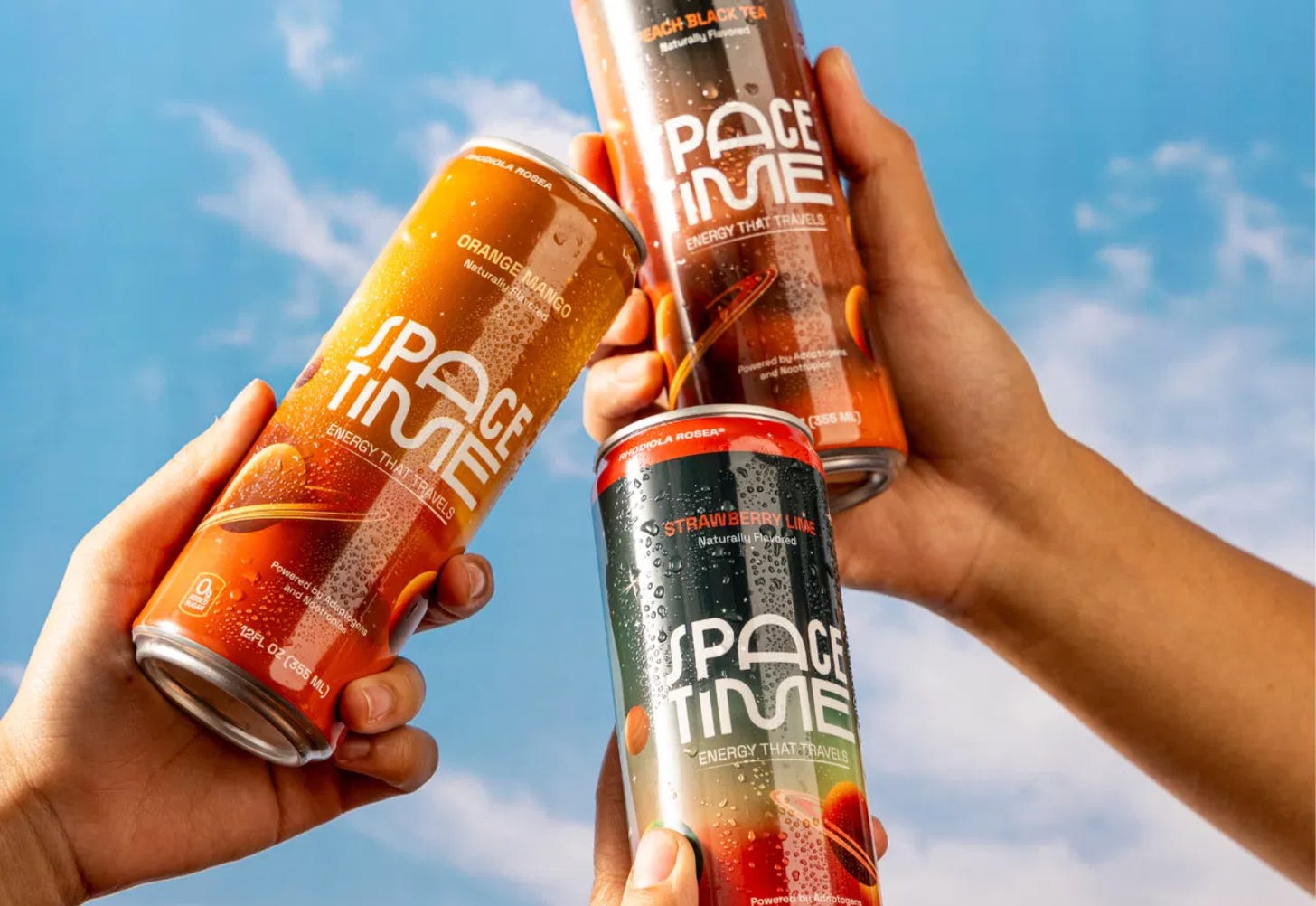
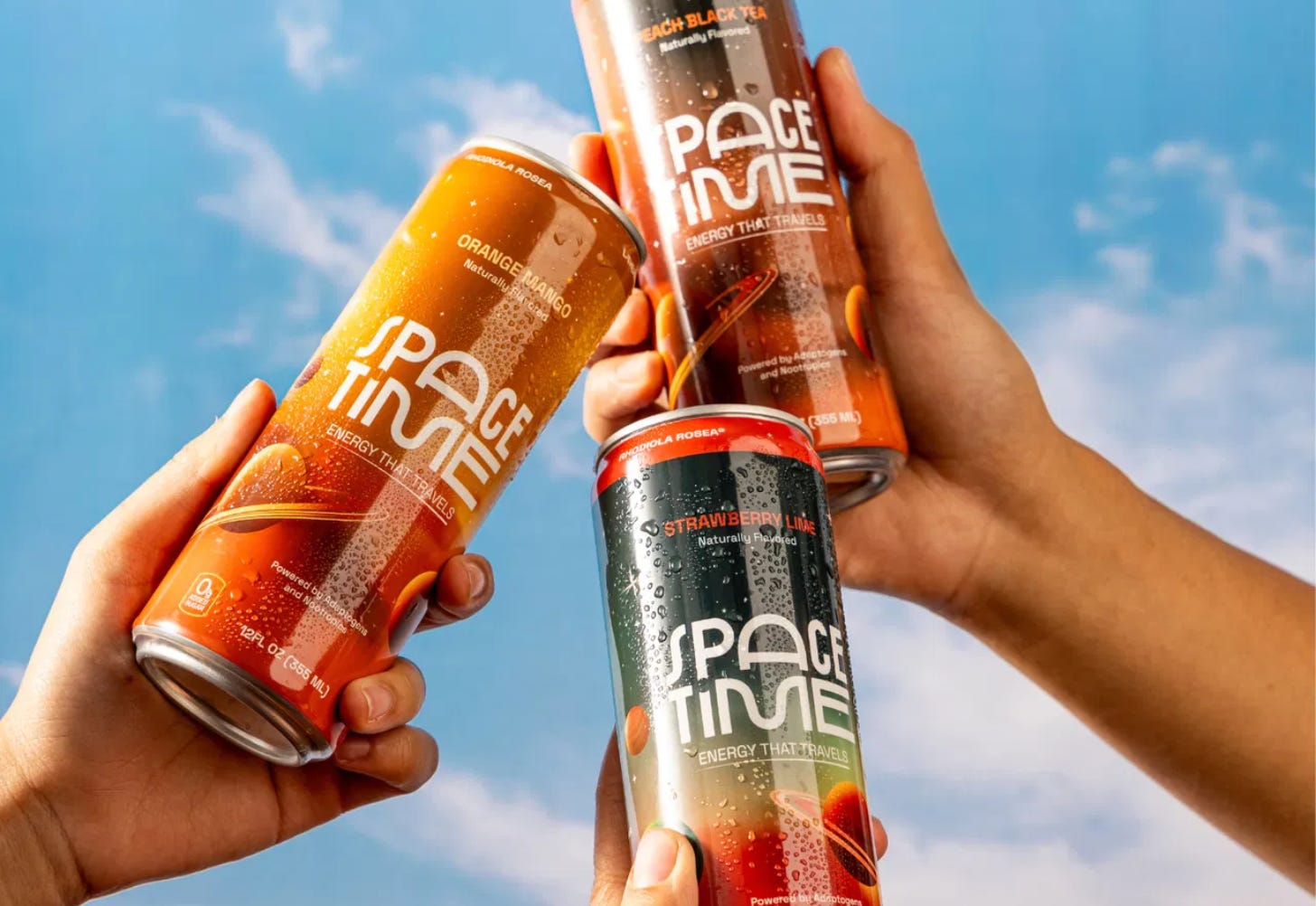
Spacetime Energy: an L-theanine energy drink marketed as “energy for your mind” that just launched into retail at Hy-Vee last month.
LAM just launched new L-theanine based coffee syrups, which bring the combo into the at-home barista category.
Which gets at the real lesson here: An ingredient can be too early. L-theanine in 2009 was a science story without a sensory hook—consumers had no reference point for what “smooth caffeine” was supposed to feel like, so the marketing had nothing to anchor to. Not even Tiger Woods could sell a feeling no one had felt yet (🙃).
What changed is that matcha gave consumers the experience before brands had to explain the mechanism. Once people had felt L-theanine working (without knowing they were feeling L-theanine), the ingredient finally had a story consumers could place themselves inside.
Functional ingredients don’t break through on clinical claims alone, they break through when consumers can map them to a sensation they already trust. Shoutout matcha for paving the way.
Stay on the lookout: we predict a whole lot more front-of-pack L-theanine and “calm energy” claims in the next few months.
Side (but related) note: We’ve also been seeing a lot of “adderall alternative” positioning, and I (Jenna) am currently working on a longer report exploring this phenomenon!
If you know anyone building in the drug-free ADHD support space, email me at jenna@expresscheckout.co
CPG & Consumer Goods


Feels like we’re just vibe coding sodas now. ARMRA launched a colostrum soda—yes, you read that right—in four flavors (Huckleberry, Spicy Lime, Pear Ginger, Pomelo Basil). Each 12 oz can apparently delivers the same colostrum dose as one scoop of the brand’s powder supplement.
ARMRA essentially created the consumer colostrum category, popularizing the idea that a single bovine-derived powder—a substance critical to calf development—could double as a cure-all for everything from gut health to skin barrier function in adult humans.
Founded in 2020 by Dr. Sarah Rahal, the brand reportedly hit ~$150M in annual revenue by early 2024 on the back of a heavy DTC and influencer playbook, and expanded into national retail at Sprouts in late 2024. A soda SKU is the natural next move—broader format, broader audience, broader use occasion.
It also slots ARMRA into a now-familiar pattern: every supplement that breaks through gets a soda treatment. Fiber sodas (obviously), then protein sodas, then creatine sodas, now colostrum. Modern soda is becoming the gummy supplement of beverage—a sticky, crave-able vehicle that makes daily supplementation feel like a treat instead of a chore. The format is the moat.
Kids need protein too! Nurri, a protein ready-to-drink beverage launched Nurri Kids, a protein drink for children with 10g of protein, 140 calories, and nine vitamins and minerals in an 8oz carton, available now at Sam’s Club in a 12-pack.
Once protein became the main character of CPG 🙄, expansion into the kids’ aisle was inevitable—and kids’ nutrition has historically been the late-but-lucrative chapter of every wellness trend, from organic to clean-label to gut health.
Expect much much more of this. Simple Mills launched two regenerative organic certified oat flour baking mixes—a cinnamon swirl muffin and cake mix and a pancake and waffle mix—available at Whole Foods, Amazon, and Thrive Market.
Regenerative has been bubbling at the brand level for a few years—Lotus Foods, Alec’s Ice Cream, General Mills’ regenerative oats commitment—and the Simple Mills launch signals that established better-for-you brands now see it as a meaningful badge worth putting on-pack.
The open question is consumer pull. Regenerative still carries less recognition than “organic” or “non-GMO,” and most shoppers can’t articulate the difference between regenerative and sustainable. For now, this looks like a supply-side story—brands and retailers betting the category will eventually earn its premium—rather than evidence that consumers are actively seeking the certification at shelf.
Frozen food continue to rip. Ripi, the restaurant-quality frozen pasta brand, launched in over 1,100 Targets nationwide. They also launched a target exclusive flavor, Basil Pesto Raviloli!
Creatine is booming, baby! Clean Simple Eats launched a Creatine + Glutamine supplement powders with 5g creatine monohydrate and 5g glutamine, available in three flavors: Pink Burst, Frosted Lemonade, and Unflavored.
We told you the other week, people want creatine.
The next-gen can. Re:Lid USA and L.A. Libations launched a resealable aluminum canned water—closable up to 14 times—now available at Gelson’s Markets in Southern California.
L.A. Libations is a beverage incubator, accelerator, and brand builder based out in Califonria started in 2009 by former Coke executives Danny Stepper, Dino Sarti, and Pat Bolden. They also have an investment arm, Taste Tomorrow Ventures, launched a $30M fund in 2025. They’ve worked with brands such as Plezi, Bero, Happy, Juni, Once Upon a Coconut, Cann, Odyssey, Zoa energy, Pretty Tasty.
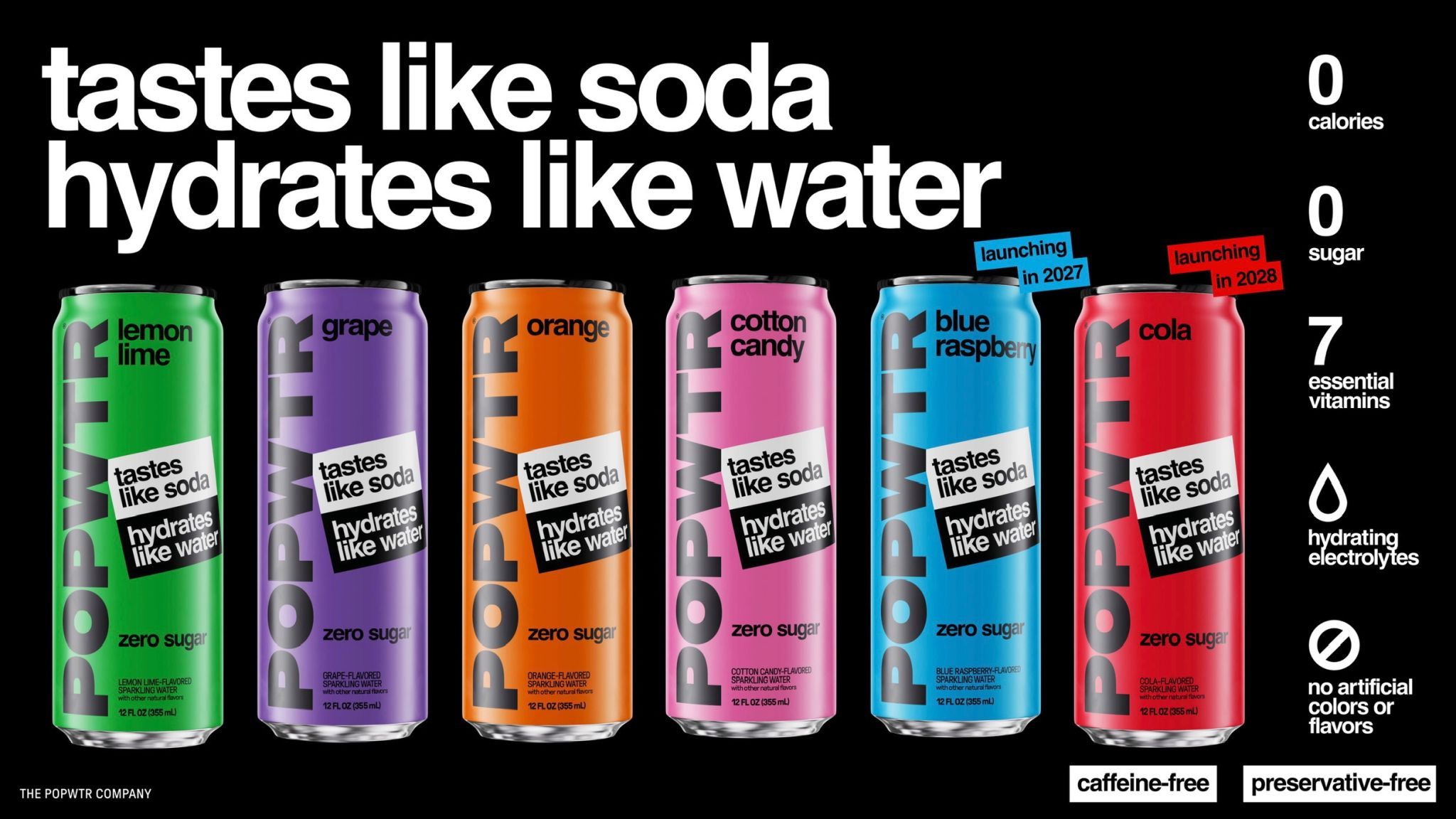
If it tastes like soda, is it soda? Yanni Hufnagel, former founder of Lemon Perfect, is launching POPWTR, a sparkling water brand bridging modern soda (flavor) and electrolyte-infused water—zero sugar, seven essential vitamins, four flavors. It’s his second act after a turbulent year at Lemon Perfect.
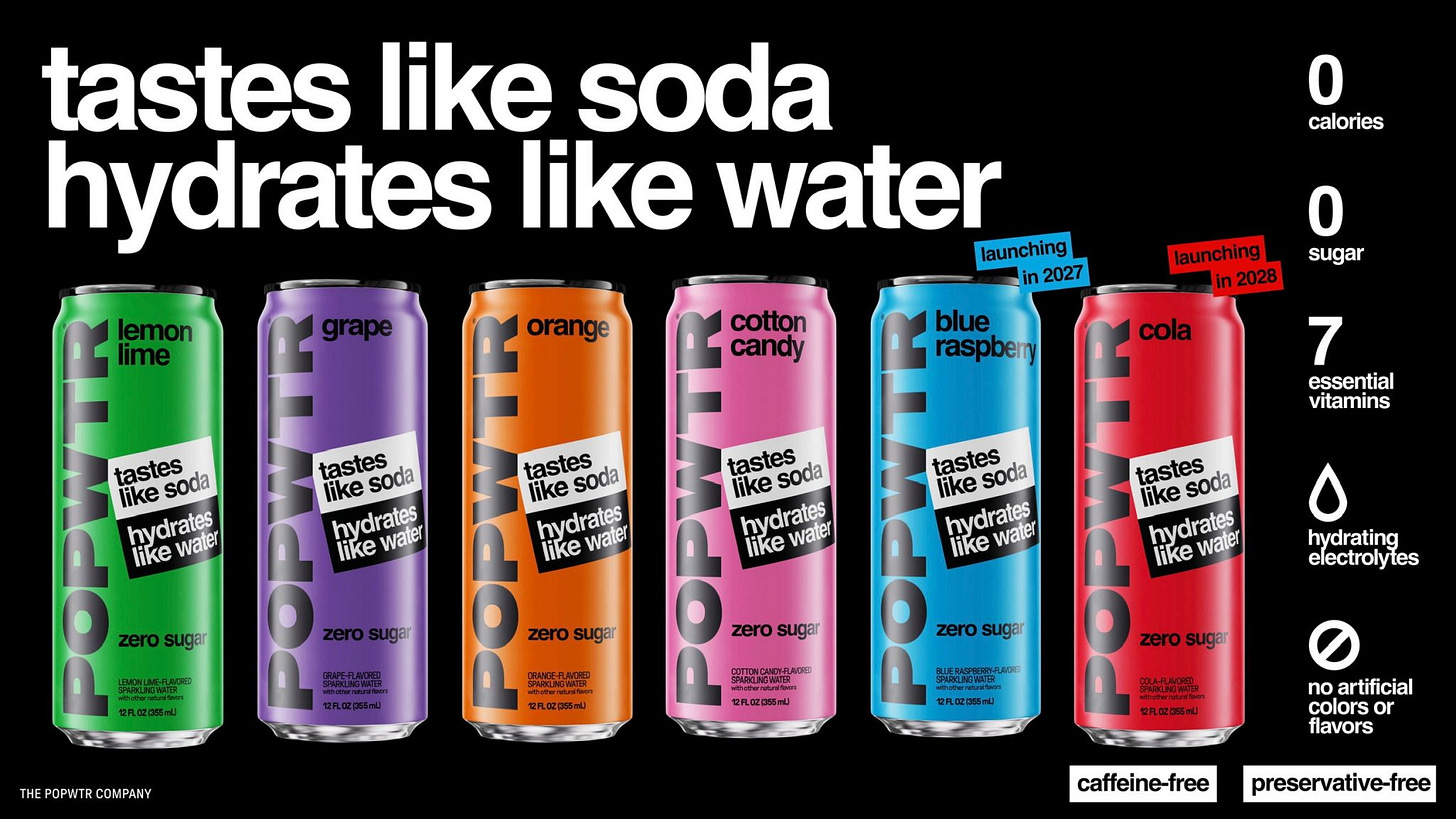
Lemon Perfect was a darling of the enhanced water category for years—Beyoncé-backed, $42M+ raised at a $100M+ valuation, and on track to surpass $100M in retail sales in 2024. But then… the wheels have come off. In October 2024, Hufnagel stepped back from CEO into an Executive Chairman role, handing the reins to former Vita Coco president Jeff Popkin. Then in January 2026, an investor-driven restructuring cut staff to fewer than 25 people, parted ways with Popkin and the CMO, and moved Hufnagel out of operations entirely as sales fell well short of projections.
POPWTR is, on paper, a sharper bet for this moment. Lemon Perfect competed in flavored water—a category increasingly squeezed between cheap private label (Aldi, Walmart) and the modern soda boom (Olipop, Poppi, Culture Pop). POPWTR is going at the modern soda category head-on, but with a hydration positioning that hasn’t been fully claimed yet. Whether the lessons Yanni learned scaling Lemon Perfect translate to a more crowded, more functional-obsessed category is the open question.
Back in January 2025 Liquid Death followed suit launching a “Soda-Flavored Sparkling” sub-line — Killer Cola, Doctor Death (a Dr. Pepper riff), and Rootbeer Wrath, lightly sweetened with agave and stevia, 2g of sugar per can. They’ve since added Killbert Grape, Sinister Ginger, and MTN Don’t. The marketing literally reads “you won’t believe it’s not soda.”
The tobacco playbook, for snacks. Kraft Heinz, PepsiCo, and 10 other major food companies have been named in a $1 billion consumer lawsuit alleging ultraprocessed foods are scientifically engineered to be addictive. This is the second such case after San Francisco’s government suit back in December 2025.
The complaint named 12 Big Food cos, including Kraft Heinz, Mondelēz International, Post Holdings, Coca-Cola, PepsiCo, General Mills, Nestle, Kellanova, Kellogg, Mars, Conagra, and Unilever.
Honestly, none of this is shocking. The cultural groundwork has been laid for years—Chris van Tulleken’s Ultra-Processed People sitting on bestseller lists, MAHA rhetoric putting Big Food squarely in the crosshairs, and a constant slew of social content casting legacy CPG as the villain of the modern American diet.
What’s notable is that consumer lawsuits—not just regulatory action—are now the vehicle. The “tobacco playbook” comparison in the complaint is doing real work: it reframes UPFs from a personal-responsibility issue into a manufacturer-liability one. Whether or not these cases win, the discovery process alone could surface internal documents that reshape the conversation, the same way it did for cigs.
Body care continues to get the facial treatment. Ex-Kenvue and Church & Dwight execs Kathy Widmer and Barry Bruno launched Dewsy, a masstige body care brand using proprietary mini-molecule technology. The line debuts with a $19.99 lotion and $35.99 serum.
Dewsy isn’t alone in treating body skin like face skin. Jones Road Beauty launched a five-product ceramide-enriched Body Collection in January 2026; Amika expanded from hair into body care at Sephora earlier this year; NYX Professional Makeup launched a body care line in April 2026; and Tower 28 has also been expanding beyond facial products into body care with its SOS Rescue + Relief Body Wash.
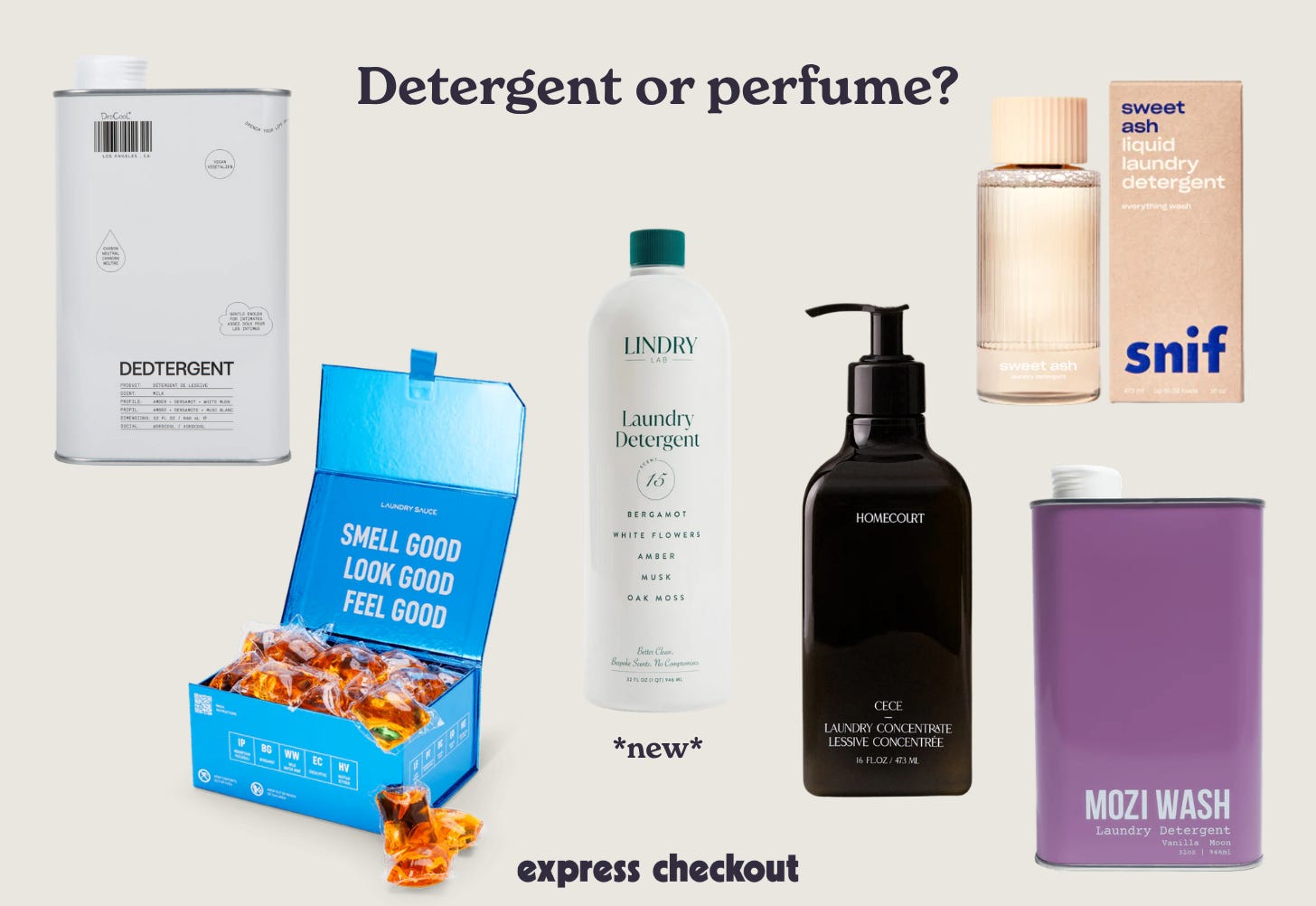
Luxe laundry heats up. Lindsey Boyd, founder of The Laundress (acquired by Unilever in 2019), is back in the luxury laundry game. She just launched Lindry Lab, a self-funded luxe laundry brand with 17 SKUs—including six detergents at $45 for 32 ounces, oh my—built around clean ingredients, functional fragrance (a term we are hearing a lot more of), and sustainable packaging.
The movement in the laundry care space is nothing short of impressive. Laundry Sauce just hit 300 Target stores in March, their first national retail break after years of success on DTC. Mozi Wash has built a whole brand on TikTok with cologne-inspired scents and metal bottles. DedCool became Sephora’s first-ever laundry SKU back in 2022 and is still the only standalone laundry brand on those shelves. Snif has a full laundry collection translating its fine fragrances into detergents and scent boosters.
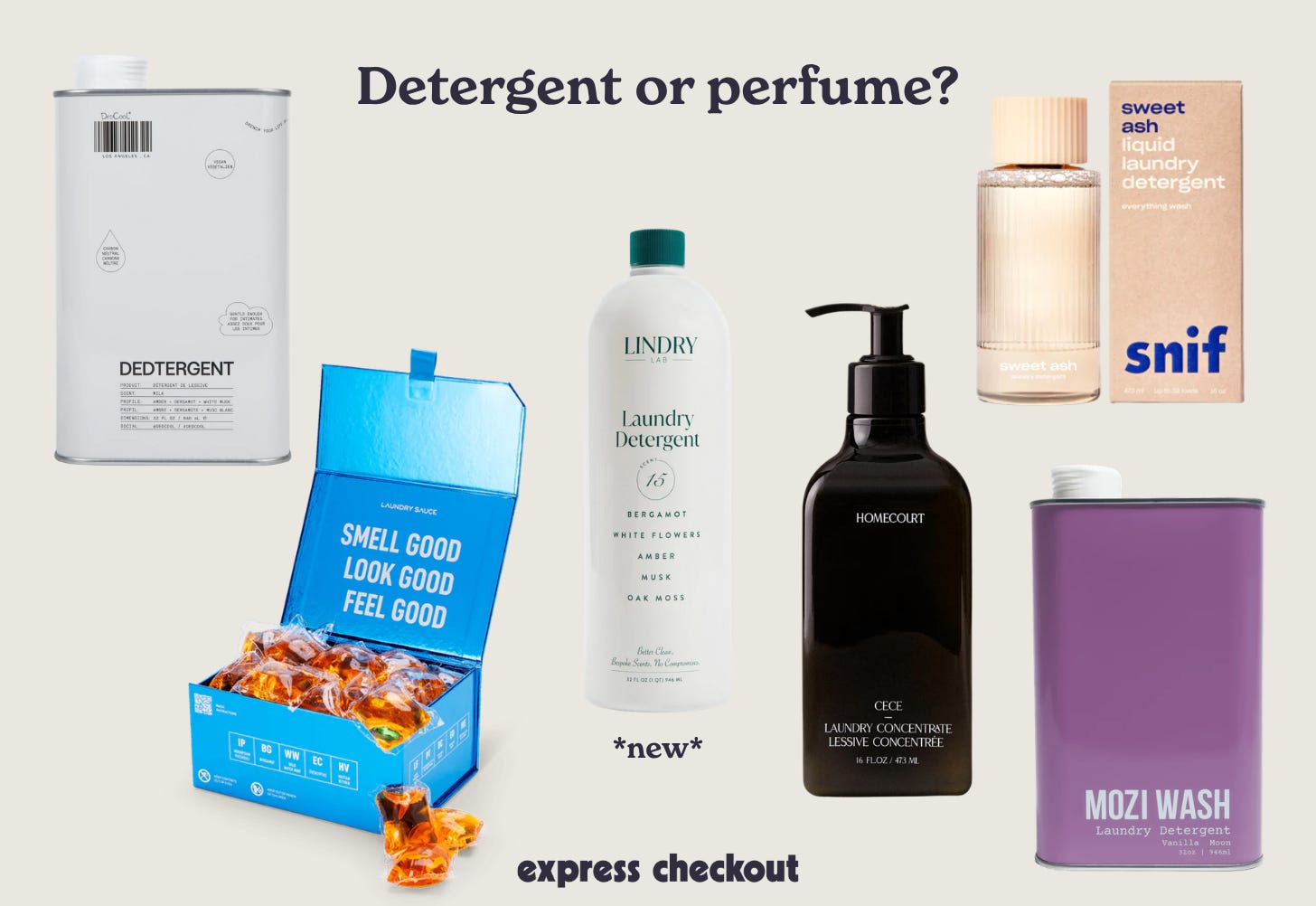
And there are so many converging trends fueling this: fragrance is booming, affordable luxury, skincare-level ingredient scrutiny, and the home as self-expression. We’ll do a full deep dive on this soon.
Speaking of functional fragrance. Maesa, a beauty incubator, has launched String Theory, a new functional fragrance brand built around Phero-Mimetic™ Technology—a pheromone-mimicking formula designed to “enhance confidence and attraction.”
The Nue Co. has been working this exact territory for years—its Functional Fragrance line includes Us Pheromone+, which leans on the same pheromone-mimicking premise alongside other “sensory supplement” SKUs marketed for stress, focus, and mood. String Theory is entering a category Nue Co. effectively built.
It’s also the natural extension of a broader pattern: every consumer category eventually gets the functional treatment. Soda did it, snacks did it, beauty did it… fragrance was always next, and pheromones—an ingredient story with built-in mythology and zero on-pack dose-checking—are an especially clean fit for the playbook.
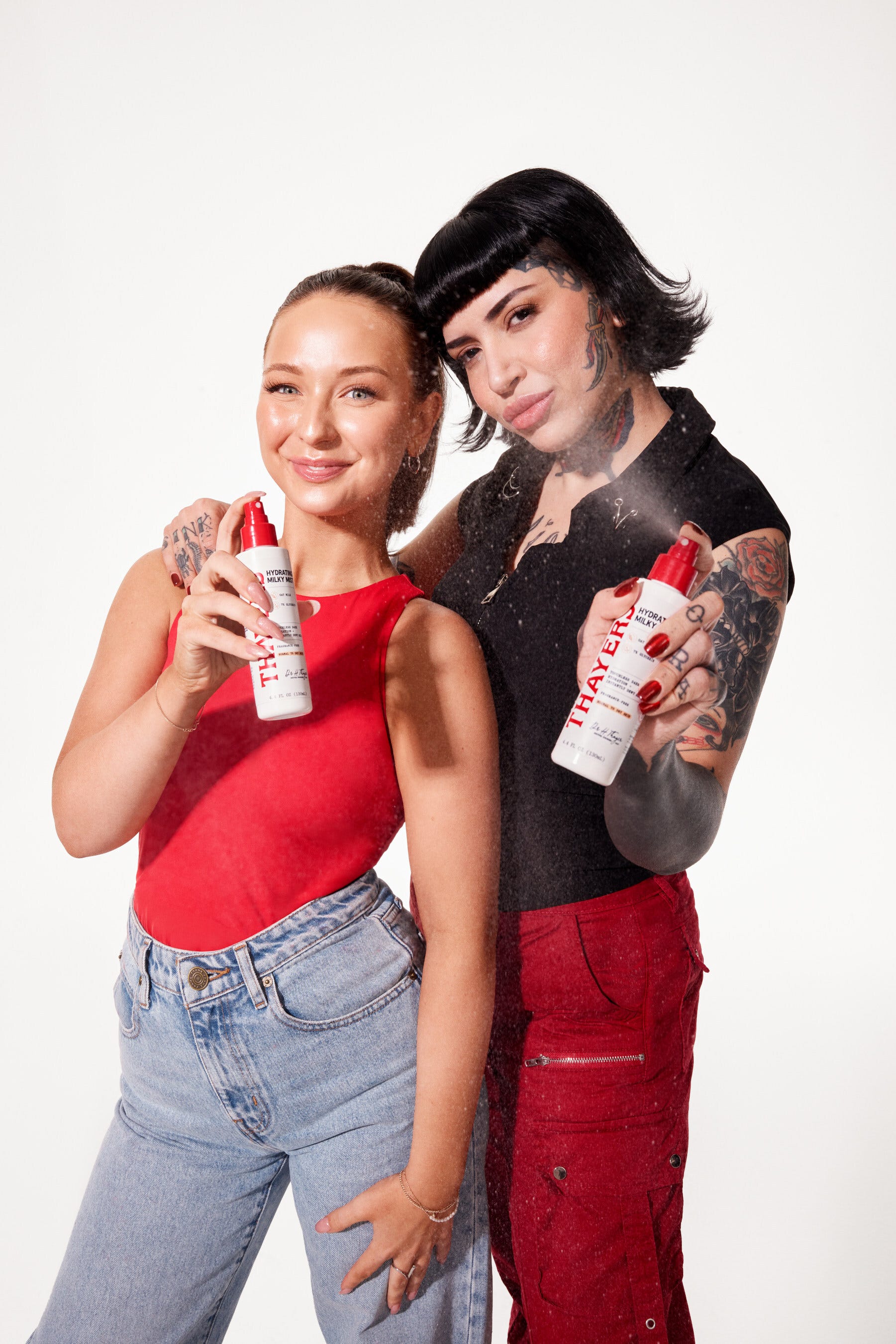
TikTok made them do it. Thayers launched a Hydrating Milky Mist after creators Nina Pool and Shelby Ann Bell went viral DIY-ing a sprayable version of the brand’s existing milky toner. The product quickly became Amazon’s No. 1 new beauty release within 24 hours of its product page going live.
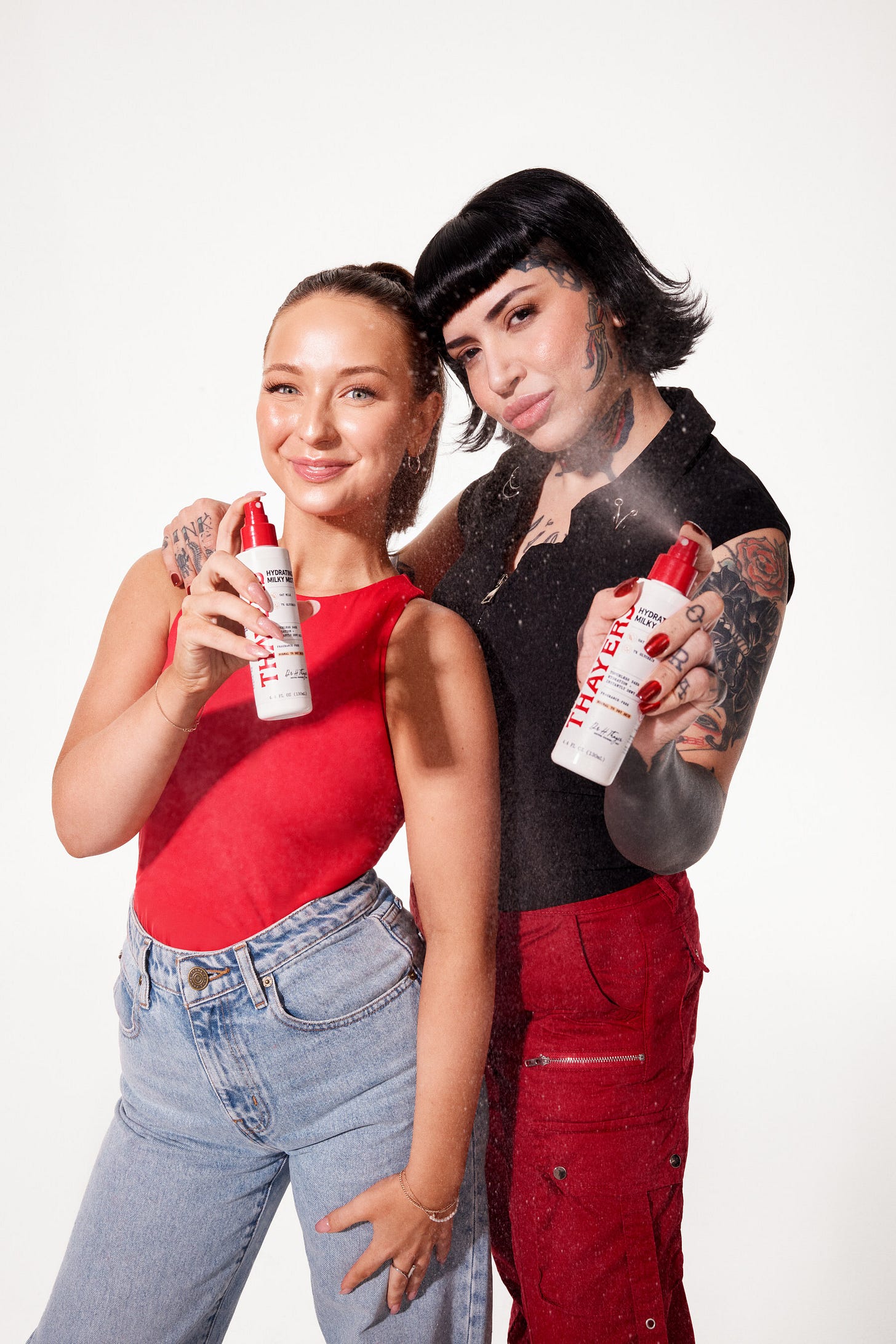
Shleby Ann Bell (Left) & Nina Pool (Right) Trend-spotting is one thing, but what was really cool here was how Thayers handled the creators behind the trend. Instead of just formulating the spray on its own, Thayers brought the two creators on as brand consultants, flew them in to the brand’s lab, and shot the campaign content with them. Crediting and compensating creators for their IP is rare, and a smart (and ethical!!) differentiator.
This is also a reminder: the most useful product research is happening in public!! Creators DIY-ing solutions to gaps in your line are essentially running free focus groups; the brands paying attention can compress R&D cycles dramatically. The Hydrating Milky Mist went from a viral DIY to Amazon’s No. 1 new beauty release—that’s not a product development timeline most legacy beauty brands could match without this kind of input.
Acne care has never looked this good. Experiment launched Continuum, a daily multi-clarifying breakout treatment formulated with dermatologist Angelo Landriscina, MD, FAAD, featuring encapsulated salicylic acid and azelaic acid.
eCommerce
Live shopping just got serious. Whatnot, the livestream shopping app, launched a direct Shopify integration, letting merchants sync products, inventory, and orders automatically to its platform. Beta users—around 30 businesses—generated more than $10 million in sales across nearly 20 categories in the past year.
With this partnership, live shopping is showing no signs of slowing down. It’s already reached an estimated $22 billion in sales across North America and Europe, with Whatnot alone commanding nearly 60% of that market share. On Whatnot alone sellers drove $8 billion in live sales (globally) in 2025 2x from the year prior.
Retail
Ulta and Sephora are on notice. Because Walmart is expanding its dedicated “Beauty Expert” store associate role to 425 U.S. locations by year-end, paired with a Beauty 2.0 redesign that moves the category to the front of the store.
This is yet another signal that Walmart is taking the store experience more seriously—and appealing to more than just the “budget-conscious” shopper.
The retailer is staying toe-to-toe with its mass competitor, Target, which recently announced its own deeper focus on beauty with an in-store “Beauty Studio” featuring prestige beauty brands.
Funding news
The Casamigos boys are back, this time sober. Crazy Mountain, a non-alcoholic beer brand co-founded by George Clooney, Rande Gerber, and Mike Meldman, raised $15 million in a Series Seed led by CAVU Consumer Partners, with participation from Coatue and Discovery Land Company.
With this fresh powder, alongside the team that built and sold Casamigos, and the former CEO of New Belgium, Steve Fechheimer, running the whole operation, this brand is poised for some significant growth over the coming years. And CAVU knows how to scale consumer brands—they backed Poppi, Bai, ONE Brands, and Vital Proteins, among many others.
But the competition is very real and coming from every direction.
Athletic Brewing built this category (and still owns it), it’s currently the best-selling NA craft beer brand in the U.S. with 52% market share and wide national distribution.
Celebrity brands are multiplying: Tom Holland’s BERO just secured PE backing at a valuation over $100 million. Easy Does It, co-founded by Erik Ellington—an influential skateboarder—just launched a Mexican lager. Charlie Sheen launched Wild AF Brewing in early 2026, and John Mulaney owns Years NA Beer as of October ‘25.
And the legacy brewers aren’t sitting out either: Coors just launched its first NA beer, and Guinness, Blue Moon, Heineken, Peroni, Stella Artois, Samuel Adams, and Corona all have NA options on shelf.
A 76er bets on clear protein + hydration. Wet Hydration raised $10M with NBA star Paul George joining as investor and brand partner, bringing total funding to $18M. The brand sells protein waters and electrolyte waters in slim cans, currently at Vitamin Shoppe and Walgreens.
(Side note: Absolutely wild that there are two brands in the hydration space called Wet Hydration and DryWater…)
Celebrity tequila will never die. Sazerac invested in Kendall Jenner’s 818 Tequila for an undisclosed sum, becoming the brand’s exclusive US sales and distribution partner.
They’re not the only celebrity tequila brand making moves. Dos Hombres just launched tequila and also raised $15M, Kevin Hart’s Gran Coramino Tequila is one of the fastest growing tequila brands selling 3.6 million bottles and generated $85 million in total sales in 2025, and the Rock’s Teremana Tequila is still seeing continued growth.
Tequila in general is also still growing, albeit slower than in previous years. While overall spirits sales are down, Tequila keeps rising. US spirit volumes fell to 1.4% to just under 60.4 million cases in 2025, with sales down 2.8% at $13.21 billion. Meanwhile, tequila volumes grew 2.2% leading to a 0.2% increase in sales to $2.51 billion.
If you haven’t yet, please subscribe, like, leave a comment, and share it! It helps us continue to bring you the most interesting news + nuance in consumer and retail every week.
Excited to see Boyd back in the laundry game !
Wow! So much amazing content and so much fun! 😎