



Hello hello!
Every Monday, we cover what’s in your cart and why it ended up there. The part we rarely get to, though, is the founder’s side of the story... like why Fly By Jing won’t make a cheaper chili crisp, even at Walmart’s scale.
That’s the beat for In Stock, Shopify’s Substack newsletter, which features founders willing to get honest about the decisions behind the business:
How did a cocoa shortage (and a fan’s dad) produce Mid-Day Squares’ bestseller?
How many rounds of testing went into the brownie behind Boarderie’s dessert board, which has sold out three times?
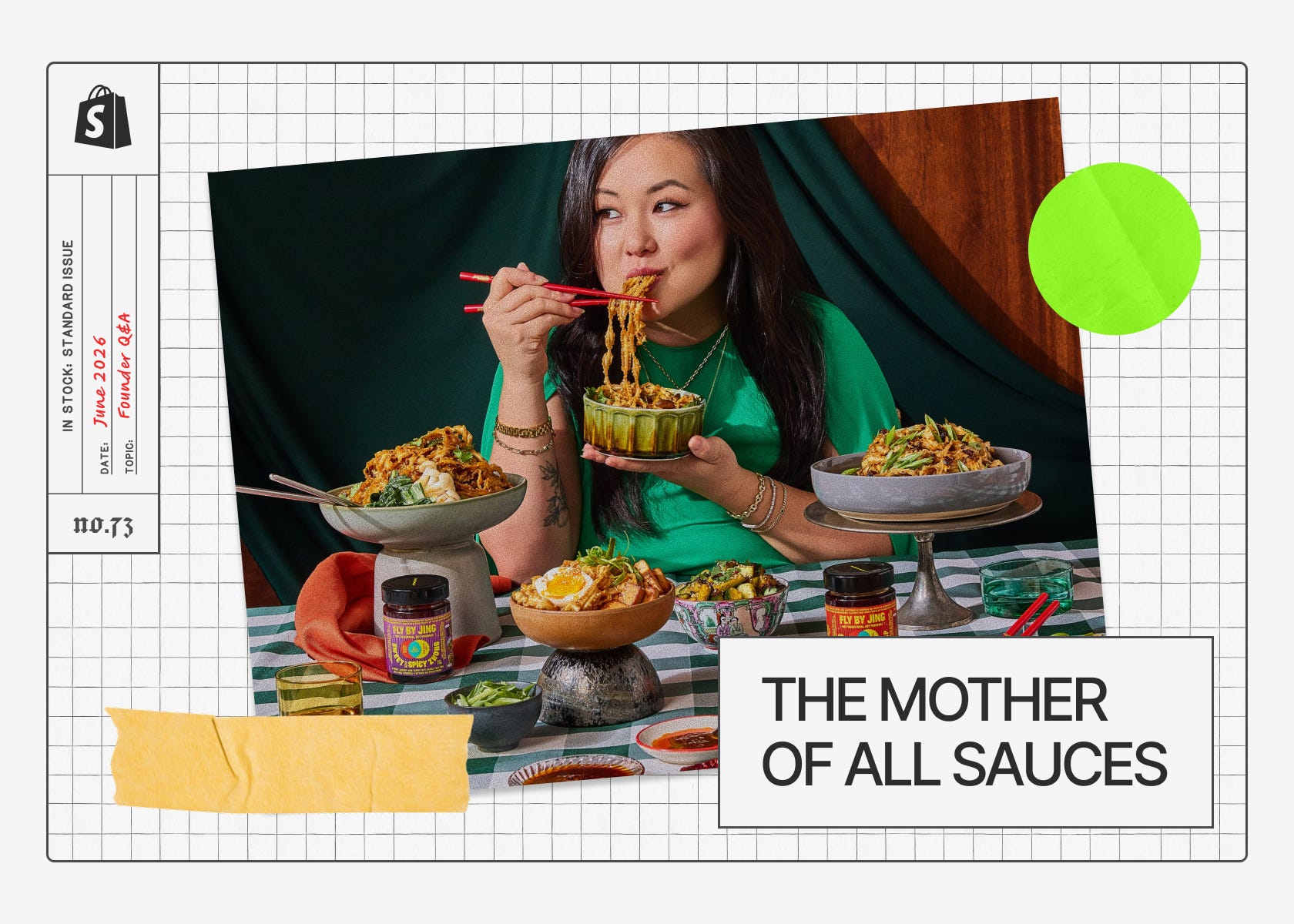
And since Shopify sees sales across millions of merchants, In Stock also reports what that data shows, like how fiber-advertised crackers up 323% on Shopify in five months.
Subscribe (for free!) for a regular peek behind the news and into the real stories from the front lines of entrepreneurship!
What what we’ve been thinking about…
2026 has been an incredible year for CPG exits, and the industry couldn’t be more thrilled. Inside the industry bubble, these deals answer years of arguments that CPG is a bad bet, and they’re giving founders something to aim for again.
But outside of the industry bubble, “acquisition” is far less of a beacon of hope… and more like a flashing warning sign.
Consumers love supporting their favorite emerging, better-for-you brand—until a strategic (or, god forbid, PE) comes knocking on its door. With one headline, that scrappy, mission-driven brand with a values-aligned founder devolves into the poster child of corporate greed with a capital-S Sellout at the helm.
This week, we’ve been wondering: when did “acquisition” become such a dirty word in CPG?
This week on the podcast, we dug into that very question, exploring what makes an acquisition “good” or “bad” or, more likely, somewhere in the messy middle. The discussion was fascinating, and sparked additional conversation with brand founders.
Two of our favorite independent, buzzy brand founders shared what they thought of this phenomenon, and how it impacts the way they view the potential of an acquisition of their own brands. →
Becca Millstein, founder of Fishwife, is convinced that the internet’s representation of consumer pushback is far off from its reality:
“All these people commenting on the acquisition social posts, are they actually consumers of the brand?nIt’s hard for me to imagine someone who buys Purely Elizabeth granola every week stopping because of the nebulous idea of what it means for Purely to be acquired.
My hunch is most of the commenters are just internet naysayers looking for something to be mad about.”
Troy Bonde, co-founder of Sauz, saw things differently than Becca:
“[The consumer sentiment around acquisitions], in many cases, is warranted. I’ve of course seen product degradation in the market as a result of an acquisition.
My hope is that it only continues to drive founders and strategics to understand that trust takes years and years to build, and one wrong move can be hugely destructive to brand affinity.
I don’t spend much time thinking about exits, but if I were to, it would drive me to be sure that the common denominator in the transaction is trust with our shopper.”
We’re working on a longer piece on this topic, and would love to include your POV. Check out the pod from this week, and email us at hello@expresscheckout.co with your thoughts!
CPG & Consumer Goods

Does every founder have to be an influencer? In Stock, Shopify’s Substack newsletter, answers that question in its latest piece, where HEYDOH founder Clarissa interviews founders from brands like Sourmilk, Biena Snacks, Fly By Jing, Pistakio, and Honey Dept. Subscribe for a regular peek behind the news and into the real stories from the front lines of entrepreneurship.*
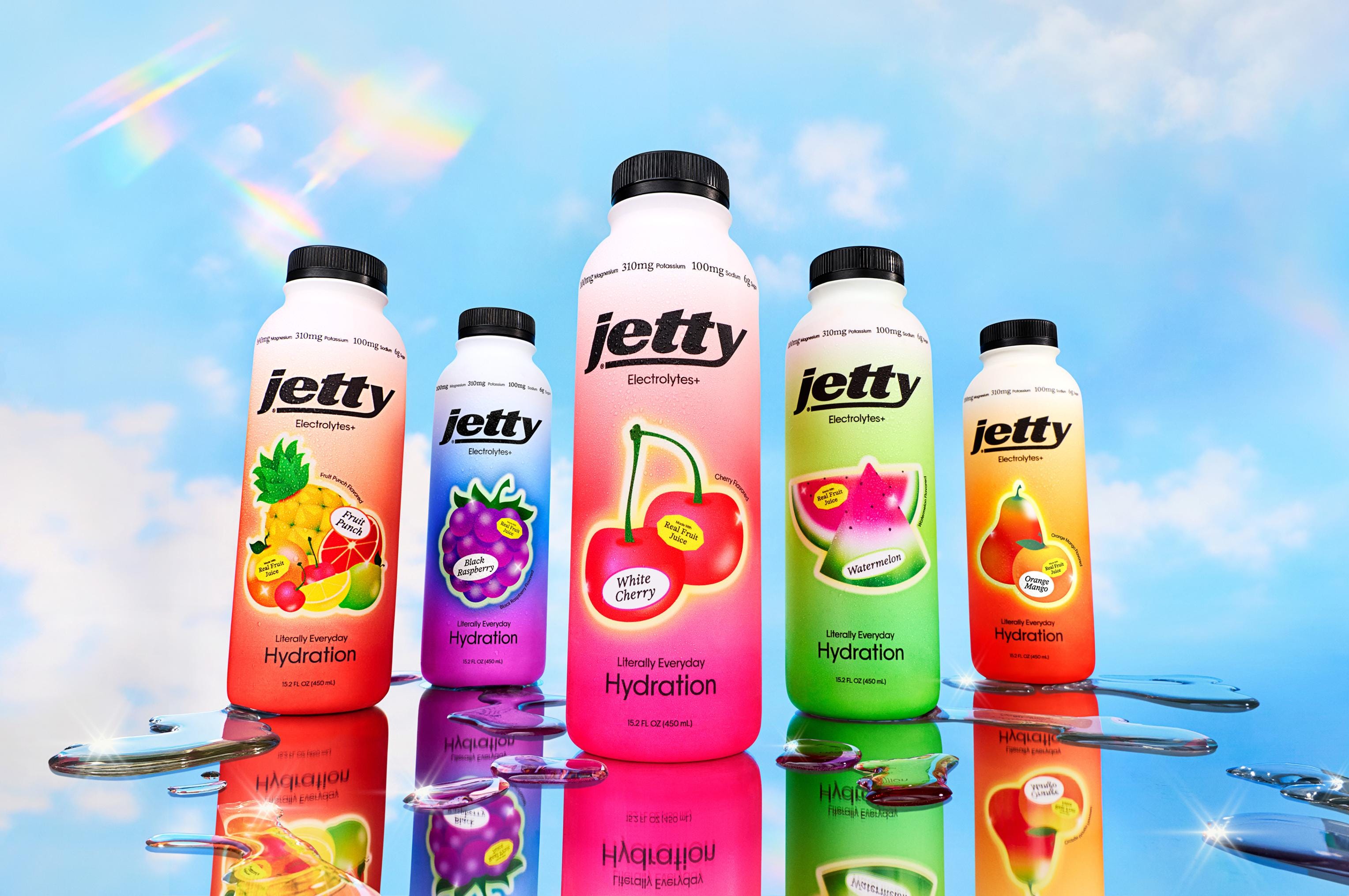
Thirsty for round two. After selling Poppi to PepsiCo for $1.95B in 2025, Allison and Stephen Ellsworth are launching Jetty, a self-funded hydration brand with bottled drinks ($2.49) and electrolyte powders. You can now find it in stores at Whole Foods and online at Amazon and Target. And the lead-up to this brand launch almost broke the internet:
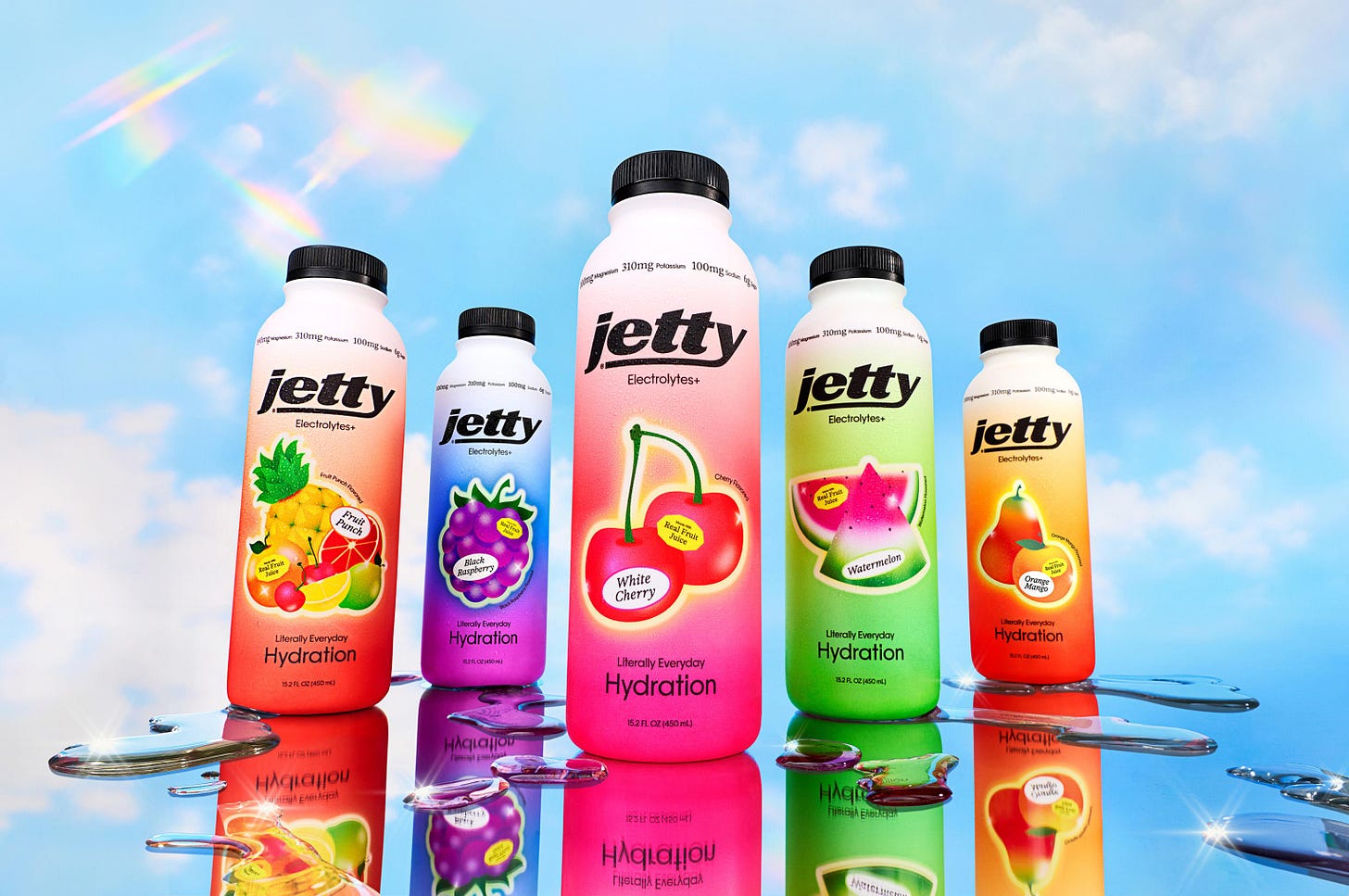
There’s been plenty of industry chatter about Jetty ever since the name was announced almost a full month ago. Allison strategically avoided identifying any category, and instead launched an IG with the handle @whatisjetty, attempting to manufacture speculation.
Trade press quickly clocked it was a hydration beverage (thanks to trademark filings), but Allison and team tried to keep up the intrigue for consumers with vague posts. The filings were confirmed ~10 days before the planned launch, when Jetty was spotted on shelf at Whole Foods Tribeca. It’s still unclear whether this was a planned leak or an early stock slip-up…
But the brand kept up its attempts to confuse consumers. It shared teaser images for Jetty-branded skincare products, even getting influencers to share these images. The internet became confused once again—was the Whole Foods sighting actually a decoy?
As of Friday, it’s been officially confirmed (again): Jetty is indeed a hydration beverage for “everyday hydration.” It’s the answer to Allison’s perceived gap in the market: there was no “sports drink for non-athletes” like her and her friends.
We’ll be talking about it all with Allison on the Express Checkout podcast that we’re recording TOMORROW! Reply with any questions or topics you’d like to hear us discuss with Allison!
David keeps on winning. A judge dismissed the antitrust case against David Protein over its control of EPG, the low-calorie fat replacer used in its bars and other products. The judge ruled that the plaintiffs failed to plausibly define the relevant market or allege that David’s conduct harmed competition.
Okay first, a translation: This is lawyer-speak for saying that the market wasn’t really defined by the plaintiffs. The plaintiffs said the market was “high-CFP (calories from protein) protein bars,” but the judge argued that “David bars are protein bars that are reasonably interchangeable with other protein bars,” meaning if a shopper couldn’t find David, they’d probably reach for something like a Barebell bar instead. And measured against all protein bars, David isn’t even close to a monopoly.
The case began after David acquired EPG maker Epogee in 2025 and stopped supplying the ingredient to several brands. OWN Your Hunger, Lighten Up Foods, and Defiant Foods alleged that the move shut out competition. Lighten Up Foods—a low-calorie sauce brand created by fitness content creator The Nutrition Narc— ended up settling its claims earlier this year and is now using the infamous EPG.
This isn’t the only legal win for David: a separate lawsuit alleging inaccurate calorie and fat labels was dropped earlier this year. We dug into the science behind the controversy back in March!
Plant-based meat is officially dead. Starbucks is discontinuing its Impossible Breakfast Sandwich this month, removing its only US menu item featuring plant-based meat. The sandwich first launched nationwide in 2020 and paired Impossible Sausage with egg and cheddar (so, no, it was never vegan). Its exit comes as Starbucks just added a braised short rib grilled cheese to the menu 🥴.
Plant-based meat has been struggling for years—just look at Impossible’s rival Beyond Meat. Its revenue fell 8.1% last quarter, even as margins improved. It’s trying to turn things around by branching into protein drinks, powders, and jerky. And it’s far from alone, the struggle bus is filled with dying or dead plant-based meat startups (many of whom have raised millions) who simply could never really find their footing.
Our take? The plant-based meat category was overhyped and poorly marketed from the very beginning. It was pitched as a planet-friendly food-tech breakthrough, but we think a lot of consumers assumed it was healthier, too. Then, when they saw the long ingredient lists and realized plant-based didn’t necessarily mean healthier, that promise fell apart—and so did all the excitement. Honestly, we’re not sure the mass-market demand was ever really there in the first place and it was all fundraising hype.
A bump in the road. Once Upon a Farm is voluntarily recalling all three flavors of its Tractor Wheels soft-baked bars over a potential choking hazard for toddlers. The company said the decision followed three consumer complaints and that no other products are currently affected. Once Upon a Farm shares sank 38% to $9.35 last Monday morning, and are now down 55% this year.
There is SO much trust that goes into children’s food and beverage products, and an incident like this for a kids brand often has more of a lasting impact than it does for products formulated for adults.
Last year, Gerber recalled and discontinued its “Soothe N Chew” teething sticks because the product could pose a potential choking hazard for babies and toddlers. While Gerber killed the product outright, Once Upon a Farm is reformulating Tractor Wheels and keeping the line. That says something about how a 100-year-old brand and a younger growth brand weigh the cost of walking away.
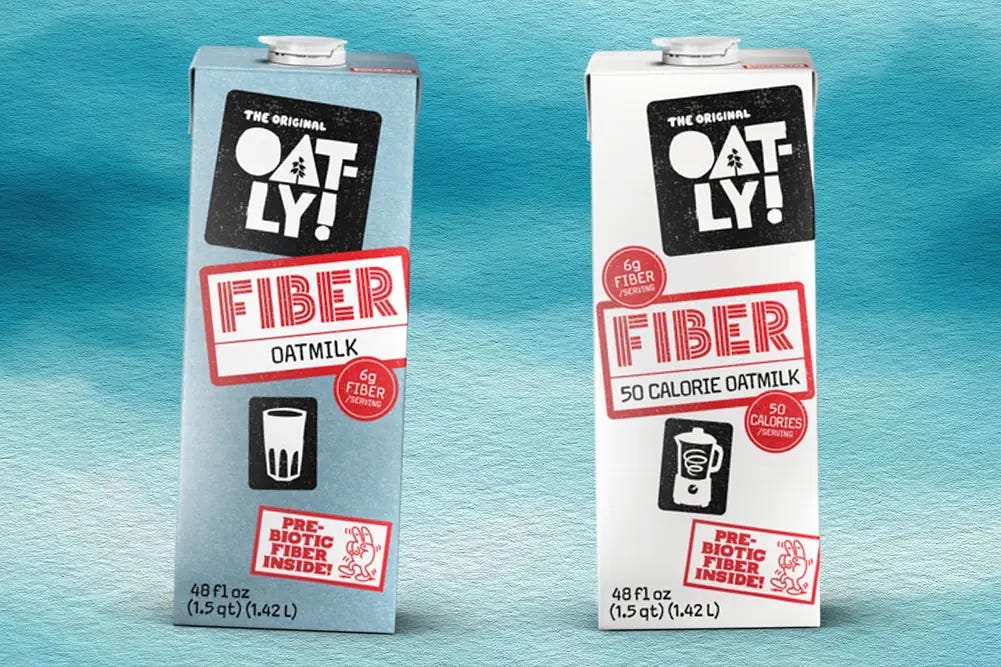
2027 is the year of fiber. Oatly is launching a new line of fiber oat milk (with 5-6g fiber per serving), rolling out in Europe by the end of 2026 and hitting US shelves in January 2027. The lineup includes options for shakes and coffee.
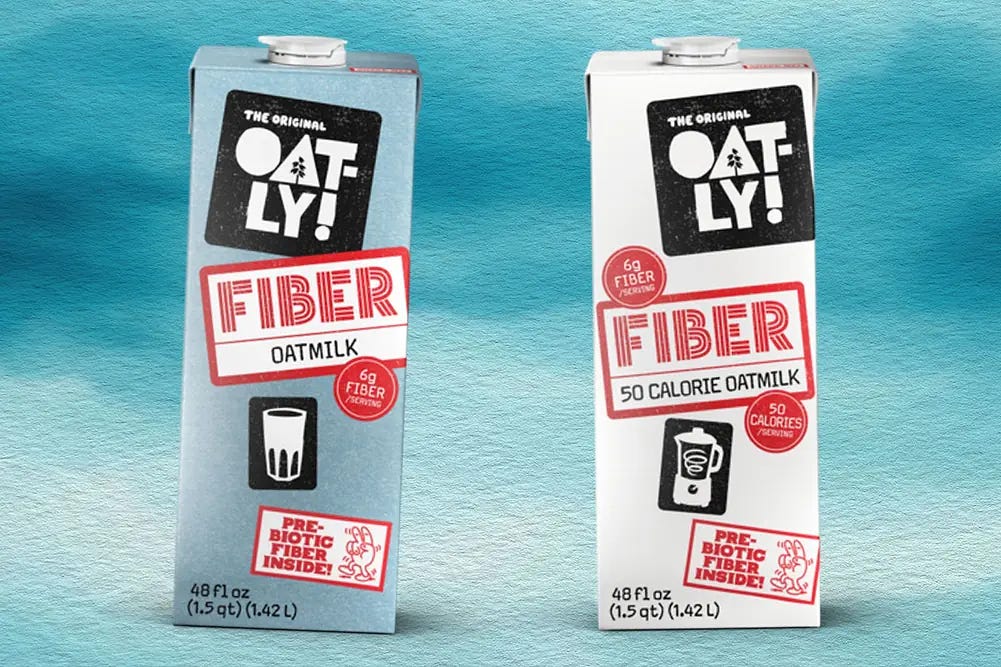
Intrigued by the new low-calorie SKU… Fiber has been a hot topic in CPG for a minute, but it’s finally breaking out of the industry bubble and catching the attention of everyday consumers. In other words, it’s no longer a “trend”; like protein, it’s just… everywhere. Big CPG is leaning in hard, adding a fiber twist (or callouts) to its existing brands rather than betting on new ones. PepsiCo has already made moves with fiber snacks and a prebiotic soda line, Raisin Bran took out a Super Bowl ad (a pretty massive indicator when a legacy cereal brand spends that kind of money), and Coke just rolled out prebiotic versions of Coke Zero, Sprite Zero, and Fresca.
I (Nate) reviewed the prebiotic Cokes, and the comments were full of people who seemed genuinely excited about more fiber. But will it work for these giants the way it might for a scrappy challenger brand? Maybe—but only if they nail the product. The taste and texture need to be the same as the OG, or as close as possible.
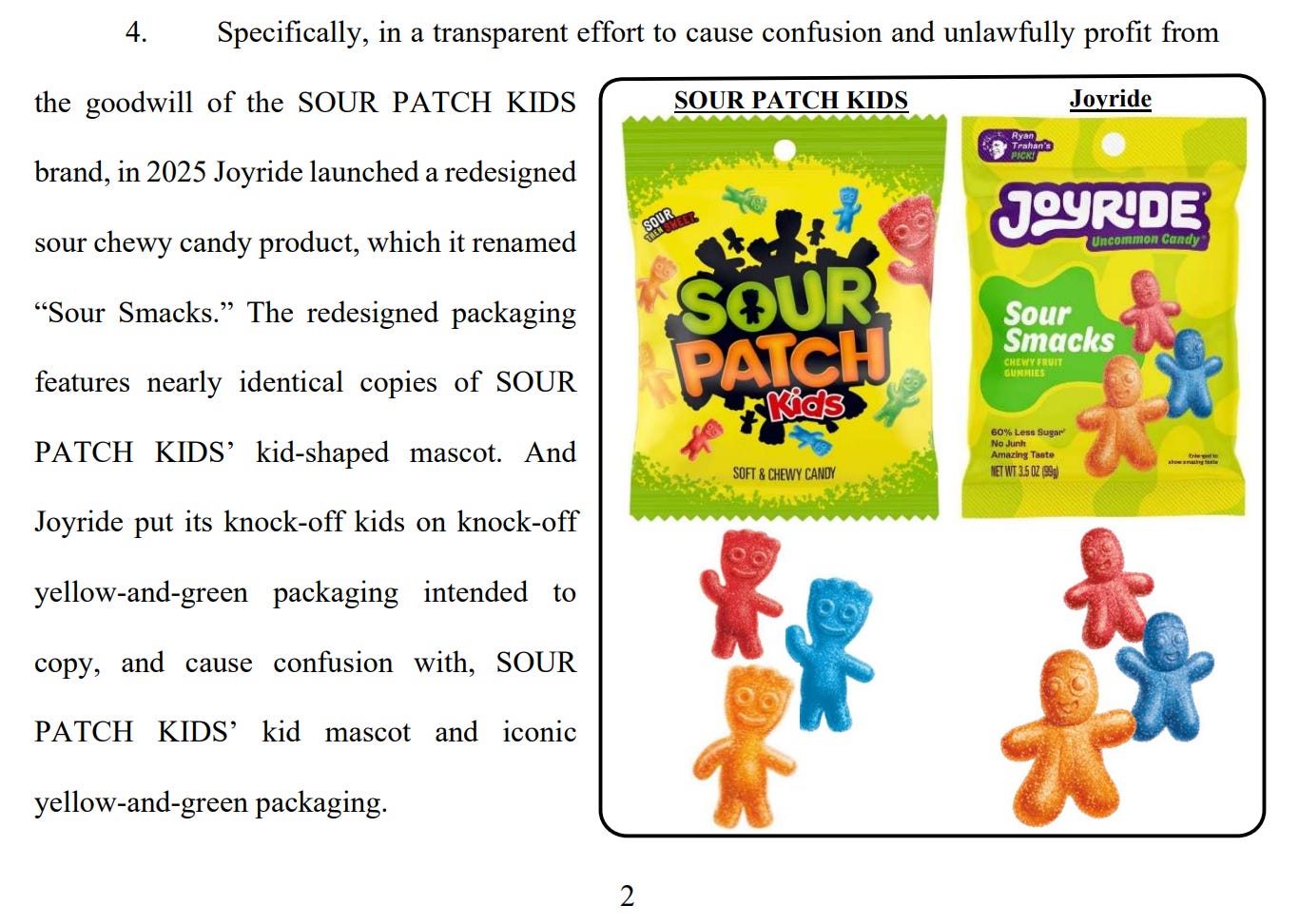
A sour patch for Joyride. Mondelēz is suing Joyride, the candy brand co-owned by YouTuber Ryan Trahan, alleging its Sour Smacks copy Sour Patch Kids’ gummy shapes and packaging (also yellow + green) can confuse shoppers. Mondelēz wants the alleged infringement stopped and is seeking damages.
Big CPG is getting more aggressive about lookalikes: In 2021, Hershey’s sent a cease-and-desist to Mid-Day Squares for the packaging of its peanut butter bar (too similar to Reese’s, it claimed). More recently, Smucker sued Gallant Tiger, Chubby Snacks, and Trader Joe’s over Uncrustables copycats, and Mondelēz pushed Aldi to change private label packaging resembling Oreo, Chips Ahoy! and others.
Many of these brands exist simply as a better-for-you-version-of-X, and rely on packaging and copy to communicate that “X.” Building a brand as the antithesis of another brand, it seems, is risky behavior. It either falls short on communicating its existence as an alternative, or too closely resembles the OG version, sparking legal action. Lest we forget what happened to Rebel Creamery…
SNAP restrictions are spreading. As of Nov. 1st, Montana, North Dakota, South Carolina and Virginia have begun restricting which foods and drinks shoppers can buy with their SNAP benefits. The rules vary slightly by state, but there’s no doubt this will impact CPG brands in the coming year
Montana: Candy, certain high-sugar beverages and energy drinks, and shelf-stable prepared desserts are off the list. Store-made bakery items are still eligible.
North Dakota: Restrictions cover candy, sweetened drinks and certain energy drinks. Protein, granola and cereal bars remain eligible.
South Carolina: Candy, energy drinks, sweetened beverages and regular soda are excluded; diet and zero-sugar sodas are still allowed.
Virginia: The focus is on carbonated sweetened drinks, including regular, diet and zero-sugar soda, plus carbonated energy drinks.
Baked by YOU. Baked by Melissa, the New York-based mini cupcake chain, is entering Target with its first at-home baking products. The exclusive lineup includes mini cupcake pans, liners, and mixes in three flavors: Christmas Tie-Dye, Marshmallow Hot Cocoa, and Red Velvet.
Baked by Melissa joins a small club of NYC bakeries and restaurants making their way into retail. Milk Bar got into grocery years ago (though that has basically gone extinct), Magnolia Bakery has brought its banana pudding into the frozen aisle and even onto select United flights. But so far, the restaurant-to-retail winners seem to be on the savory side: Momofuku, Carbone, Roberta’s, Katie’s Pizza & Pasta, Tacombi, and Via Carota, just to name a few.
This is such a smart move, and like some of the other restaurant-to-retail brands, we see this having a lot of potential. Melissa Ben-Ishay, the founder of Baked by Melissa, has grown a major following on social media where she shares simple recipes to make at home. It only makes sense to translate her brick-and-mortar bakery into a simple DIY offering, too.
Gummies for longer life? Because there is now a gummy for virtually every ailment and concern, Richard Laver, the founder behind Kate Farms and Lucky Energy, has launched IAN, a new longevity-focused wellness brand debuting in December. Its first product is a daily pack of eight gummies with 24 ingredients and 10g of fiber (woof, that is a LOT of fiber). IAN was named after Richard’s father, who died in a plane crash at age 45 (Richard survived that same crash, and it led him to be this serial entrepreneur).
The product makes a lot of promises: gut health, antioxidant defense, healthy aging, “cellular health,” and mental clarity. It basically sounds like if Gruns was launched in 2026—an absurd number of claims, highlighting a long ingredient list (which is only ever considered a positive thing in supplements), and the gummy snack pouch format (as opposed to the two-gummy serving size). We wrote about the “gummy-ification” of wellness earlier this year, and the category has only grown since then.
A second act, on pause. Fragrance brand The Maker, an extension of the Hudson, NY luxury hotel of the same name, is shutting down its online shop and wholesale business. Founders Lev Glazman and Alina Roytberg, who also founded skincare brand Fresh, are focusing on the hotel for now but haven’t ruled out bringing the fragrance brand back in the future.
The Maker launched in 2021 and quickly landed at Sephora, Goop, and Bluemercury. It received backing from True Beauty Ventures in 2024 (more on them below), and industry sources projected $2M–$5M in fragrance sales for 2026. But even with that retail presence and investment, the brand is pressing pause for the time being.
Retail
The skies are getting crowded. Walmart is expanding its drone delivery partnership with Zipline, adding 300 more sites nationwide over the coming years. The retailer says its drone program has already completed more than 2 million deliveries, with eligible orders arriving in as little as 30 minutes.
Walmart isn’t putting all its drones in one basket. It’s also working with Alphabet’s Wing, which plans to reach 270+ Walmart stores and just announced up to $125M in manufacturing investment over two years, including a Fort Worth drone factory. Meanwhile, Amazon announced plans in August to expand Prime Air to nearly 500 US cities and towns by the end of 2026. As we’ve written before, this is all part of the race to get shoppers what they want, when they want it, as quickly as possible.
Funding, Mergers, and Acquisitions
The acquisition ate the acquirer. Alani Nu, the brand Celsius bought for $1.8B in 2025, is now its biggest seller. Alani Nu brought in $410.1M in Q3, up 24%, while the Celsius brand fell 6% to $356.8M. Alani Nu leads for the year too, with $1.14B through nine months versus $1.09B for Celsius. Now, the company is splitting into three brand-led business units (Celsius, Alani Nu, and Rockstar Energy & Emerging Growth), each with its own president reporting to CEO John Fieldly.
Celsius admitted in August that it pushed Celsius-branded innovation too far back while it absorbed Alani Nu and Rockstar and waited for better shelf space to roll out. Brand sales took the hit, which makes the restructure feel partly like a fix for a self-inflicted wound…
Time for a coffee break. Kraft Heinz announced it’s selling its North American coffee business to private equity firm One Rock Capital Partners for $650M. The deal includes brands such as Maxwell House, Gevalia, and five other brands. Kraft Heinz will retain a 30% stake, and the deal is expected to close in mid-2027.
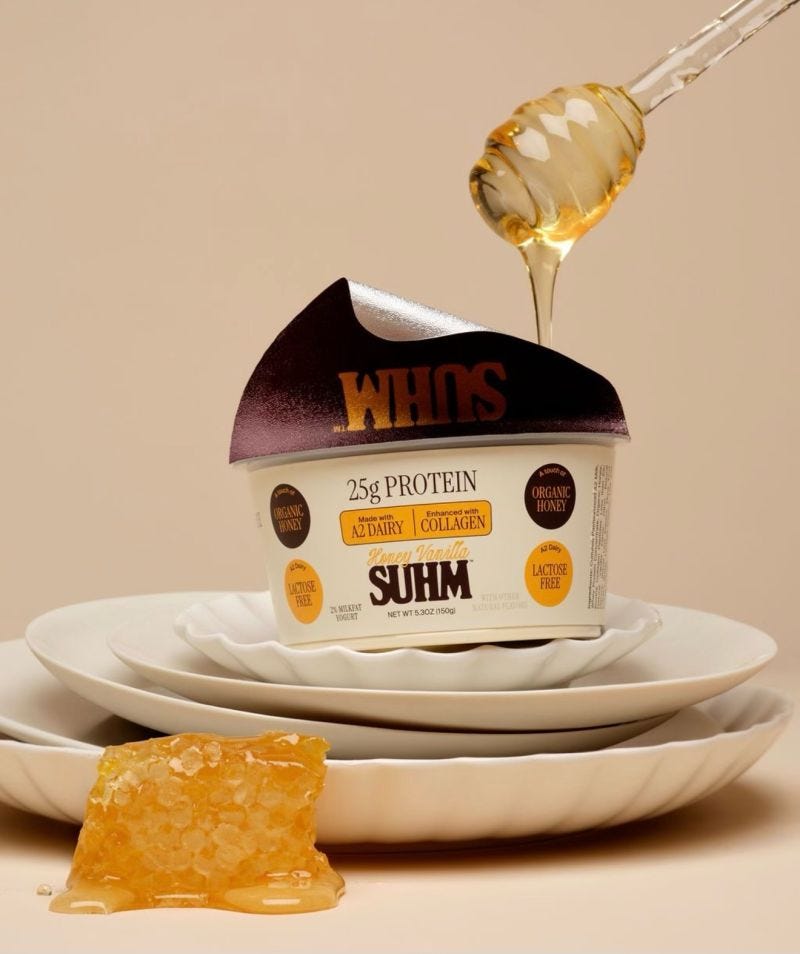
Yogurt is having a moment. Los Angeles-based yogurt brand Suhm raised $1.8M in pre-seed funding ahead of its SoCal retail launch this November. Each cup reportedly has 25g of protein and is made with A2 milk, honey, and collagen. Sweetgreen co-founders Jonathan Neman and Nicolas Jammet participated in the round and are joining as founding advisors.
Yogurt’s been on a run (shoutout protein craze). Per Circana, yogurt sales rose 11.6% from July 2025 to July 2026, reaching $13.6 billion, and challengers are piling in. Just look at the incredibly buzzy, founder-led brand Sourmilk, a Greek yogurt that emphasizes probiotics (because apparently, most yogurts don’t have enough live cultures to actually impact the gut). Sourmilk says it’s seen velocities of 50–100 units per week with a single SKU across 35+ NYC doors since entering retail in November 2025 (company-reported). Another major category disruptor is Painterland Sisters, the organic skyr brand with a female-farmer-founder story which sold its first cup in 2022 and is now in about 8,000 stores nationwide, including 500 Target doors.
What’s interesting about Suhm in particular is its unique combo of callouts. 25g of protein in yogurt isn’t anything too crazy these days, but it typically comes from brands like Oikos or Chobani, which appeal less to the premium shopper. Suhm, with its added collagen—separate from its 25g of complete protein from my (Jenna’s) understanding—smidge of honey, and luxe packaging, presents a premium yogurt for the macro-conscious.
A2 is Suhm’s differentiator to watch. A2 milk comes from cows bred specifically to produce only the A2 protein; conventional milk has both A1 and A2, and the A1 is what often makes dairy hard to digest—so A2 dairy is a smidge easier on tummies (helpful for those of us who accidentally made ourselves semi lactose intolerant through a years-long plant-based milk affair…). And A2 is finally reaching the masses: SPINS data shows A2 dollar sales up 14.7% in 2024, while refrigerated plant-based milk fell 4.9%. Alec’s Ice Cream built its whole brand on it: the ice cream brand uses premium A2 milk plus probiotics for “gut-healthy” ice cream.
Haagen-Dazs on the chopping block. General Mills is reportedly weighing a separation of its Häagen-Dazs business outside North America, which could end in a sale. This comes after a sales drop: net sales fell 5% to $18.4B in the fiscal year that ended in May, and organic sales dropped 2%.
Häagen-Dazs is already a child of joint custody: In North America, the brand belongs to Froneri, the ice cream company Nestlé and private equity firm PAI Partners launched as a 50/50 joint venture in 2016. Nestlé moved its US ice cream business (Häagen-Dazs included) into Froneri in 2019, and the trademark is licensed royalty-free in the US and Canada. Froneri is the name being floated as a buyer, which would put both halves of the brand with the same company.
This isn’t the first time we’ve seen ice cream get the boot by a strategic—at the end of last year, Unilever spun off its ice cream business (The Magnum Company). As we wrote last year when Ferrero scooped WK Kellogg, countless CPG giants have been restructuring their portfolios over the past few years as they get crushed from all sides: private-label, emerging brands, and premiumization.
A fresh round for a clean lager. Fathers, a California-based beer brand, announced $2 million fundraising round that includes chef and FitCrunch co-founder Robert Irvine, who’s joining as a strategic partner. The brand says it’s in more than 800 retail locations across California, Pennsylvania, and New Jersey, including Trader Joe’s, Erewhon, and Costco.
We asked co-founder and president Conor Begley about the difference between “craft beer” and this emerging era of “new beer” (which he more identifies with), and he said it was the business model: Craft breweries were built around owning production and launching lots of SKUs, forcing brands to choose between driving people to their own taprooms or to Costco, and to make production bets years in advance. It’s why so much of craft is consolidating now: breweries overbuilt during the boom and are “now have excess capacity which is lost cash,” he told us.
“If you look at the largest beer brands in the world, how many SKUs do they have? Corona, Stella, Modelo, Coors, Heineken, Guinness, Garage Beer. Every single one was built off of one or two monster SKUs,” he told us.
After 18 months building infrastructure, Fathers is “in the pallet shipping and depletion business.” The plan is liquid to lips (sampling, charity events, on-premise, and “all of our mom’s Christmas parties”) plus social, the channel Garage Beer used to build its brand.
A brewery buyout. Sazerac, the owner iconic brands like Fireball, BuzzBallz, and Buffalo Trace, acquired Full Sail Brewing, an Oregon craft brewery that’s been around since 1987. The deal includes its production facilities and brand assets, but Sazerac doesn’t plan to make or distribute Full Sail beer long term.
So why buy a brewery then? Sazerac is scaling up its production capacity as it builds out its ready-to-drink empire. After buying BuzzBallz in 2024, it acquired Dirty Shirley and Au Vodka and took a sizable stake in canned margarita brand SipMargs this year. Full Sail’s production and packaging operation could help support that growing portfolio. As friend of the newsletter and beer aficionado Doug Veliky points out, Full Sail was a fixture in Hood River and helped launch the careers of other Pacific Northwest brewery founders. The brewery was once employee-owned before selling to private equity in 2015, and it’s been doing contract production for years. Its facility is also licensed to make spirit-based RTDs, so this acquisition doesn’t feel that random at the end of the day.
Big moves in big olive oil. Deoleo, the company behind Bertolli, Carapelli, and Carbonell olive oils, has agreed to sell to Spanish olive oil producer Acesur and cooperative Dcoop. The proposed deal values Deoleo at €520 million, including debt, and would bring the company back under Spanish ownership.

If you haven’t yet, please subscribe, like, leave a comment, and share! It helps us continue to bring you the most interesting news + nuance in consumer and retail every week.