



Hello hello!
Tuesday newsletter coming at ya after we both took off for the Jewish holiday yesterday. Enjoy this day-late send :)
Crazy fact of the week: for the average food or bev brand, a dollar of wholesale sales translates to just ~$0.81 in the bank (after trade, promos, and deductions).
Roughly a fifth of every gross wholesale dollar never even arrives. Amazon keeps the most ($0.93); wholesale keeps the least.
This data comes from Drivepoint’s new Food & Beverage Brand Benchmark, built from the reconciled P&Ls and order-level cohorts of food, beverage, and ingestible brands, with DTC, Amazon, and wholesale kept separate. A few more sneak peeks of the gold mine of data in this report:
$56 to win a DTC customer, breakeven at the one-year mark, and median LTV:CAC at day 360 is 1.02x.
Amazon customers cost $16 and pay back 2.38x.... before merchant fees and fulfillment take roughly a quarter of sales.
The pool overall: 66% gross margin, 1.8% EBITDA margin, 54% growth. Most brands are running near breakeven and buying growth on purpose!!
91 days of inventory, a 39-day cash conversion cycle. Food brands don’t usually die from a bad product. They die from working capital.
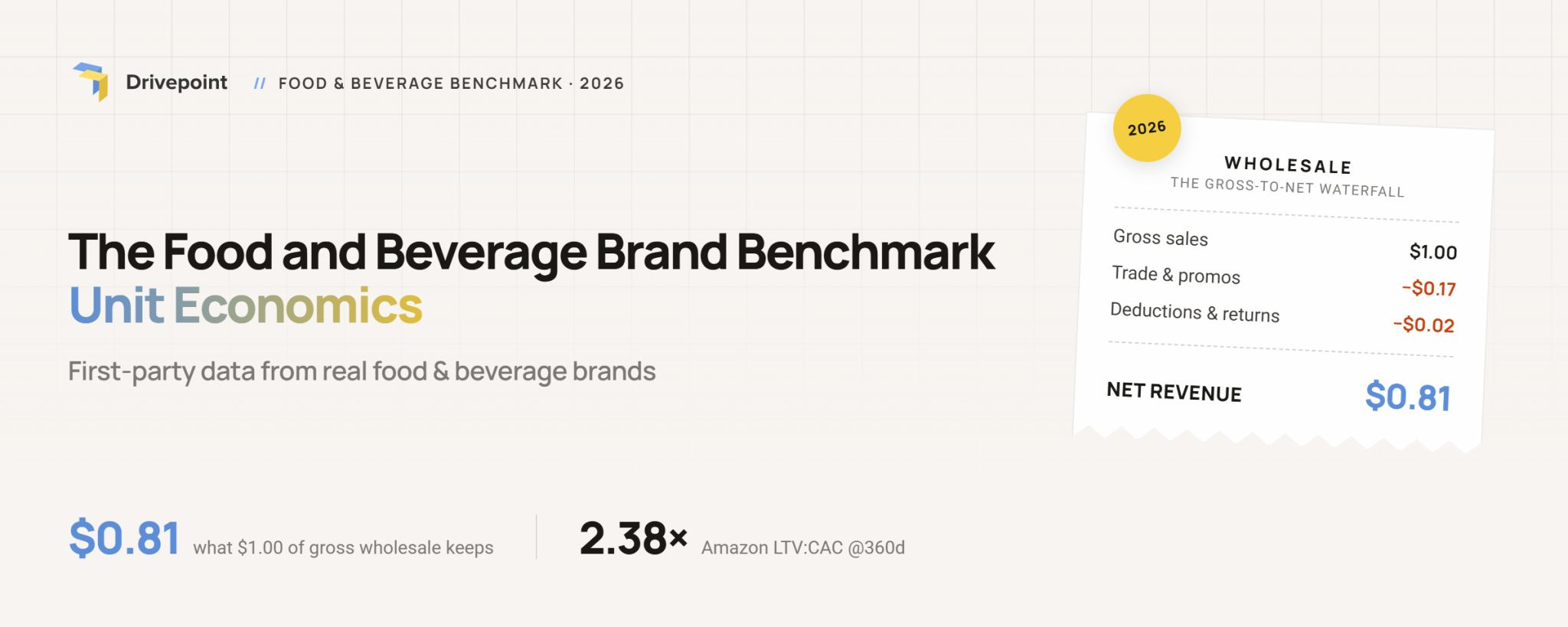
The guide closes with five numbers to pull from your own books this week, with the quartile thresholds to score yourself against.
Download the free Food & Beverage Benchmark here!
News From the Week
Last week, another premium, better-for-you brand launched straight into Target—adding to the growing list of brands bypassing the natural channel.
In today’s slightly different deep dive, we’re sharing an interview with the brains behind that brand, then digging into our thesis around this strategy.
Let’s get into it →
Interview with Mark Ramadan, Co-founder of Riff
Every “convenience” meal brand of the last decade has optimized for one thing: getting you further from the stove.
Riff is a new meal kit from Mark Ramadan (Sir Kensington’s, Hu) and Daniel Humm (Eleven Madison Park) that’s betting the opposite—that the 15 minutes of actually cooking is the part people want back.
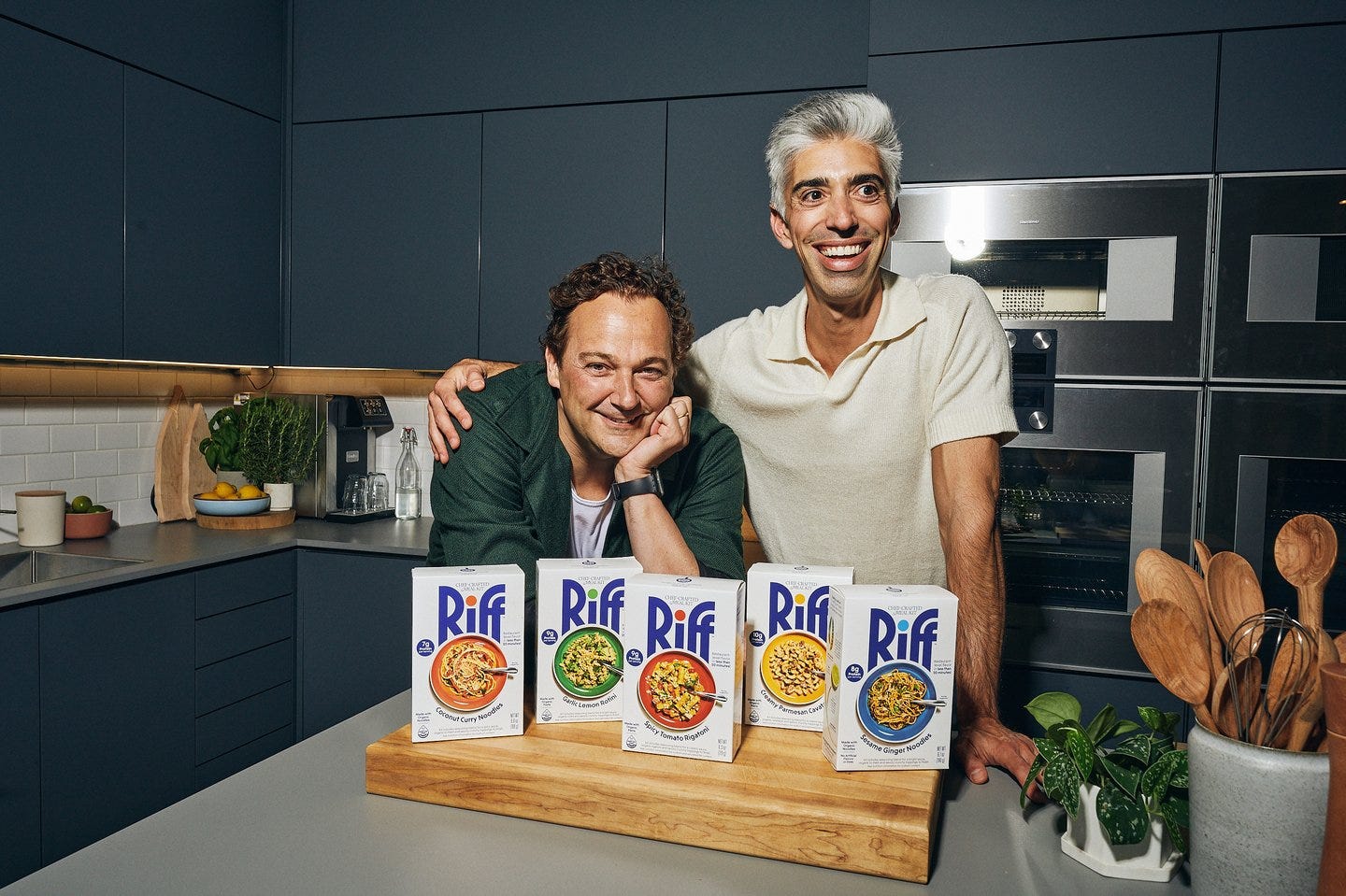
We (virtually) sat down with Mark to talk about why he built a meal kit instead of a heat-and-eat, what two very different pantry categories taught him about standing out, and why Target, not Whole Foods, got the first call.
On designing for both standalone eating and customization:
The small idea for Riff is to help people make dinner; the big idea is to bring joy back into the kitchen. Riff is delicious straight out of the box, but the real opportunity is helping people feel confident experimenting with veggies, proteins, herbs, or whatever is in the fridge. Testing recipes as both standalone products and bases for customization certainly added complexity.
The baseline question for us was––can we stand behind this SKU as-is, and does it become even more restaurant-quality, even more exciting, when just a few simple ingredients are added? It’s easy for something to feel incredible if you add expensive inclusions at home (fresh grated parmigiano reggiano, for example), but our goal was for it to feel just as special with ingredients you could buy anywhere, anytime (like broccoli), so that was our focus. In practice, that meant designing a simple, standard preparation system rather than focusing on any single combination.
On choosing the format itself (inclusions optional, “riffing” encouraged):
It was a mix of data and intuition. Data shows people are cooking at home more than at any time since 2012 (over 80% of meals), but they’re also exhausted after work, budget-conscious, and overwhelmed by endless recipe content.
Intuitively, we knew that weeknight “what’s for dinner?” stress all too well. We craved an “in-between” option: not an hour-long, fully-from-scratch meal, but not expensive delivery or plastic microwave meals either. We made Riff for how people actually want to cook—providing structure and inspiration while leaving room for creativity based on what’s in the fridge.
On choosing Target as the first retail partner:
Target has always been on the side of innovation, and this has been especially true in food over the past several years. Though my experience with Sir Kensington’s and Hu has been that the natural channel typically comes first, in the case of Riff, we wanted to create something that had mainstream appeal and affordability from day one. We feel like the question of dinner is a big one, a common one, and we couldn’t think of a partner better able to deliver on that opportunity than Target.
This “day-one mainstream” bet is becoming increasingly common, and we think it could be the new trajectory of premium, better-for-you CPG brands: bypass the natural channel entirely, and launch direct-to-mass-market.
And it seems that, among the new-age brands going straight to the Targets and Walmarts, many are structured similarly: celebrity co-founded with a CPG vet, accessibly-priced, relatively simple + non-polarizing packaging.
Some recent examples:
Earlier this summer, we broke down Glen Powell’s condiment brand, Smash Kitchen, which debuted in Walmart with its entire product assortment priced under $5 to compete head-on with Kraft-Heinz rather than court the natural aisle first—and is on track to hit $100M in sales this year.
Co-founder Sameer Mehta (who cut his teeth in DTC with Casper and the natural channel with Honest Company) has said getting the price point competitive with the biggest incumbents was central to the strategy from day one, just like what Ramadan is describing with Target.
HallPass, the new candy brand from Peter Rahal (okay this one isn’t a celeb, but Rahal is basically a CPG celebrity from RXBar and David) and Michael Tierney (formerly of Stuffed Puffs), similarly launched nationwide at Walmart. It’s priced alongside classic candy brands, which is unusual for better-for-you confection.
cadootz! is a creator-led version going through Target. Rachel Mansfield (influencer + now cookbook author) launched her kids’ cracker brand nationwide at Target in June as its first time in stores, following a DTC debut whose first production run sold out in under two hours in January. The difference is that it tested DTC briefly first, but it still went straight to a mass retailer and skipped natural.
Bero, the premium non-alcoholic beer brand co-founded by Tom Holland and John Herman, formerly the president of Nutrabolt, launched online-only in late 2024, and its first retail step was a nationwide Target launch.
For ~15 years, the standard path for a BFY brand was natural and specialty first, then mass. But now, BFY stopped being a niche, mass retailers are explicitly asking for it, and the founders who know the natural-to-mass path best are the ones who are skipping it in their second go-around.
The risk in the mass-first strategy is that it doesn’t leave much room for error. While a brand that isn’t flying off shelves in specialty can stealthily fix itself, a brand in 4,000 Walmart doors gets delisted publicly. That’s why this model works best for founders with a track record—but we’re curious to see if first-time founders start attempting this track.
CPG & Consumer Goods
The Swedish candy boom is here.
Sweden’s most-bought car is now at Target, and we’re only kind of kidding here… Cloetta Group, the 164-year-old Swedish confectionery company, launched its Ahlgrens bilar candy car brand exclusively at Target stores nationwide. The car-shaped foam candy has been a Swedish staple since 1953 and comes in four varieties including Original, Sour, Fruity Duo, and Sour & Fruity. Cloetta says the brand sells ~2.6 billion candy cars every year in Sweden alone.

And in the same week, BonBon launched its two Moomin-branded varieties in more than 1,900 Target stores nationwide for $4.99 a bag. The rollout marks a major leap from niche specialty treat to mass-market category
The past few years have made one thing pretty clear: American candy does not cut it for consumers anymore. There has been a huge rush of Swedish and Swedish-adjacent candy, all building up for this moment.
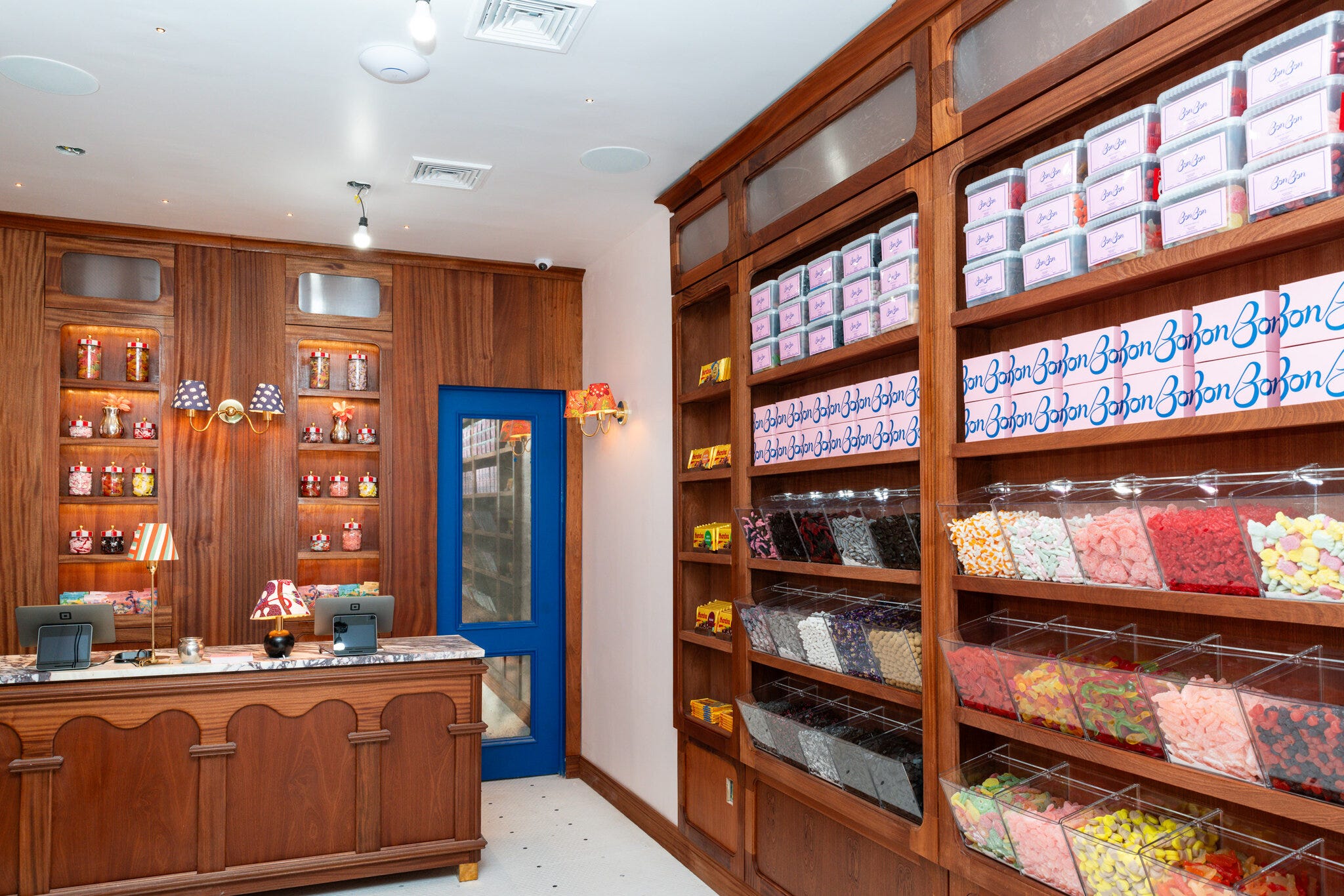
The story actually begins in 2010, when Sockerbit, a pick-and-mix Swedish candy shop founded by a Swedish-American couple, opened in the West Village—years before it was a trend. But BonBon, founded in 2017 on the Lower East Side, was the real catalyst for the viral Swedish candy takeover. Rather than importing and reselling Swedish candy like Sockerbit, BonBon built original, Swedish-inspired products and invested heavily in design and a cohesive brand world. It was the perfect storefront for the social media era, and blossomed from a retailer into a beloved brand.
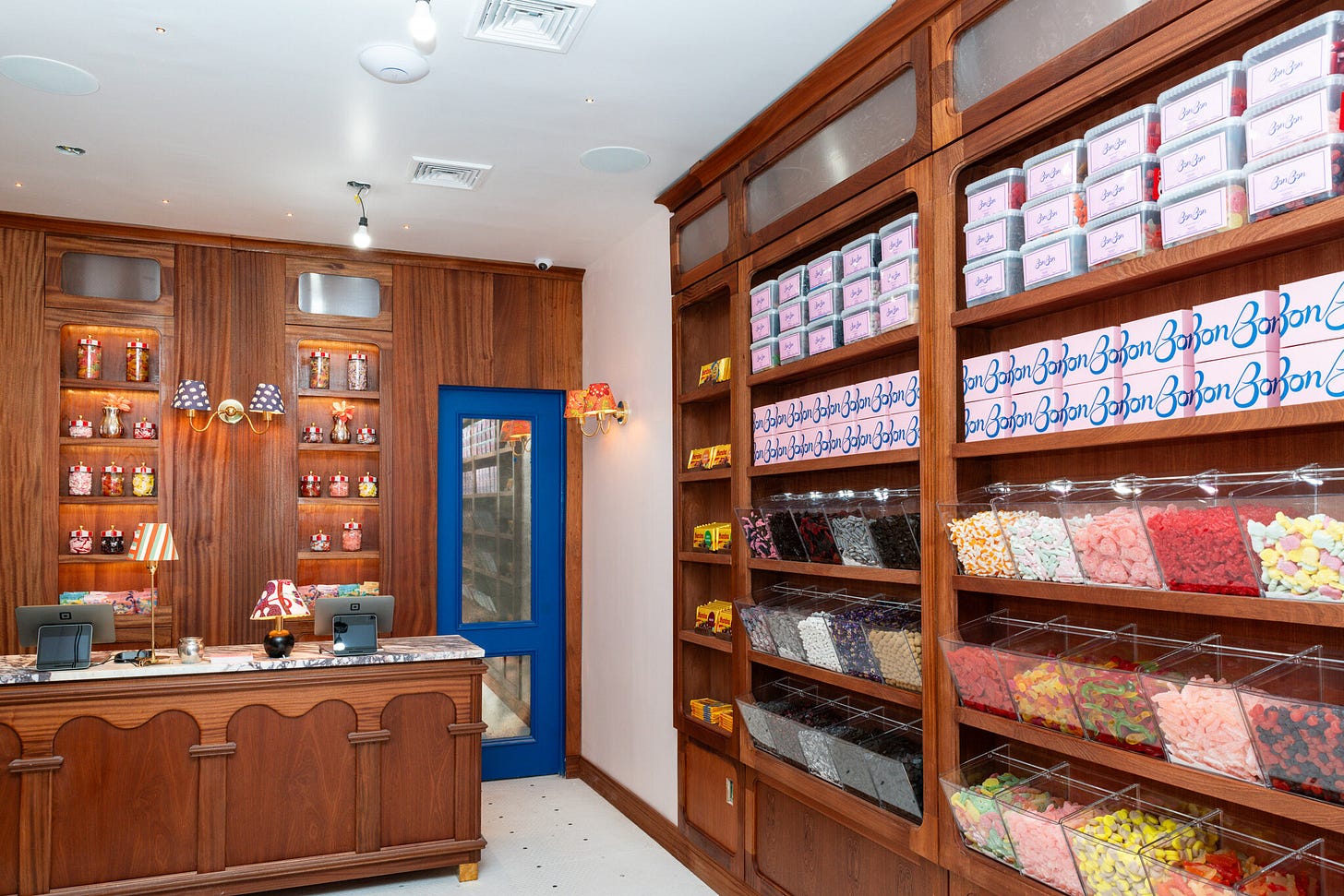
From there, the pick-and-mix format multiplied—Lil Sweet Treat, Candor, and others opened in its wake, offering the experiential shopping moment of choosing your own sweets. And once shoppers expect a format in-store, grocery follows, because it always does.
Bubs went from zero US presence to 60,000 retail stores in twelve months. Katjes has been having its moment in the sun, too, and recently named TikTok comedian Jake Shane its chief creative officer and launched Sourpuss—an octopus-shaped sour gummy named for his TikTok handle—into 1,200 Target stores.
And Funday—Australian, not Swedish, but featuring the same foam-on-gummy texture play—hit $100M in sales in five years and just landed 1,300 Target stores.
Even Smart Sweets, a brand with zero Swedish DNA, launched its first-ever foam candy this year (and it’s SO GOOD)—because the texture itself has become the trend, independent of the country of origin that popularized it.
This trend really shapeshifted from being more about experiential retail into being more about the product itself. The product was introduced into the US at the exact right time in wellness + food culture history: a bouncy, foam-forward texture American candy never had, sour profiles built for a generation that treats sour as a flex, and clean-label positioning (no dyes, no high-fructose corn syrup, natural colors) that reads as healthier even when the sugar content mostly isn’t.
Add this to the growing list of things that didn’t need to exist: C4 Energy just launched a beer-flavored energy drink, All Hopped Up, with its classic 200 mg of caffeine and added vitamin B12—no alcohol (thank goodness), but flavor inspired by a hoppy brew. It’ll be sold on TikTok Shop (of course) and Amazon.
As a sucker for a pun, I’m glad this product exists so this name can shine. But as a discerning human with taste, I’m… concerned. Are people really seeking the taste of beer at the same hour that they’re seeking 200mg of caffeine?
In the last two weeks, we saw two other attempts to functionalize non-alcoholic beer: first, Herb Light came out with a first-of-its-kind NA beer featuring 1mg of hemp-derived THC. Then last week, Optimum Nutrition launched the first protein NA beer—we shared our thoughts on that in last week’s newsie. 🙃 Clearly, brands think that NA beer is a format that is ripe for functionalizing; the irony isn’t lost on us that it was created explicitly to de-functionalize beer.
Separately, C4 seems to be experimenting with trends. Last month, the brand came out with its first non-energy drink RTD: a protein soda. The lesson we’re learning here: when in doubt, launch something with protein or non-alc beer and hope for the best.
In other energy news, is Red Bull on the outs?? Kroger has stopped selling Red Bull nationwide, citing that the last units sold in August and in-store coolers/displays were removed at the end of last month, while continuing to carry other energy drink brands.
The reason? According to inside sources, it was something of a pricing standoff: Red Bull wanted to raise wholesale prices, and Kroger wasn’t interested.
The reality is that a major retailer like Kroger would be willing to pay for a brand driving incremental growth to its category. Red Bull is, unfortunately, no longer that brand. As brands like Alani Nu and Celsius command shelf space with colorful brand blocks and pull in new consumers, that silver can is struggling to justify its existence.
And one last piece of energy news… Nello is expanding its RTD energy drink line after a successful initial launch with Apple Rush. Now the functional powder brand is bringing four new flavors of its energy line to Target. Flavors that interestingly all feel surprisingly summer-coded. Rainbow Sherbet, in particular, has our attention.
The new generation of Halloween candy is coming.
SmartSweets is launching its 2026 Halloween lineup at Target, including returning Gummy Worms and Sour Zombie Buddies (3g sugar, 50g bags) plus a new Mini Sweet Fish in 24-count snack packs.
This adds to a growing stack of new better-for-you Halloween candies emerging: Last year, Unreal Snacks launched its 26-count Halloween-branded variety packs of better-for-you chocolate-based candies. Other better-for-you brands with Halloween-specific snack-packs include YumEarth and Skinnydipped. Curious to see how the transition from the old guard (Snickers, Milky Ways, M&Ms, Skittles… and my personal favorite, Almond Joy) to these new, “cleaner” candies plays out as younger Millennials and Gen Z become parents.
But, despite legal efforts, a new, more realistic Reese’s pumpkin will not be part of the stack: Hershey secured dismissal of a lawsuit alleging its Reese’s Halloween pumpkins lacked the carved designs shown on packaging. The judge found plaintiffs suffered only “subjective disappointment,” not economic harm. And TBH… yea.
A better bowel movement, now in gummy form! Grüns launched its newest product, Müves, a prebiotic fiber gummy with 10 grams of soluble fiber per pack. The Strawberry Kiwi gummies come in low- and no-sugar options.
Slowly but surely, Grüns is following the same path as many other gummy supplements: start with the multivitamin to get mass market appeal, then break the benefits out into many single-purpose products (see: OLLY). Across the Ü Snacks portfolio, it now has Grüns for greens, Nütrops for cognition, Immün for immunity, Jüced for pre-workout energy, and Müves for digestion—all (except the energy SKU) functions promised in the OG Grüns gummy product.
AG1 is also moving in a similar direction from “all-in-one” promise to a multi-SKU brand: It began with its all-in-one powder and had that for around 15 years before adding other products like AG1 Pro with creatine for the wellness maximizers, AGZ for sleep, and they even launched gummies for a more casual users. The play for both of these brands is to build a portfolio for every type of wellness consumer all under one roof.
At $66 for 28 servings, this is still very expensive fiber. Most consumers can get the same nutrient for much less from a powder or, you know, a salad (without the cyclospora of course). But the gummy format is much likelier to become a daily habit. There’s a reason Grüns was sold to Unilever for $1.2 billion!
Prestige laundry hits mass retail. The Laundress, which Unilever acquired in January 2019 for a reported $100 million after it built its business mostly through its own website and Amazon, is headed to 600 Target stores with 15 SKUs and a Target-exclusive fragrance called Cloud. This marks the brand’s first major move beyond DTC into national brick-and-mortar retail, with over 1,000 stores planned by March 2027.
These scents were developed with a perfumer, and Target is even adding scent testers to the display! Fragrance has become one of the biggest trends in personal care, across traditional perfume to body wash, deodorant, and now laundry—offering an elevated feel that makes a chore feel like an upgraded ritual.
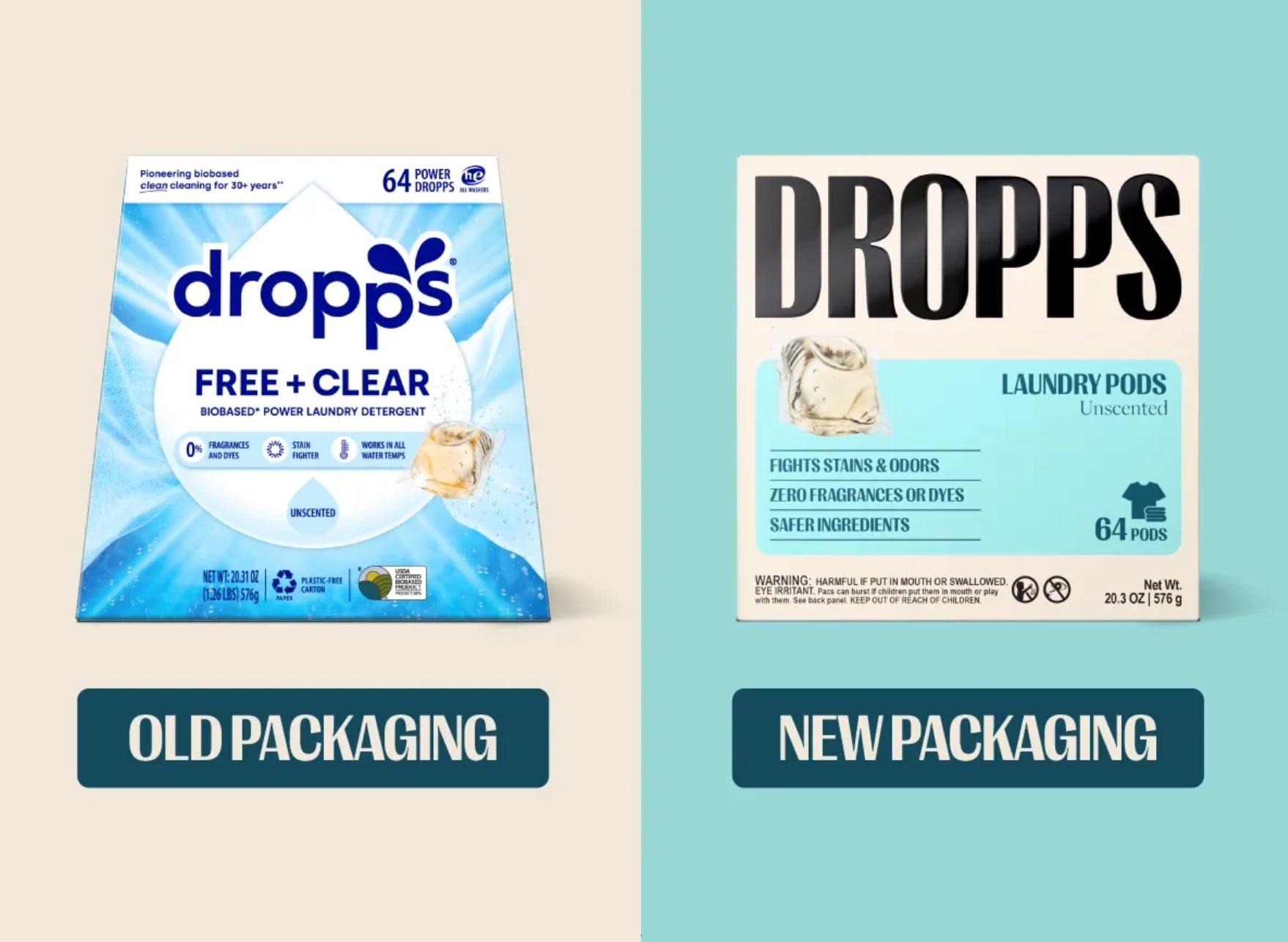
Home care, meet the wellness industrial complex. Dropps, the DTC home-care brand best known for plastic-free laundry and dishwasher detergent pods, rebranded with updated packaging, website, and positioning (”Messy Life. Kind Ingredients. Actually Clean.”).
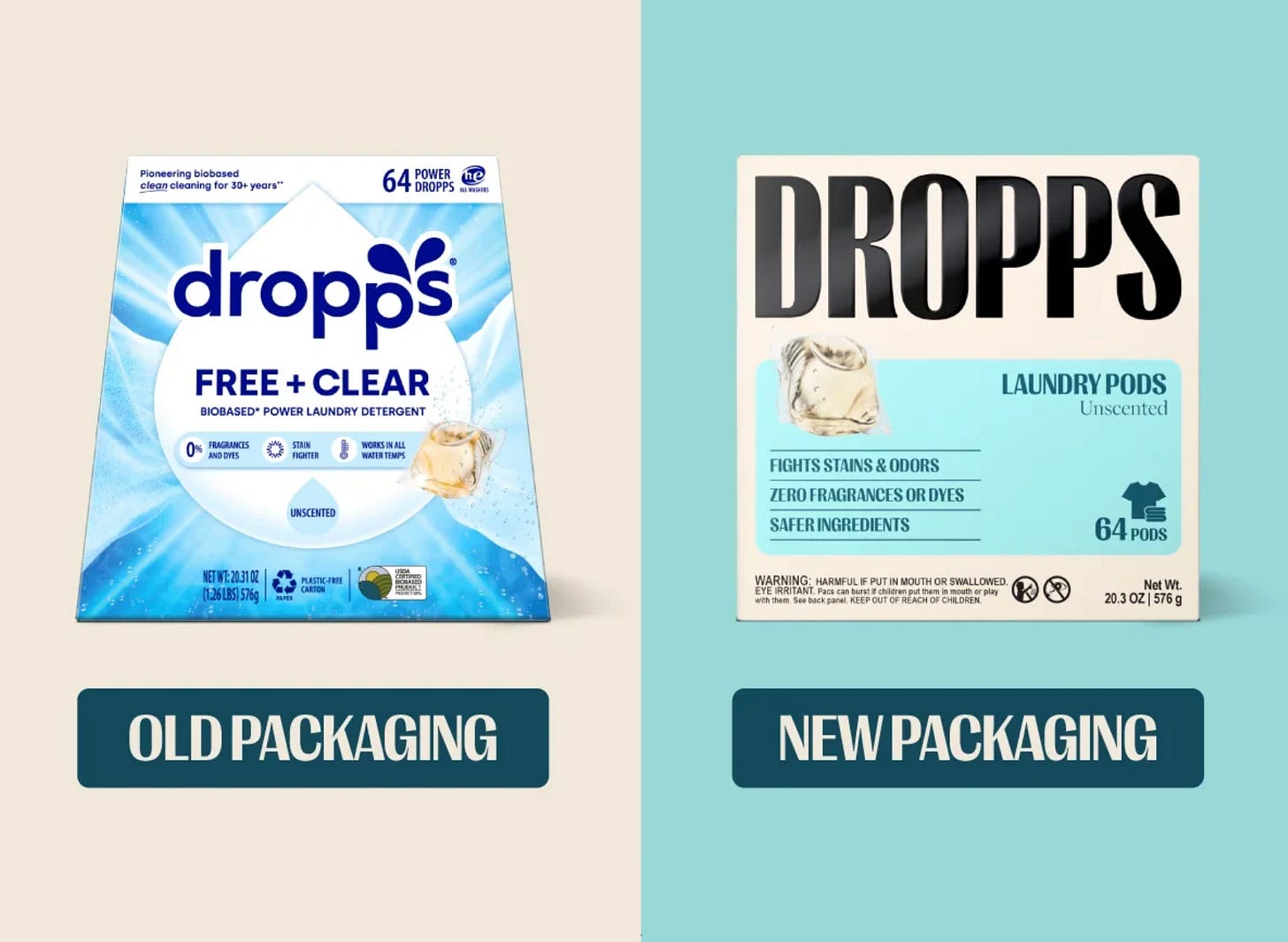
what do you think?! Function is only one part of how a product wins these days. Yes, the cleaner needs to clean your clothes or clean the floor or clean your dishes, but it also has to fit into the consumer’s current view of wellness. The old Dropps branding spoke more directly to a plant-based, sustainability-first shopper who may have even been on the crunchier side. But this new identity keeps their ingredient credibility they’re known for but packages it in a more modern and premium way. It then opens up the brand to this new wave of consumers who care just as much about how a product looks in their home as what’s inside it.
In case you’re unfamiliar, this brand kinda invented laundry pods: Jonathan Propper founded Dropps in 2006, spinning it out of Cot’n Wash, a gentler-detergent formula his mother developed in the 1980s for her cotton mill. He patented the pod format years before Tide brought its own version to shelves in 2012, and the brand ran on that eco-first identity for over a decade before taking its first outside money—$16M in 2020 from The Craftory, a firm that explicitly funds “anti-VC,” slow-growth, mission-driven brands. Dropps is now officially translating cred it’s held since before “clean” was a shelf category.
A recipe for hyptertension (AKA, electrolytes for the “everyday consumer”). Momentous launched Daily Hydration, an electrolyte powder made for everyday use (not workouts) with 100mg sodium, 150mg chloride, 50mg potassium, and 2g functional carbohydrate.
We’ve been seeing more and more brands launch hydration products catered to the “everyday consumer,” and honestly, we’re getting a little concerned. If you’re not profusely sweating on a day-to-day basis, you likely don’t need to down a bev with added sodium for funsies. If anything, you may be overdoing it on the sodium front… and a generation of wellness-obsessed non-athletes hooked on electrolyte powders may lead to an aging population with seriously high blood pressure 🙃 - J
Everyone wants in on matcha. La Colombe launched a line of RTD Matcha Lattes—Everyday, Strawberry, and Vanilla—made with single-origin Japanese matcha and lactose-free whole milk. Unsurprisingly, matcha sales at La Colombe cafés have grown 188% since 2023.
Retail
Costco bets big on same-day. Costco expanded nationwide same-day delivery to Uber Eats (~600 locations) and DoorDash (~630 locations, 47 states + D.C.), adding two marketplace partners alongside incumbent Instacart. CEO Ron Vachris called same-day the fastest-growing segment of Costco’s digital business, and Uber One perks (fees waived on $60+ orders) makes Costco a loyalty amplifier for both brands
This will be interesting for Instacart in particular, which, up until this point, had been the go-to for Costco ecomm orders.
Funding, Mergers, & Acquisitions
Celebrity checks keep flowing into CPG. Podcaster Jay Shetty has invested in Sleep or Die, the buzzy new wellness brand behind Sleep Strips (think Listerine stripes but for sleep). Shetty is no stranger to the CPG world. He also owns Juni, a sparkling tea brand that’s sold nationwide.
High-profile names are increasingly investing in brands rather than starting another their own brand from scratch. In the past few months alone we saw, Alix Earle invest in Cymbiotika, Bethenny Frankel took an ownership stake in DpHue, TikTok creators Katie Fang and Aliya Rachinski became equity partners in ESW Beauty, and NBA players including Draymond Green and Anthony Davis invested in Beekeeper Coffee. And then there are brands like TRIP, which has added a whole roster of high-profile names—including Joe Jonas, Alessandra Ambrosio, Paul Wesley, Ashley Graham, and last week just added Kylie Jenner—to its cap table. For the brands? It’s a way to get capital and reach and cultural relevance in one fell swoop. For the celebrities and talent? It’s more often than not a much better way to participate in the crazy CPG without having to actually build something from scratch.
This brand also feels very aligned with the type of content and vibe that Jay Shetty puts out there into the world. Maybe this is a bit more bold of a brand but what it’s trying to get at, especially in the sleep category, feels very aligned with everything else that he’s building for his personal brand.
Allergy care gets a glow-up. Wizard Wellness, the allergy brand launched in January by beauty-industry veteran Lorne Lucree, raised $1 million. Wizard is also expandin while rolling into more than 4,000 Target, Walmart, and CVS stores. The company is also bringing in Clueless actress Elisa Donovan for its first celebrity campaign.
A French beauty portfolio. Caudalie, the family-owned skincare company known for grape-powered formulas, acquired Talm, a French sensitive-skin and maternity brand sold in about 60 doors across 12 countries. It’s Caudalie’s first acquisition, and Talm will remain independently run by founder Kenza Keller
Little bottles, big bucks. Sol-ti has raised $30.3M in equity, per an SEC Form D filed in June, as the glass-bottled juice and shot brand positions for expansion in retail and foodservice.
Loves an RTD. Sazerac acquired Au Vodka, the UK-based gold-bottle vodka and RTD brand founded in Swansea in 2015, expanding its UK portfolio and giving Au a path into more global markets. Terms were not disclosed, though Bloomberg’s source puts the deal at more than £300 million.
Au is the second-largest player in the UK’s RTD cocktail market, and it now sits in the same portfolio as the category leader, BuzzBallz, which Sazerac bought in 2024. Together the two brands hold about a fifth of UK RTD sales by value (per NIQ data cited by The Grocer).
Au is also Sazerac’s third RTD bet this year, following its March purchase of the canned cocktail brand Dirty Shirley and a May stake in Sipmargs, the canned margarita brand backed by TikTok creator Alix Earle. IWSR expects RTDs to be the only alc category to grow in 2026, so the owner is buying its way into the one corner of spirits that’s still growing.
Brain food buys snack food. Cerebelly, the company that makes brain-focused baby food, acquired Fresh Bellies, a plant-based, freeze-dried kids snack brand founded in 2015, to expand into snacking. Financial terms weren’t disclosed; both brands will operate separately under shared ownership with distinct retail presences.
In case you missed it… 🎧
Last week, we caught up on a bunch of launches from the past few weeks, from David Protein’s new ready-to-drink milkshakes (fresh off a $2.2B valuation), to the Liquid Death founder’s new canned bubbly brand, and Beyond Meat’s latest (bizarre) attempt to regain relevancy.
Plus, what “peak function” looks like now that Folgers is doing functional coffee, why “supplements for your supplements” might be the next big thing, and more.
Catch the full episode below 👇
If you haven’t yet, please subscribe, like, leave a comment, and share it! It helps us continue to bring you the most interesting news + nuance in consumer and retail every week.