



Hello hello!
Coming fresh off of Fancy Foods, we’ve been thinking a lot about what it takes to launch a product that actually stands out in today’s noisy CPG landscape.
The most frustrating pre-launch hurdle? Your new product’s ready, but a slow design team (or just a one-person Canva account) stands between you and launch day. You know AI tools could help, but finding the right one to produce high-quality assets is SO hard (let alone prompting correctly to get the result you want).
Kittl’s new Agentic AI feature is built to fix exactly this. You type a simple phrase like “healthy kids snack, listing photos” or “premium beauty serum, Instagram post” and it immediately reads your intent, writes an expert prompt, picks the model, and gives you the correct sizing for whatever you need.
You think in products, and now, your design tool does too.
Subscribe to get 50% off at checkout with code AGENTIC, on annual plans, for a limited time.
News From the Week
Last week was the Specialty Food Association’s Fancy Food Show, one of our favorite trade shows of the year (partly because it’s in our backyard, AKA Javits Center in NYC). Unlike other trade shows, like Expo West (which features beauty and supplement brands), Fancy Food Show is purely a food- and bev-focused event—an absolute field day of samples from all over the world.
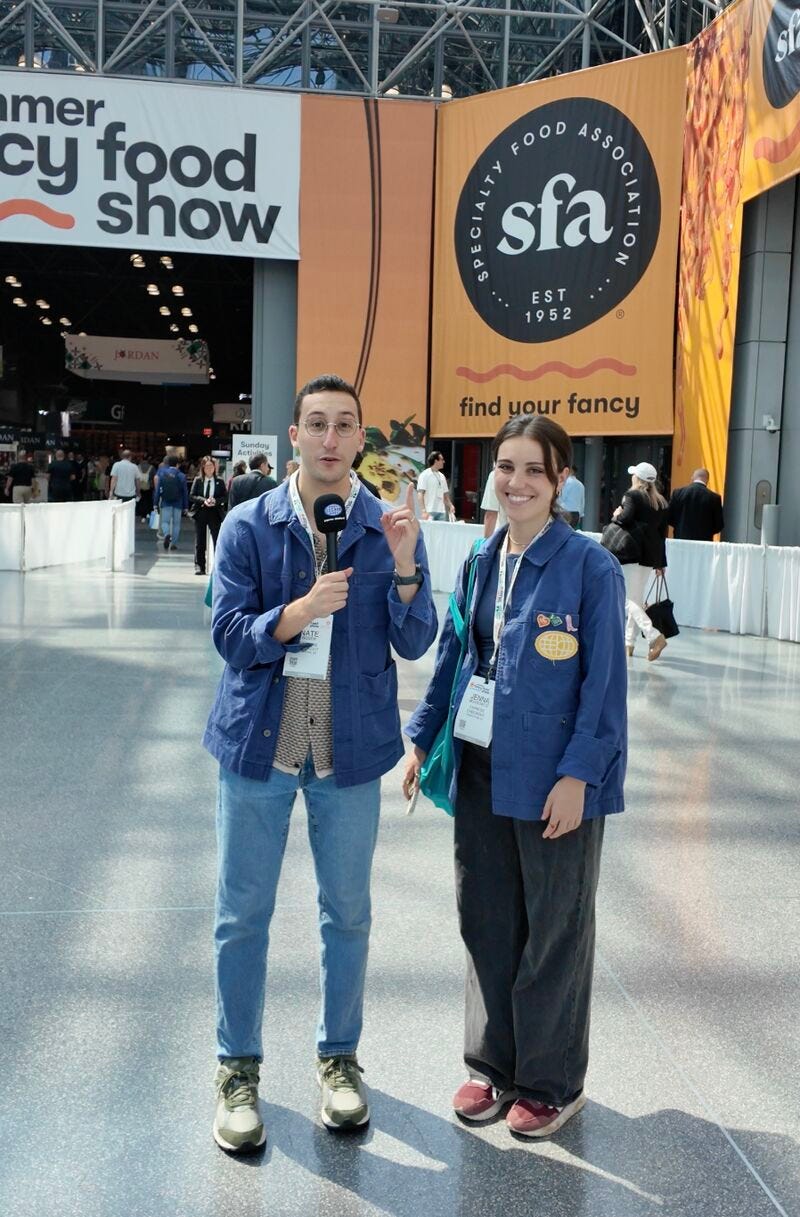
We had the best time eating our way through the convention center, hosting a happy hour on a gorgeous rooftop with our friends at Wayflyer, and seeing our favorite people in CPG all in one place!
If you’ve been around for a bit, you know that we don’t love the idea of calling out “trends” from any given trade show. Instead, we look out for “themes,” our reasons being: 1) trends are fleeting, and 2) just because we see a lot of something at a trade show doesn’t mean it will be a trend among consumers. Too often, the industry has hyped something up that has fallen flat once it reached the masses.
With that being said, here are a few themes we saw at the 2026 Summer Fancy Food Show:
Real sugar, real indulgence. More and more brands are moving towards unapologetic indulgence. There seems to be some health halo around the idea of “real ingredients,” even if those ingredients are calorie-dense or, in many cases, high in sugar. It’s not news that “better-for-you” and “ingredients I understand” have been conflated—but what is interesting is that this mindset has trickled all the way down to indulgences. We’ve gone so far down the diet culture hole that we’ve actually swung back, and decided that a cookie or ice cream made with real sugar and real butter is actually healthier than the low-cal, artificial-ingredient alternatives (I believe this is what they call The Circle of Life).
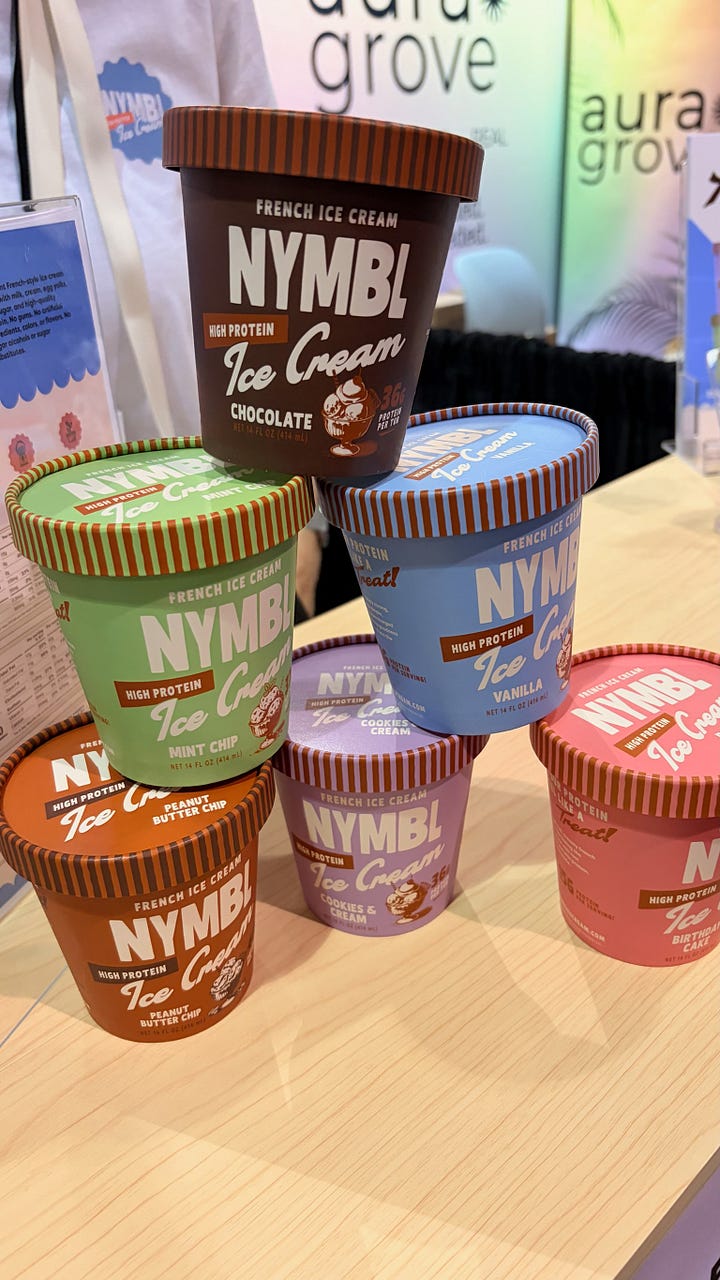
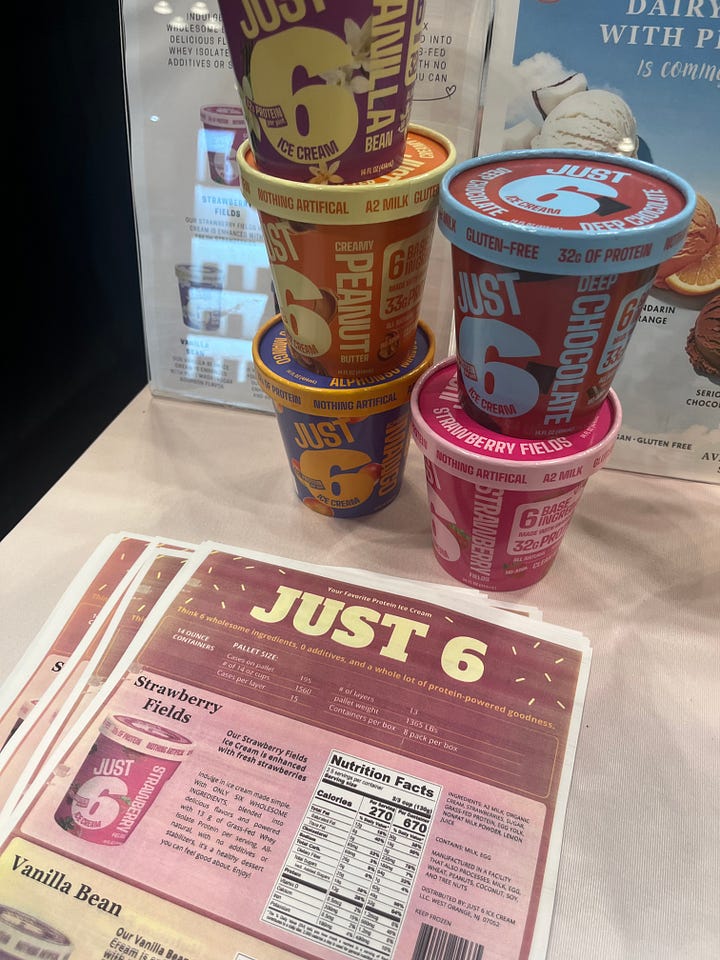
At Fancy Food, this idea materialized in multiple protein ice cream options. As the protein ice cream subcategory booms (some news on that below), new brands in the set are hoping to stand out by being purely indulgent (not low-cal, not low-sugar)… and just happen to offer a boost of protein. Just 6 and Nymbl were two of such brands, boasting Haagen-Dazs richness, real sugar, and full-fat with “benefits”—AKA an added dose of protein (it’s what the people want, after all). Because, according to Nymbl’s site, “Getting your protein should feel like a treat!”
We also walked with Whole Foods Category Manager/beverage buyer Charlie New (stay tuned for our video on IG), who showed us one of his favorite sips from the show: Moozy, a canned A2 flavored milk proudly calling out 13g protein on front-of-pack. This is a seriously premium-tasting product, and I was surprised to learn that it actually contains a lot of sugar (37g, to be exact)—but that didn’t make it a no-no for the WFM team. Instead, Charlie was excited to see a canned milk beverage without any artificial sweeteners, that could be served as an occasional indulgence. “If we didn’t accept sugary products, the ice cream aisle wouldn’t exist. The cookie aisle wouldn’t exist. It’s my job to ensure there’s something for every kind of consumer—including those seeking indulgence—on Whole Foods shelves,” Charlie explained.
Notably, both cases seem to be hedging their bets: They lean into real indulgence, but still borrow the health halo of added protein callouts.
The continued boom of high-quality frozen products and meals. We’ve spoken endlessly about the frozen aisle’s glow-up era—how the category that was once thought of to be filled with sad, soggy, value options has been premiumized. Fancy Food showed us a continuation of this trend, featuring even more innovation in formats, global flavors, and more, across the entire frozen aisle.
“Restaurant-quality” isn’t just a bar being set—a lot of it is coming from actual restaurants (and chefs) making the jump to the frozen aisle.
Benihana launched frozen dumplings at the show—building out a whole grocery line betting that its restaurant name means something in the freezer aisle.
Mimi Cheng’s, the cult-favorite East Village dumpling shop founded by sisters Hannah and Marian Cheng, is another restaurant bringing its menu to the freezer aisle.
NADAS brought their unapologetically Colombian empanadas, born out of founder Carlos Santos’s mom Olga’s longstanding NYC restaurant. The new SKU, guava & cheese (a flavor that may be unfamiliar to American palettes, but is a South American classic) might be our fave of the bunch, and one of our favorite bites from the whole show!
Zucker’s froze their iconic hand-rolled bagels and threw them in a bag, bringing a New York appetizing-counter staple home.
Mad Mutz frozen mozz sticks come from Mike Hauke, the founder of Atlantic City’s Tony Boloney’s, who taught himself cheesemaking and built a whole “Mozzarella Laboratory” to make fresh-mozz sticks with real pull and trendy flavors (truffle and everything bagel).
Mazala’s frozen pizza (including a show fave, butter chicken pizza) is an offshoot of their physical restaurant locations, bringing Indian-spiced formats into the freezer.
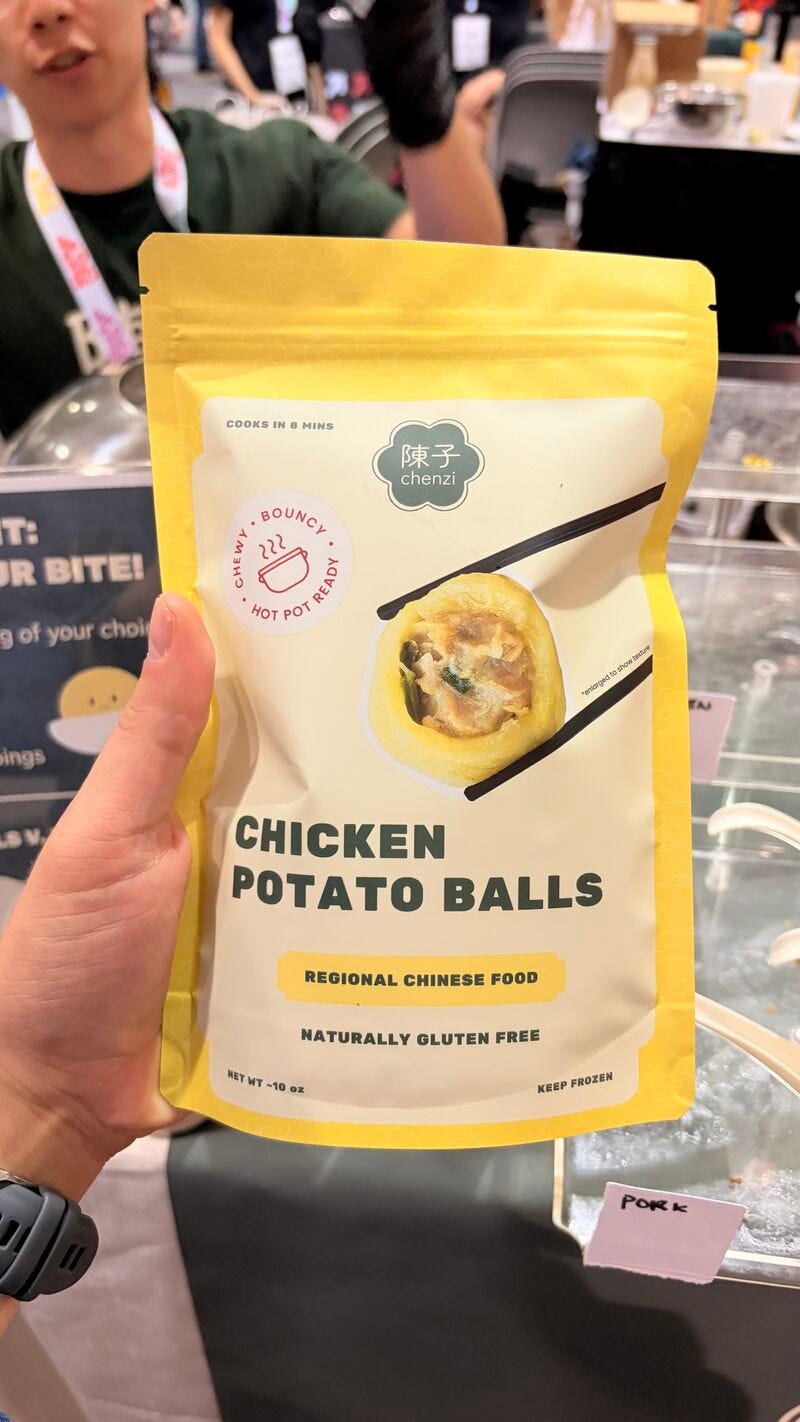
Dumplings on dumplings. There were so many frozen dumplings at this show (Mei Mei’s, LuLu’s, Big Yum’s, and more), but there was one standout: Chenzi, a potato based stuffed dumpling described as a “love child between a dumpling and mochi.”
Sauce city—more specifically, seeking tang and unique spice. Have we finally reached peak sauce? The category has expanded a lot over the past few years, with clean-ingredient and globally-inspired entrants giving consumers the culinary toolkit to make restaurant-quality dishes at home. Now, we’re seeing sauce enter its fusion era—taking beloved American sauces and giving them the global flavor treatment.
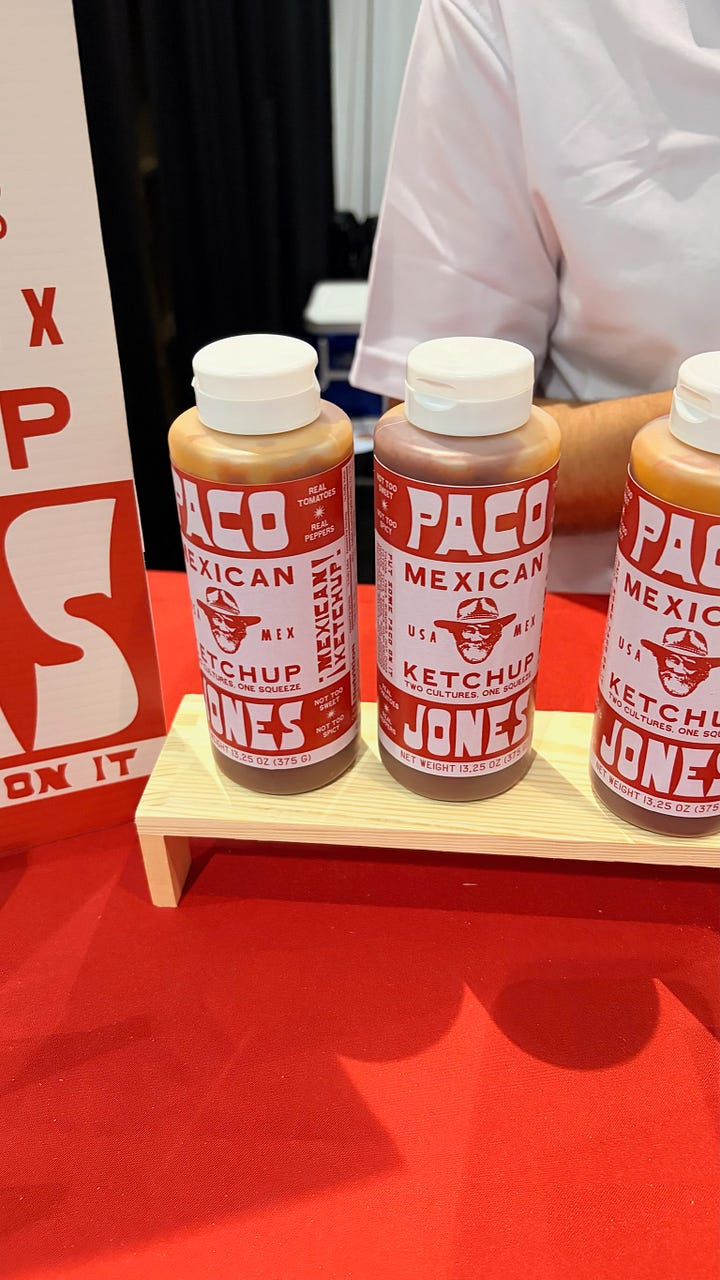
Paco Jones (pre-launch) introduced us to a Mexican Ketchup and Mexican Barbecue Sauce, two condiments you think you already know, reframed with bold Mexican flavors. The Barbecue Sauce blew our socks off—it swapped tomato paste with ripe, sweet strawberries and red chiles for a sweet/spicy/tangy sauce that we will want to put on everything.
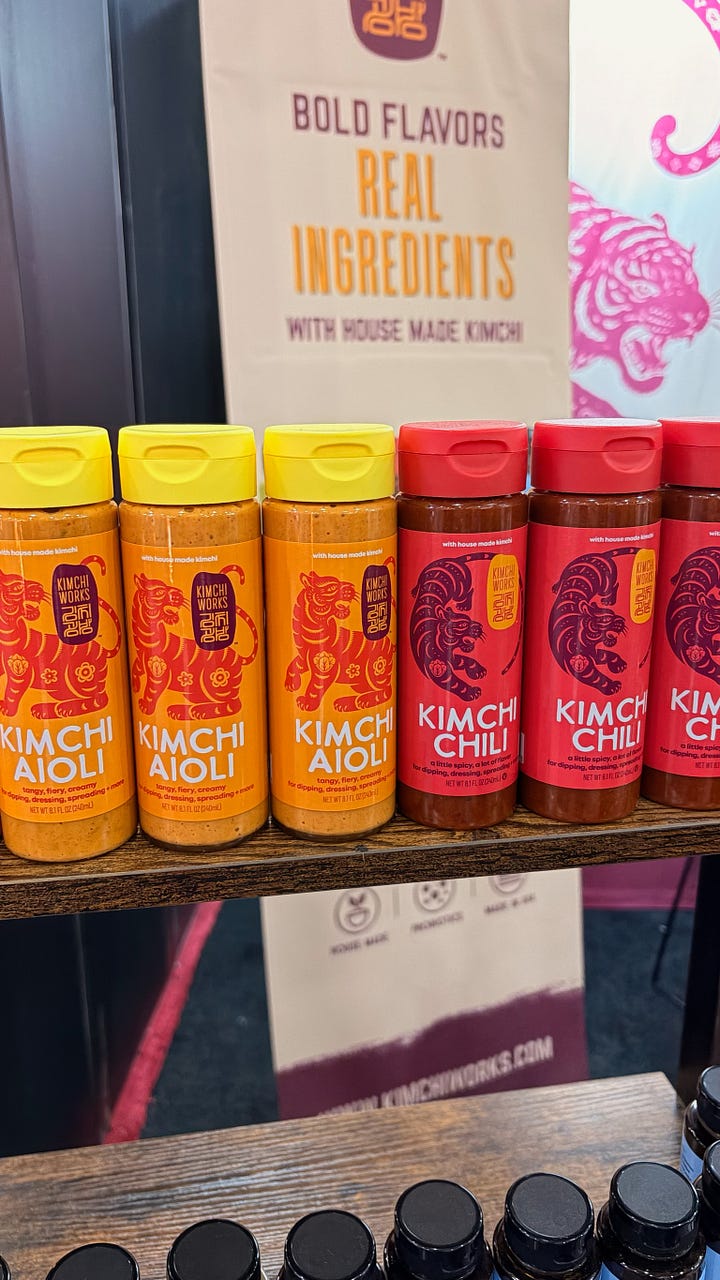
KimchiWorks similarly offered two chilis and aiolis—Kimchi Chili/Aioli and pre-launch Wasabi Chili/Aioli—that fuse the bold flavors of kimchi (bright, acidic) or wasabi (pungent, spicy) with the familiar formats of a chili sauce or creamy aioli.
Indian Influence across the board. This one wasn’t just us—we saw it echoed across other roundups of the show (shoutout to Fred Hart and NOSH), and we’re very inclined to agree. The Indian flavor influence was visible across nearly every category and format at the show.
On the more traditional side, we loved Panaji’s mini naans (which came in both traditional and more Americanized flavors, like Apple Cinnamon and Jalepeno Cheddar), simmer sauces from Gymkhana, and chai concentrate from Kolkata Chai (genuinely gasped upon trying their chai latte served with Oatly lavender cold foam. But Indian flavors also appeared in some unexpected places—here were some of our faves:




And now, a quick rundown of each of our favorite bites from the show:
Jenna’s Picks
Figa Food’s new Passionfruit Cupuacu Bar: a Brazilian chocolate alternative, made with real passion fruit seeds for the most delightful crunch!
Freezecake: cheesecake that was made fresh by a pastry chef, then freeze-dried into ridiculously delicious, crunchy, satisfying little bites
Umami Insider’s Yuzu Kosho & Barley Miso: the most flavor-packed miso paired with bright, citrusy yuzu and full pieces of barley for a delightful chew
Tooties Tempeh: the most buttery, nutty, non-bitter tempeh fermented without plastic (plastic bags are typically used in the fermentation process)
Mama Knows Broccoli & Cheddar waffles: frozen waffles made with super simple ingredients (including greek yogurt for an added boost of protein), in the most unexpectedly delicious broccoli cheddar flavor
Nate’s Picks
Paco Jones Mexican Ketchup and BBQ sauce: See above!
Female Rage Hot Sauce: hot sauces in unique flavors like Honey Garlic Carrot and Brown Sugar Peach, with actual heat and an awesome mission
Bagelverse Pizzabagels: the OG frozen pizza bagels you grew up with, but reinvented with better flavors and quality bagels
Lady Babka: just really, really good babka that tastes fresh out of the oven, Bubbe-approved
With that, let’s get into the news of the week →
CPG & Consumer Goods
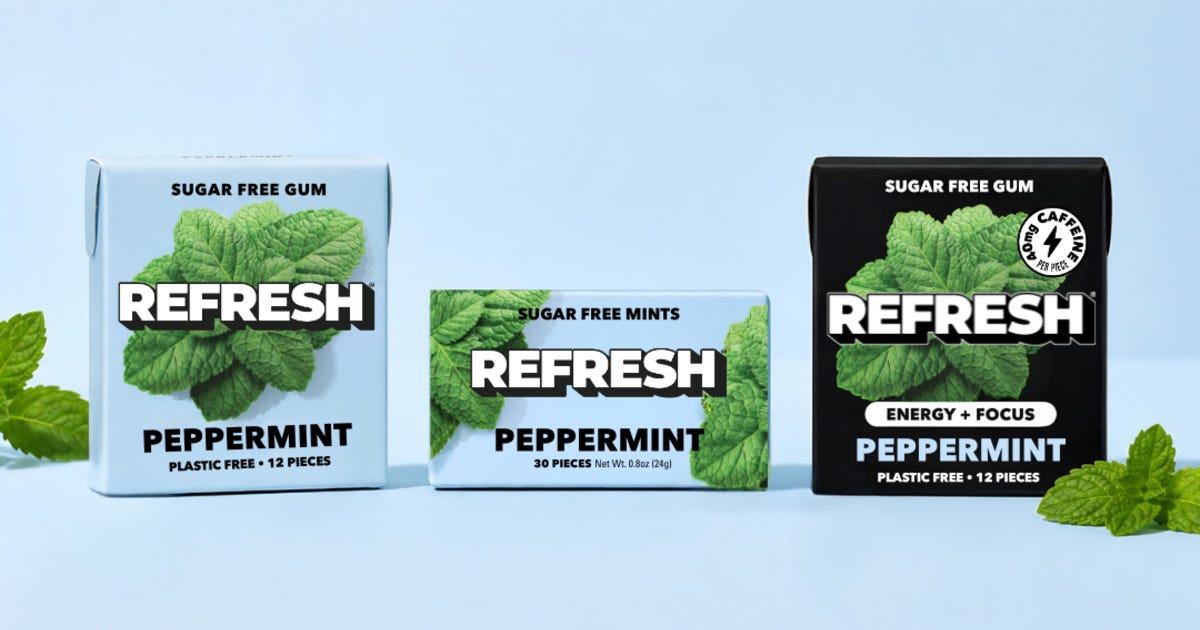
Will this move save chewing gum? Refresh Gum launched caffeinated gum and mints alongside a full packaging rebrand replacing its Pantone color blocks with a new logo and “mouthwatering visuals” designed to drive trial in the mainstream market.
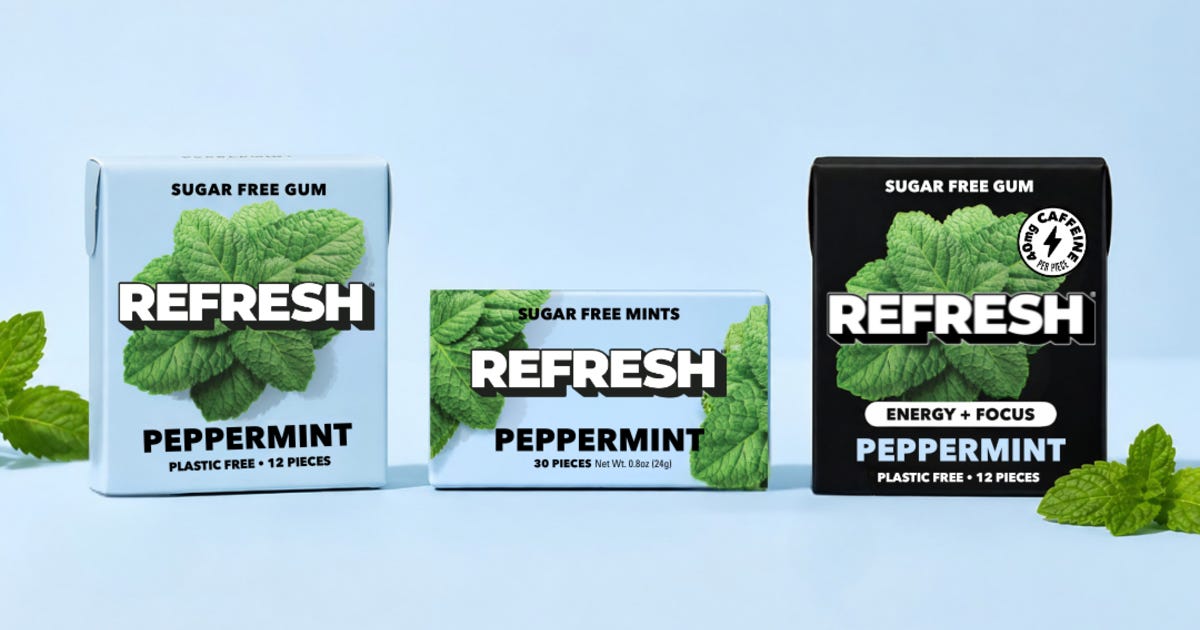
While functional gum may be a new concept to some, it’s a format that’s done numbers for NeuroGum, a line of gums with different functions (like energy, memory + focus, etc). NeuroGum is sold in over 10,000 retail locations, has been on Shark Tank, Joe Rogan constantly (and organically) brings them up on his podcast, and the brand does over $10 million in revenue each month. Refresh is coming right into that functional gum category.
It’s worth noting, though, that gum isn’t exactly in its heyday. Global chewing gum sales officially peaked in 2011 at nearly $25 billion (adjusted for inflation), dropped to $15 billion in 2020, and inched back up to $18 billion in 2023—but US unit sales in 2023 were still down 27% from 2019. Clearly, people haven’t been consuming gum like they used to.
To us, that means that this category is ripe for a resurgence—and in today’s CPG world, category resurgence often means infusing a function*.* And as new formats take over the traditional supplement aisle (see: transdermal patches, oral dissolvable strips), turning a dying category into a supplement vehicle presents a smart backup retail placement.
A little food for thought I (Jenna) considered while writing: Do you think there’s a possibility (within the next decade) of the standalone supplement category effectively disappearing as every category introduces functional products?
Clean up on aisle 5, there’s a mycelium outbreak in the freezer aisle. Beyond Meat launched its mycelium (mushroom root) whole-cut steak filet at Wegmans and H-E-B in a two-pack, following a DTC run on Beyond Test Kitchen where it became the top-selling item. Each 127g cut delivers 28g of protein and 1g of saturated fat.
Could this save Beyond? Beyond’s sales declined by 15% last quarter, which was its lowest quarterly total in seven years. Since last year’s massive revenue drop—and subsequent rumored bankruptcy and delisting warning from Nasdaq—the brand has attempted to make a comeback with a rebrand (now Beyond the Plant Protein Company) and the launch of its sparkling protein drinks (which we’re admittedly still confused about…). Looking ahead, the brand is planning to add to its more nutritious Beyond IV portfolio (ft. no seed oils and higher protein from whole food sources like fava beans and lentils), seemingly an effort to reposition itself as not just a better-for-the-earth brand, but a better-for-you brand.
Founder and CEO Ethan Brown is doubling down on this messaging: “I believe that [by] introducing consumers to our brand and our foundational commitment to great taste, clean ingredients, and plant-based nutrition in less controversial applications, we will bring back many to the centre of the plate,” (note: nothing here about climate). Brown’s key point is that this isn’t just a plant-based alternative—it’s actually a healthier option than the animal-based version: “Whereas consumers are typically advised to limit their consumption of steak, the remarkable nutritional profile of Beyond Steak Filet means you can turn any meal into a steak occasion.”
We’ve seen the mycelium steak movie before—Meati was the mycelium whole-cut darling, raised ~$450M and landed in ~7,000 stores, before a technical default let its lender sweep its accounts and the whole thing sold for a reported $4M (its steaks moved just fine—the unit economics didn’t). It’s easy to look at that story and assume that consumers aren’t ready for whole-cut, but Beyond is betting that demand wasn’t the issue. Instead, the question becomes whether a company already bleeding cash can make it profitably 🙃
When protein demand is so big, you buy the factory. Vitamin Well Group (company behind Barebells) is merging with EMPWR, the Belgium-based contract manufacturer behind its Barebells protein bars, in a deal backed by Cinven, one of Vitamin Well’s private-equity backers. EMPWR’s owner Waterland Private Equity will retain a minority stake; financial terms were not disclosed.
The demand for Barebells products globally has been so massive, it only makes sense to own the plant to keep up. EMPWR will continue serving its 100+ other customers, so this isn’t a clean captive integration.
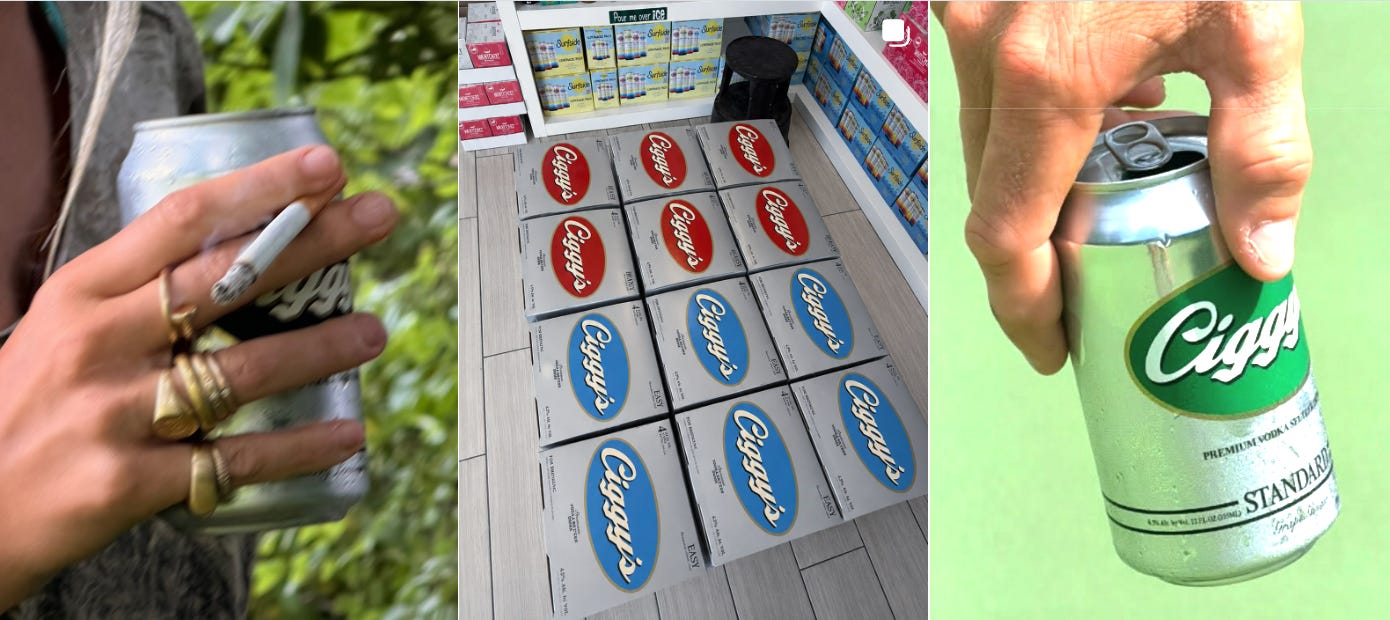
The “fridge cig” has officially materialized. Or, at least, that’s what we’re gathering from the latest ready-to-drink vodka seltzer launch, Ciggy’s, which launched on Nantucket this past weekend, with plans to expand throughout the northeast. Ciggy’s offers <2g sugar, 100 calories, 4.5% alcohol, four flavors made with real fruit juice and sparkling water, and the aesthetic and laidback confidence of a classic beer brand.
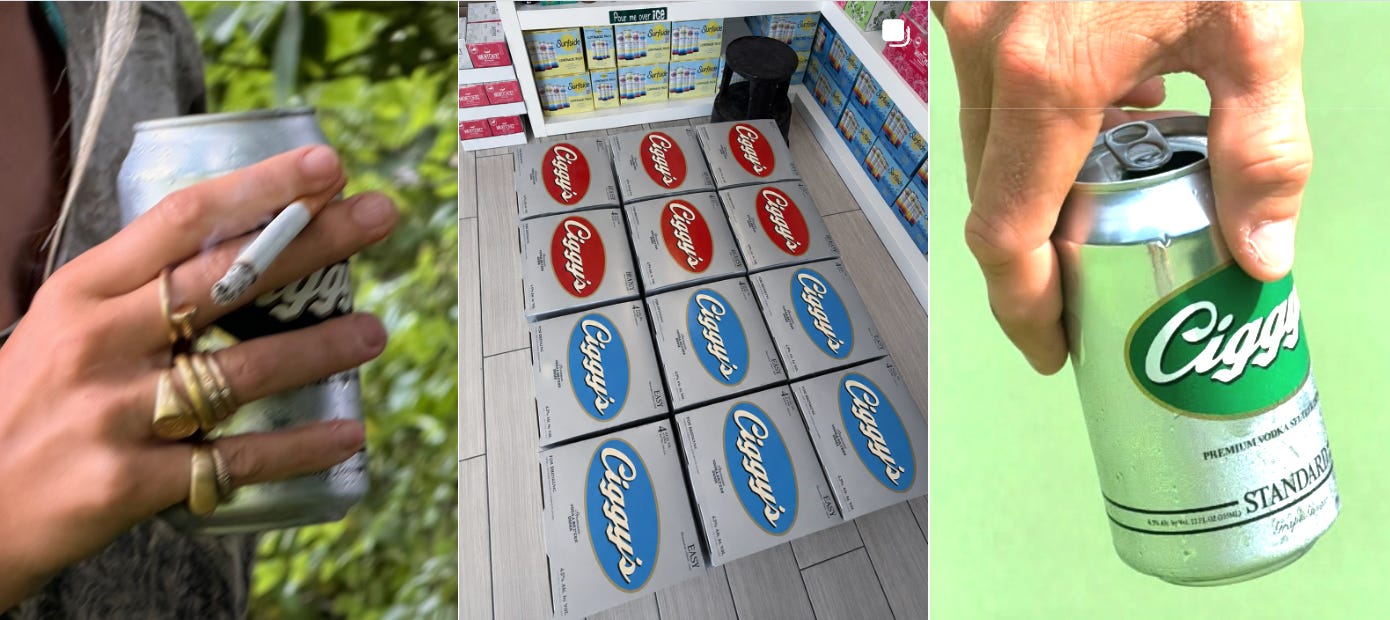
straight from the @drinkciggys IG feed Though the RTD alcoholic seltzer space may feel saturated to some, there’s still room for innovation from truly premium, differentiated products. The first wave of RTD seltzers, circa 2016, was all White Claw and Truly—malt-based, sold on the low-cal, low-effort promise—and that base is now the part of the category actually shrinking, with Circana logging beer-seltzer sales down 4.2% to $3 billion for the 52 weeks ending December 2025.
The growth migrated to spirits-based versions made with real vodka or tequila and real juice. Per DISCUS, premixed cocktails and spirits RTDs grew 16.4% last year to nearly $4 billion while malt-based seltzers shed 14 points of category share. High Noon owns the lane it defined, and even White Claw is chasing it—rolling out a 7% ABV ClawTails line in 2025 and moving into spirit-based formulations for summer 2026.
So Ciggy’s isn’t walking into a saturated category so much as a bifurcated one, where the malt shelf is losing but a premium, differentiated product with an actual point of view still has runway. And in this case, that differentiation is part-premiumization, but mostly vibe. “Ciggy’s wasn’t built to make drinking feel healthier,” said the founders of Ciggy’s. “It was built to make drinking feel fun again. We wanted a can that looked like it belonged in every cooler, every boat, every dive bar, and every backyard in America. Familiar. Confident. Uncomplicated.”
The name Ciggy’s, whether intentional or not, feels like it’s leaning into the “fridge cig” concept—a viral term for an ice-cold Diet Coke. The idea is that we know Diet Cokes aren’t the healthiest choice, but, like a cigarette, there’s something deviously nourishing about taking a break to crack one open—a carcinogenic* indulgence. Cigs are back, they’ve (tragically) regained their cool factor, and brands like this one are brilliantly borrowing that cultural cache. Sure, a vodka seltzer isn’t the best thing for you, but this brand is promising an experience that outweighs its nutritional failings.
*Side note for my (Jenna’s) conscience: While cigs are a widely known carcinogen, Diet Coke is still up for debate. Current research shows that aspartame’s cancer risk remains unresolved. You’d have to drink a genuinely absurd volume daily to approach the threshold of concern.
The losing middle... General Mills announced a $3 billion cost-cutting plan over four years, targeting $750 million in savings for FY2027, as flat organic sales and a $2.1 billion operating loss reflect prolonged consumer spending pressure.
General Mills spent FY2026 cutting everyday shelf prices to win back cash-strapped shoppers—which helped base volume and household penetration but crushed margins—and the $3 billion (about $2 billion from its Holistic Margin Management program, the rest from a supply-chain and transformation overhaul) is how it pays for staying cheaper without gutting earnings. CEO Jeff Harmening framed the savings as critical to “offset inflation” and fund growth.
Management said weaker sentiment pushed more shoppers toward discount, and that pressure is expected to persist into FY2027 (organic sales guided at down 1.5% to up 0.5%). Cheerios, Betty Crocker, and Pillsbury sit in the mainstream-branded middle—priced above private label, below the premium/functional tier—which is exactly the shelf position getting hollowed out when budgets tighten.
This reflects something we’ve been noting a lot recently: the branded middle getting squeezed from both ends. Trade-down shoppers are moving to private-label (which can compete on price) and trade-up shoppers are moving towards premium, better-for-you options. General Mills’ answer is to compete on both fronts at once—cut costs to defend on price and invest in “remarkability,” bolting in-demand attributes like protein onto legacy brands to chase the top end.
Retail
One of the nations largest grocers gets a smidge bigger. Kroger is acquiring Giant Eagle for $1.65 billion, adding the family-owned grocer’s ~$9 billion in annual sales and 197 supermarkets across Ohio, Pennsylvania, West Virginia, Maryland, and Indiana. The deal is expected to close in 2027, pending regulatory approval.
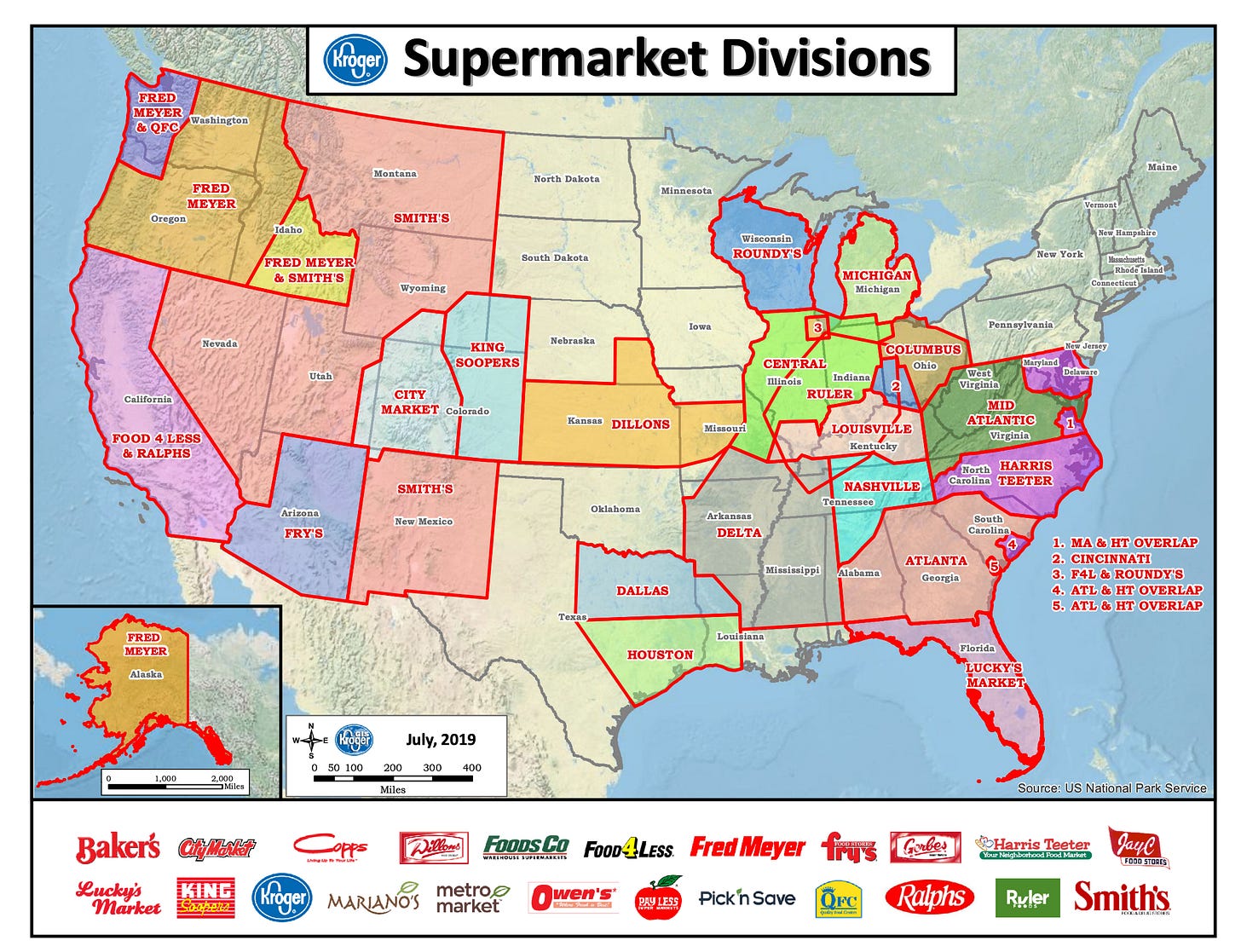
Kroger Co. already operates more than 2,700 stores under a variety of banner names, including four out of the five states where Giant Eagle operates (Pennsylvania being the new addition, with Western PA being a specific focus—Giant Eagle’s HQ is in Pittsburgh).
Reactions to the deal seem to be mixed: Neil Saunders, managing director with GlobalData, told Grocery Dive “For Kroger, making a success of the deal requires it to absorb a new division at the same time as fixing the core of its own business.” Others are more critical of the lack of differentiation Giant Eagle offers. While differentiated retailers like Sprouts, Walmart, and Aldi take market share, Kroger went for an acquisition of a chain that looks a whole lot like its other banners.
Playing the curation game. Target Plus is expanding its invite-only marketplace with nine new brands including Clarks, Forever 21, and JanSport in apparel; LovelySkin and NatureWise in beauty and wellness; Serta, JLab, Hisense, and Wild Alaskan Company across home, entertainment, and food after posting nearly 60% GMV growth and 20% digitally originated comparable sales gains in Q1. The platform is targeting $5 billion in GMV by 2030, up from $1 billion.
Unlike Walmart and Amazon which allow any vendor to get on the platform (so long as they pay), Target is much more strict on who it lets in and hovers around 1,500 hand-picked brands, each SKU exclusive to a single seller. You apply and wait; category and brand fit decide whether you’re in, and reporting suggests Target now leans on AI vetting to screen for that fit.
Target Plus brands now make up more than half of Target’s total K-beauty assortment—which to us, reads that the marketplace is letting Target chase trends (K-beauty, dermatologist-owned skincare, premium wellness) faster than its physical buying cycle allows. LovelySkin and NatureWise are examples of Target extending January’s largest-ever beauty rollout without a single new endcap.
The logic: Target can’t out-spend Amazon or Walmart on marketplace scale, so it’s competing on taste. Curation is the product. And the payoff shows up less in take rate than in the services flywheel: marketplace growth helped drive a 24.6% jump in Target’s “nonmerchandise” revenue last quarter, the bucket that also holds Roundel ad dollars and Circle 360 memberships.
Funding
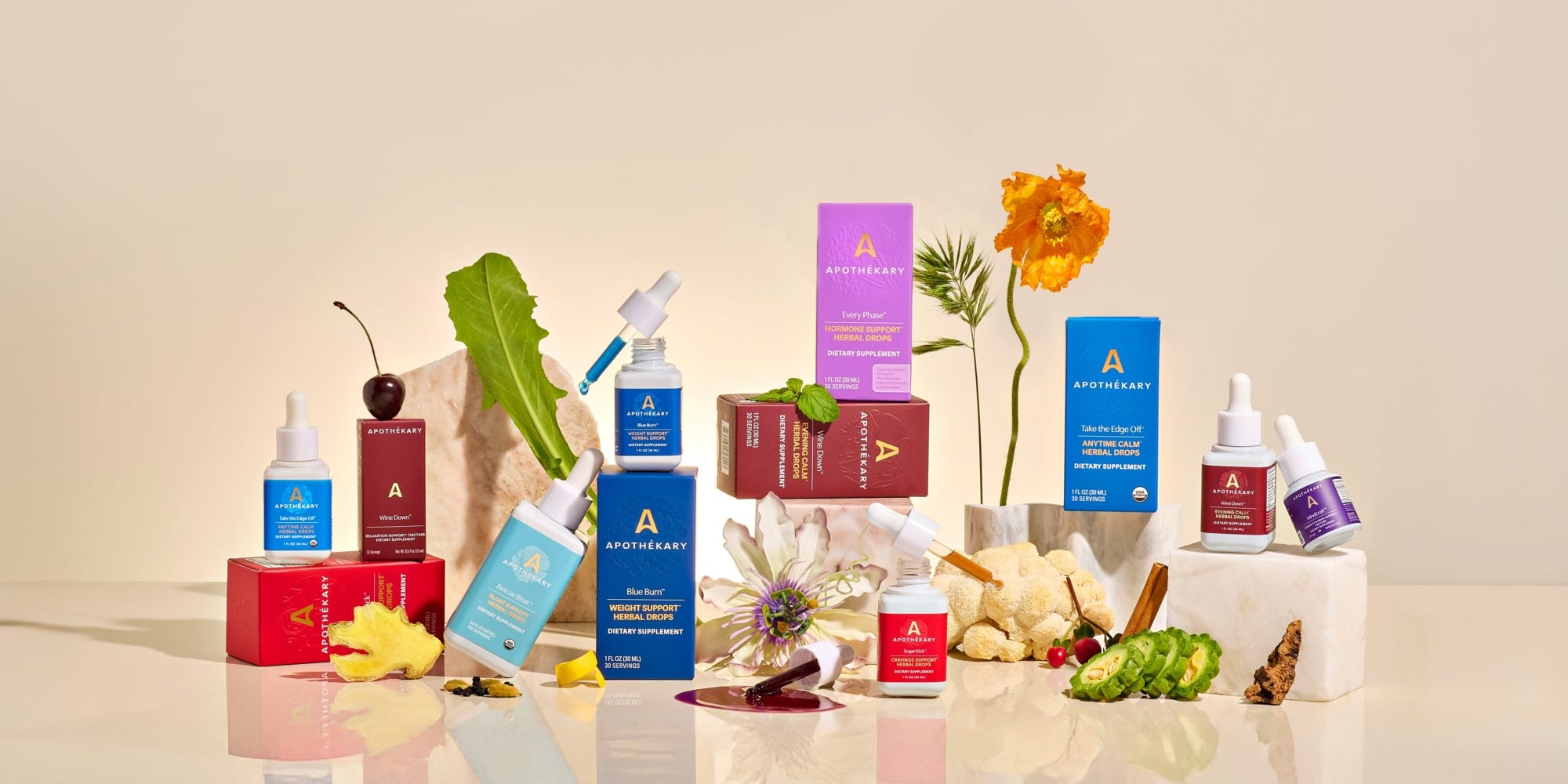
Meet the latest supplement star. Apothékary, a plant-based herbal wellness brand, raised $16M—$10M in venture funding and $6M in debt—bringing its total funding to ~$32M. Backed by Shiseido and NextLevel Management, the brand is using the fresh capital to fuel retail growth, product innovation, and even AI advancements as it targets $40M in 2026 sales across Ulta, Whole Foods, and The Vitamin Shoppe.
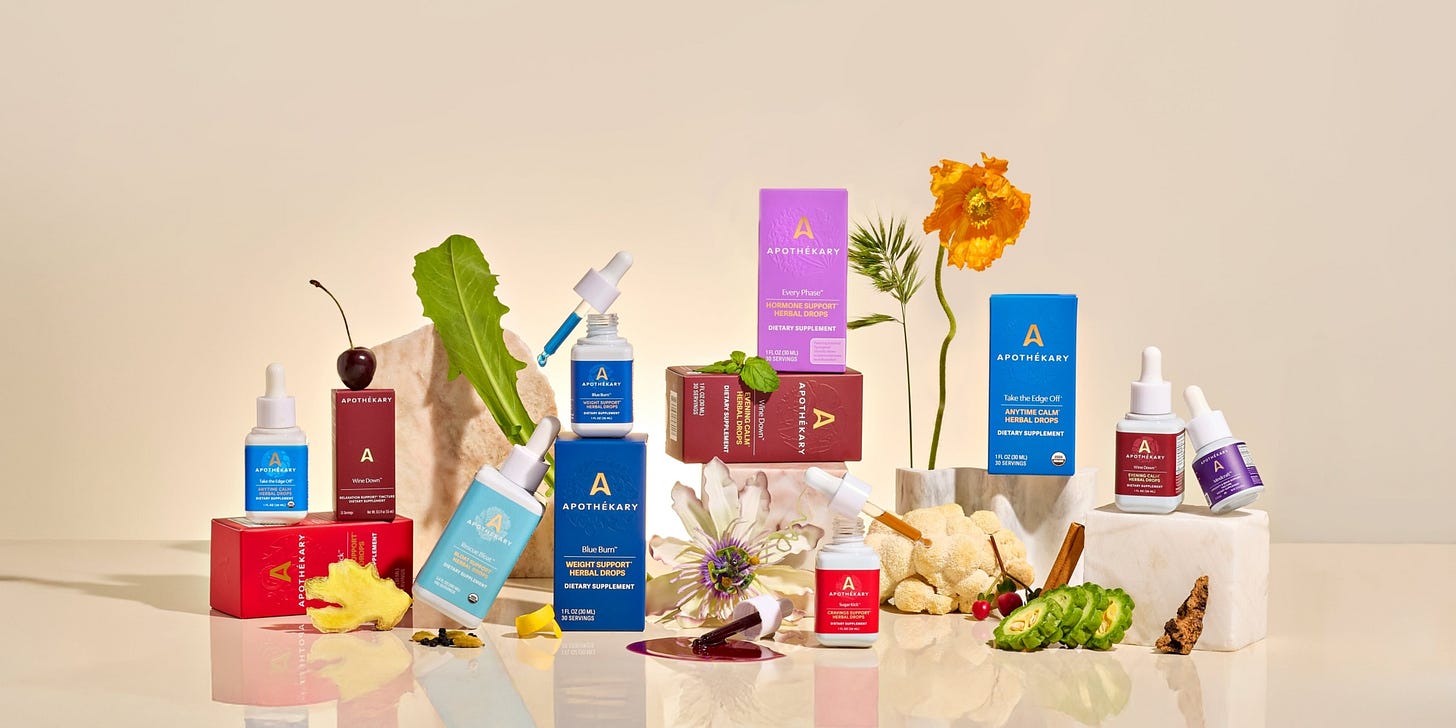
Apothékary feels like the rise of a new arm of wellness. It’s not quite hippy-dippy herbalism, but it’s also not full-on biohacker bro. The brand’s whole pitch is “Ancient Herbs, Backed by Science,” with real clinical studies to match. We know a tincture alone is not going to fix systemic health issues or the chaos of modern life, but Apothékary has packaged old-world herbal traditions into a format that feels modern, accessible, and actionable.
That might be why the brand is hitting right now. Wellness has spent the last few years getting increasingly optimized and this feels like a softer counterpoint with a more ritualized quick fix. And that makes it perfect for TikTok Shop, their #1 sales channel. The brand turned endless video testimonials and affiliate marketing into some serious revenue, reportedly doing $1M in monthly sales on that platform alone. That makes sense! Supplements need explaining, and TikTok is very good at turning “here’s what I take every night” into “wait… should I be taking that too?”
And then there’s Shiseido of it all. A legacy beauty conglomerate backing an herbal tincture brand is yet another proof point that the beauty-wellness line continues to dissolve. Apothékary is also sold at Ulta in their endlessly growing wellness section, because of course it is. We’re well past the era where beauty meant only topical treatments for your face or body. Ingestible wellness is looking more and more like an existential necessity.
C4 is heading to Wall Street. Nutrabolt announced an IPO targeting up to $1 billion, with JPMorgan, Goldman Sachs, and Bank of America leading the deal. Keurig Dr Pepper currently holds a 30% stake from a 2022 investment that valued the company at $2.88 billion.
Bloom has been a massive win for them: Nutrabolt first took a 20% stake in the Gen Z-favorite for $50 million in 2024, then poured in roughly $160 million more in 2025 to raise its position (it declined to disclose the new percentage)—a bet that looks smart now that Bloom’s sparkling energy drinks, creatine gummies, and hormone-health line have it touching nearly every functional trend on the board at once.
Stack that on the owned portfolio—C4 in energy, Cellucor in sport supplements, XTEND in recovery—and Nutrabolt is less a fully diversified functional-nutrition house spanning pre-workout, protein, BCAAs, creatine, and hormone health. The pitch to public markets is clear: whichever corner of the protein-and-energy boom keeps running, Nutrabolt can play in it.
Protein ice cream keeps having a moment. Frozen One raised a $5.75M seed round led by Brand Foundry Ventures, just months after closing an oversubscribed $2M round. Grammy-winning Ryan Tedder and Abe Burns joined existing investor Supernatural Ventures.
Since a national Target rollout in April, the Austin brand—40g of protein and under 400 calories a pint—claims some of the strongest sales velocities in the better-for-you dessert set, and it’s added Wegmans, Raley’s, Bristol Farms, and Central Market on top of a footprint that hit ~2,300 doors by May.
The freezer aisle is filling with protein pints. David launched one, Protein Pints raised seven figures last year, Smearcase’s FroCo took money from Listen Ventures, and the legacy Halo Top/Nick’s cohort still holds shelf. The winner here will likely be whoever can hold velocity across thousands of doors without the (very delicate) frozen supply chain buckling.
Intimate wellness is entering getting its beauty era. Mila, a new intimate wellness brand, raised a $2.5M oversubscribed pre-seed led by Mensch VC, with Sticker Ventures and angels from Spotify, Dyson, and BrewDog. The brand is built around skincare-style rituals, community, and patent-pending products like its 4-in-1 Aura device and Bloom gliding mist—with the goal of making intimate care feel more like an everyday self-care category than a taboo one.
The Sexual and Intimate Wellness space for years has either been taboo, or almost medicinal. That is starting to change, and, as Mila’s founder Ada Trujillo told us, “the future of intimate wellness looks a lot more like a Sephora than a sex shop.” Mila is part of a new wave of brands trying to make intimate wellness feel less clinical and more like the rest of beauty and wellness: better designed, more inclusive, higher quality, and built around rituals people actually want to participate in. The products are no longer meant to be hidden away. They are being made to look beautiful, sit next to skincare and supplements, and feel like a normal part of taking care of yourself.
Retailers and investors are clearly betting on the same shift. Sephora brought Maude and Dame into the category years ago, Target and Ulta have been expanding their wellness assortments, and funding is still flowing into brands that can make the space feel more modern and culturally relevant. To emphasize how new this really is, Maude was the FIRST sexual wellness brand in Sephora back in 2023, and they really haven’t expanded much since then.
This is also another example of wellness culture seeping into every category imaginable—but in this case, it’s very overdue. There is a massive opportunity here to not just make better products, but to take something historically stigmatized and make it aspirational, everyday, and completely normal for everyone.
InvestEco closed its fourth Sustainable Food Fund at C$106 million ($74.6M USD; its largest) with backing from Canadian federal agencies including Farm Credit Canada, Export Development Canada, and the Business Development Bank of Canada. Its three prior funds raised a combined C$138.2 million.
Bethenny Frankel acquired an ownership stake in DpHue, the at-home hair color and care brand founded by Donna Pohlad in 2011, joining as chief brand officer. Financial terms were not disclosed; DpHue projects 32–40% year-over-year sales growth with distribution across Ulta Beauty, Amazon, and TikTok Shop.
Private equity comes for us all, eventually. ACON Investments acquired a controlling stake in YumEarth, the organic, allergy-friendly candy brand sold in ~30,000 doors including Target, Whole Foods, and Walmart. Global confectionery company Fini—100-country distributor, founded 1971—will take an ownership stake as strategic partner.
Looks like better-for-you candy is private equity’s next big bet. Lucky for them, there are now plenty of up-and-coming brands for firms to sink their greedy little teeth into. SmartSweets was an early signal, getting acquired by TPG back in 2020 for a reported ~$400 million. Since then, the candy aisle has only gotten more interesting. Joyride recently raised $30 million and has quickly become the #1 non-chocolate candy brand at Target, while a new class of BFY candy brands—Rotten, Behave, Blobs, Better Sour, Good Greed, and more—are trying to prove candy can still be fun, nostalgic, and just a little less terrible for you. We wouldn’t be surprised if Joyride is up next 👀. And these brands aren’t just DTC darlings or sitting on the shelves of mom-and-pop shops. Big retailers are taking big bets here, too: Behave, Rotten, and Better Sour are all sold nationwide across retailers from Costco to Target to Walmart. BFY candy is reaching a mass consumer more than ever before.
This was ACON Evolution Fund’s debut deal, which could be a signal for what’s next in consumer PE.
If you haven’t yet, please subscribe, like, leave a comment, and share it! It helps us continue to bring you the most interesting news + nuance in consumer and retail every week.
A great read!
Great issue! Maybe you can sneak me in next year. 😆